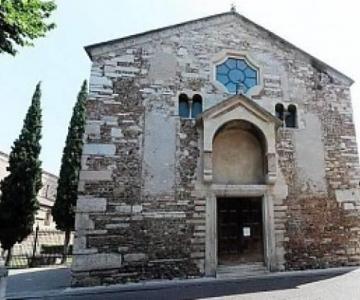
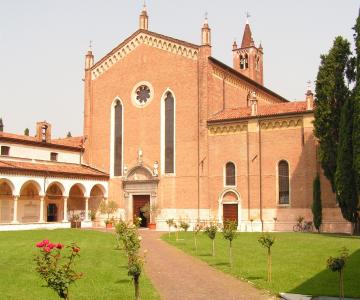
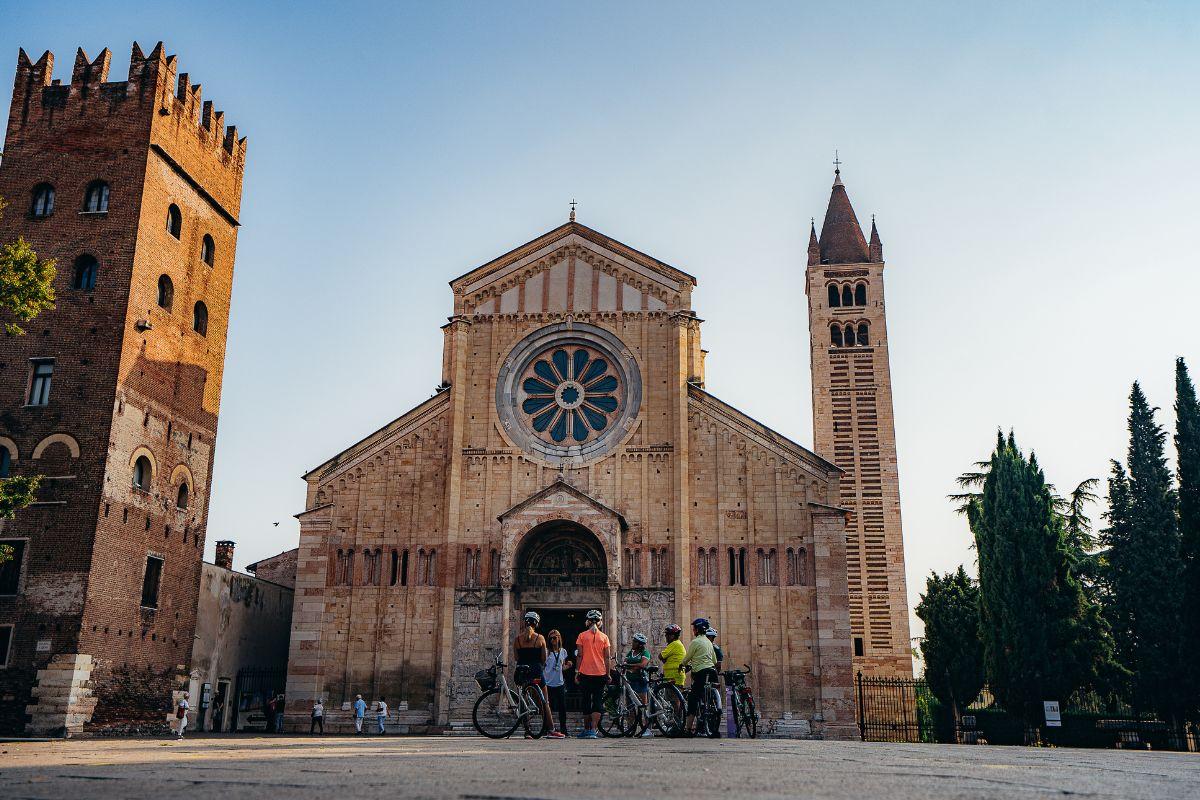
The Basilica of San Zeno is without any doubt one of the most beautiful and better preserved examples of Romanesque architecture in the whole of Northern Italy.
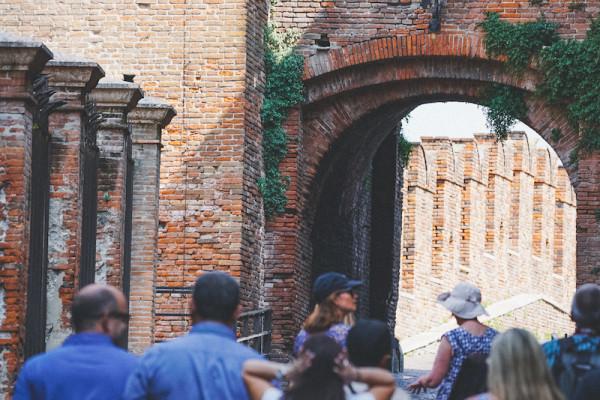
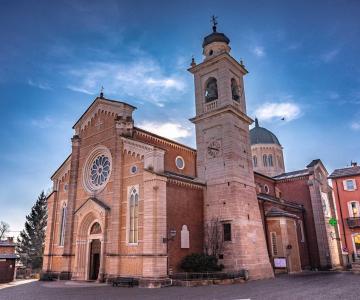
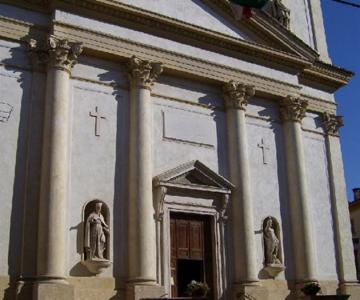
What strikes the visitor most is the warm colours of the façade, due to the alternated use of tufa stone and bricks.
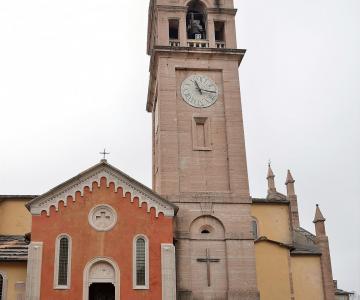
The façade, ideally enclosed on the left by the tower of the early monastery (13th century) and on the right by the slender bell tower (12th century), is suggestive in its colors, harmonious in its perfect architectural linee, sober and graceful in its decoration: it shows the influence of Lombard-Emilian architecture in the Veneto.
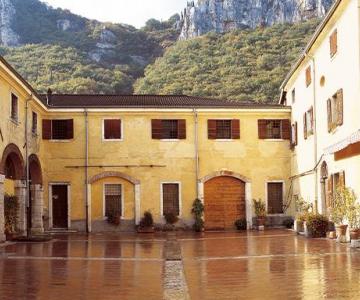
The original nucleus of the complex has been identified in the church and convent that rose on the Roman and later an early Christian burial ground near the Via Gallica. The church and convent had been built on the spot where the Saint had been buried.
FAQ
Why is the Church of San Zeno well known?
The church is known because besides being one of the four main churches, it is the church dedicated to the patron saint. Here you can admire the Pala del Mantegna and the bronze panels of the main portal.
Are there relics of the patron saint in the Church?
The relics of the patron saint of Verona were transferred to the Basilica during the solemn consecration which took place in 807.
Is the Church on one level?
The interior of the Basilica is divided into three levels: the parish church, the crypt and the presbyteral church.
Is the monument accessible to people with disabilities?
The church is partially accessible, in the areas of the cloister and in the lower area.
Is it possible to access to the monument with animals?
It is not possible to enter the monument with animals, except in cases of guide dogs with muzzle accompanying a disable guest.