Between the Eighteenth and Nineteenth centuries, Calvene thrived on a rural and artisanal economy. The rearing of silk worms was a common source of livelihood, as in the rest of the Vicentine territory.
In the second half of the Eighteenth century, only one productive activity was registered, Giobatta Sartori's small stove, and there were only three frames for domestic hemp processing.
In the Nineteenth and Twentieth centuries, the rearing of silk worms continued, providing a great opportunity to increase family income: extensively, families raised the worms (called knights) in the warmth of their kitchens, feeding them with mulberry leaves (in dialect moraro), until they matured for the production of precious thread.
Women, in turn, spent part of their evenings and free time making a dressa, that is, weaving straw. However, neither men, the elderly, nor children were exempt from the effort.
The tradition of straw processing was typical in the area of Lusiana, Lugo, and Calvene.
After harvesting the wheat with a hand sickle, the ears were selected with a special comb and threshed. The resulting stalks were sorted by size, passed through appropriate filters. They were then treated with water to improve their malleability, and then stored in boxes with sulfur vapors to give them a more pronounced yellow color.
Once the raw material was prepared, weaving proceeded. This resulted in a dressa which was also sold in skeins to the factories in Marostica and Vallonara.
It is worth noting that straw processing was introduced in the Vicentine area in the seventeenth century. It then developed to such an extent that the woven semi-finished products and the Vicentine straw hats were sought after and marketed in France, Switzerland, Germany, and England by these large factories, which could count on a local supply chain of experts in straw processing. The inhabitants of Calvene were an integral part of this prelude to labor tertiarization!
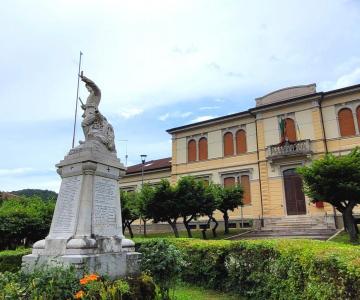
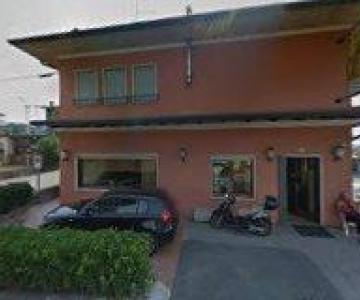
Returning along Via Roma towards Piazza Resistenza, at number 30, you can find the former Casa del Fascio, which has become the site of Calvene’s manufacturing.
After the war, the textile industry also developed in Calvene.
The E.T.I. knitting factory was established in the premises of what was once the Casa del Fascio, built in the Thirties of the Twentieth century.
The building consisted of nine rooms and a theater where performances, concerts, dance nights, and various exhibitions took place, including those of the Schola Cantorum and the Mandolin Orchestra of Calvene.
After the E.T.I. knitting factory ceased operations in Calvene, the former Casa del Fascio is now home to Tessitura Sartori.