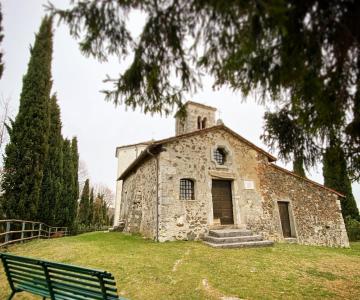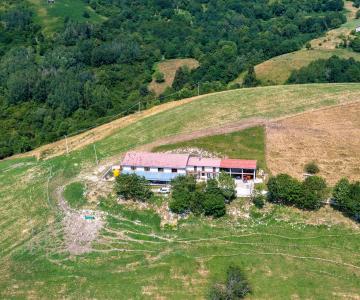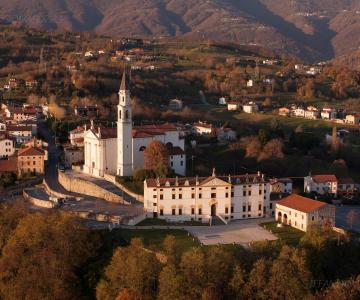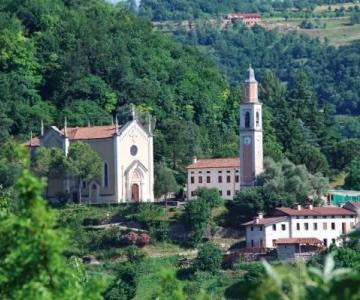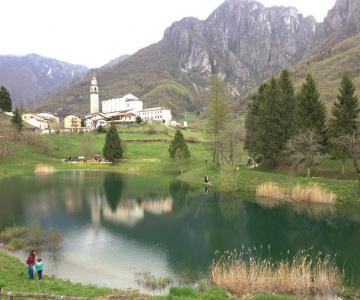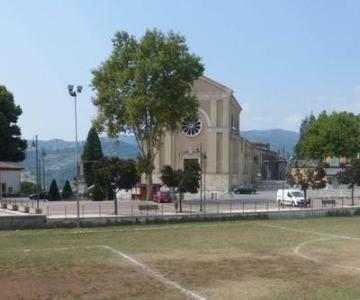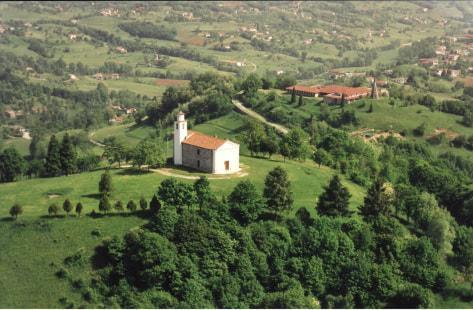
The Church of San Pietro stands on a volcanic hill from which one can enjoy a beautiful panorama, bordered by the Vicenza plain and the Astico river to the south, with the mountains of the Venetian Prealps surrounding it.
The Church of San Pietro is preferably reachable on foot, starting from the hamlet of Mare.
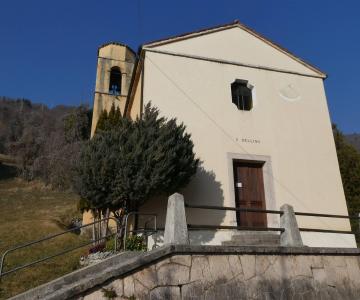
Considered the first parish church of Lugo di Vicenza, the earliest records regarding this small building date back to the early 15th century (specifically to 1424), and over the centuries it has been modified several times, while still maintaining its characteristics of linearity and simplicity.
Since popular tradition, in addition to the church, has always referenced a castle, it can be assumed that the church, in medieval times, was enclosed with "castle-like" walls to protect the population during the raids of barbarian tribes.
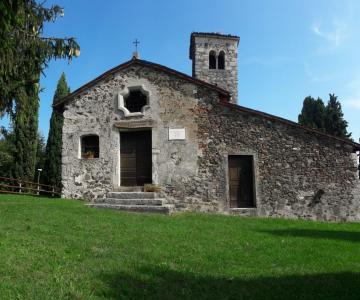
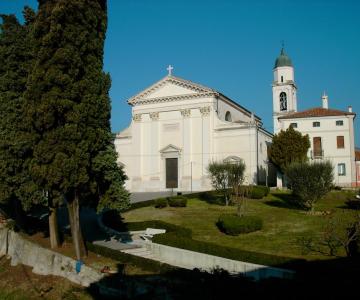
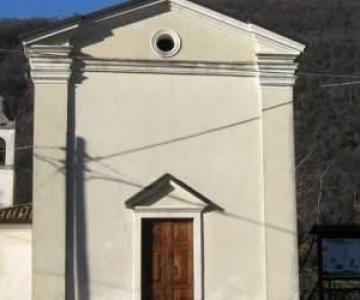
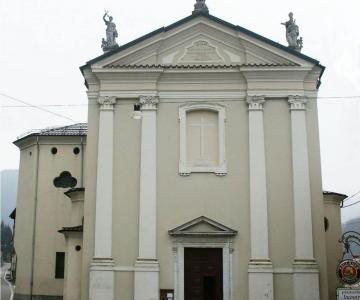
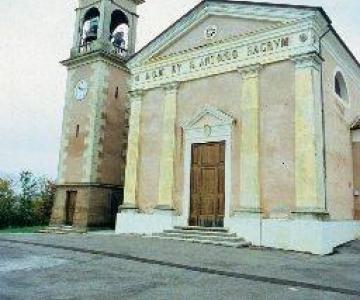
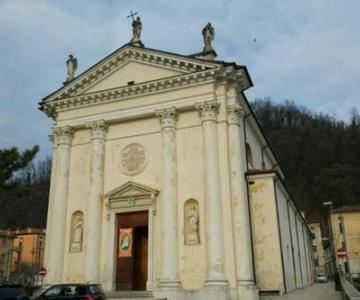
The facade of the Church of San Pietro, facing west, is composed of four pilasters and is topped by a tympanum, with remains of an arch and a marble plaque above the main entrance door. It is possible to access the interiors of the church through two side entrances, surmounted by a window and a slit opening. To the north of the church stands the bell tower. To the northwest of the church lie the remains of the Oratory of San Sebastiano.
Noteworthy inside are the wooden trussed ceiling, the main altar dedicated to Saints Peter and Paul, and the side altars dedicated to Sant'Eurosia and San Sebastiano, all three in baroque style. Finally, it is worth mentioning the popular belief that a mythical golden calf hides in the depths of the hill on which the church stands.