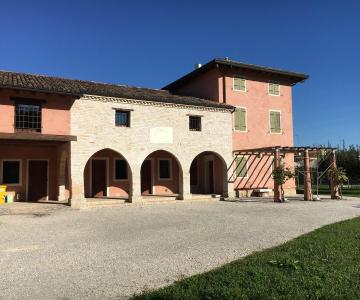
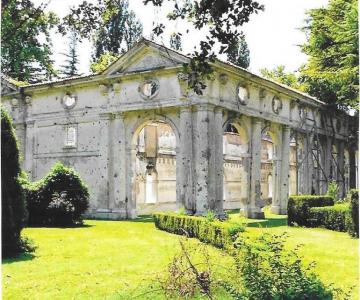
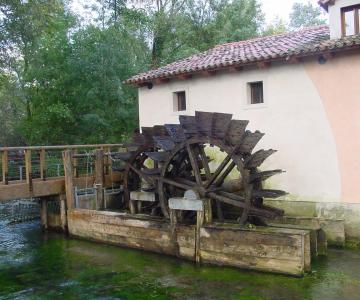
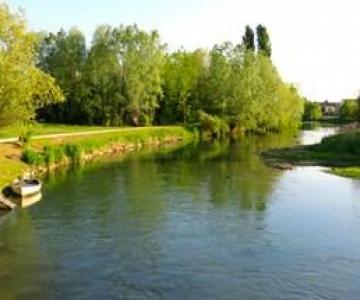
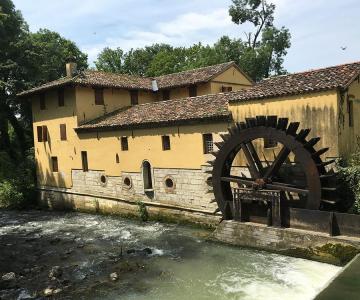
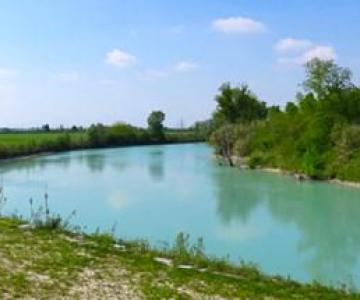
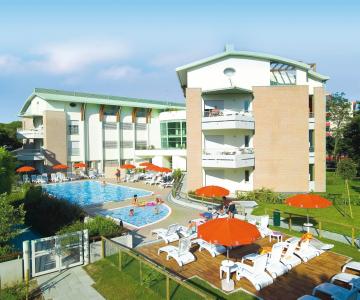
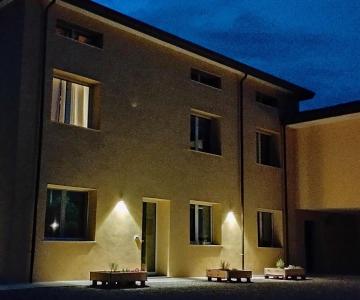
On the right side of the site there was originally a mill, its use was changed in the 17th century to transform it into a paper mill and later, in the very early years of the 20th century, a hydroelectric plant was built, which operated until the second post-war period. The building owes its functionality to the presence of the Roggia del Molino, an ancient branch of the Tagliamento that humans have modified over the centuries to exploit the hydraulic drop.
In the 16th century in Venice, printing was one of the most profitable activities for the Venetian patricians, who needed the precious raw material, paper, which was difficult to produce in the city due to the significant amounts of fresh water required during processing. The patricians therefore financed paper production in the inland areas; it is very likely that the paper mill in Villanova was commissioned by the noble Barbarigo family, owners of the nearby feudal estate of Fraforeano, who recognized in the site of the Villanova mill the ideal location for this type of production in the early years of the 17th century. Subsequently, the paper mill was acquired by the Mocenigo family, who owned a printing house in Alvisopoli. A high-quality paper was produced from the processing of fine rags sourced from the ancient fulling mill of Morsano al Tagliamento.
The paper mill also served as the residence for the master papermaker's family, whose role involved training and supervising the workers. For a period, the building operated as both a mill and a paper mill, since paper production mainly took place in spring and autumn to avoid the hot summer winds and winter humidity. From the first half of the 18th century, the paper mill's activities gradually began to decline due to the evolution of paper processing methods, which by then were producing paper from wood at much lower costs.
At the dawn of the 20th century, on the left side of the watercourse, a hydroelectric plant was built at the behest of Vittorio Biaggini, a visionary man who provided electric light to San Michele al Tagliamento, San Vito, and Latisana with his own resources. The 2.5-meter water drop allowed the turbines to generate electricity, one of which is still present today.
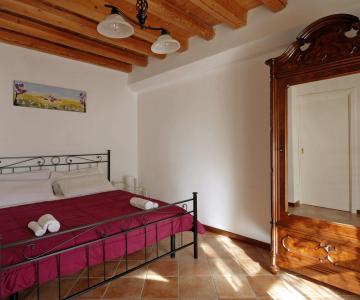
The building has been recently renovated.
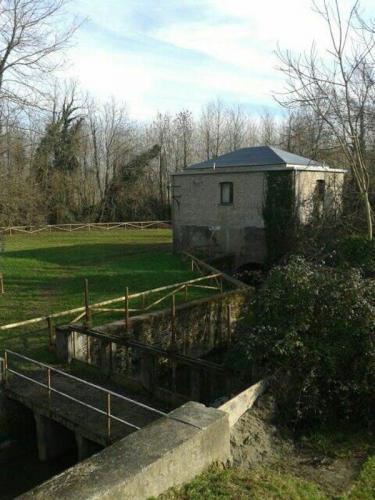
La Cartiera di Villanova della Cartera
Villanova della Cartera (San Michele al T.) , San Michele al Tagliamento (VE) - 30028
- Download
- Brochure La Cartiera - pdf 925.86kB
TAKE ME HERE: Villanova della Cartera (San Michele al T.)