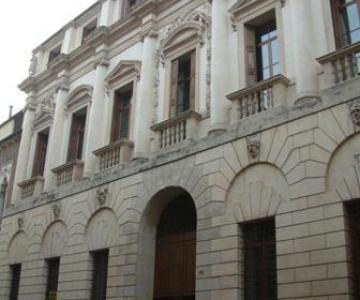
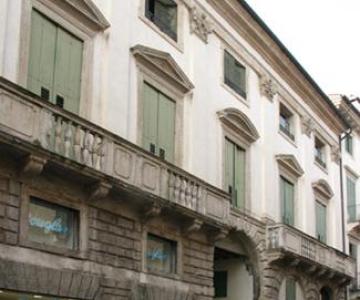
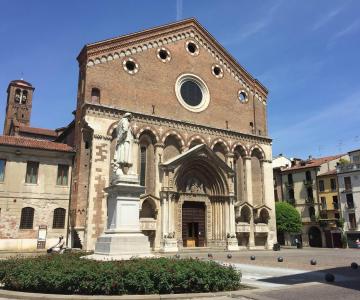
The building is located in front of the church of S. Corona, at the corner between the eponymous contrà and contrà S. Stefano, where the Da Monte family had properties.
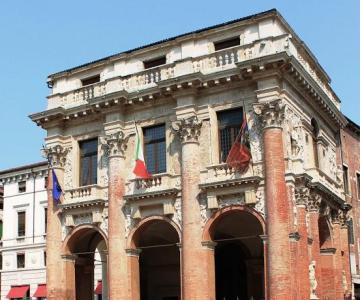
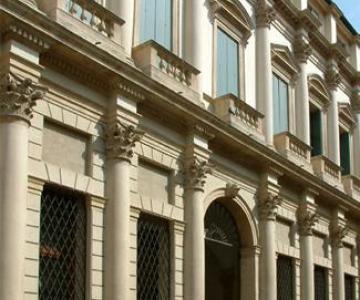
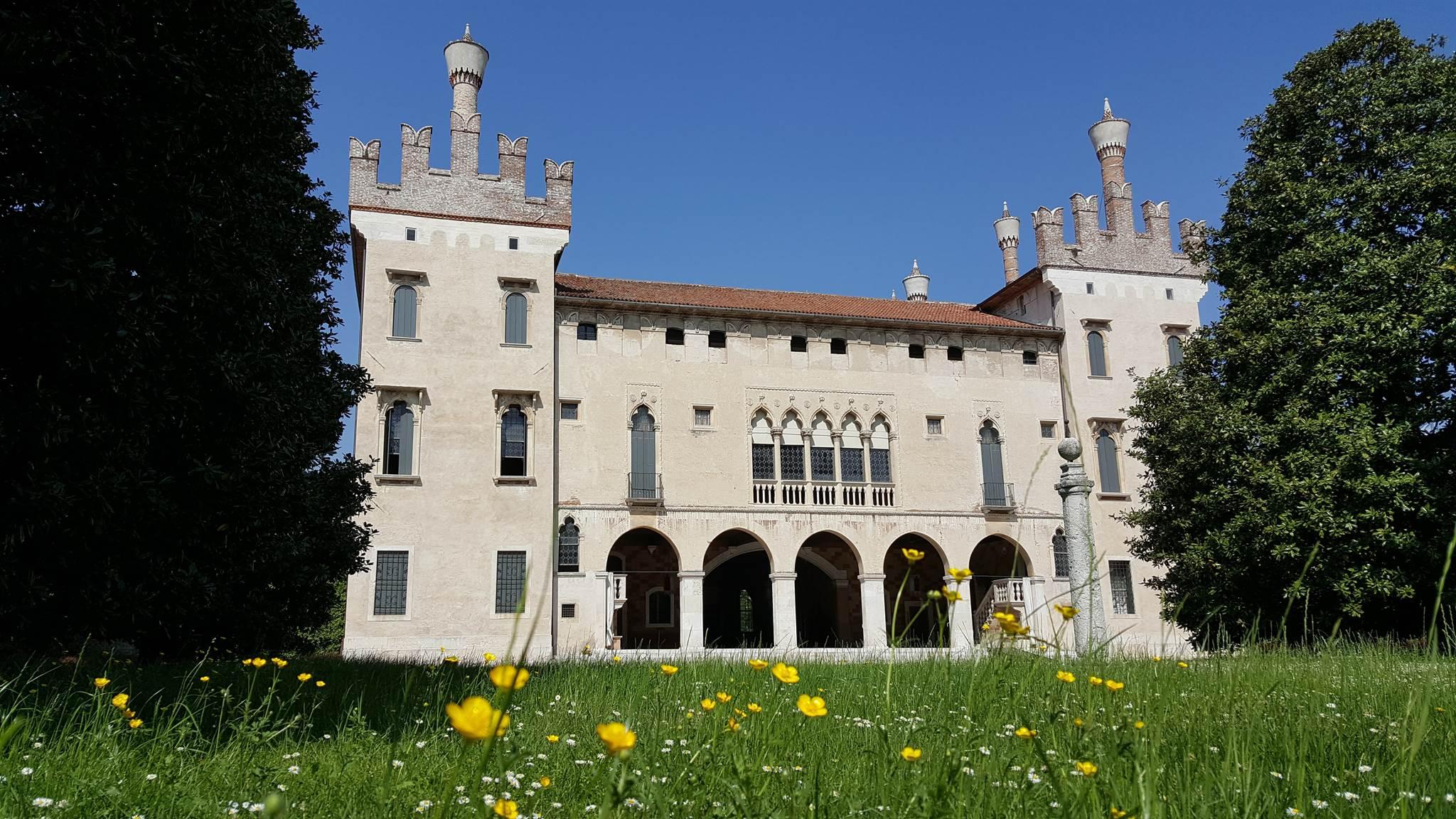
It develops over two floors, separated by a string course. The ground floor opens in the center with a rusticated arched portal and features two rectangular windows with sharp corners on either side. The upper floor is marked by three pairs of Tuscan-Doric pilasters that frame the central serliana and the two lateral French doors, topped by triangular pediments. The palace is topped by a cornice that includes a Doric frieze, with plain triglyphs and metopes.
The dating and Palladian authorship of this palace remain uncertain. The construction has been traced back to the early 1640s, although the hypothesis of a late execution based on a youthful design by the master remains open; indeed, the inscription on the string course above the portal bears the name of Battista Da Monte and the date 1581.
The stylistic and compositional features of the facade show many similarities with Palladio's youthful designs. It could indeed be a project from the 1640s, when the architect was experimenting with the theme of the serliana and was strongly influenced by Bramantesque and Raphael-like architecture following his first trip to Rome in 1541. The compositional model is the one adopted in those years in Palazzo Civena. Recent archival sources would prove that the construction of the palace occurred between 1550-1554.
Subsequently, decorations and other completion works were carried out, lasting until the date displayed on the facade.
What is certain is that some compositional and execution inaccuracies exclude direct involvement of Palladio in the realization of the work, such as the irregular spacing of triglyphs and metopes, the discrepancy between the bases of the pilasters of the serliana and those of the pilasters, the lack of moldings on the pedestals, and the misalignment between the frames of the serliana and those of the other windows. Historians have hypothesized that it was executed by Domenico Groppino.
In the nineteenth century, the building underwent alterations by Tommaso Becega, who modified the distribution of the floors and created new openings. It is likely that the application of the rusticated plaster, now removed, on the ground floor, along with the elimination of window frames, dates back to this period.
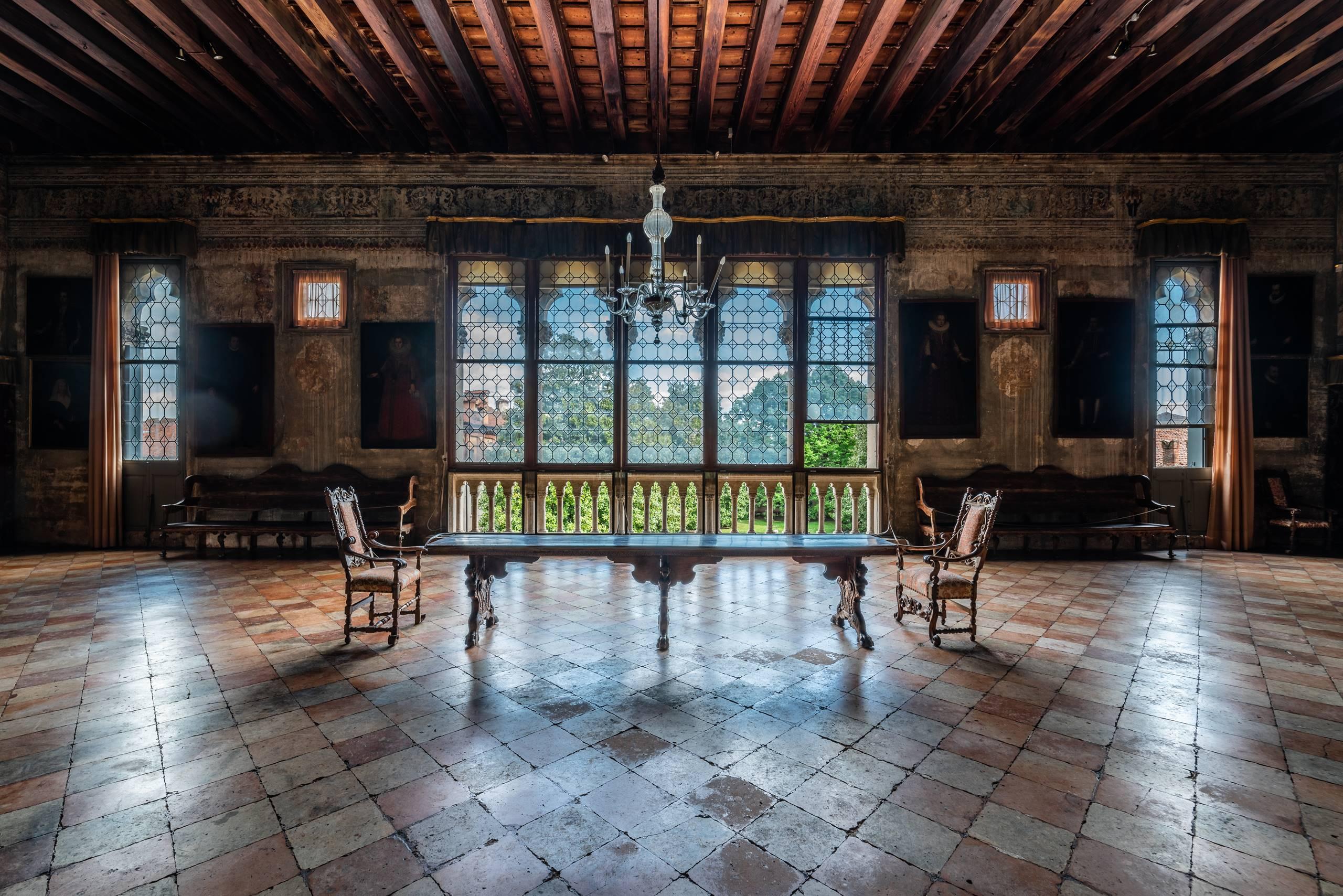
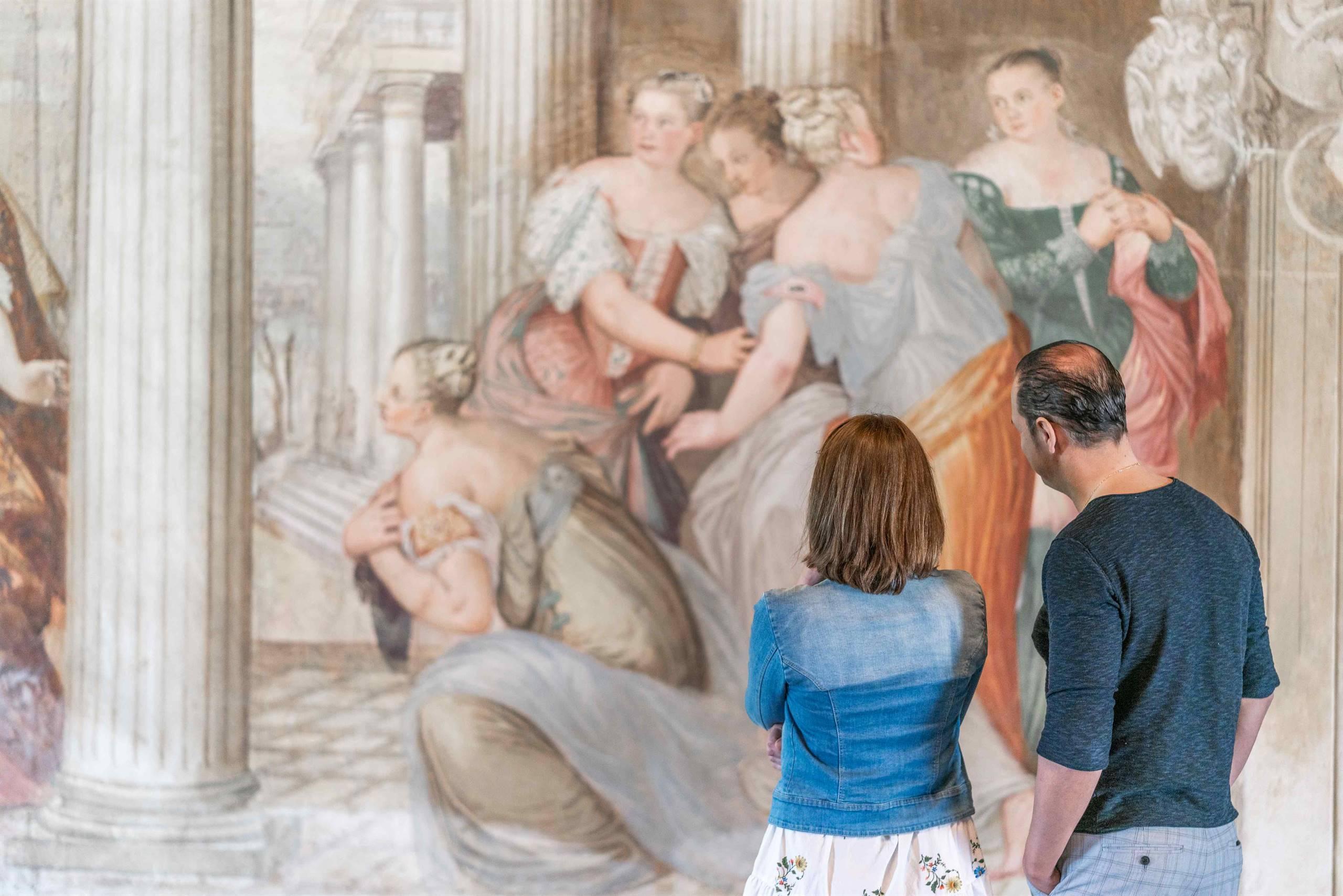
During the restoration works in the 1970s, frescoed friezes emerged in the room to the right on the ground floor and in some rooms on the upper floor.
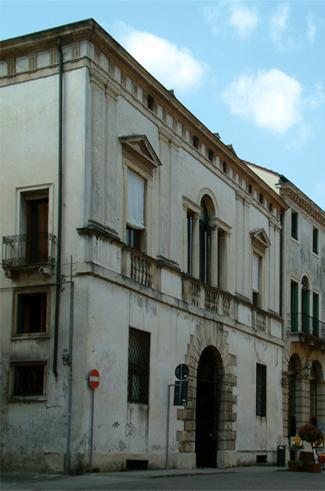
Palazzo da Monte Migliorini
Contrà Santa Corona, 9 , Vicenza - 36100
TAKE ME HERE: Contrà Santa Corona, 9