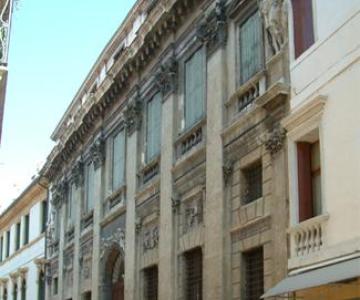
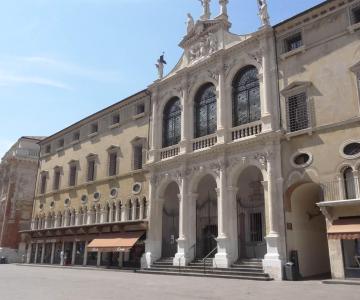
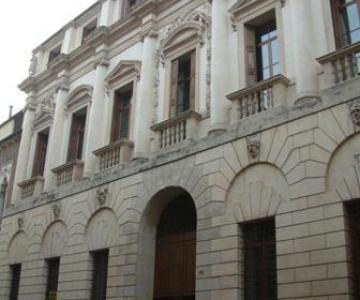
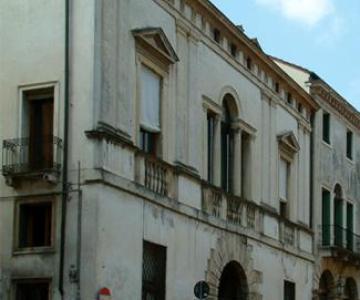
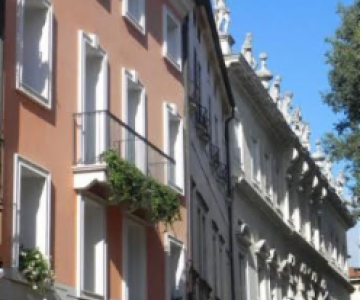
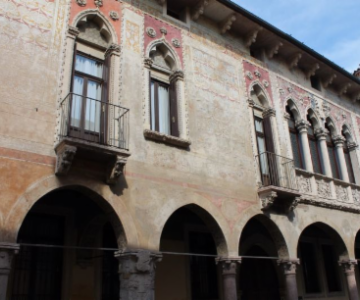
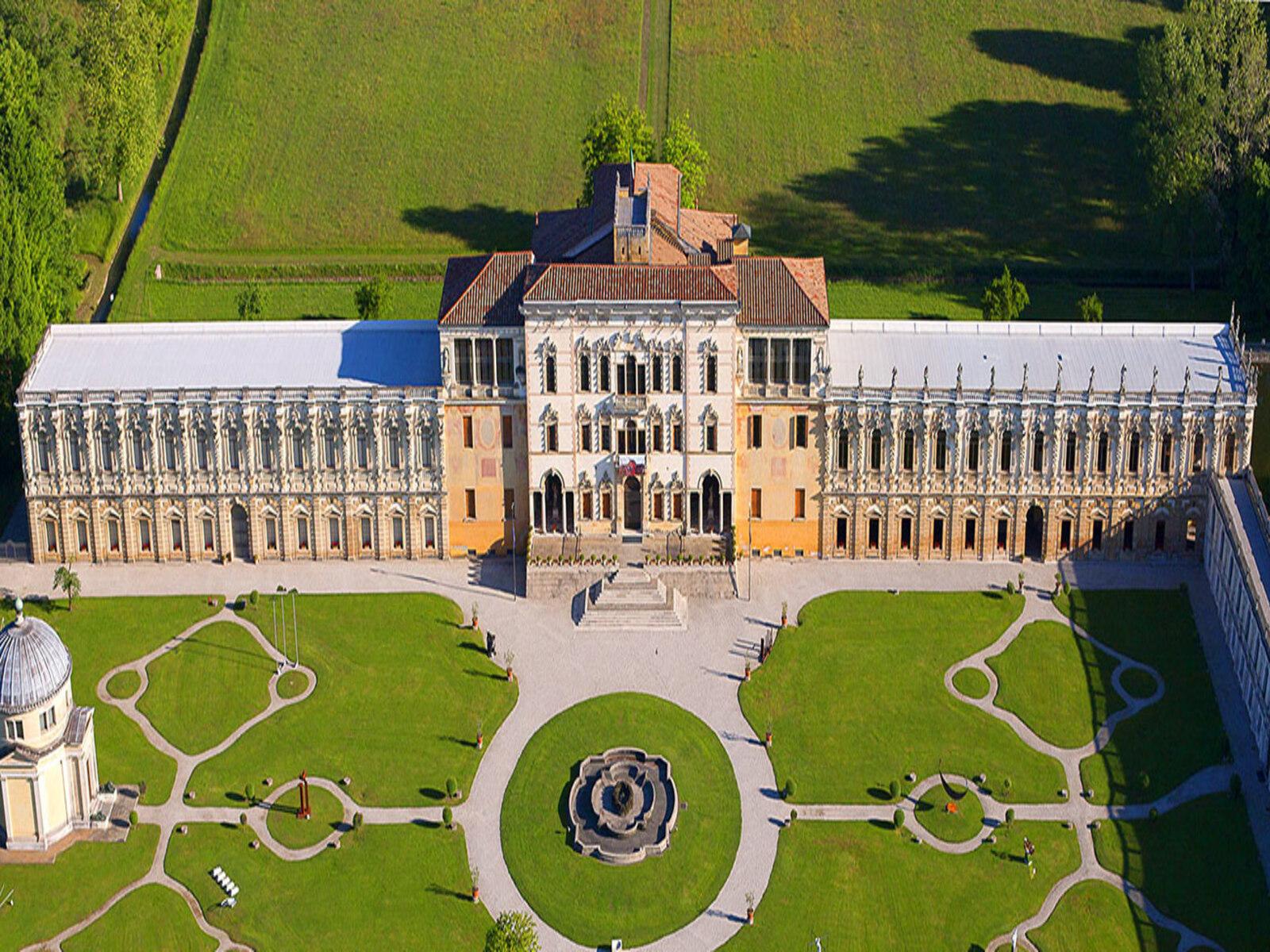
The building stands at the beginning of Corso Palladio, at the northern corner with Piazza Castello. It is a two-story building with an attic above, overlooking the two urban spaces with very different façades in rhythm and architectural layout, resulting from two distinct design developments.
The façade facing the main city artery, whose design is particularly linked, especially in the lower order, to Palazzo Barbaran da Porto, is attributable to Palladian design; it features two orders of semi-columns with a very tight rhythm, Corinthian at the lower level and Composite at the upper level, among which the ground floor contains a vaulted entrance portal and three rectangular windows on each side, and on the noble floor, seven windows with alternatively triangular and curvilinear tympana, facing strongly projecting balconies. The architrave of the lower order has a strangely linear cornice, while in the upper order it correctly follows the alternation of projections and recesses of the semi-columns. Overall, the front vibrates intensely with chiaroscuro effects.
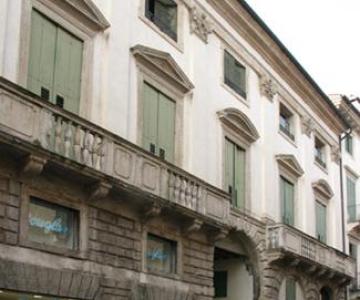
Very different is the effect of the façade on Piazza Castello, of probable Scamozzi conception, with a more subdued arrangement of openings, five per floor, and the absence of a marked architectural articulation, limited to flat cornice bands.
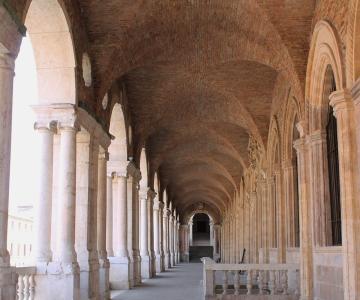
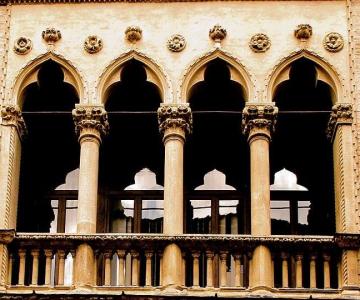
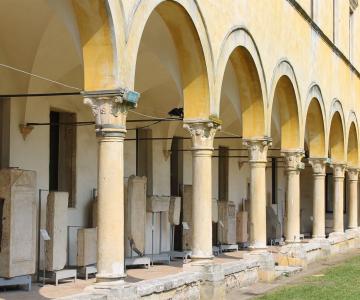
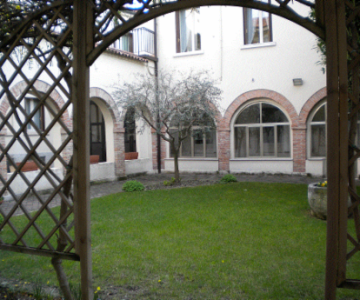
The double order of loggias overlooking the courtyard echoes the rhythms and light effects of the main front, and therefore can be attributed to Palladio. Here, the overlap of Corinthian and Composite orders is repeated; the columns follow with an even quicker cadence, defining four intercolumnar spaces on each side and in the middle, framing an arched opening on both floors.
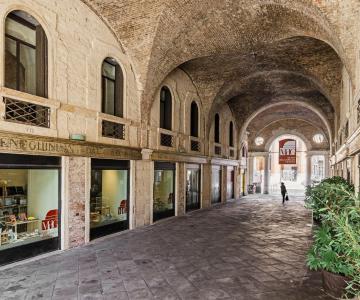
The wide and well-spaced atrium, articulated at the walls by flat Corinthian pilasters and concluded by a dissociated serliana, is attributable to the hand of Scamozzi.
The project promoter was Francesco Thiene, to whom it is hypothesized that Palladio may have provided a proposal for the palace starting in 1572, which Francesco himself may have reproduced in the floor plans now kept at the R.I.B.A. in London, which are quite consistent with the executed work; the relative sketch of the façade would probably be attributable to Palladio himself, and shows some differences compared to the façade later realized.
Work began no earlier than 1580 (thus after Palladio's death) and by the death of Francesco in 1593, no more than a third of the palace had been built. The enterprise continued with his cousin Enea Thiene, who brought it to completion by 1608, using the work of Vincenzo Scamozzi.
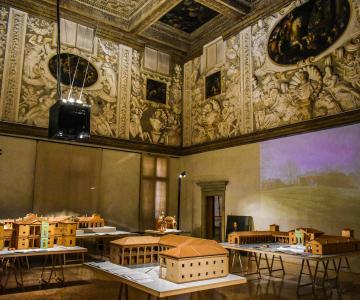
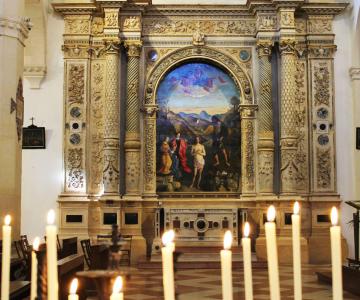
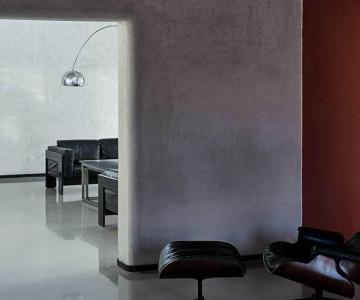
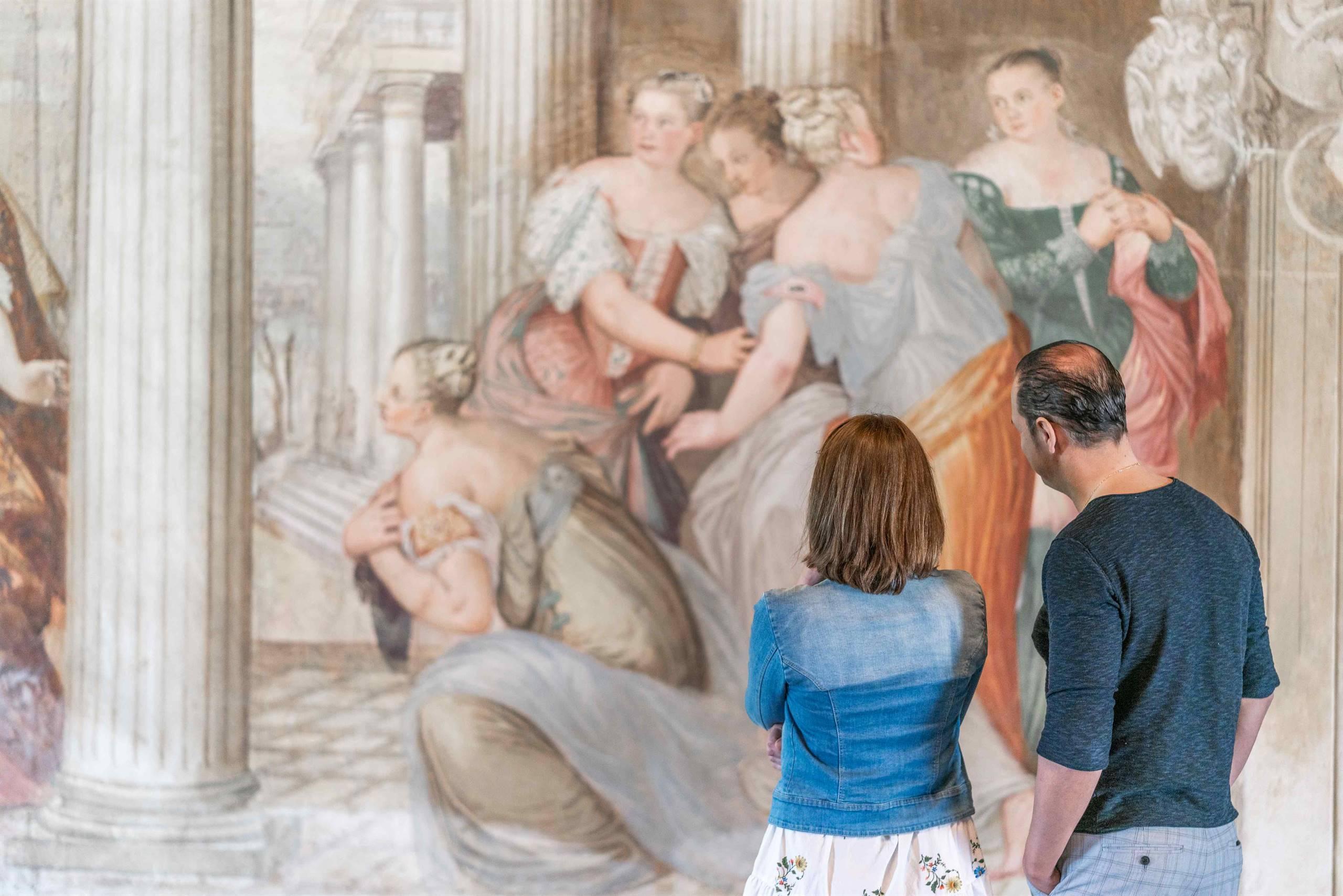
The rich decorations of the rooms predominantly date back to the 18th and 19th centuries, corresponding to the last period of splendor of the Thiene family and the subsequent purchase of the palace in 1834 by Lelio Bonin Longare.
On the eastern side of the courtyard, there are stables and attached buildings with a 17th-century appearance, overlaid with a 19th-century extension.
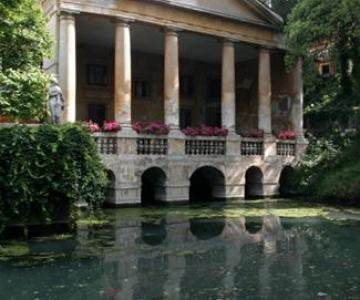
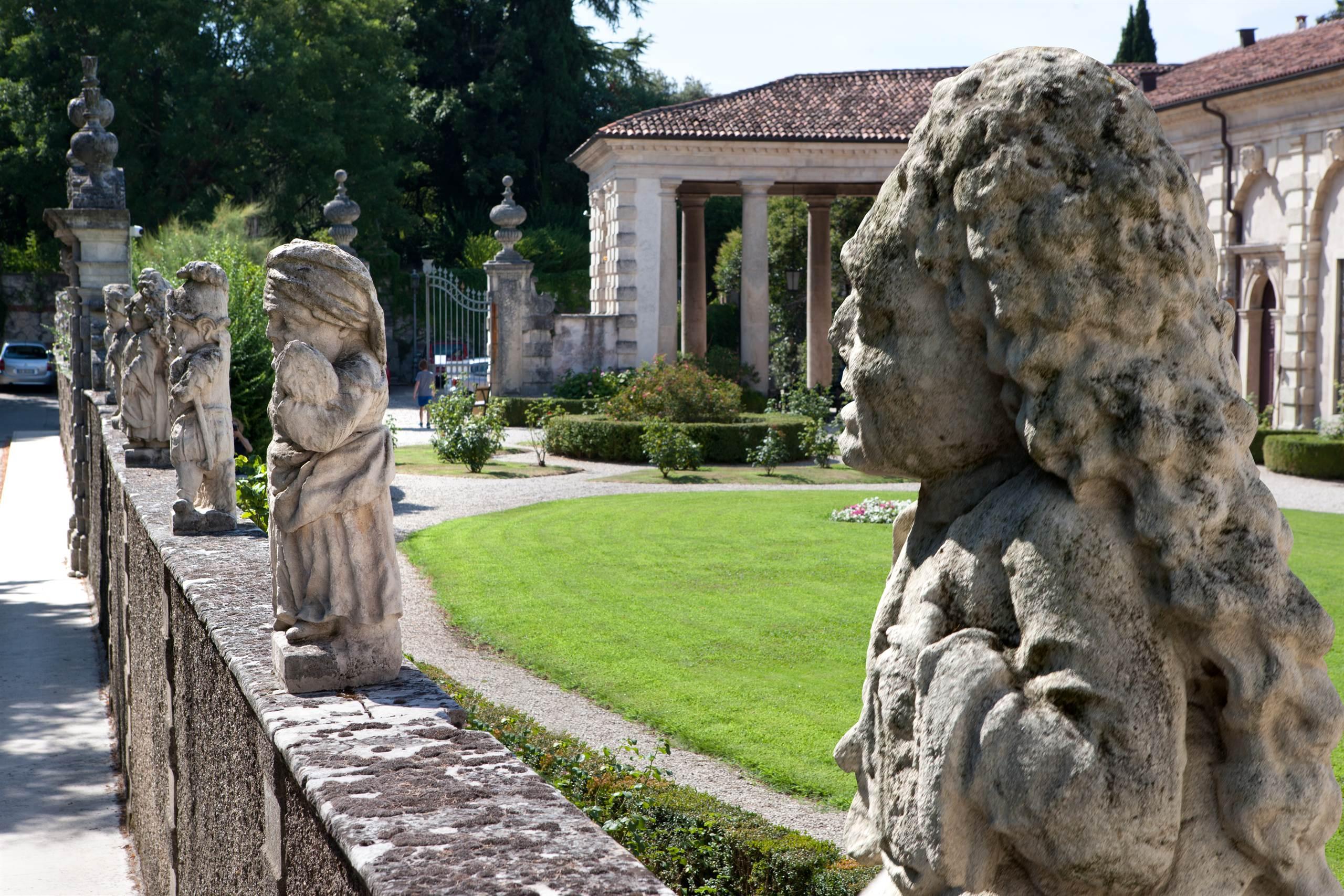
The rear garden, already contemporary with the construction of the palace, took on an English-style arrangement in the 19th century that it still displays today.

Palazzo Thiene Bonin Longare
Corso Palladio, 13 , Vicenza (VI) - 36100
TAKE ME HERE: Corso Palladio, 13