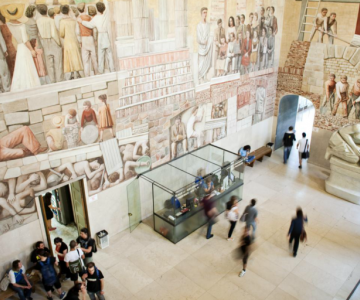
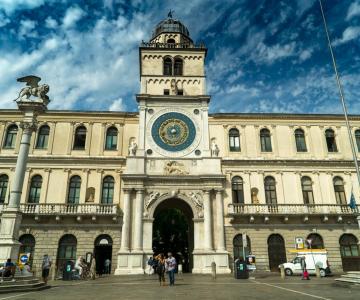
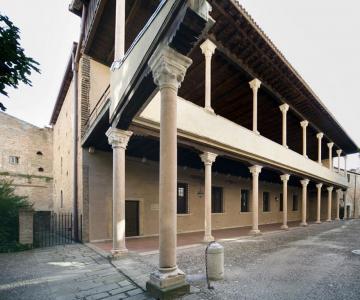
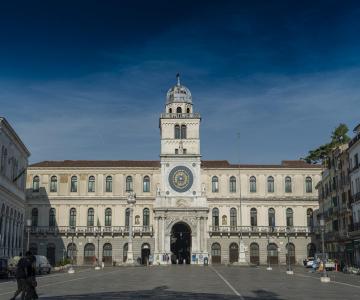
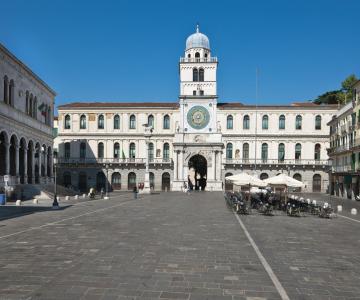
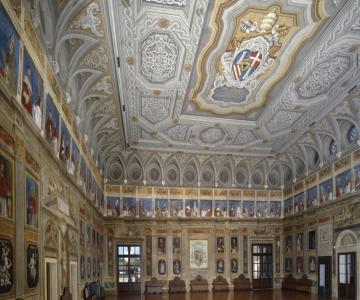
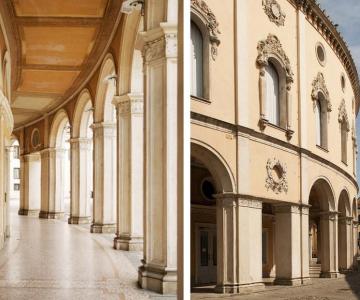
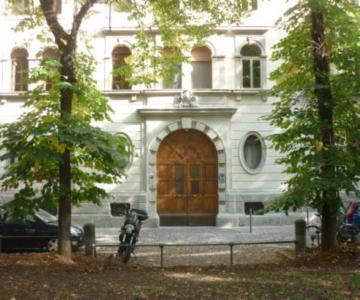
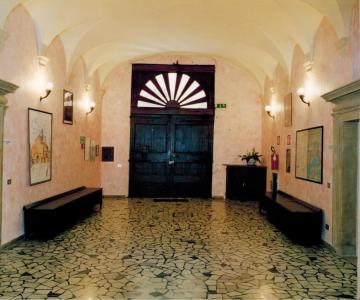
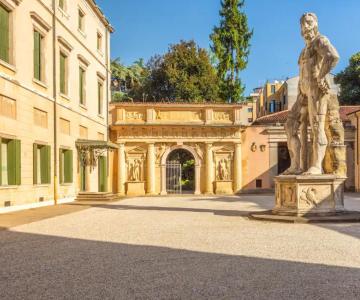
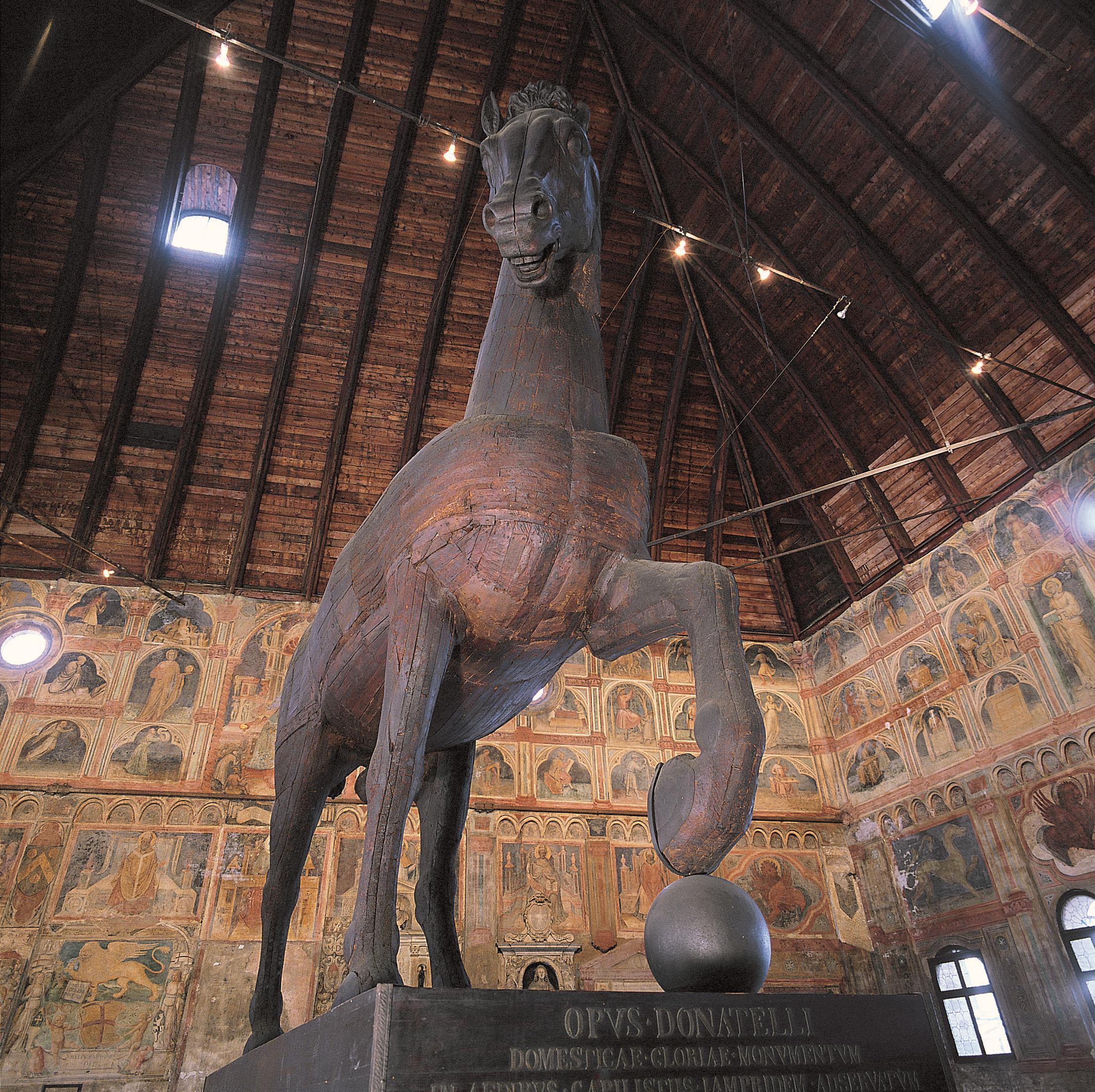
After restoration work on the old Carraresi Palace in the mid-sixteenth century – during the period of Venetian rule – the Giants’ Hall became part of the Palazzo del Capitanio, the seat of the Republic’s military governor in the city. From 1539 to 1541, the capitano [Military governor] of Padua was Girolamo Corner, a member of an important Venetian family, and it was he who commissioned a new scheme of decoration for the Hall. This was to have the same didactic purpose as the original fourteenth-century decoration, but make a rather different choice of ‘illustrious men’.
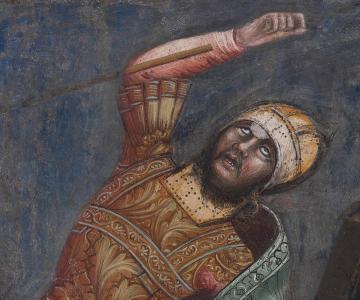
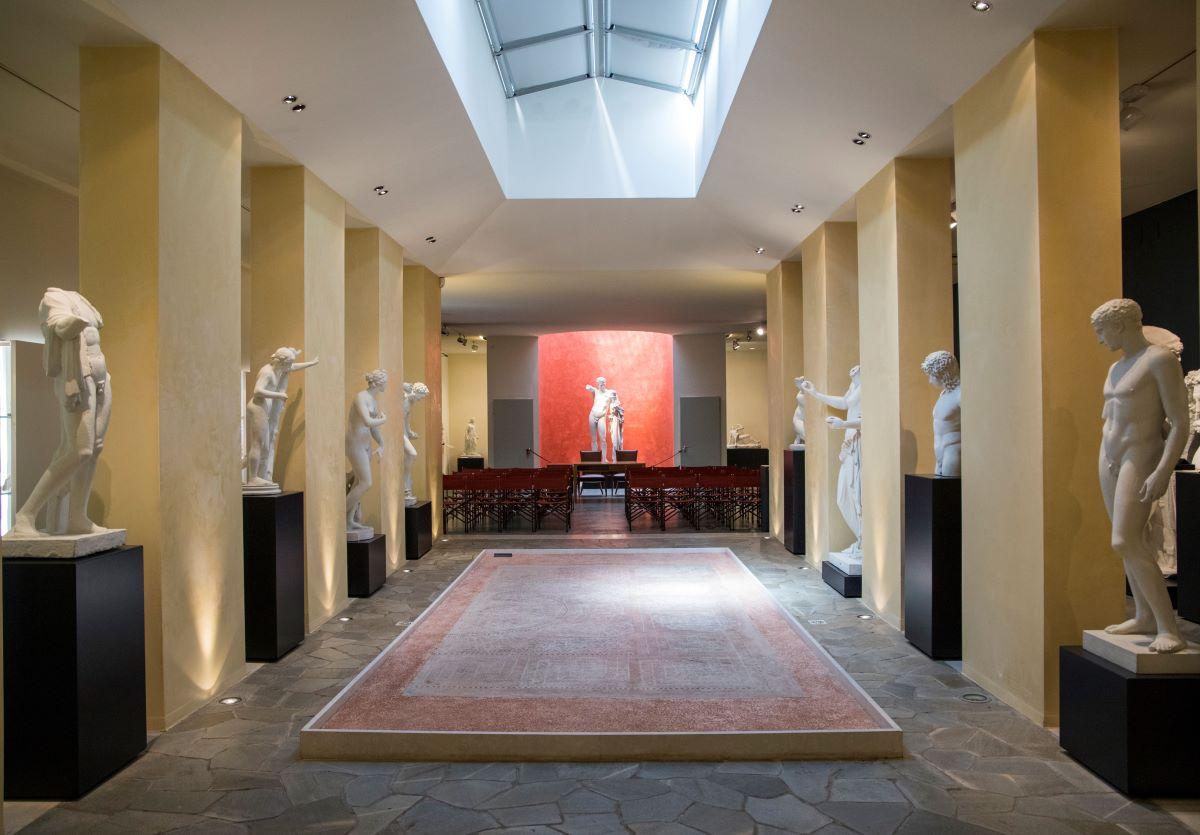
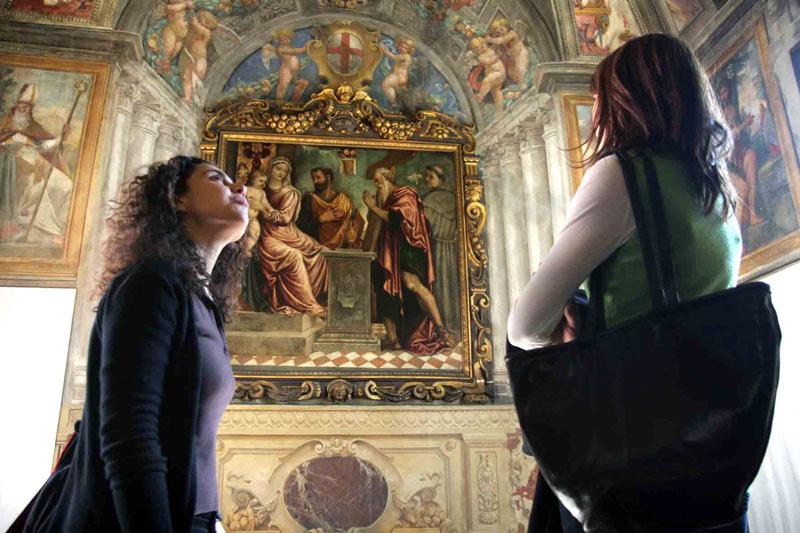
The artists chosen to carry out the work were Domenico Campagnola, Stefano Dall’Arzere and, probably, also Gualtiero Padovano. On the two long walls, in the spaces divided by trompe-l’oeil columns, are 44 figures representing kings, emperors and distinguished figures from the age of the Roman Republic, all intended to exemplify the virtues of military valour, good government, justice and peace. On the shorter walls are depictions of six famous men of letters who were either born in or associated with the Padua area. Here, the intention was to broadcast the unchallenged cultural importance of the city and its university within the territory of the Venetian Republic.
The Hall has always been associated with university life. Just after its completion it was used for balls organised by university students, and from 1631 to 1912 it housed the University Library. Nowadays it is used for concerts, conferences and cultural events.

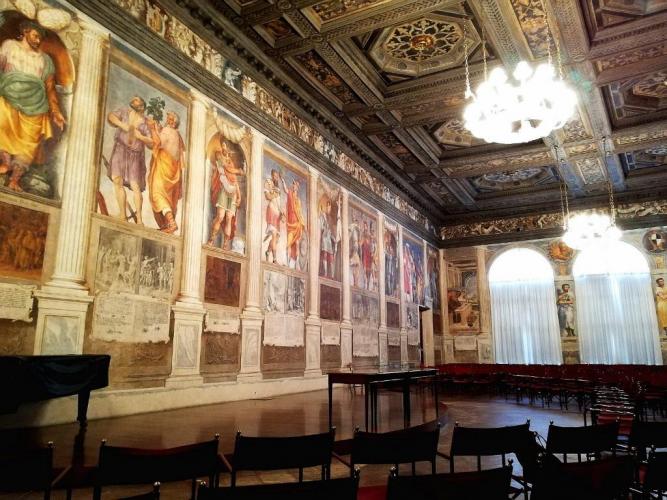

Sala dei Giganti
Piazza Capitaniato 3/5 , Padova - 35139
- Contacts
TAKE ME HERE: Piazza Capitaniato 3/5