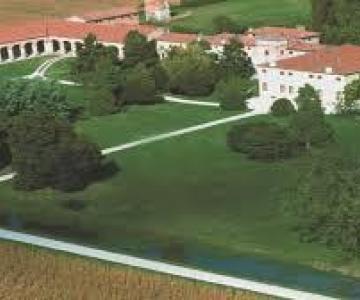
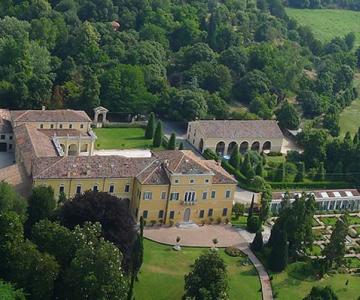
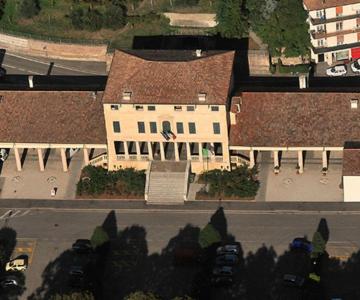
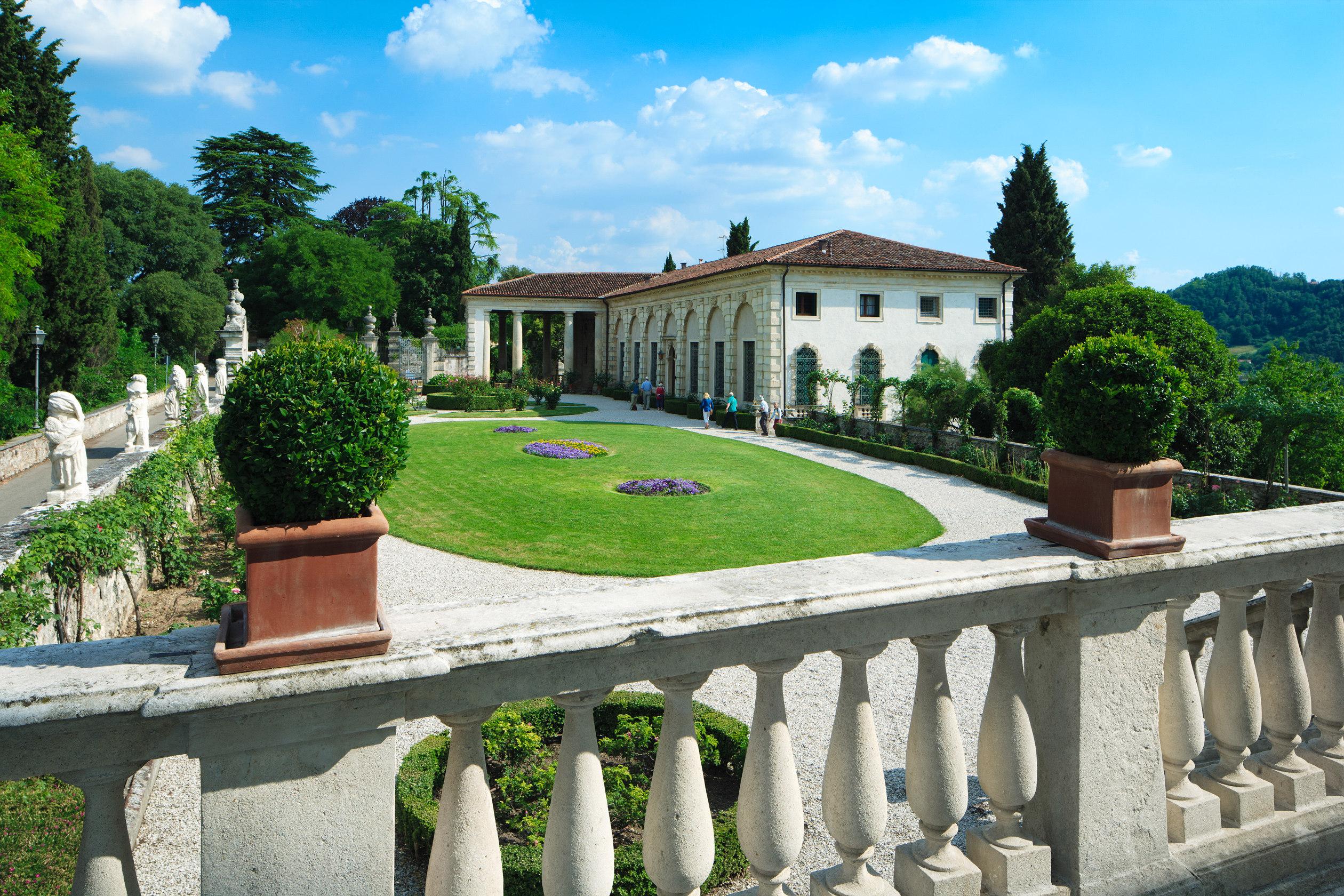
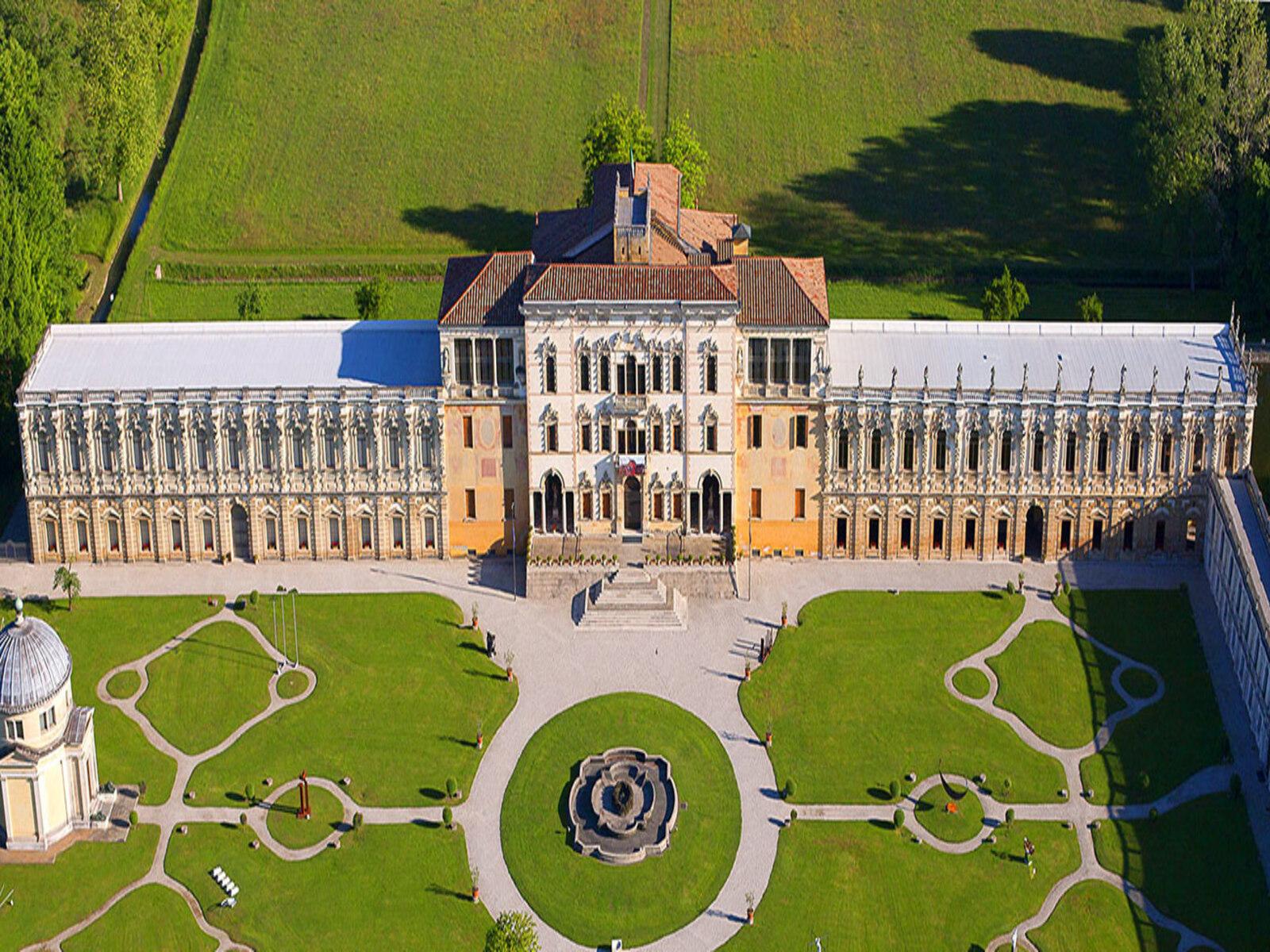
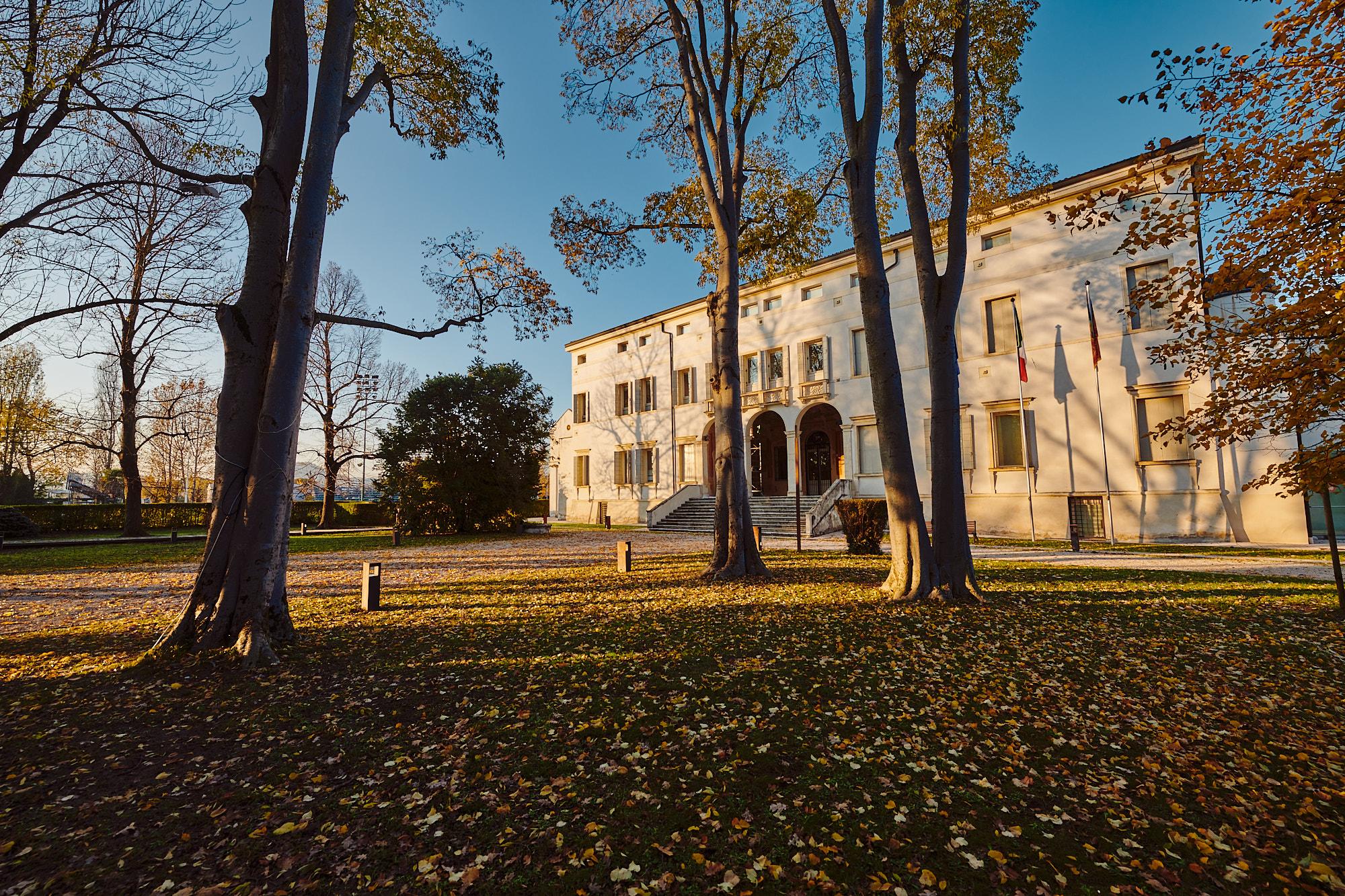
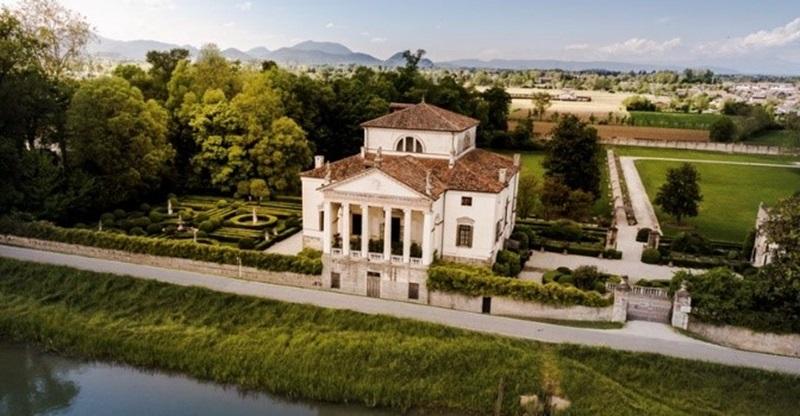
Villa Chiericati is located in the hamlet of Vancimuglio in the territory of Grumolo delle Abbadesse; the brick entrance portal opens along the highway that connects Vicenza to Padua and leads to the villa through a long straight avenue.
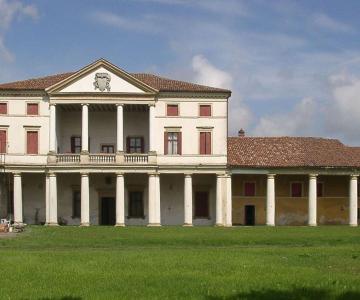
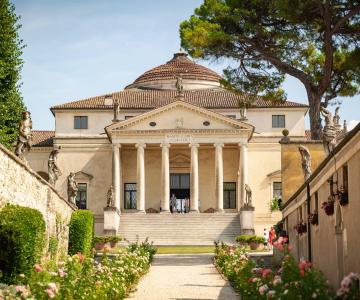
The building consists of a parallelepiped block rising above a high base marked by a stringcourse, animated on the main facade by a tall, strongly protruding Ionic tetrastyle portico, accessible via a central grand staircase and open at the ends by arches. Above the frieze of the portico rises a triangular pediment topped with statues.
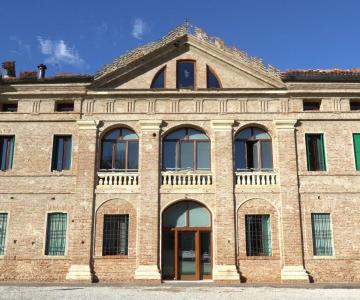
The continuation of the base and the cornice along the entire perimeter unifies the envelope of the building. A slight projection at the back facade features a central section topped with a pediment, characterized by an axial portal flanked by windows, in analogy with the group of openings that animate the portico of the main facade.
Through the main entrance, one accesses a narrow vestibule flanked by two large rectangular rooms with fireplaces and barrel vaults, which opens up into a spacious central hall covered by a beamed ceiling. On either side of the main hall are symmetrically arranged two square rooms and, to the north, smaller corner rooms and oval-shaped stairwells. All the side rooms have vaulted ceilings.
The interior spaces are distributed over three levels: a cellar, a habitable noble floor, and an attic used as a granary. An interesting structural solution characterizes the central cellar area, covered by a particular cross vault with lowered sails that connect to a central cylindrical pillar.
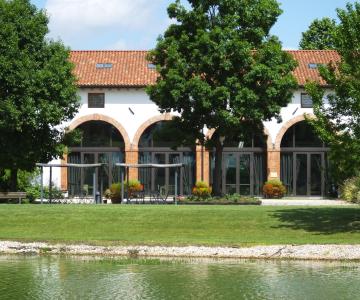
To the east, there is a long building partially articulated on two levels, partly open by arches on pillars against which Tuscan semi-columns are set.
The construction of the villa began after 1554, at the behest of the noble Vicentino Giovanni Chiericati, brother of Girolamo, the patron of the eponymous palace in Vicenza; at that time, the property lists recorded a previous construction belonging to Giovanni in Vancimuglio, identical to that noted in the deed of division of assets between the Chiericati brothers in 1546. By 1557, the construction site was undoubtedly underway, as recorded in Giovanni Chiericati's will, who passed away the following year, in which he urged his heirs to continue the construction of the house in Vancimuglio.
However, in the 1564 land registry declaration, his son Lionello described it still in a rustic state, “without floors or windows,” and just two years prior, a cadastral map indicated only the presence of two rural buildings at the site. Meanwhile, in 1574, the property was purchased by Ludovico Porto, under whose initiative the villa was completed by 1584.
Since the 18th century, the attribution of the villa to Andrea Palladio has been a subject of critical debate (for instance, Bertotti Scamozzi denied it). Today, many scholars recognize Palladio's authorship, based on the analysis of two autograph plan studies dating back to 1547-48, resembling the completed building (RIBA, XVI, 20), especially the first one, where the hall is designed as bi-apsidal and with a cross vault.
The project was likely provided to Giovanni Chiericati by 1554, during a period when Palladio, who was still receiving payments for the city palace commissioned by his brother Girolamo, was in a professional relationship with the family. The cited drawing suggests a more ambitious program, reflected in the blocked thermal window present on the rear facade, which became incongruous as the project progressed due to the height reduction of the hall and the adoption of a flat ceiling instead of the cross vault. Palladio, moreover, did not participate in the execution of the project, which was overseen by Domenico Groppino, definitely in the initial phase of the construction (as evident from his will in 1560), but probably also in the final decade of the works, after the property was transferred to Ludovico Porto.
The adjacent rural portico, dating back to 1768, is the work of Ottavio Bertotti Scamozzi.

Villa Chiericati da Porto Rigo
Via Nazionale, 1 , Vancimuglio di Grumolo delle Abbadesse - 36040
TAKE ME HERE: Via Nazionale, 1