Until 1937, the city center was organized along the tree-lined banks of the Adigetto River, connected by several bridges. Over time, the flow of the watercourse had significantly decreased, making it not particularly useful for navigation.
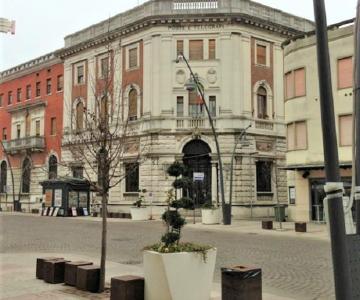
To this was added health problems that led to the burial of the urban section of the Adigetto. This created an important communication artery in the city, simultaneously giving new impetus to construction. However, the realization of Corso del Popolo was halted by World War II, leaving only a few limited public construction projects, including the Palazzo delle Poste and Palazzo INA. There were some attempts to give this street a general design, but this did not prevent the fragmentation of private works.
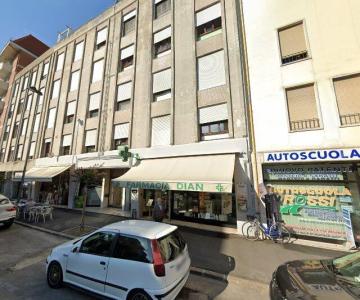
The current Corso del Popolo, following a significant urban redevelopment intervention, stands as an element of a project aimed at giving Rovigo a renewed face, making it modern and functional, livable in all its spaces, in a word, a city designed for people.
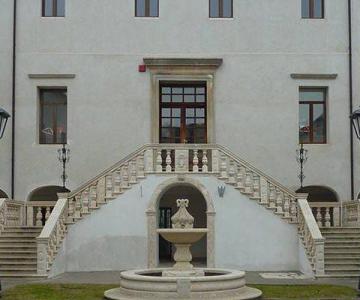
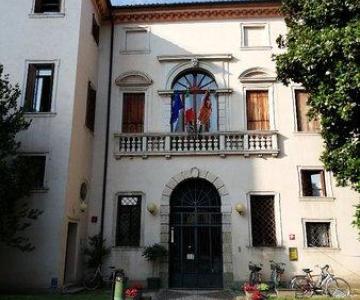
It is lined with important historic buildings: the Pescheria Nuova, a curious building in neo-Gothic style, the Palazzo delle Poste in Liberty style, and Palazzo Venezze, now one of the most beautiful buildings in the city, built in 1715 by the design of Agostino Ghirotti.