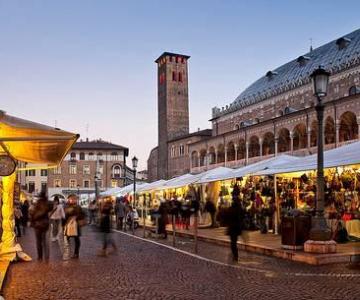
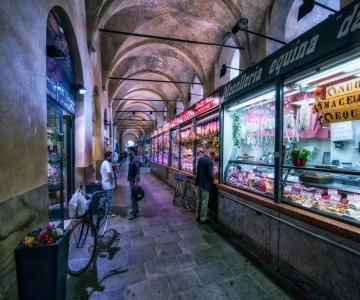
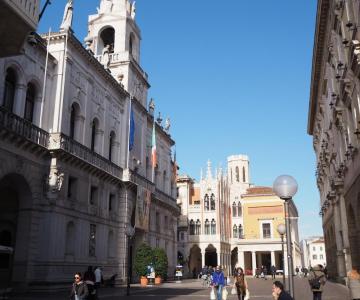
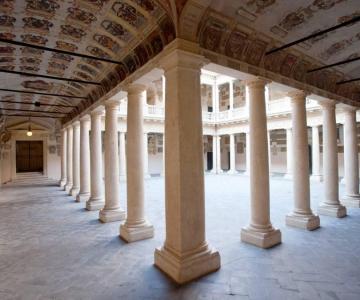
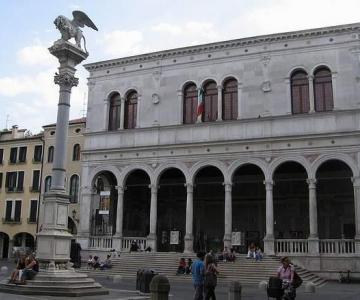
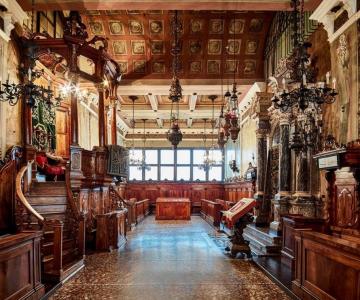
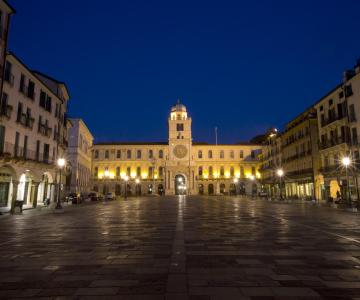
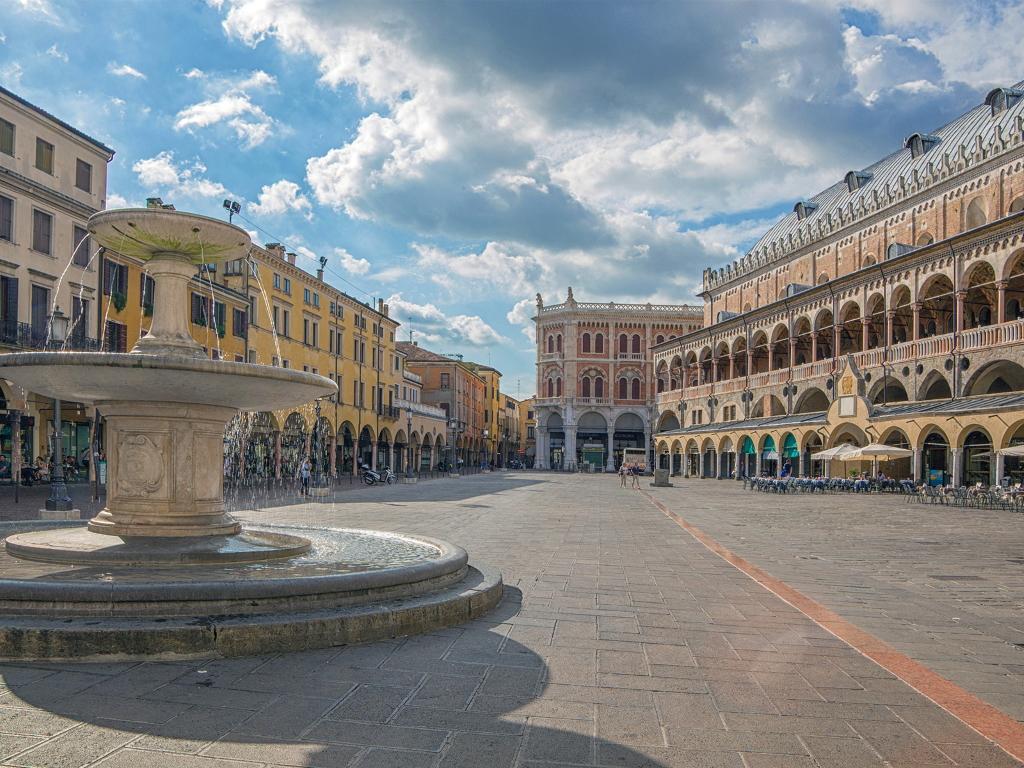
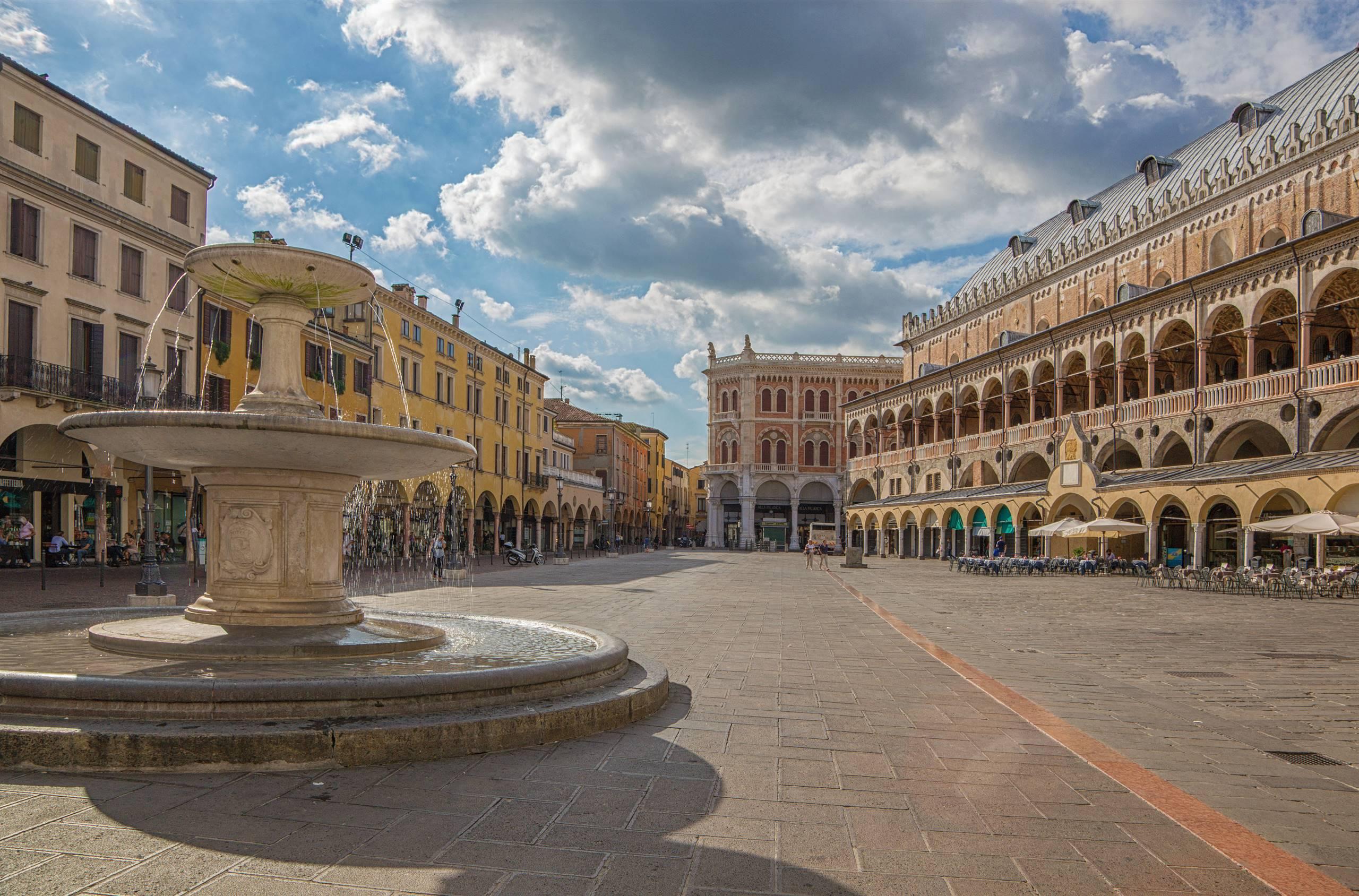
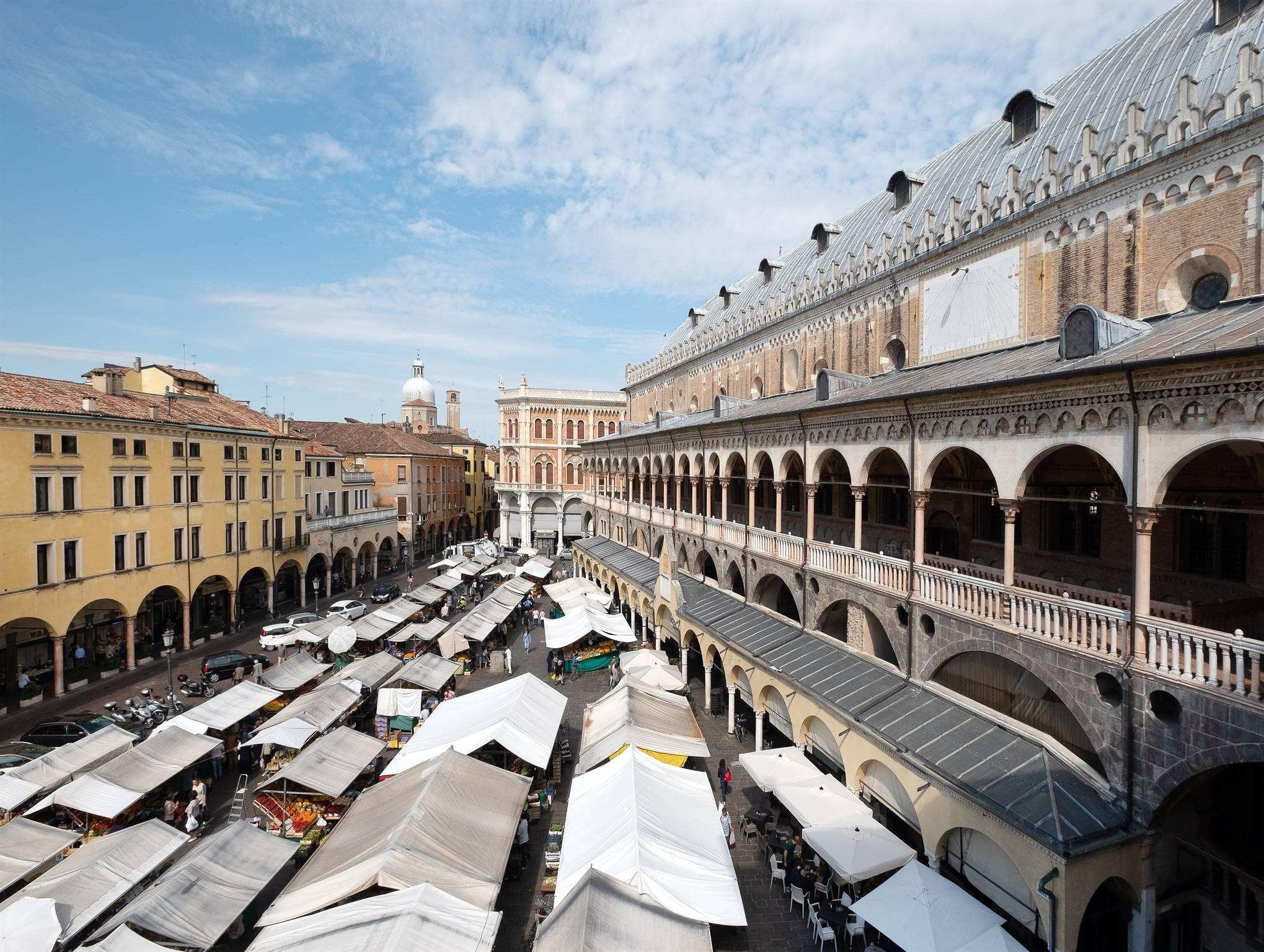
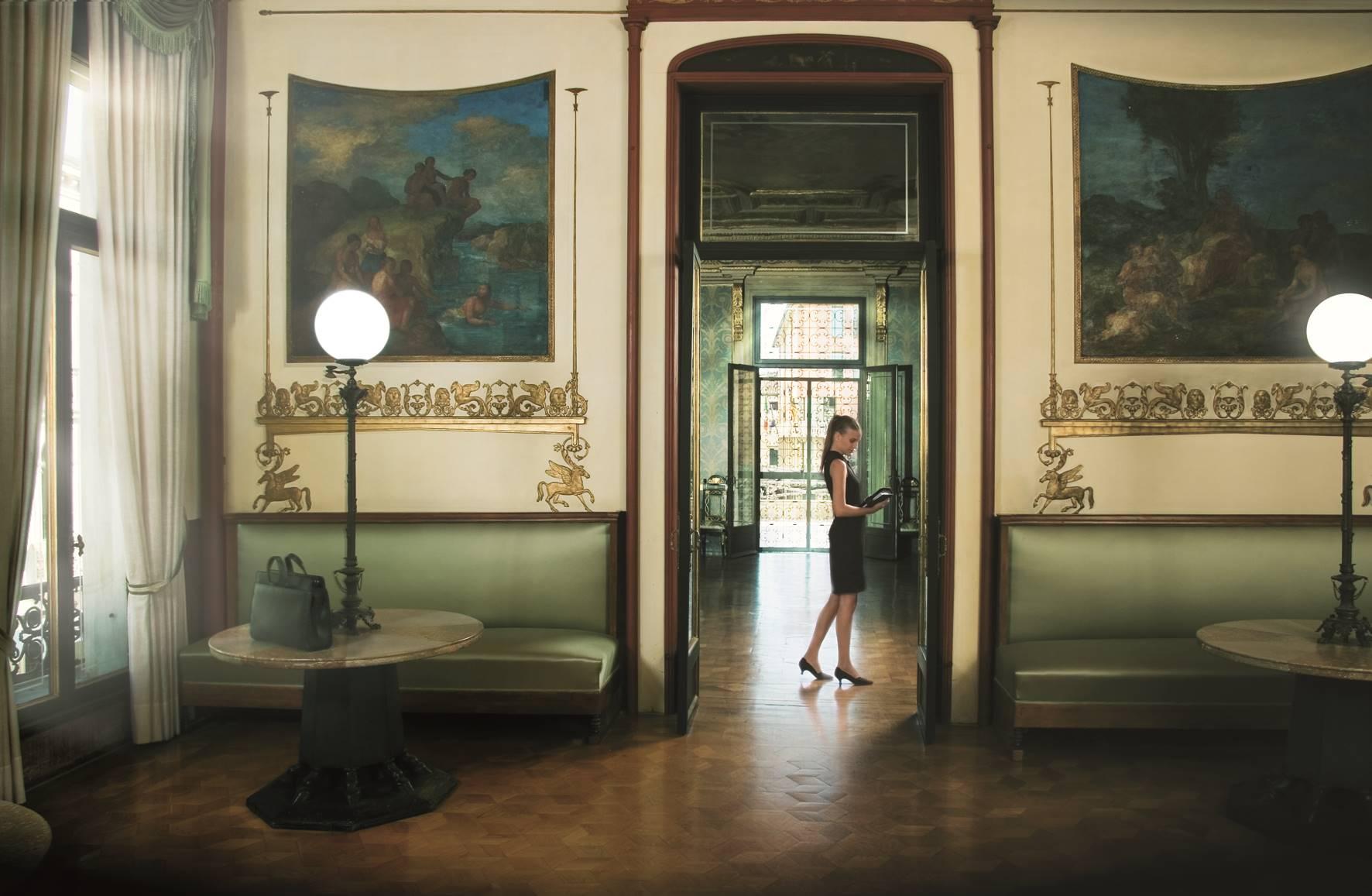
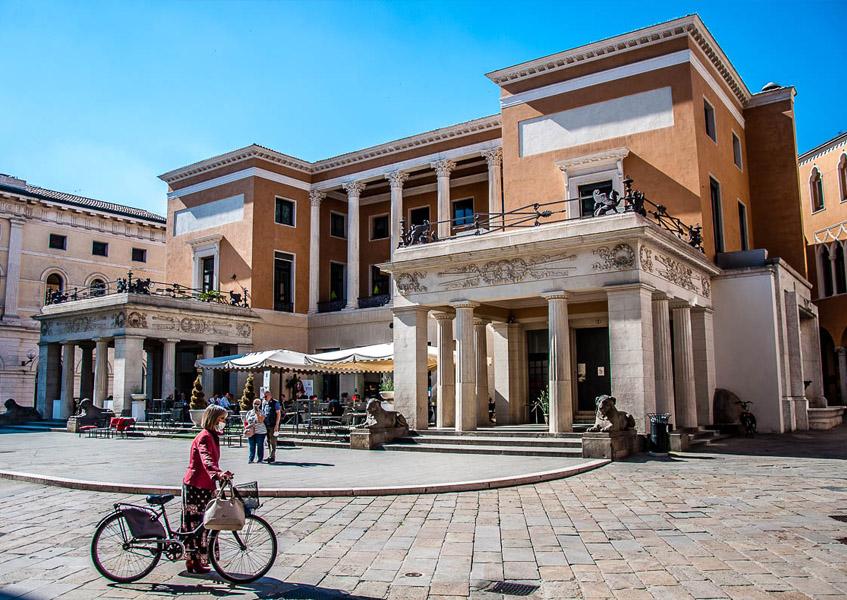
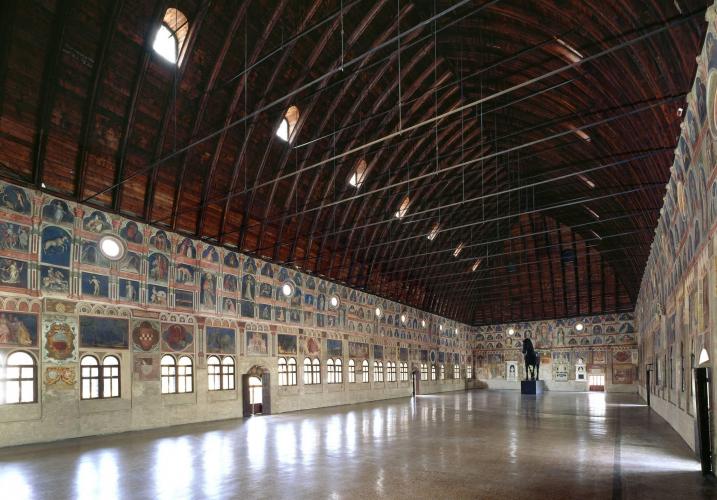
Known simply as Il Salòn, the Palazzo della Ragione formerly housed the city’s courts, and has one of the largest raised rooms in all of Europe. Work upon it began in 1218, and the building is now recognised as one of the most famous civilian structures from the time of the Communes. In the years 1306-1308, the monk Giovanni degli Eremitani transformed the three large rooms within it to make a single hall, also designing the keel-vault roofing (so-called because from inside it looks like an upturned boat).
Giotto and his workshop were then commissioned to decorate the walls with frescoes, which would be destroyed by a fire in 1420. However, working on the basis of studies by Pietro d’Abano, a wealthy scholar of the time, the frescoes were then repainted by the Paduan Nicolò Miretto, working in collaboration with Stefano da Ferrara and other artists. What they created is one of the very few cycles of medieval astrological frescoes to have survived to this day. The relation between the images and the function of the large hall explains the presence of the animal figures, which served as symbols of the various courts that met here. The work of these courts is also reflected in the presence here of: allegorical images of Justice and Law; the depiction of the Commune in Assembly and of the Judgement of Solomon; a fresco which portrays a contemporary trial.
In the large hall you can also see the Pietra del Vituperio [The Stone of Censure], upon which insolvent debtors had to beat their buttocks three times after having removed their clothes. (The practice was at the origin of the Italian expression restare in braghe di tela, which means ‘to be left with nothing’ but whose literal translation is ‘to be left in cheap-cloth drawers’). There is also a large wooden horse which was originally created for a funfair by Annibale Capodilista and then donated to the city by his family.
UNESCO World Heritage List.
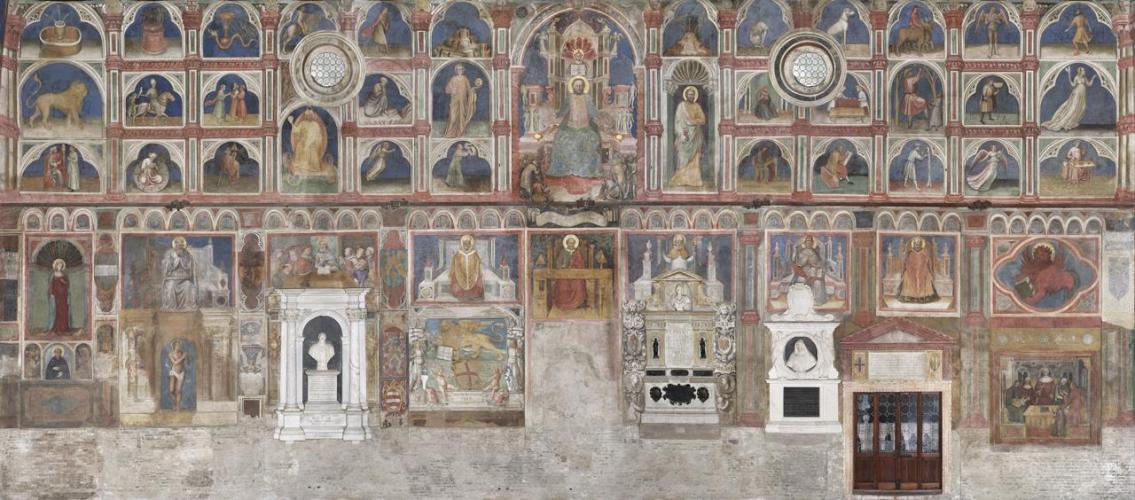
Palazzo della Ragione
Piazza delle Erbe , Padova - 35100
- Contacts
- Opening
- From 2024/12/27 h. 09:00 To 2024/12/31 h. 19:00 - Tuesday, Wednesday, Thursday, Friday, Saturday, Sunday
- From 2024/02/22 h. 09:00 To 2024/12/24 h. 19:00 - Tuesday, Wednesday, Thursday, Friday, Saturday, Sunday
- From 2024/04/01 h. 09:00 h. 19:00 - Monday
- Links
- Download
- Scarica la Guida CAA al Palazzo della Ragione - pdf 4.48MB
TAKE ME HERE: Piazza delle Erbe