
HISTORY
Amongst them the best known was the humanist Pietro Bembo (1517- 1547). In 1562 the Council of Trent abolished the commandries and the Olivetans moved into Villanova. The monastery gradually went back to normality and, thanks to careful management, the many baroque works of art that decorate it were realised. Despite this intense activity, in 1771 the Republic of Venice closed down the monastery. The church, now a parish, was deprived of all its land, the monastery complex, the vast courtyard and even the crypt. In 1927 Father Gaetano Martinelli (1901-1939) reunited the crypt to the church and Father Giuseppe Dalla Tomba (1939-1985) carried on the process of the Abbey's rebirth. Only at the end of the 20th century did the buildings that formed the original monastery complex return to the parish and were restored.
ARCHITECTURE
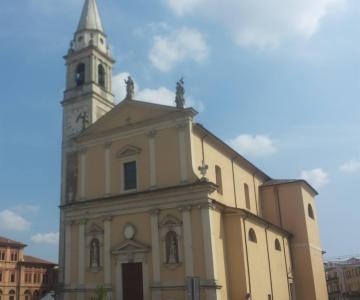
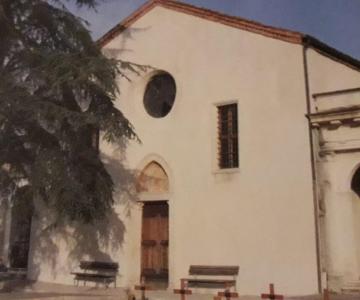
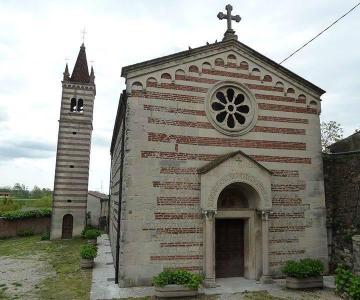
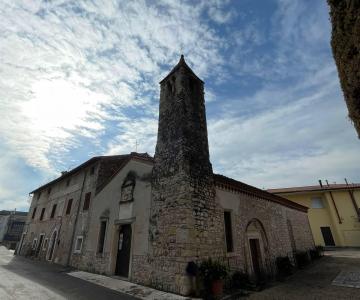
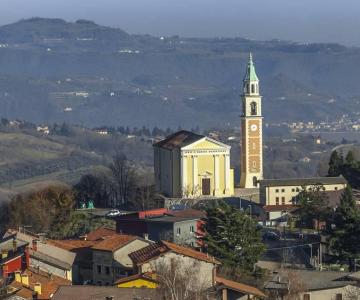
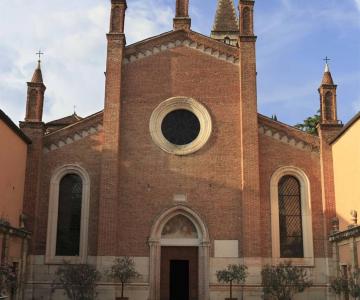
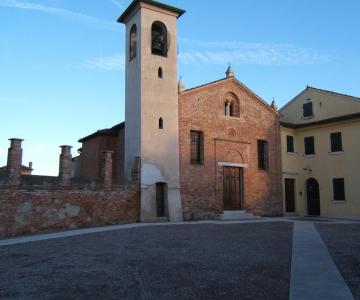
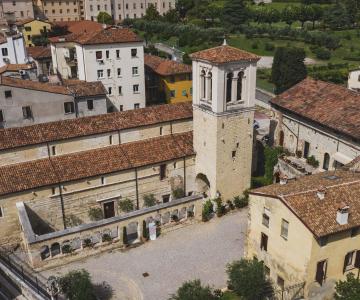
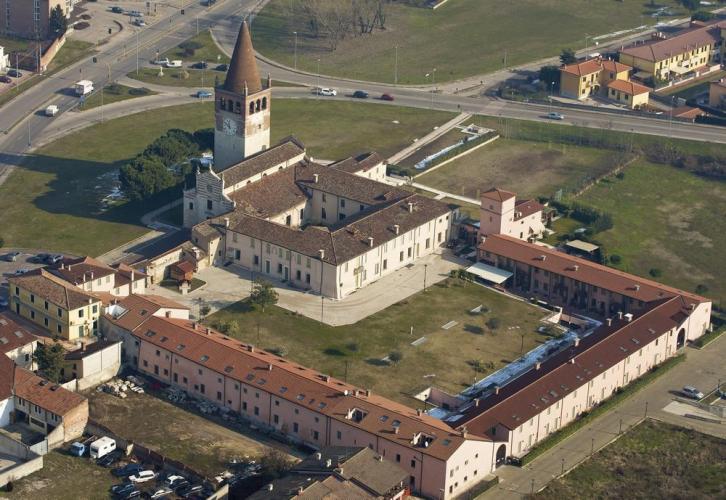
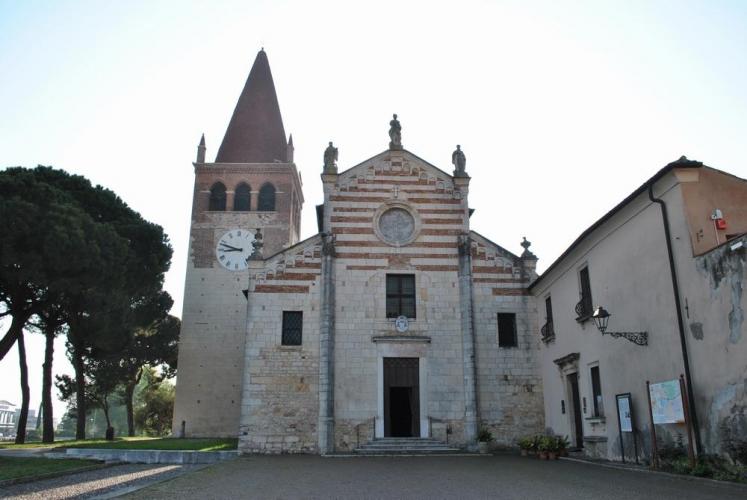
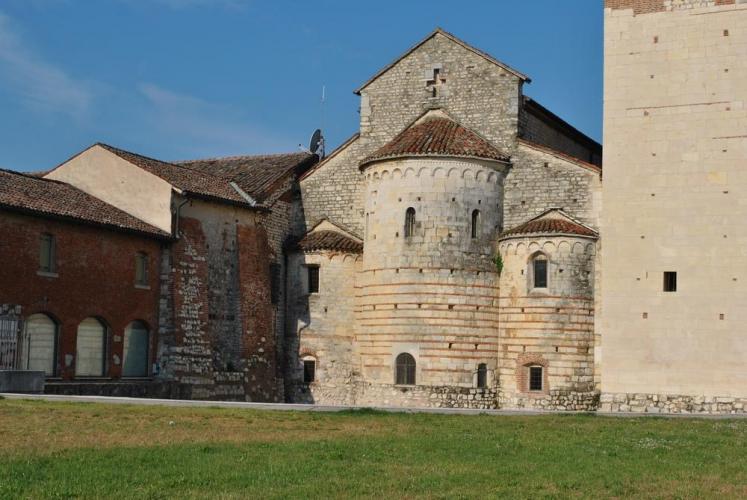
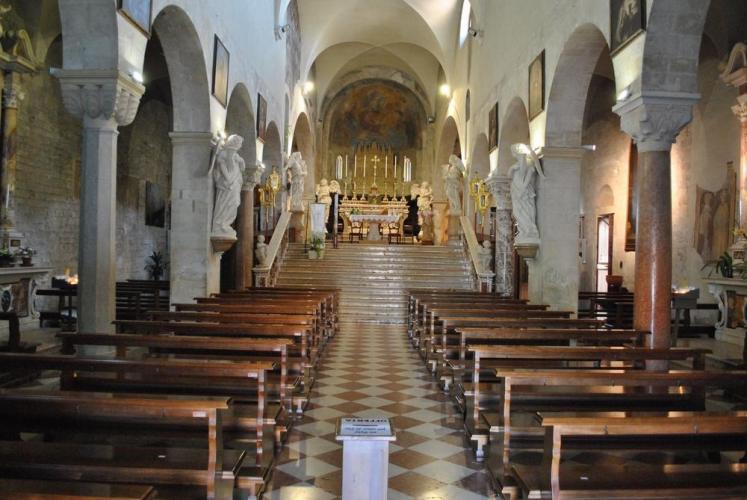
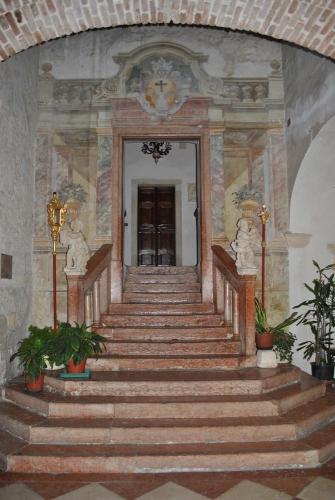
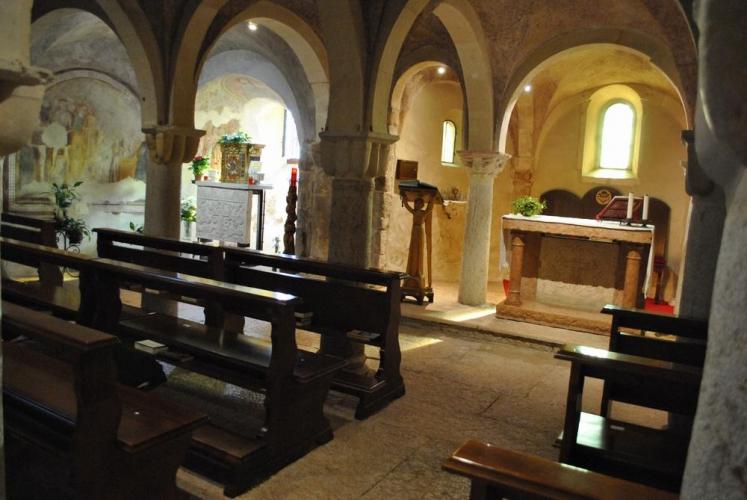
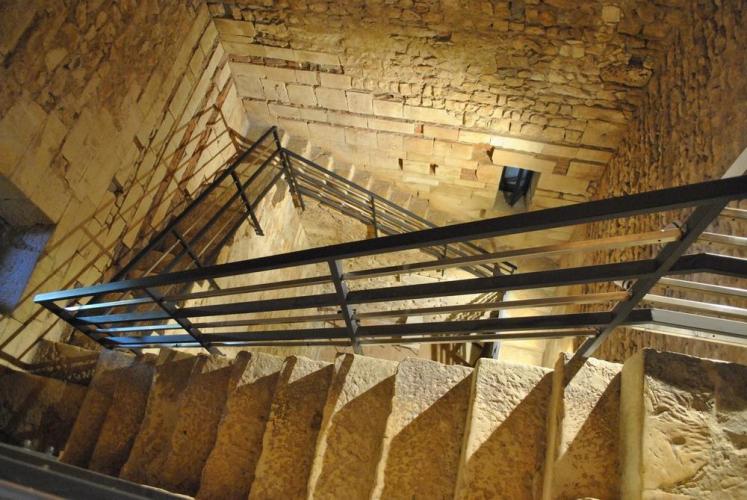
The Abbey of Villanova with its church, the bell tower, the monastery and the courtyard forms a vast complex that for centuries controlled and administered the extensive surrounding land. The current structure is the result of three important building phases: the romanesque phase of the 12th century, the gothic phase of the 15th century and finally the baroque phase of the 17th -18th centuries. The facade of the Abbey of Villanova, which presents the typical stylistic features of the romanesque architecture of Verona, was rebuilt at the beginning of the 12th century after the earthquake of 1117. Above the portal are still visible the traces of a suspended porch, typical of all romanesque churches in Verona. The apsis area is fascinating; the three romanesque apsides show different manufacturing styles that bear witness to the subsequent renovations. The bell tower is very sturdy, each side of the base measures 8,7 metres and the walls are as thick as 2,5 metres with a total height of 40 metres. Only the base can be dated back to the romanesque period (1149). This was built with square blocks of stone and, around the 15th century, was completed with the current belfry. The interior of the church maintains the original romanesque structure that comprises of three naves with alternating square and round columns. The level where the chancel is found is much higher than the common people's part; the former can be accessed through the 18th century monumental staircase. Towards the end of the 17th century the church was enriched with baroque additions such as three altars, the staircase and eight statues of angels. Also the naves were covered by rib vaulting. The evocative crypt is completely romanesque and, held by slender columns and rib vaults, is without doubt one of the most interesting in the Verona area. Of the ancient monastery only the early benedictine structure remains which is characterized by rooms open towards the ambulatory that encircles the cloister.