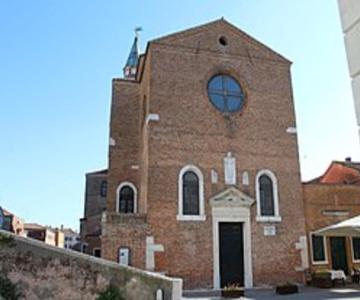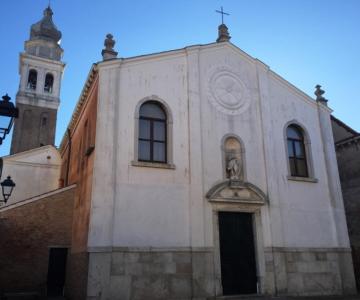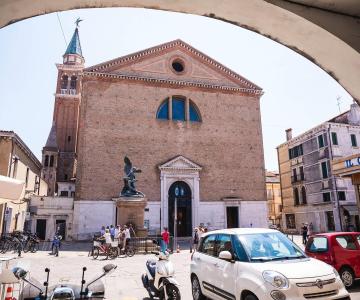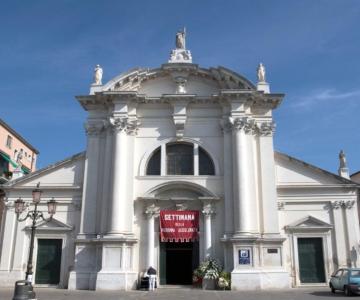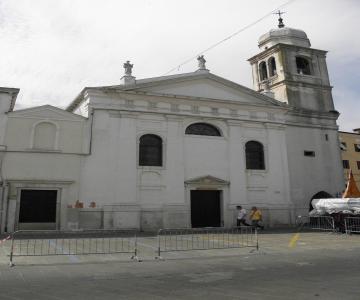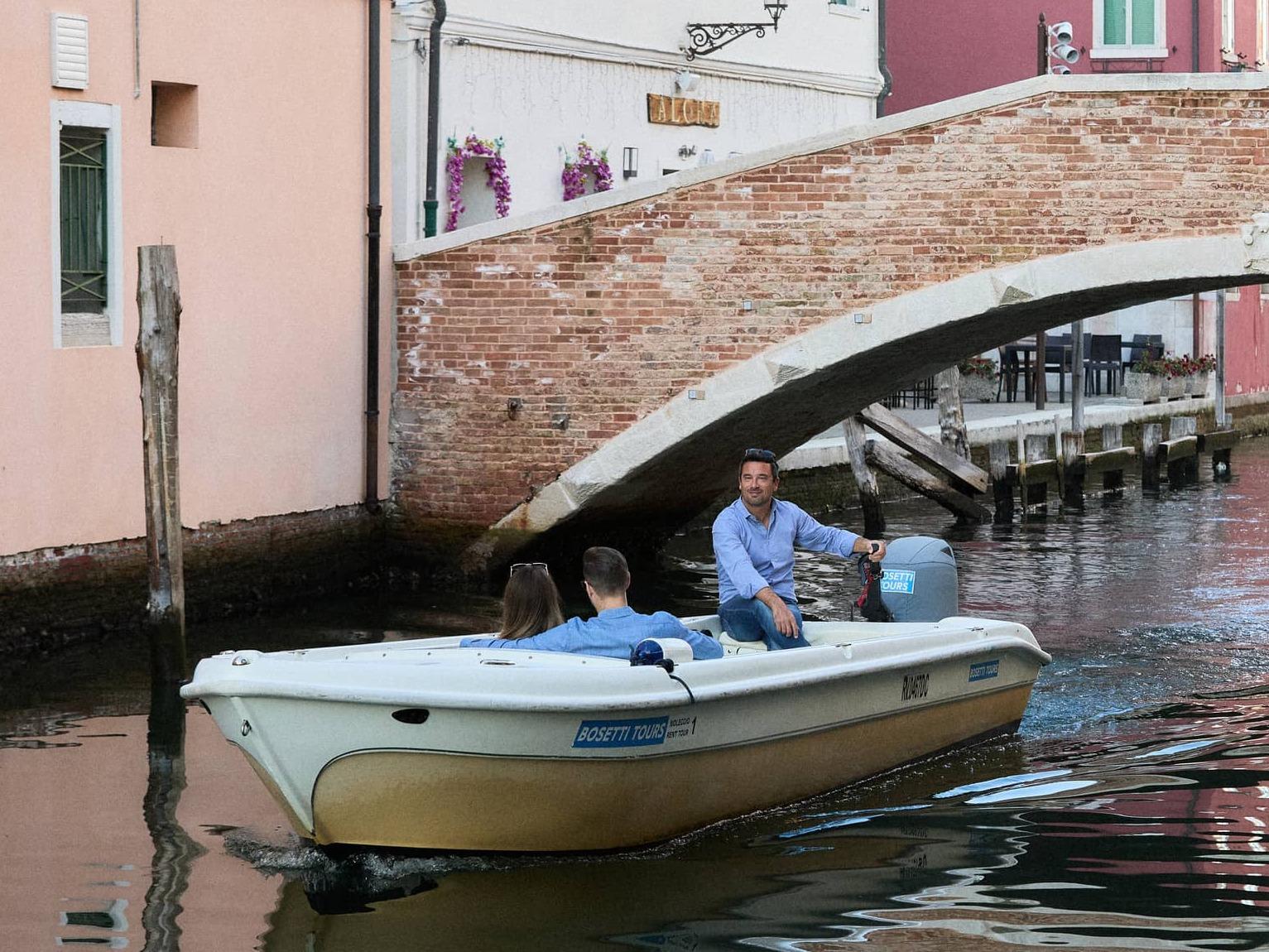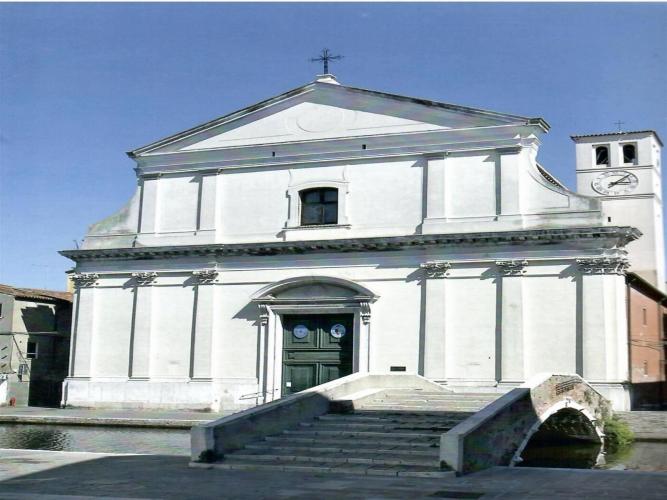
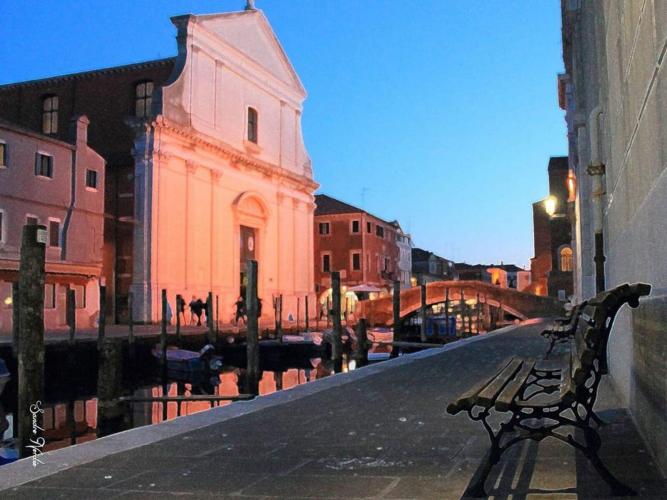

On the other side of the bridge, overlooking the Vena bank, is the white facade of the Filippini church, the last great religious undertaking during the period of the Venetian Republic. It was built, on the design of Tommaso Temanza, by Giuseppe Canner between 1768 and 1772 in the typical 18th century style of the Filippini oratorios, thanks to the generosity of the aristocrat Ludovico Alvise Manin, who was greatly attached to the city of which he had been mayor in 1720-21.
- The large ceiling fresco illustrates La Vergine venerata da San Filippo Neri mentre i Padri Modonese e Gastadelli presentano al Conte Ludovico Manin il progetto di edificazione della chiesa, and is one of the finest works by the Venetian artist Giacomo Casa; it was painted in record time in 14 days in May 1865.
- The same artist is responsible for the lunettes of the side altars with images of the Four Evangelists.
- Above the entrance is a canvas of the Lavanda dei piedi by the Veronese artist Pace Pace, and dates from about 1600; it came from the Santa Croce church in Venice.
- The centre of the Chapel of Visitation, after the altar with reliquaries, there is an altarpiece illustrating the Visita di Maria a Santa Elisabetta by Francesco Fontebasso (1772). The luxurious Art Nouveau decoration of the walls and vault, with episodes from the Vita della Vergine, is by the Venetian Giuseppe Cherubini (1913).
The church hosts the mortal remains of Padre Raimondo Calcagno who devots his life to the educations of guys.