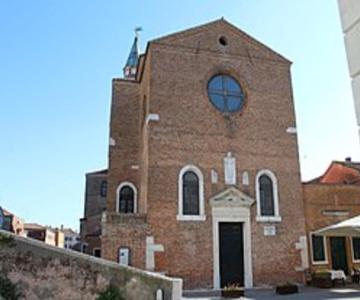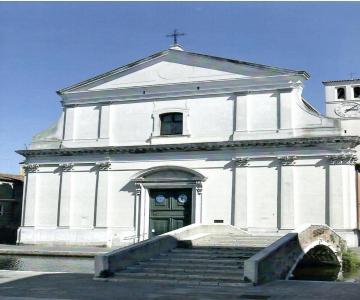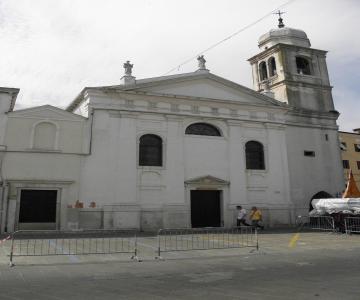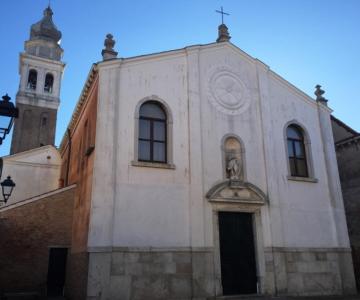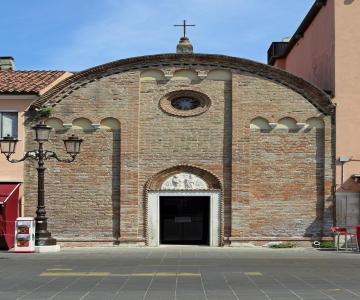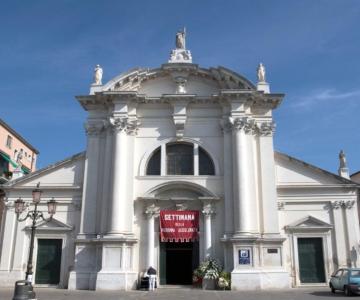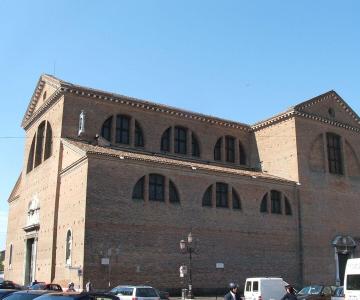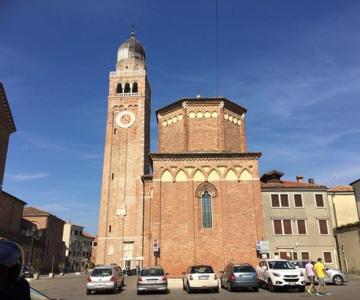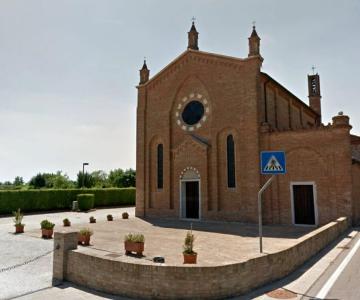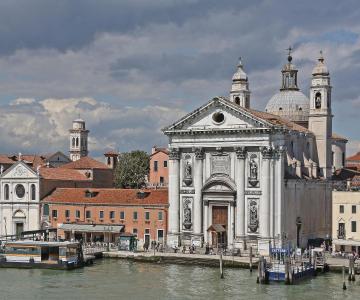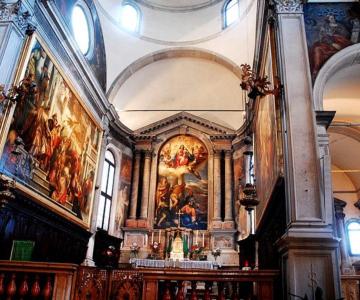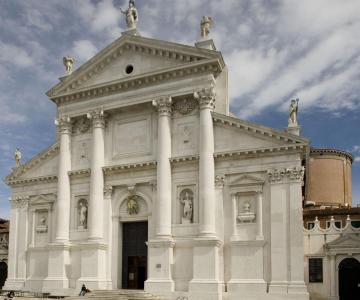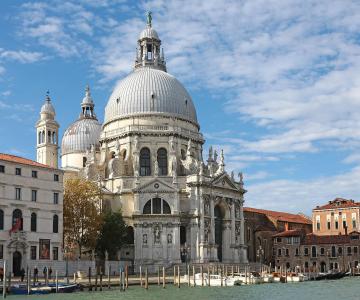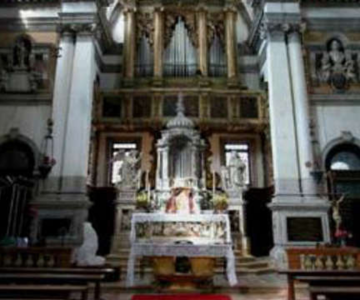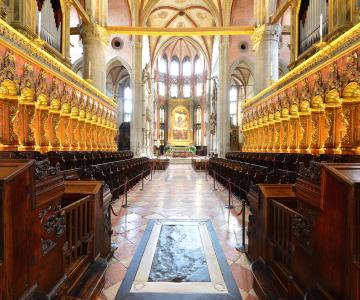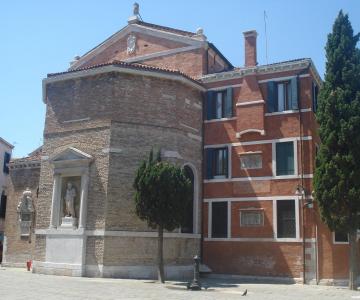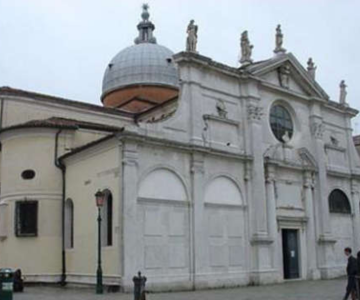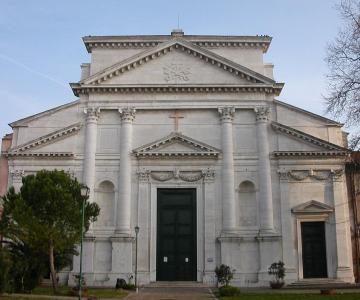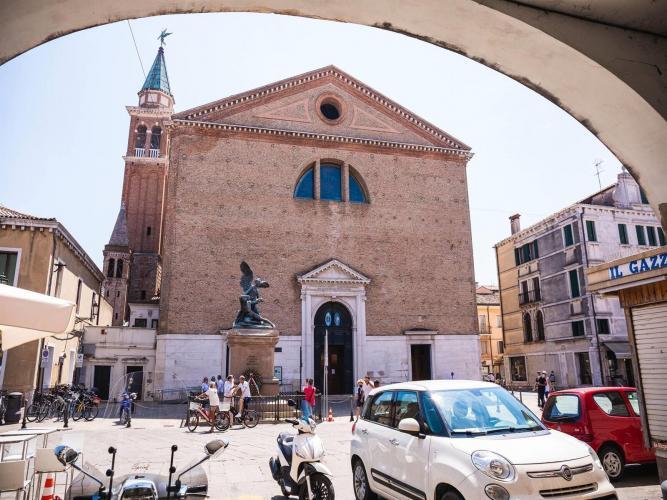


The construction works of the imposing Church of San Giacomo Apostolo began from the second half of the 18th century. The project was designed by Pietro Pelli and finished by his nephew Domenico Pelli. At that time, they opted for a single nave, instead of the three low columns naves of the ancient Romanesque building. In 1790, the church was consecrated and in 1906 it was elevated to basilica. In 1806, it became the shelter of the relics of the Apparition of the Virgin Mary in Sottomarina: the icon "Madonna di Marina”, the piece of wood where she sat, and the silver ex-votos. In 1508 the Blessed Virgin appeared to the farmer Baldassarre Zalon on the beach of Sottomarina. According to the legend, the Virgin Mary, dressed in a black mantle, held in her arms the body of Jesus exhausted by the several sins of the people of Chioggia, and told the farmer that if the citizens would not have repented of their sins, she could not stop the fury of God as a punishment. In some documents, the icon is called “Madonna della Navicella”, because the Virgin Mary disappeared getting aboard a little boat. The icon is kept in the rich high altar.
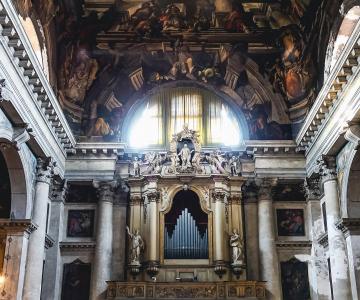
The church houses several remarkable works of art too. On the right side, for example, there is the altarpiece of “Santi Rocco e Sebastiano”, reassembled, perhaps, by Marinetti with the beautiful figures of San Sebastiano and San Rocco, attributed to Giovanni Busi, known as Cariani. At the centre of this altarpiece, dominates a frame fragment of a 16th century fresco with the Volto della Madonna, which was once in the chapel next to the ancient Palazzo Granaio. Another very important and precious work is the big fresco on the ceiling of 223 square meters, which represents “Il Martirio di San Giacomo Apostolo” painted by Mauri brothers and Antonio Marinetti at the end of the 18th century.