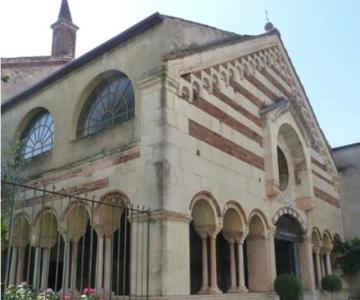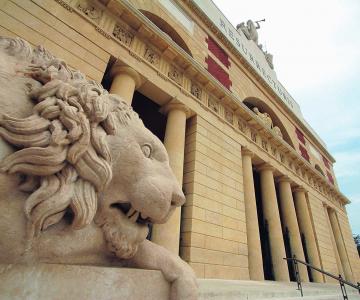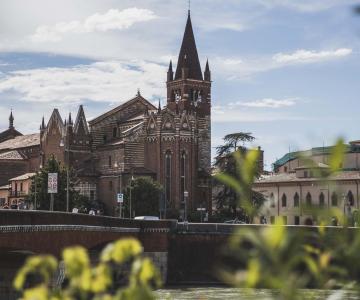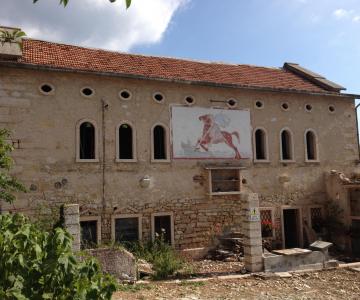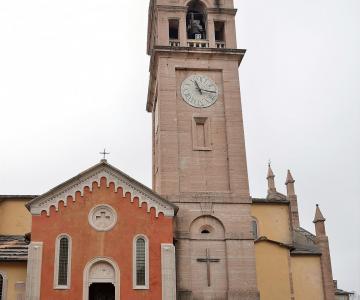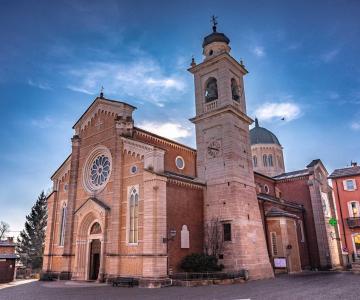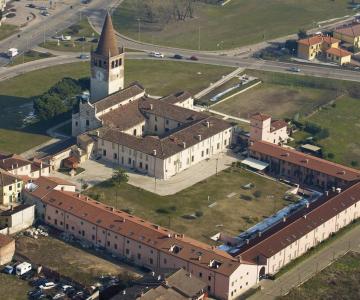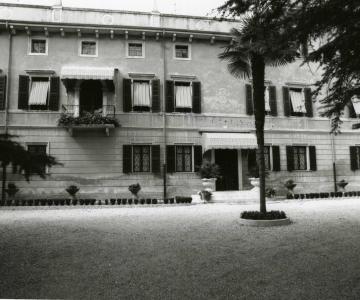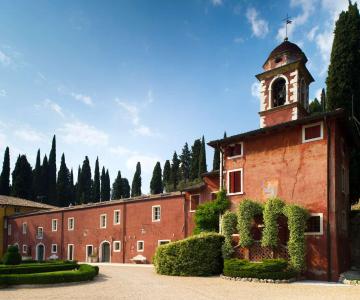

The convent complex of S. Francesco al Corso dates back to the 13th century. The primitive church of San Francesco al Corso was in fact erected in 1230, and together with the adjoining monastery it accommodated a community of monastic Franciscans.
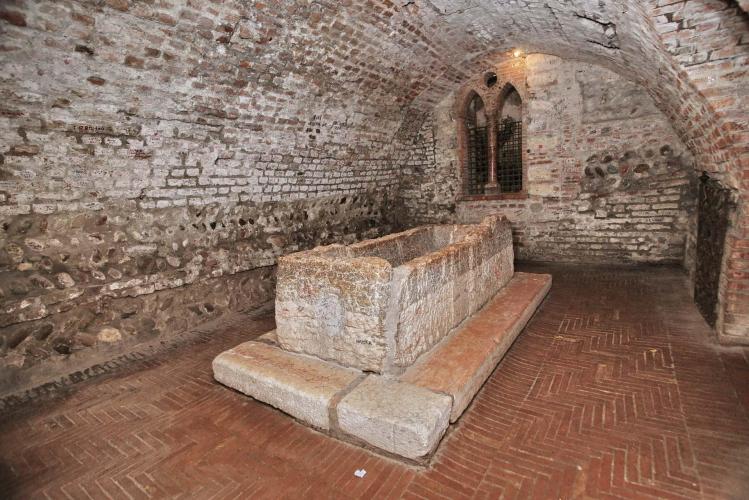
In 1935 Antonio Avena, then Director of the Civic Museums, opened to the public the so-called "Juliet's Tomb", the place where the ark had been placed, which according to the legend received Juliet's body, making it a tourist attraction.
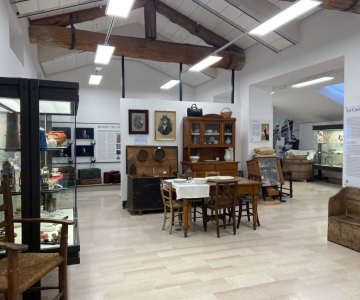
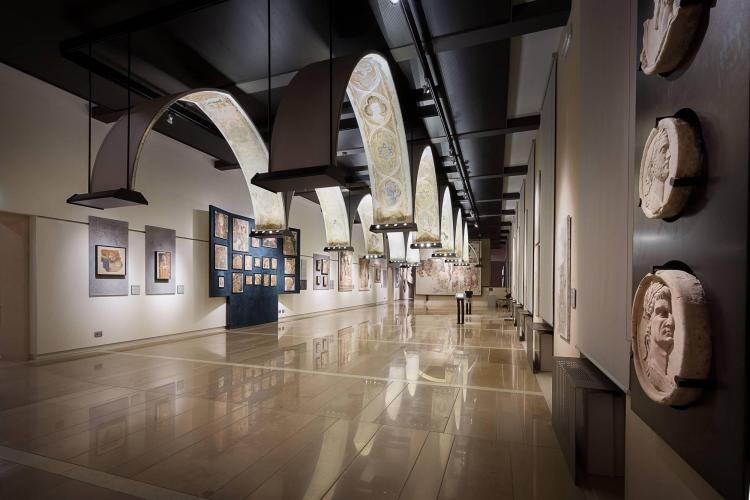
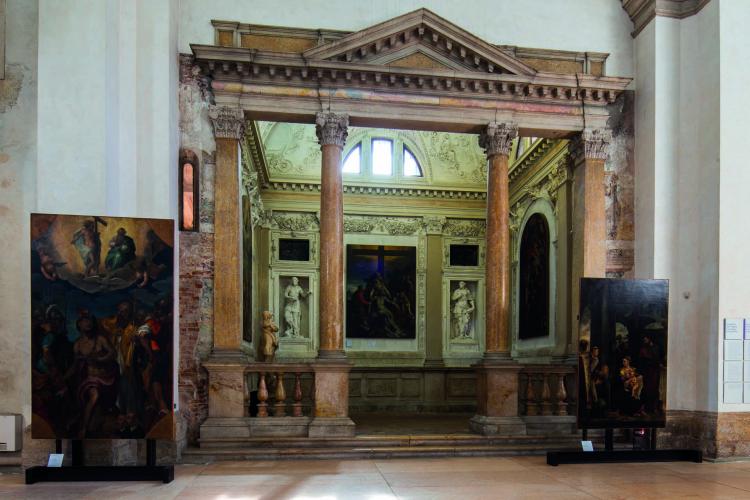
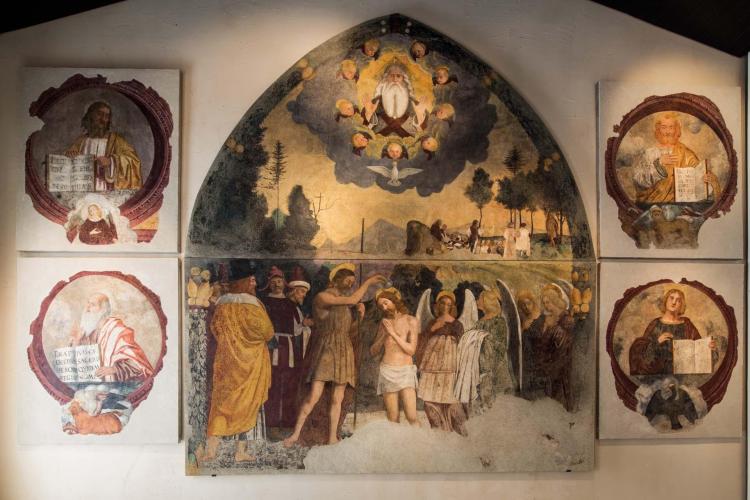
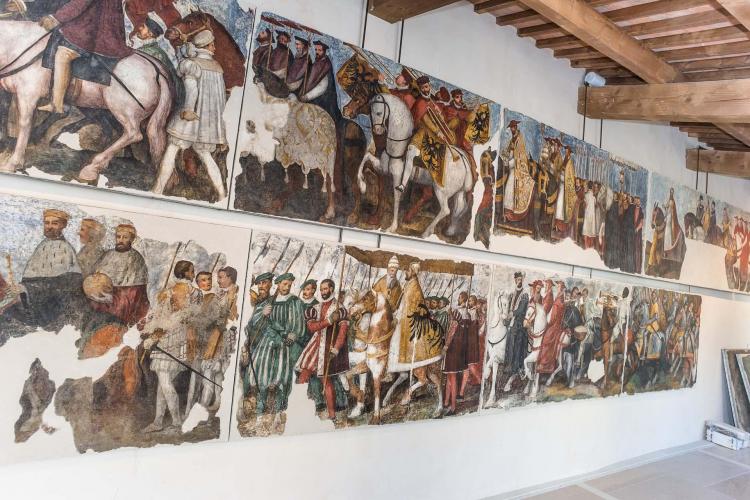
In the annexed Museum of Frescoes "G.B. Cavalcaselle "(inaugurated in 1973) are exhibited cycles of frescoes from Veronese buildings from the Middle Ages to the 16th century and 19th century sculptures, while the church of S. Francesco houses large canvas works from the 16th to the 18th century.
The Guarienti room contains the reconstruction of an interior of a 16th century Veronese palace, the Guarienti ai Filippini palace, in which the frescoes that decorated the walls have been placed in their original arrangement. The subject of this pictorial cycle has not yet been fully clarified, although it is possible to recognize some mythological or allegorical figures: Mercury with the caduceus, Venus with two cupids, Diana the huntress, the allegory of Fame with a trumpet, portrayals of river divinities and of water nymphs.
The presence on the over-doors of female figures with musical instruments has lead to the assumption that this was a music room. Of great interest is also the decorative partition: Ionic columns coupled and seen in perspective delimit a short porch, beyond which vast landscapes with bright skies appear. The room is conceived as a loggia opening towards the exterior, where there is an alternation of real openings - the doors, the windows - and painted openings with an illusionistic effect, on the model of the Room of Perspectives by Baldassarre Peruzzi in the Farnesina Palace in Rome.
The frescoes that approximately date back to 1560 are a rather early work of Paolo Farinati, who was one of the protagonists of Veronese painting of the 16th century, particularly appreciated for his large fresco decorations. The fireplace is a more ancient construction, probably built at the end of the previous century, and it has been placed here in replacement of the original fireplace which had not been preserved.
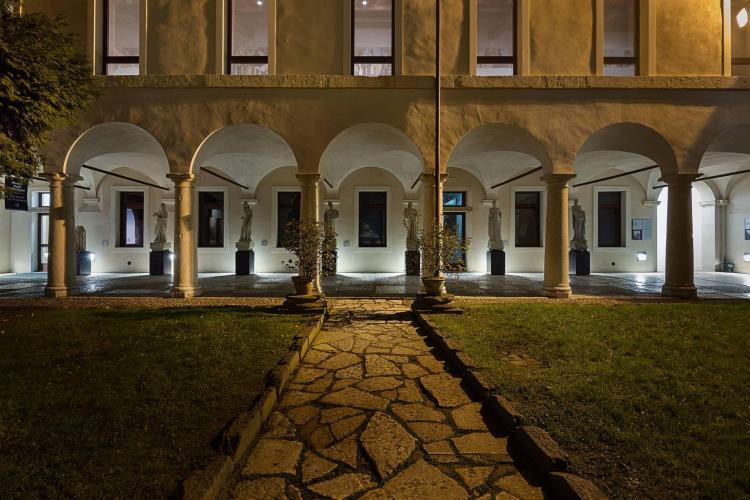
On the ground floor there is the large hall Sala Giacomo Galtarossa, named after the greatest patron of Verona's museums of the second half of the 20th century and first president of the association "Amici dei Musei Civici di Verona". Outside the hall in the cloister, to welcome the visitor, there are six statues, representing the Virtues and the cities of Verona and Vicenza, from the enclosure of the Arche Scaligere, inserted in order to bring them together and to create an ideal dialogue with the fourteenth-century pieces on display in the upper rooms of the museum.
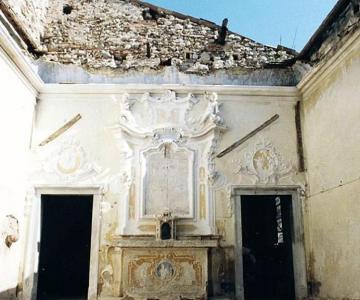
In the crypt of the convent is placed the sarcophagus that according to tradition kept Juliet's body. In the basement there is a deposit of Roman amphorae from the 1st century AD found in excavations in the area. In the courtyard, moreover, medieval and modern stone material (architectural and sculptural) is deposited with a view to the preparation of a lapidary.
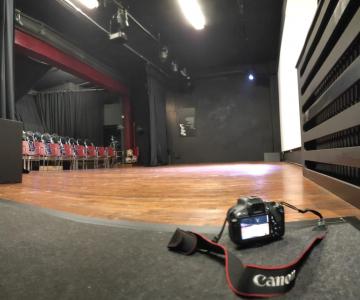
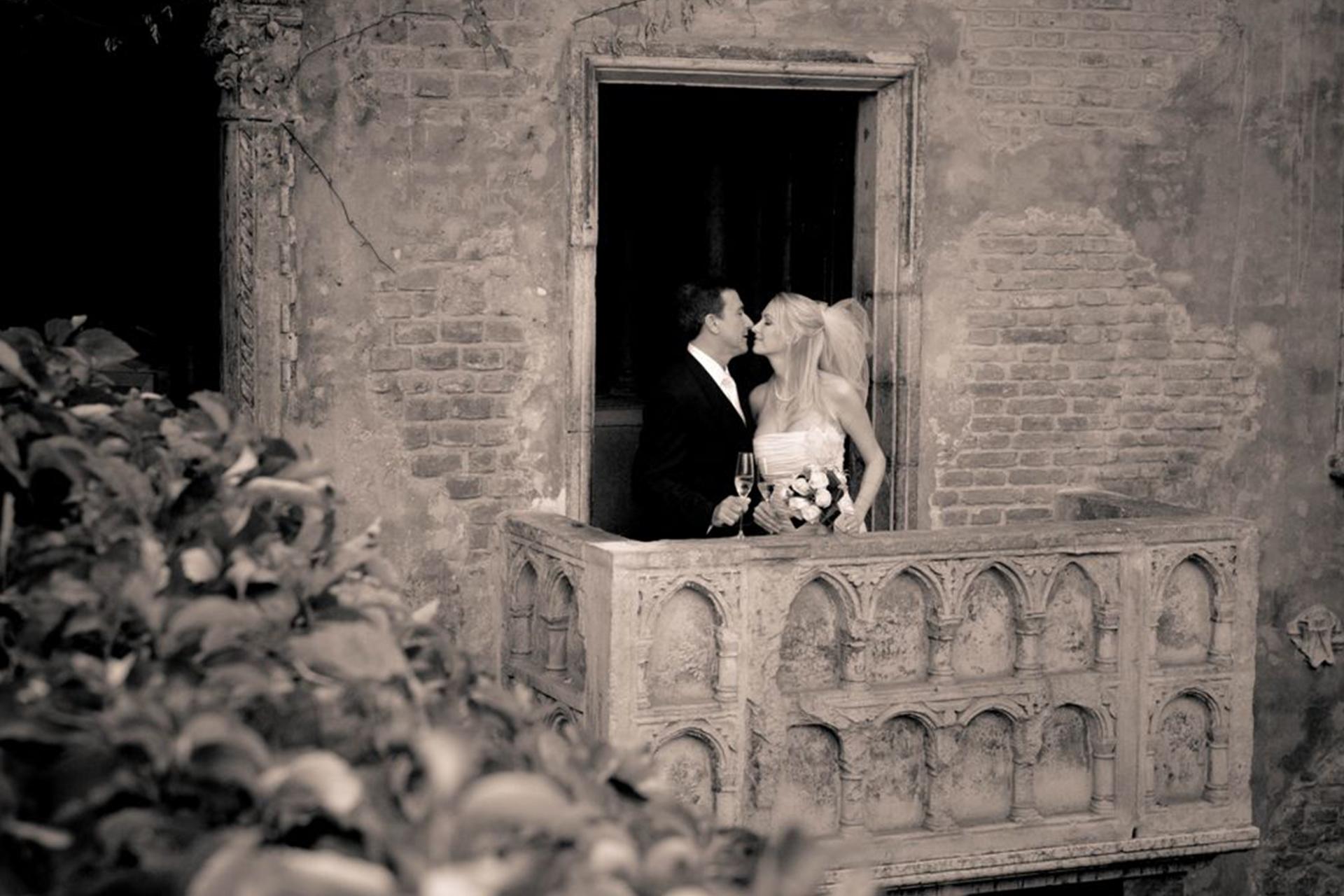
The Hall Sala delle Muse da Casa Guarienti can also host wedding ceremonies (for a maximum of 60 minutes). The reservation made refers exclusively to the room chosen for the indicated time. The access route to the hall is defined due to the concomitance of events and manifestations and may be subject to changes even at the last moment.
FAQ
Can I visit both the Tomb of Juliet and the Fresco Museum with a single ticket?
The entrance ticket is unique, including the access to both the tomb and the museum.
What was the function of the building that currently houses the Fresco Museum?
The building housed a convent, dedicated to San Francesco al Corso.
Are private celebrations possible at Juliet's Tomb?
The city of Verona offers two rooms of the museum for the celebration of weddings.
Is the monument accessible to people with disabilities?
The museum is completely accessible, equipped with an elevator also for the disabled. The tomb is not accessible due to the presence of stairs.
Is it possible to access to the monument with animals?
It is possible to access the monument only with small dogs only inside special bags (pet carrier). Guide dogs for the visually impaired, assistance dogs for the disabled and alert dogs (diabetes, epilepsy, etc.) are always allowed. Dogs are not allowed in the case of guided tours; coffee breaks; set-ups; in the case of special temporary exhibitions that require special maintenance; if female, during the period of estrum and in pregnancy and in case of illness. To know the complete requirements for admission to the monument and the responsibilities of those who visit the museum with their dog, we invite you to take a look at the complete pet policy attached.