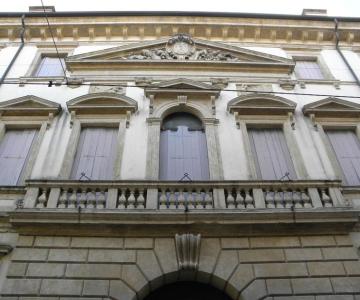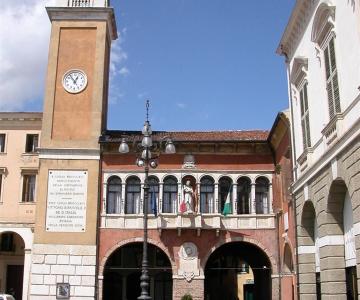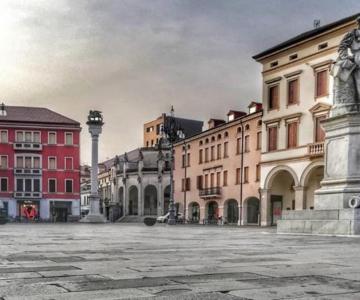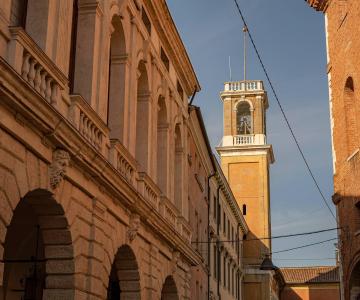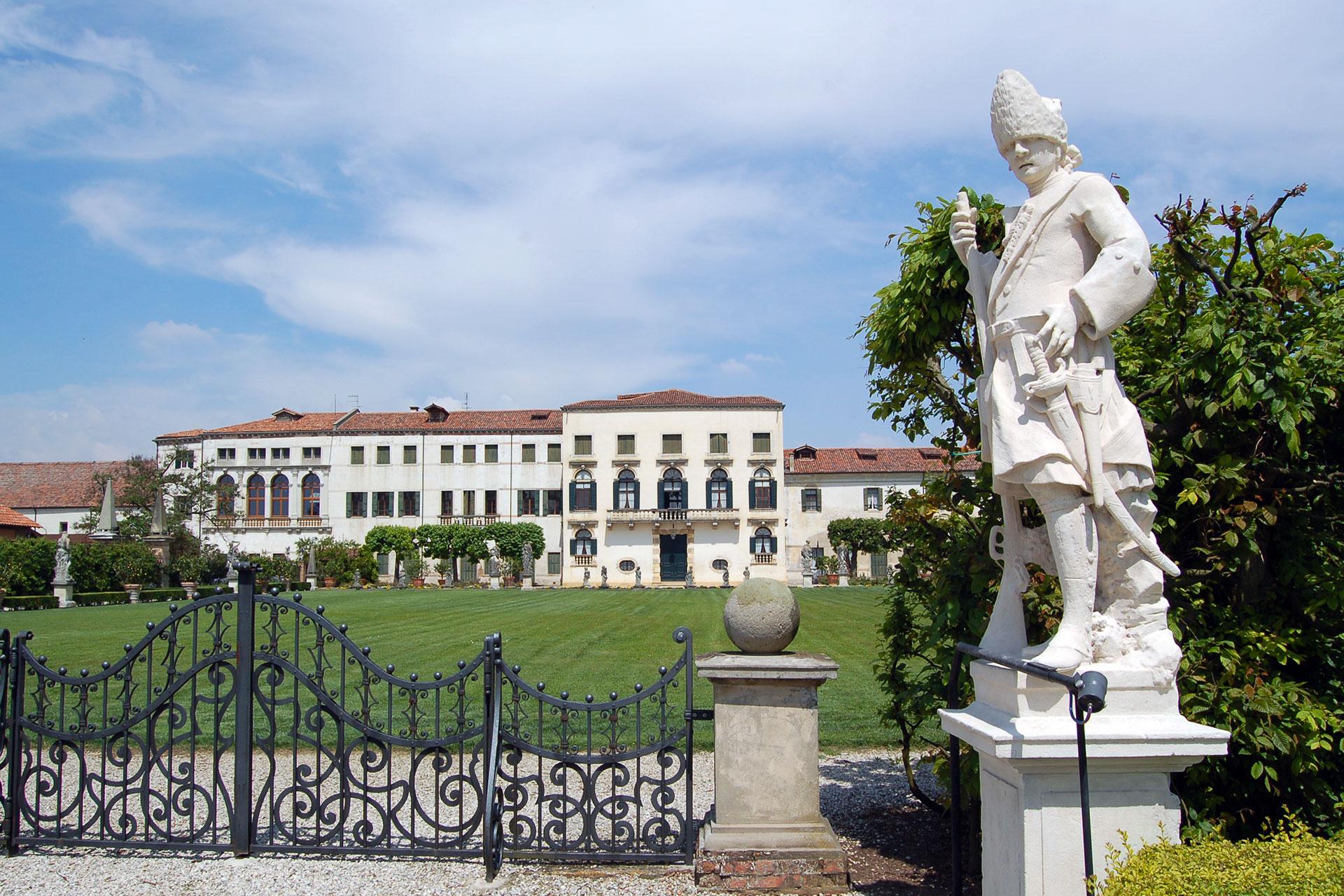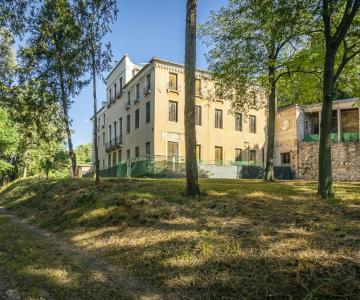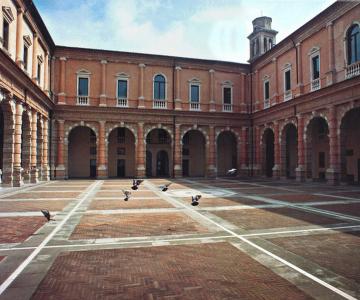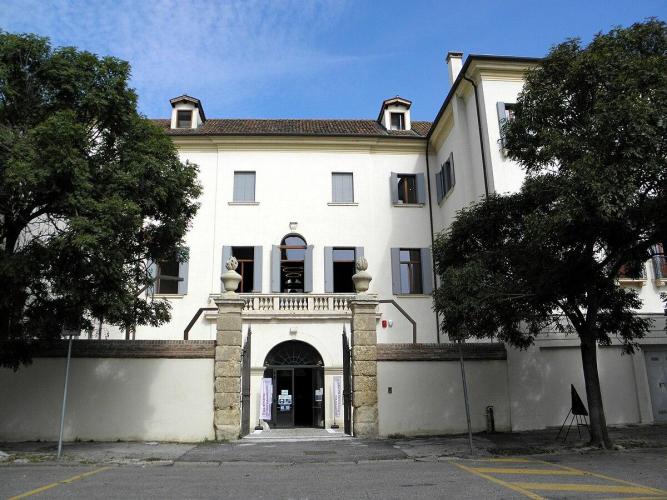

Palazzo Angeli is an elegant noble palace located in the historical center of Rovigo, built around 1780 during a period of great architectural fervor for the city. It was commissioned by Count Giovanni Battista Angeli to the Veronese architect Francesco Schiavi, who signed his most important work with this building. The palace stood in the ancient district of San Rocco, now almost disappeared, and overlooked the Adigetto, a canal that was lively at the time, now buried and replaced by the modern Corso del Popolo.
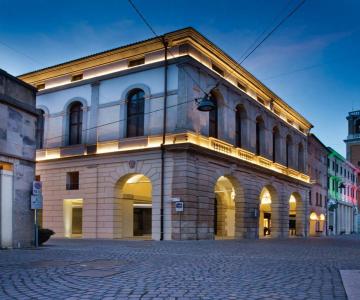
Constructed in neoclassical style, Palazzo Angeli stands out for its harmonious façade, decorated in the tympanum with the coat of arms of the Angeli family surrounded by war instruments. Inside, valuable frescoes by the Venetian painter Giovanni Battista Canal, nephew of Canaletto, are preserved, illustrating episodes from the Jerusalem Delivered and mythological scenes, accompanied by refined stuccoes by Basilio Serena. On the monumental staircase, there are statues of Concordia and the Genius of the Arts of Design, a work by the Veronese Gaetano Muttoni from 1785.
The palace has hosted important historical figures, including the last podestà of Rovigo, Nicolò Venier, and illustrious personalities such as Francesco Giuseppe I of Austria, Giuseppe Garibaldi, and Umberto of Savoy. In 1876, the last heir donated the palace to the Municipality, which allocated it for multiple uses: from a high school, to public offices and institutional residences. Since 2019, an important restoration has begun that has transformed Palazzo Angeli into the headquarters of the Faculty of Law at the University of Ferrara, with the aim of enhancing this historical jewel of the city.