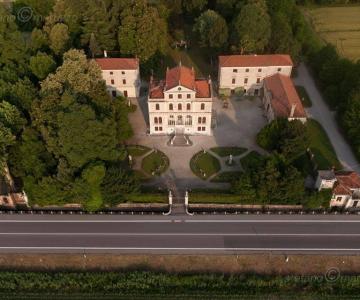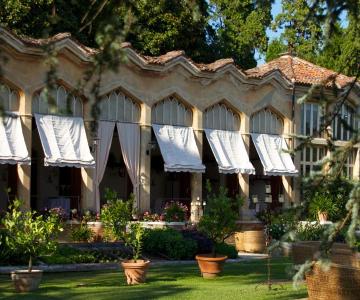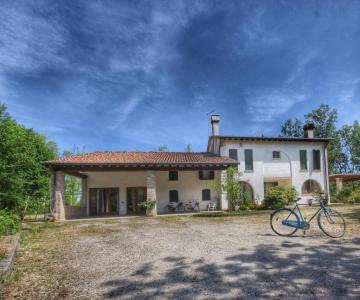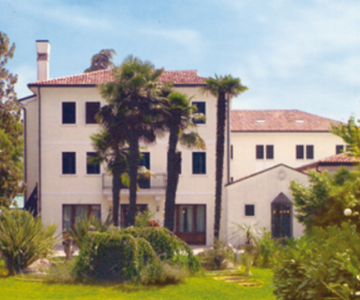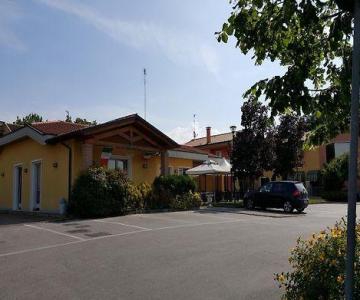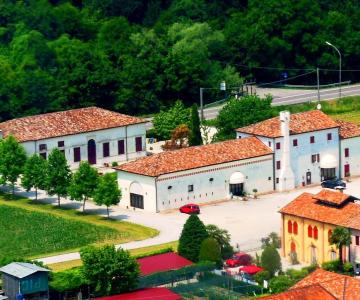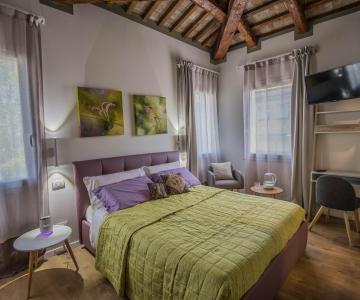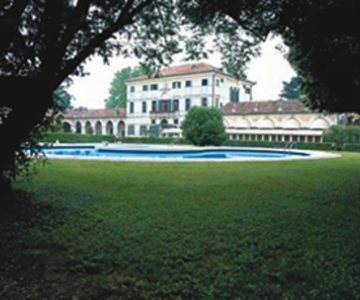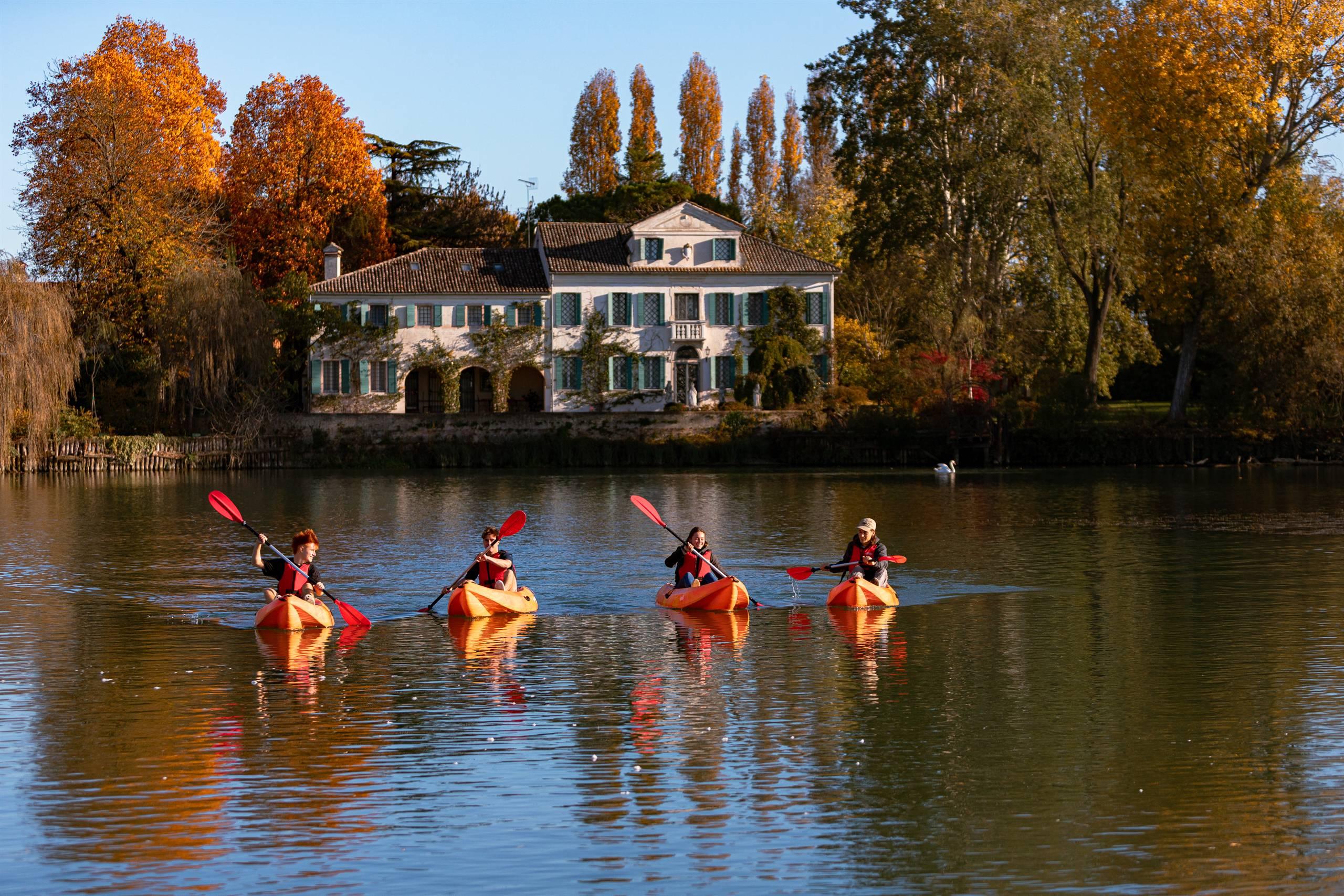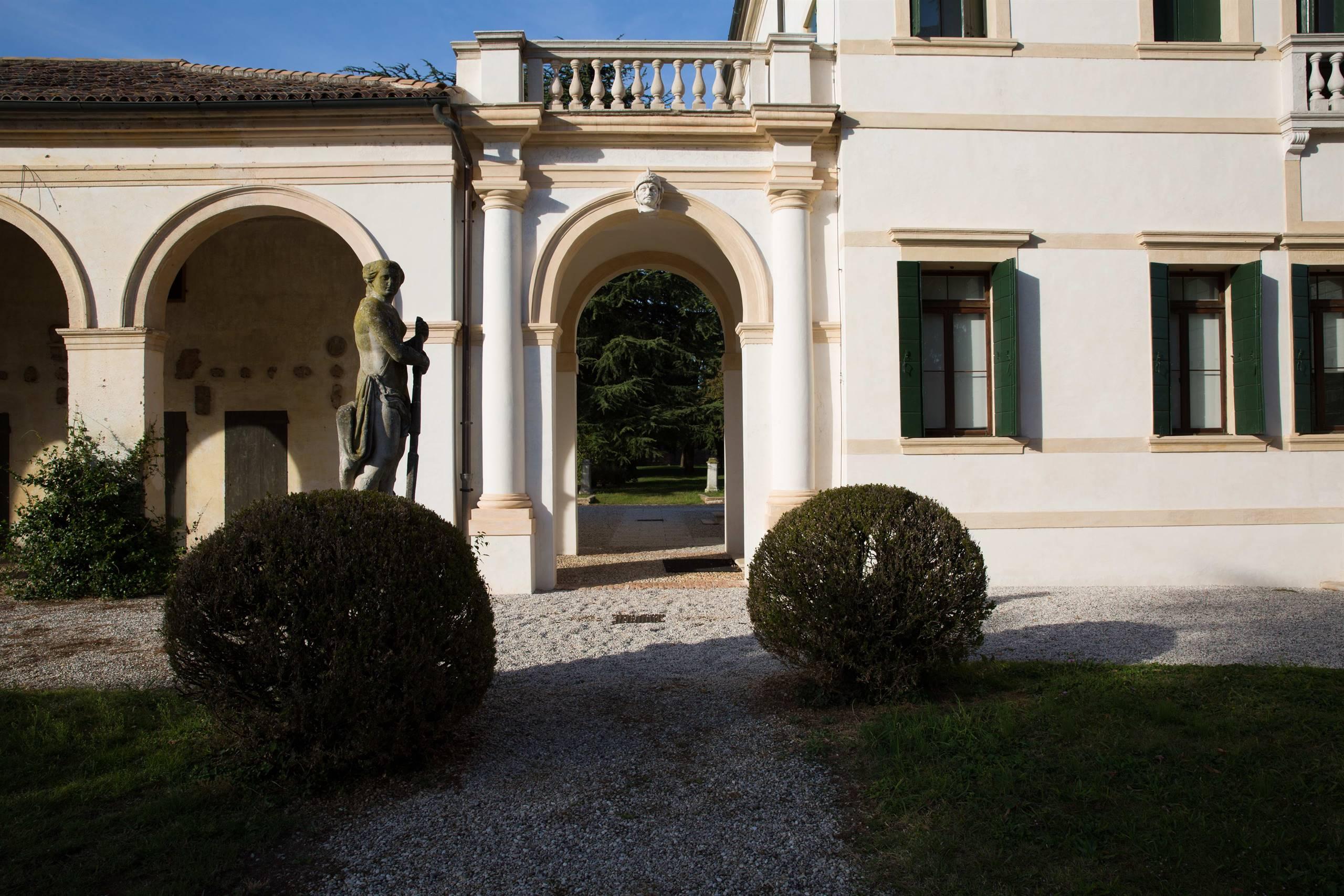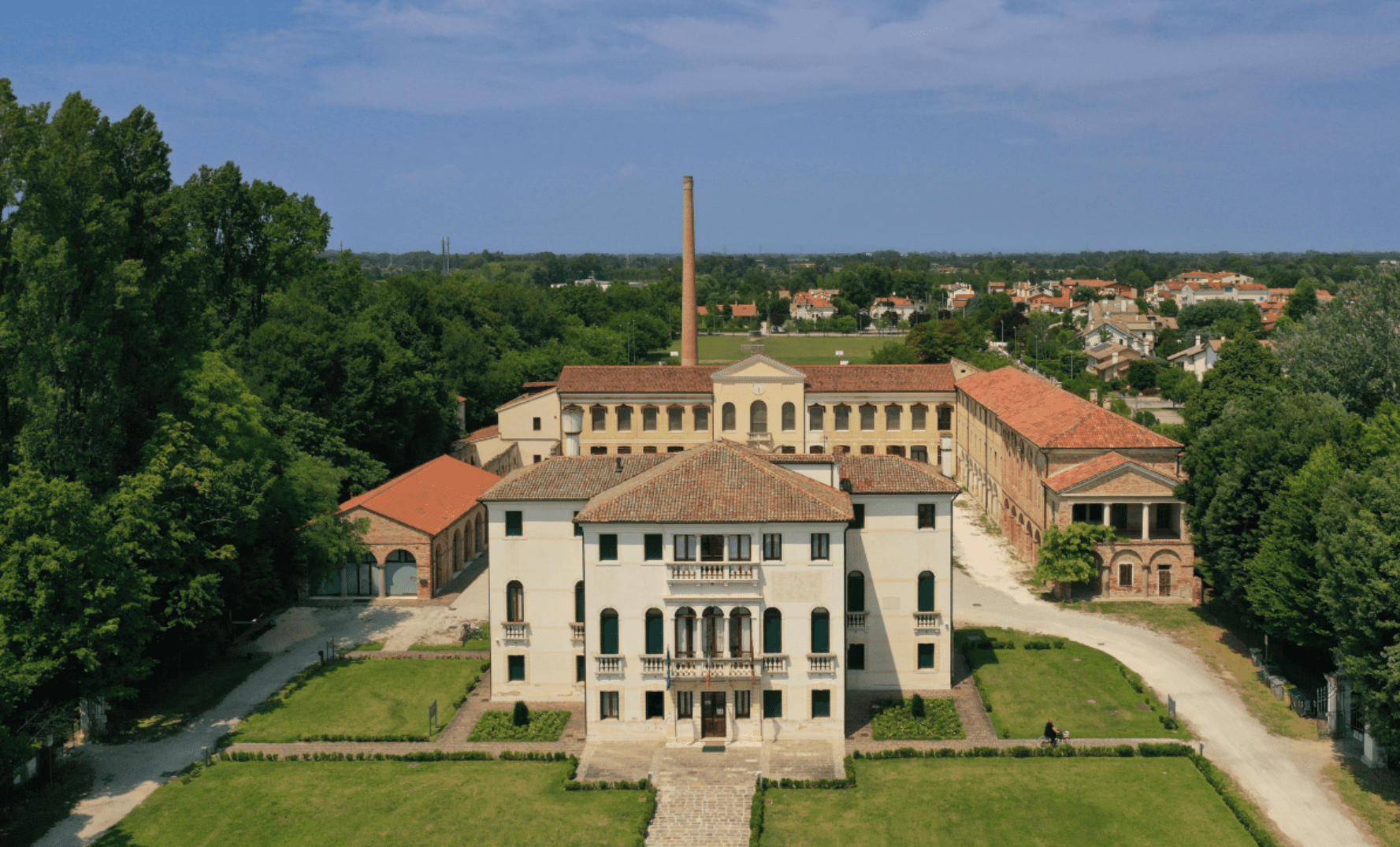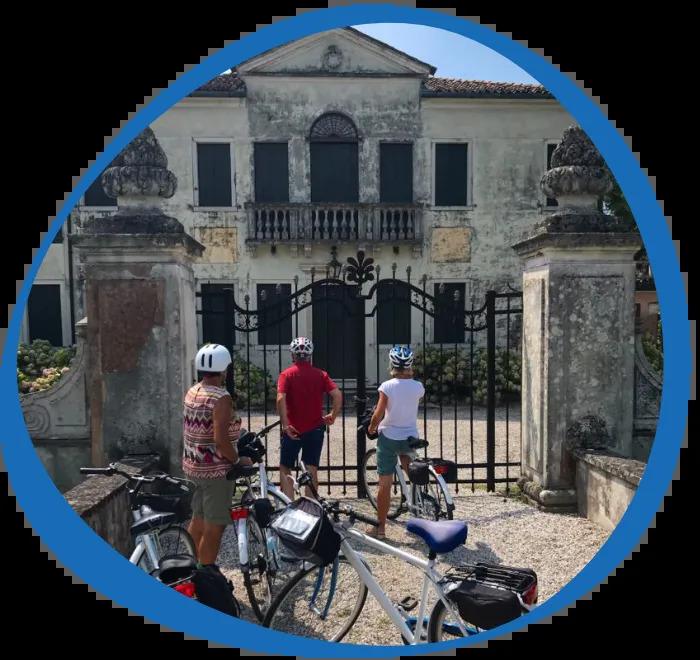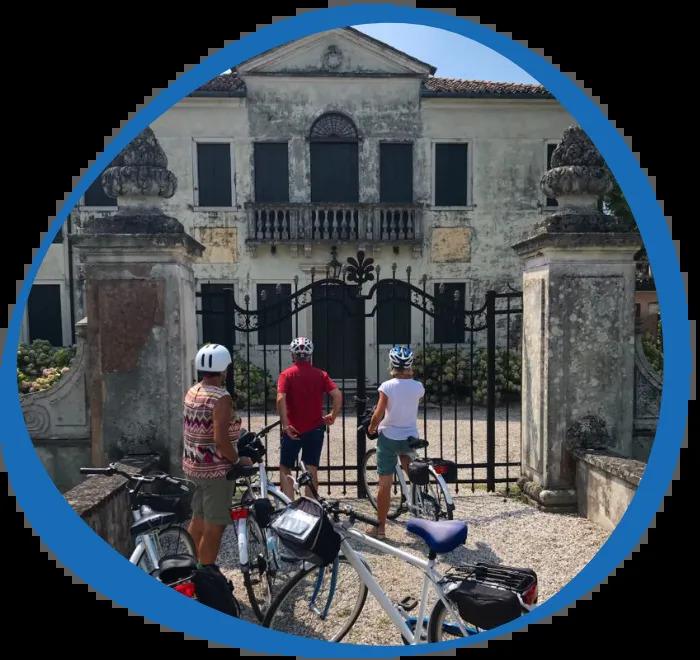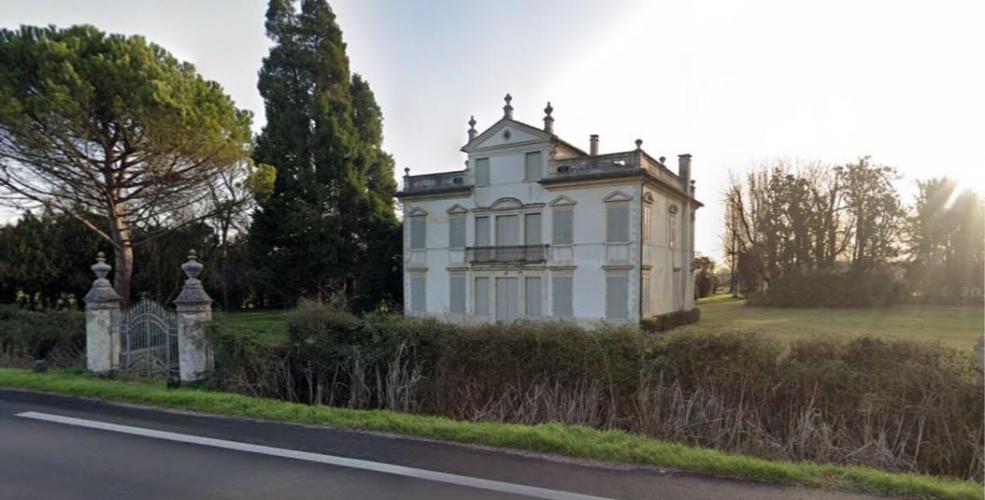

The villa is located on the eastern side of the Terraglio; it stands in a residential area with low building density, distinguished from the presence, in the vicinity, of other historical complexes of considerable interest.
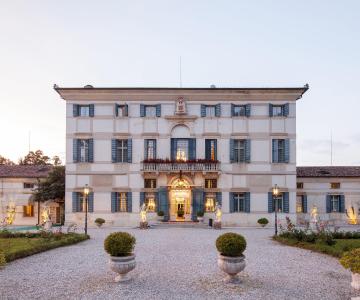
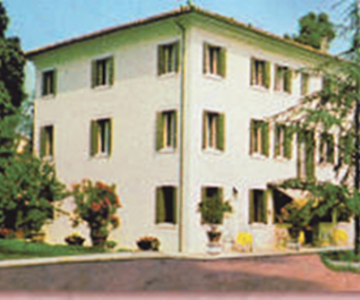
In addition to its two buildings, arranged in line, the property, which dates back to 1960, also has a vast park in excellent condition, full of trees and statues that complete the design. The eighteenth-century manor house, probably built at the behest of the noble Venetian Querini family (Venturini, 1977), has an almost square plan, articulated on two levels with the addition of the usual central raised coepo, closed by a tympanum.
The main façade, facing west, has a tripartite pattern and has a pair of openings on each side, separated by a three-lit middle segment. Completely similar is the rear façade, where some slight divergences are found in the ornamental details but not in the overall structure.
At the southwest corner of the villa there is a large two-storey rustic annex, about 50 metres long and 10 metres deep, once used as a stables with service loali. The point of union between the two buildings is distinguished by the presence, on the first floor, of two holes with a mistilinear profile that reflect a different function of the interior spaces, destined to house the family chapel.