During the 15th century, the walls of the nave were frescoed on several occasions by the workers from the Cenedese and Belluno. Of these interventions remain only fragments of sacred scenes and decorations.
The fresco that entirely decorates the rear facade of the Cathedral is the work of Palma the Young, dated in 1607. This fresco consists of about 160 square meters.
Proceeding along the right aisle there are three paintings of considerable size, created by Pomponio Amalteo (1505-1588, painter of the school of Pordenone). These works were born as doors of an organ, prior to the present , which was placed against the back facade. The largest work, visible when the organ was closed, has as its subject , the Transfiguration of Christ. The painter sets the scene in a sort of bipartite curtain, whose curtains are supported by angels. The scene, that is divided horizontally, is illuminated by the figure of Christ, placed between the two prophets, while at the bottom are placed the three apostles almost together with the occasional observer. The signature is visible on the boulder near the right apostle’s knee.
On the side wall there is a canvas , once attributed to the Carneo,but actually signed by Joachin Comin in 1667, that recalls a vote of the city for the liberation from the plague of 1630. It represents the Madonna between Saint Jerome and Sebastian. The author reveals an excellent ability both for the composition and for the colorism that makes it ascribable to the Venetian school. The mosaic carpet placed under the altar table is from Roman times. It was found in the garden of a nearby house of the Battuti, and it was placed in the Dome during the great restoration of the cathedral in 1920.
The altar of the Blessed Sacrament, which has always been attributed to Sansovino, shows, on the sides of the door of the tabernacle, fragments of a gilding that reveal an annunciation. On the left wall there is another work by Palma the Young.
The altarpiece represents the Descent of the Holy Spirit. An admirable work, for its chiaroscuro effect , where it is possible to highlight a wise use of cold for the rendering of areas of shadow. This is an anticipation “ante litteram” of the lesson of the impressionists.
Continuing along the nave, near the baptismal font you can admire the altarpiece representing “The Baptism of Christ”, oil on canvas. This work has a considerable size, until 1923 it was placed on the high altar and it is attributed to Maganza senior, called Magagnò (Vicenza 1605 - Padua 1660).
The figure of Christ and the baptising John are inserted in a suggestive night light, which exalts the hieratic, rough, powerful figures. The transparency of the water and the dove indicating the Holy Spirit surrounded by a halo of light , emphasize the image of God stretched out over the Son and the world , dividing the pictorial space into two clearly separated areas. This represents the otherworldly world in contrast to the earthly world identified by the figures in the blue-green of the background. But the connection with those two realities is emphasized by the presence of angels surrounding the whole scene. The result is a careful reading of dogmas of faith. This indicates a particular sensitivity to the theme addressed by the painter, who succeeded to insert with wisdom a note of red, in spite of the almost monochromatic palette on the tones of blue and green. This note of red is located in the drapery directed by the left angel as an index of the kingship and future martyrdom of Christ.
A particular attention must then be paid in observing the frame of this canvas. A curved wooden frame carved with golden floral motifs interspersed with small angels painted in tempera with delicacy, bearing fifteen oval medallions in which the Mysteries of the Rosary are illuminated. The work is ascribable with good approximation to the 17th century, given the preciousness of execution decidedly Baroque.
Starting from the left, the fifteen tables represent in order the Joyful Mysteries, Sorrowful and Glorious. They belong to the same painter, that unfortunately is still unknown. The pictorial layout is often happy, despite the small size and oval shape, and the wise use of bright and bold colors (red, blue, yellow) encourage a discreet reading of the images even though they are considerably distant from the eyes of the observer. The author reveals himself as a skilled narrator and it is therefore possible to understand him in late Venetian Mannerism.
The recovery of the splendid work depicting the Madonna and the Child Enthroned ,was recently completed. The painter of this work is one of the most interesting Friulian painters from the 15th century, and he was called Andrea Bellunello. He was from San Vito and he spent most of his life performing dozens of works, between Friuli and Veneto.
The extraordinary perfection of the executive technique as well as the choice of the excellent nature of the materials used, are the main reasons that have allowed a work like this to reach today. This work has almost five hundred and fifty years of life of which the most passed outside. The removal of the sedimentation of dirt brought out the splendid azurite (stretched out to create the sky). The purple tones that today appear on the garments of the Madonna helped the blue to reach the maximum brilliance and chromatic strength.
Through the cleaning we have discovered traces of pure gold, applied on the clasp placed at the breast as closure of the garment and still above the crown of the Virgin.
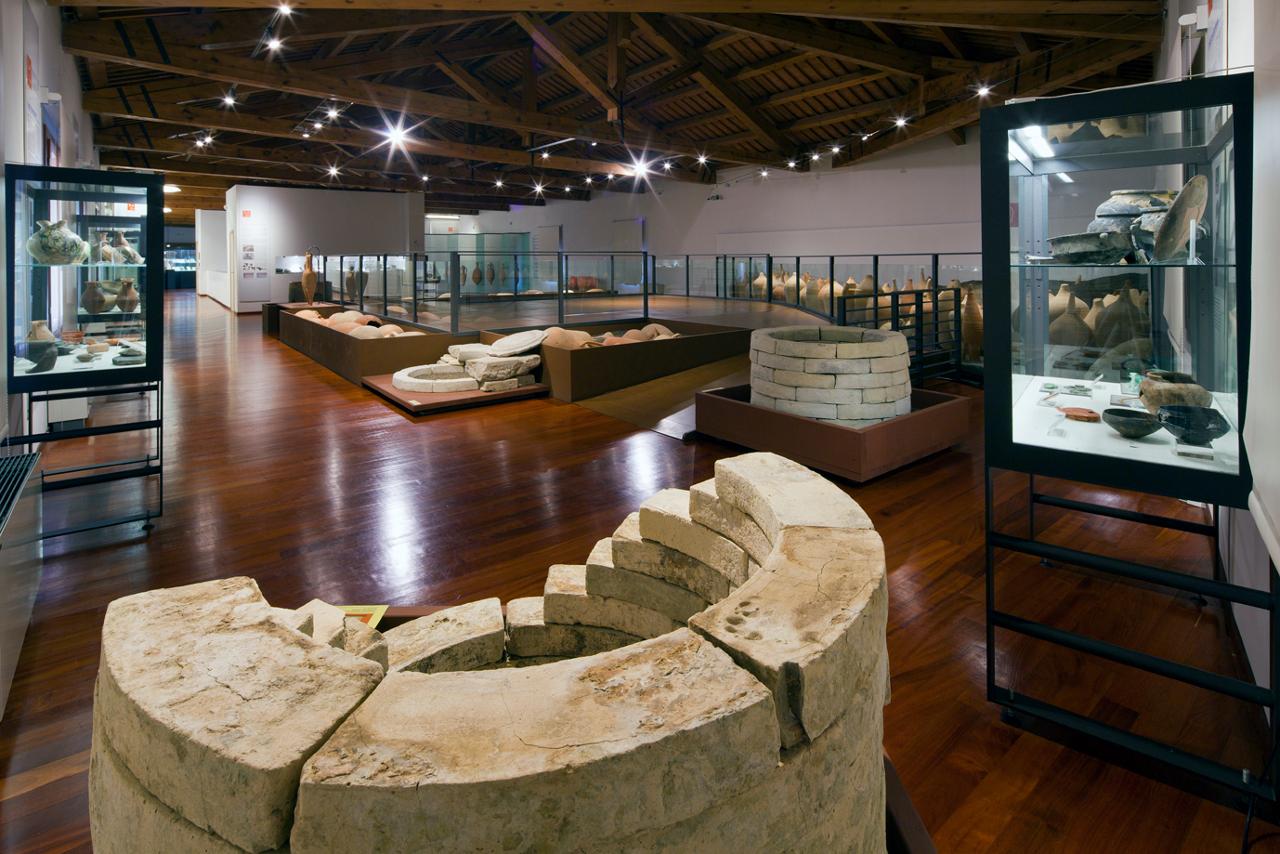
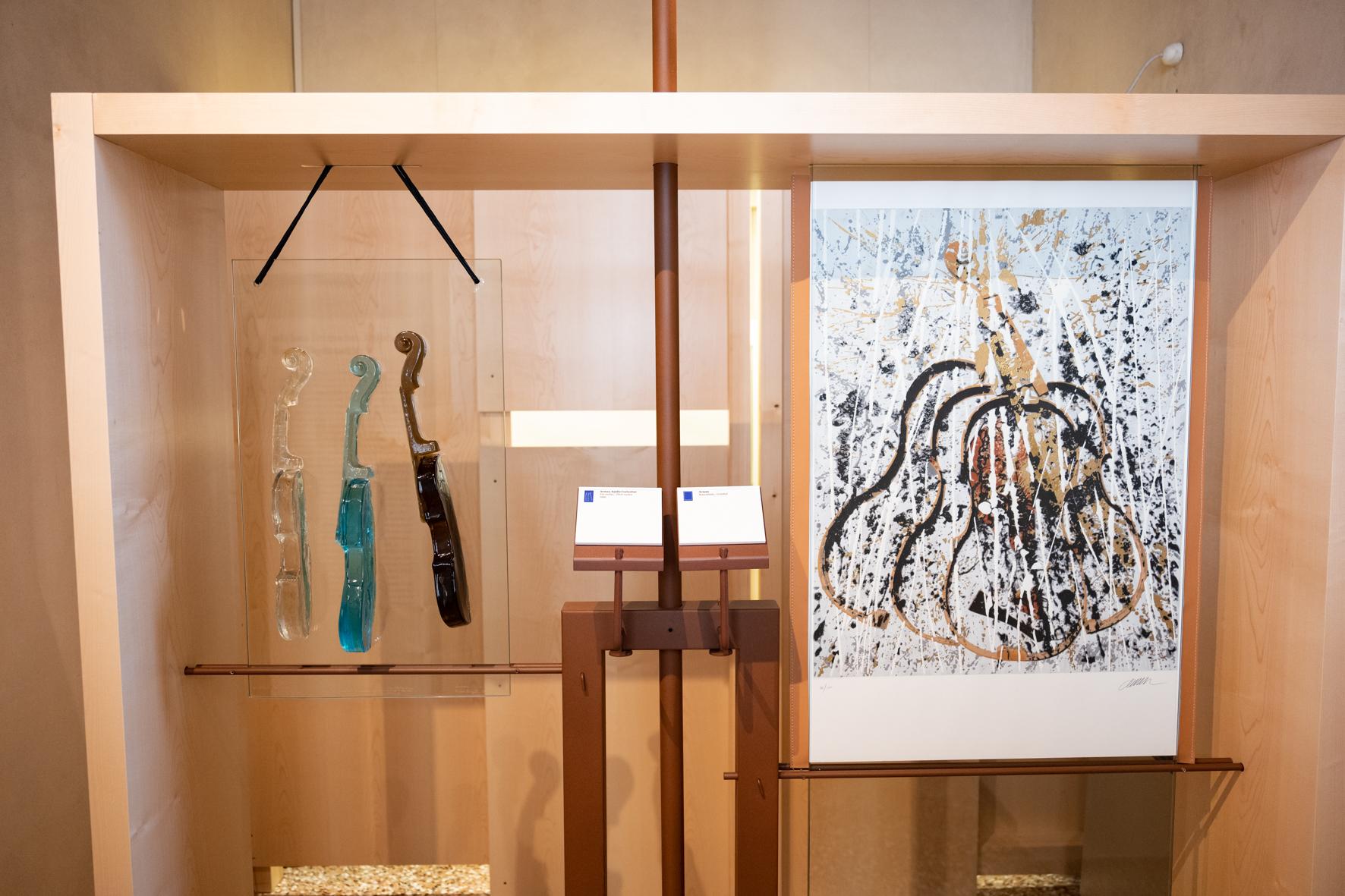
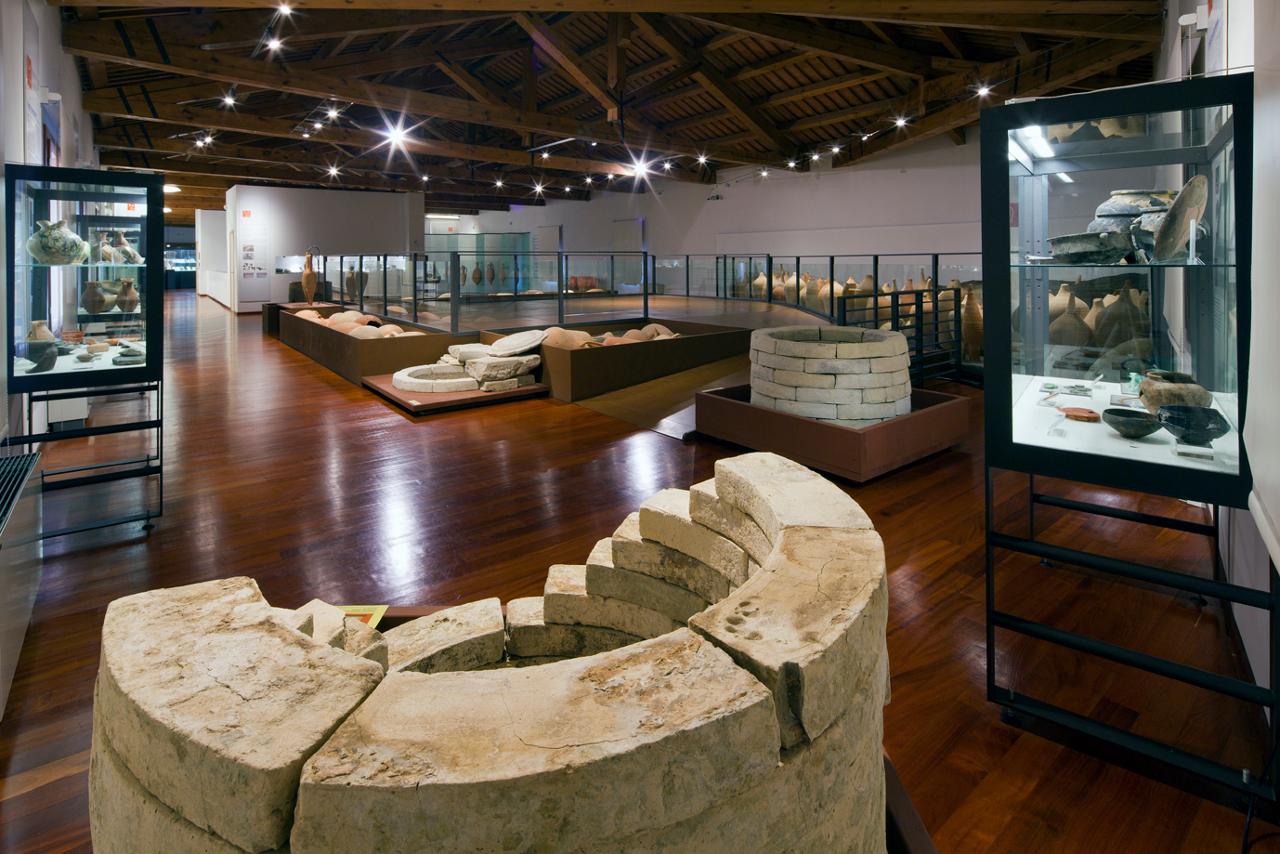
While entering the museum , you immediately feel that you are projected into a space where the life of past generations and the transmission of knowledge intersect in a universal language.