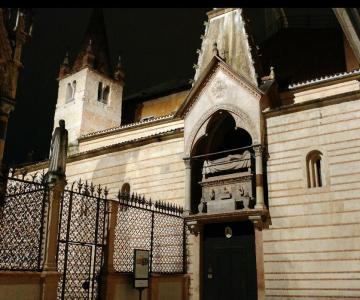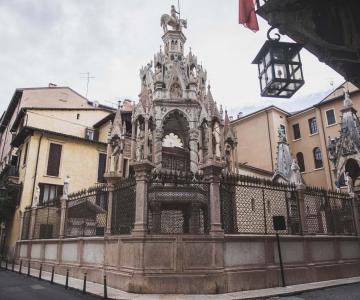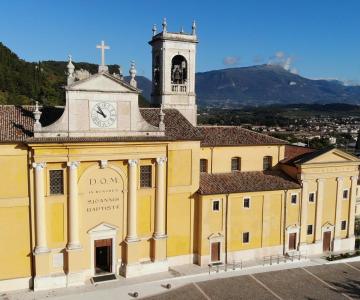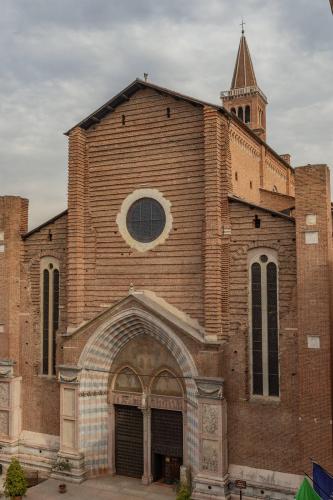
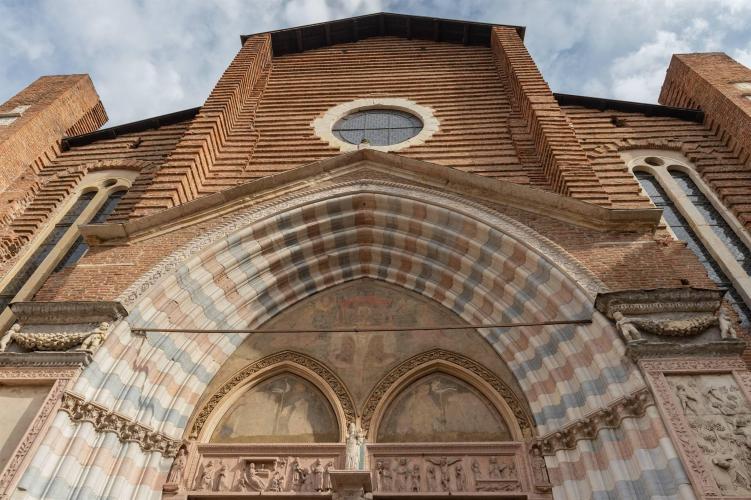


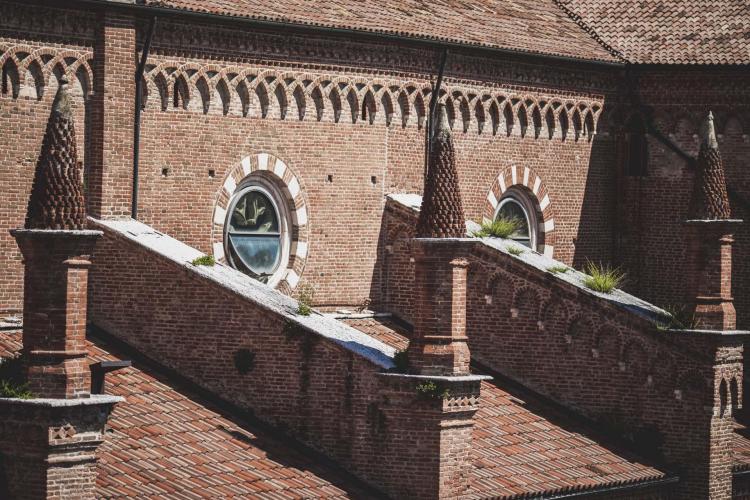
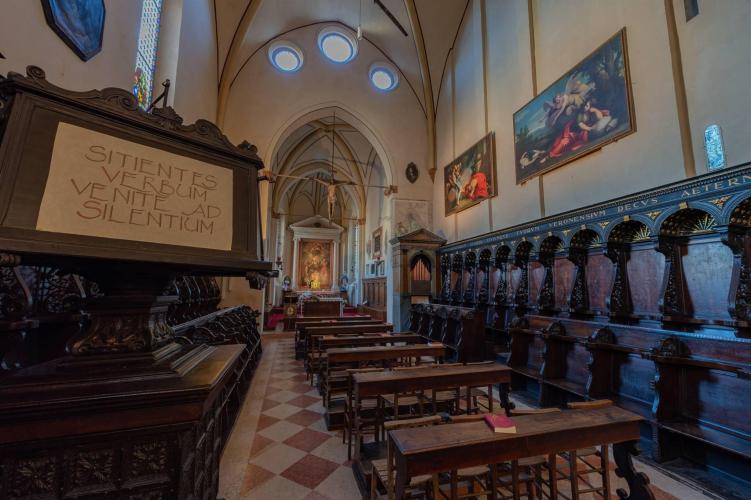


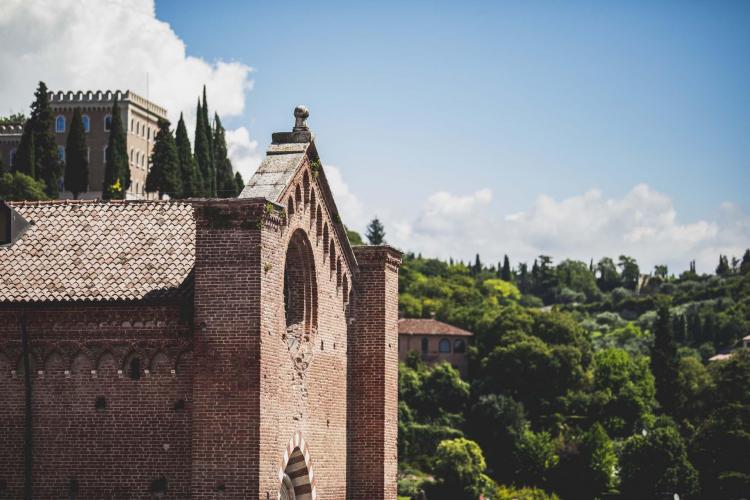
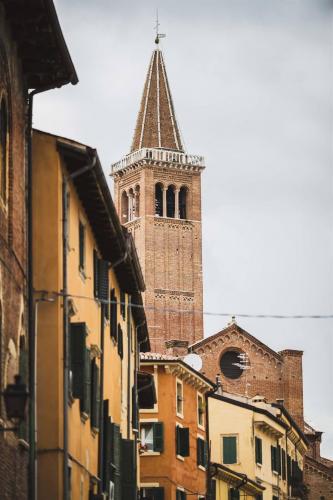


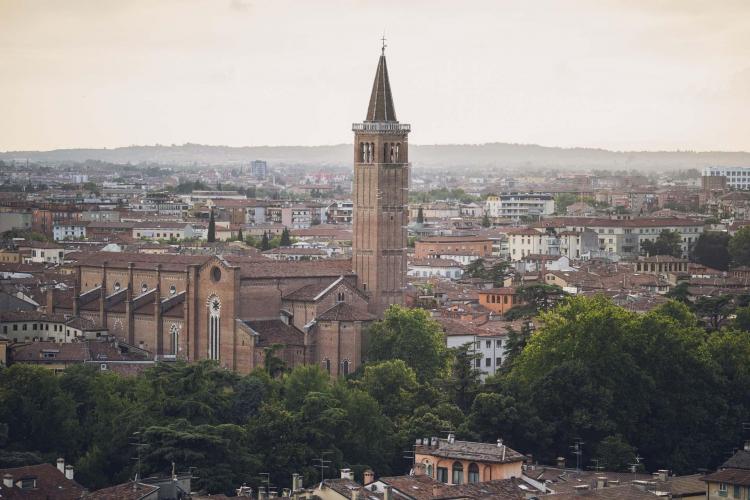
The Basilica of Saint Anastasia is a masterly example of Italian Gothic style.
It has kept the name of a pre-existing church from the Lombard period, dedicated to the Virgin Anastasia, a fourth century martyr. The building was situated at the end of the decumanus maximus: the main Roman road in Verona that connected Porta Borsari to the former Postumio Bridge. Around 1290, the order of the Dominicans settled here and began the construction of the Gothic basilica, dedicated to the martyr St Peter, a Dominican who originated from Verona and patron of the city alongside St Zeno.
The work was possible thanks to the support of the Della Scala family, who ruled Verona from the late 13th to the late 14th century. S.Anastasia is the largest church in Verona.
The Basilica extends over three large aisles supported by twelve impressive pillars in red Veronese marble. To the left of the transept a splendid marble entrance opens onto the Giusti chapel which was at one time the oratory of the Dominican monastery.
FAQ
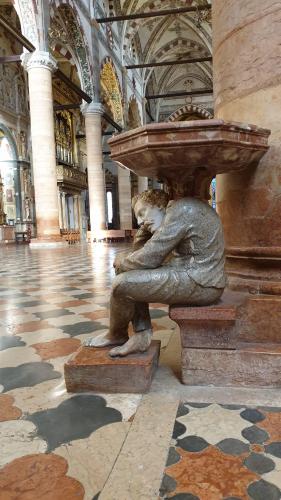
Who are "the hunchbacks" of St. Anastasia?
They are so familiarly called the two caryatids that support the stoups. In the tradition the "hunchbacks" represent the effort made by the population to pay for the construction of the church...it is said that touching their hump brings good luck!
Is it possible to visit the church during a religious ceremony?
Visits are suspended during religious services.
What famous painting can be admired in the church?
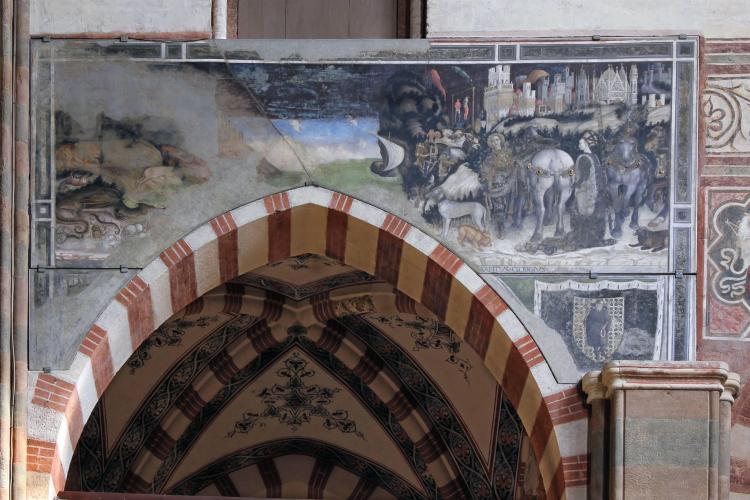
It is possible to admire the fresco "Saint George and the Princess", painted by Pisanello between 1433 and 1438. It is located on the outside wall, above the arch of the Pellegrini (or "Giusti") chapel.
Is the monument accessible to people with disabilities?
The church is completely accessible.
Is it possible to access to the monument with animals?
It is not possible to enter the monument with animals, except in cases of guide dogs with muzzle accompanying a disable guest.