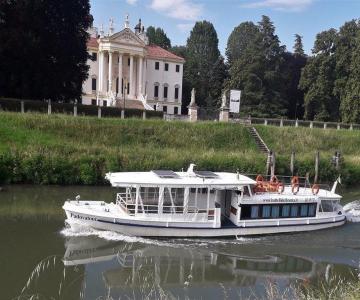
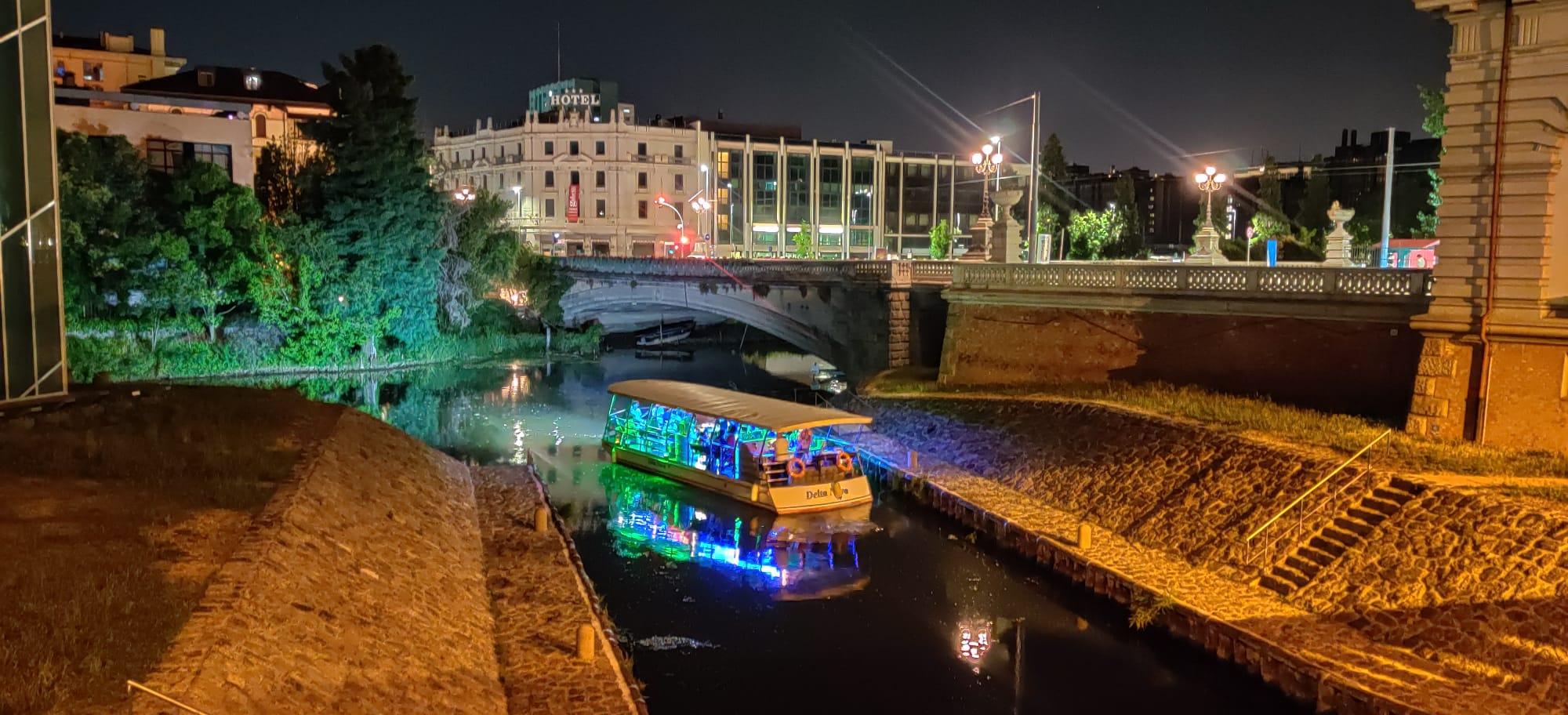
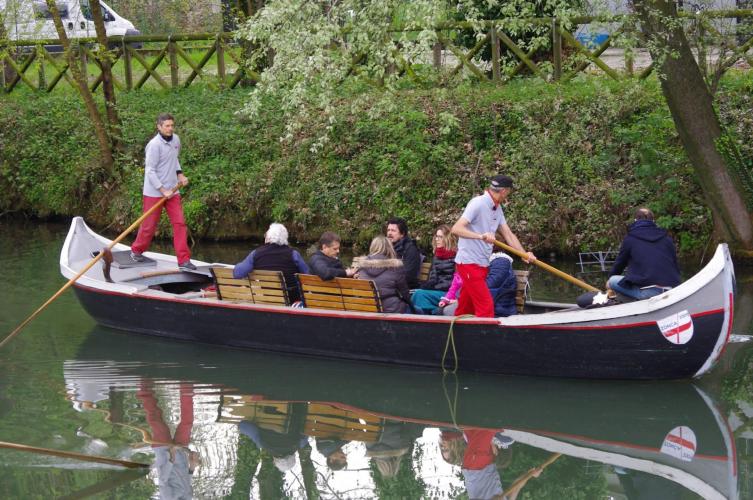
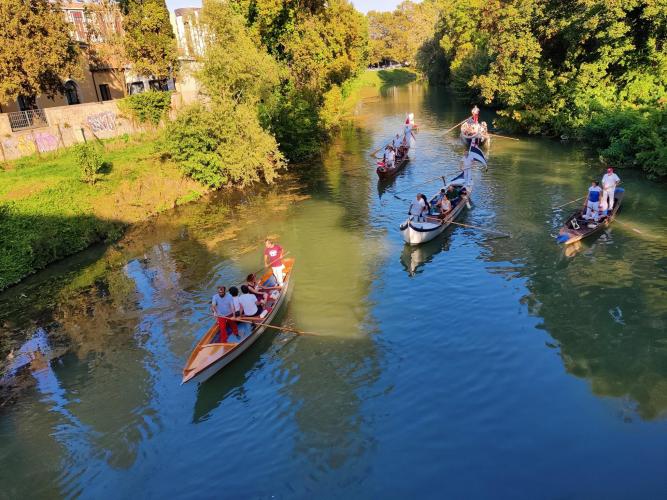
Navigation along the "Piovego Canal," the city's main waterway, aboard a "Caorlina," a rowing boat propelled by expert rowers of the Scuola Voga Veneta Zonca.
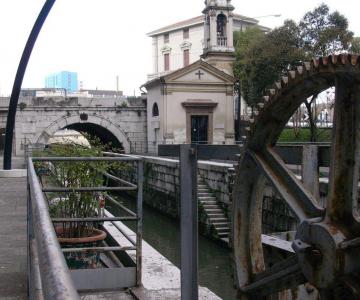
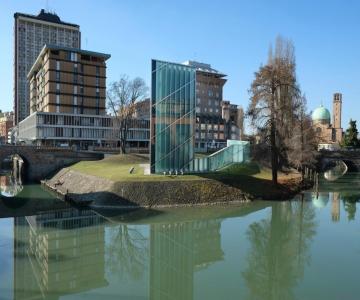
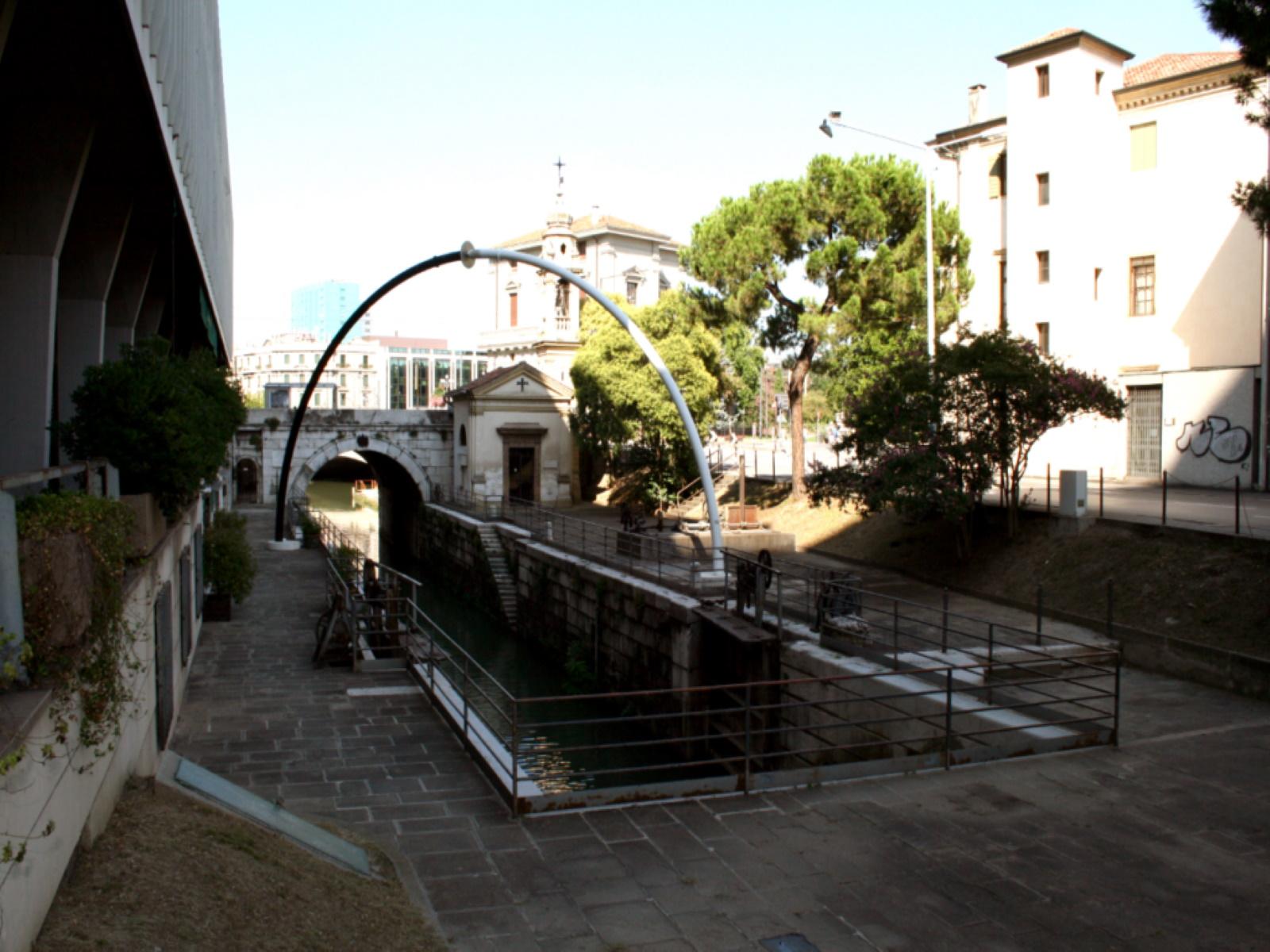
We embark in the mandracchio di valle della Conca delle Porte Contarine and go under the monumental Corso del Popolo Bridge, skirting the Gardens of the Roman Arena, the avenues of the university citadel, to arrive at the Portello, an ancient river port.
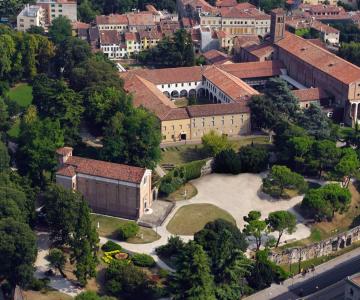
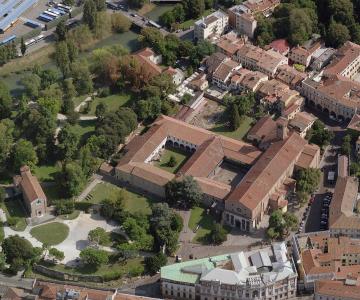
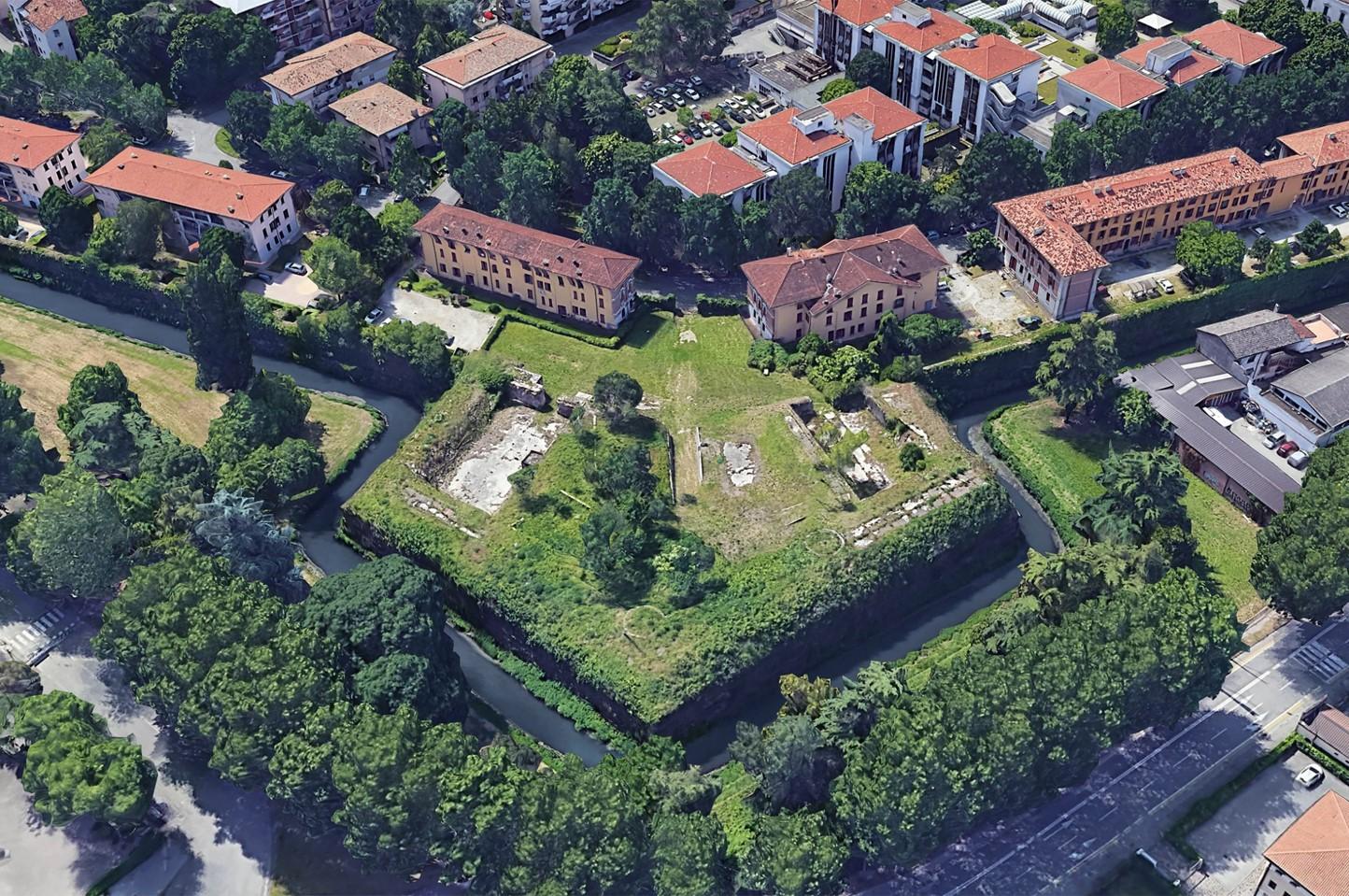
Next to the Ponte di Corso del Popolo stands the Bastione dell'Arena, a 16th-century defensive structure erected to defend the river junction of the Porte Contarine, at the top of which is an offshoot of the Public Gardens built in the early 1900s.
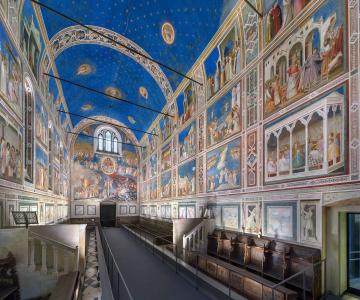
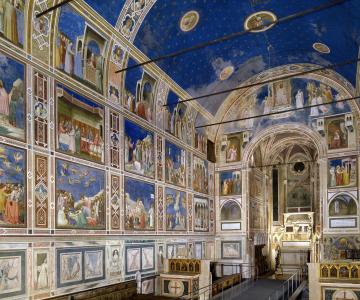
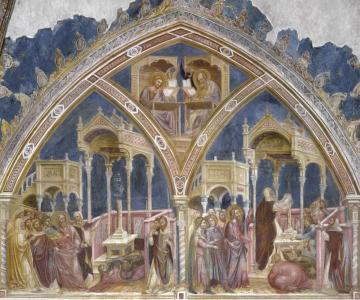
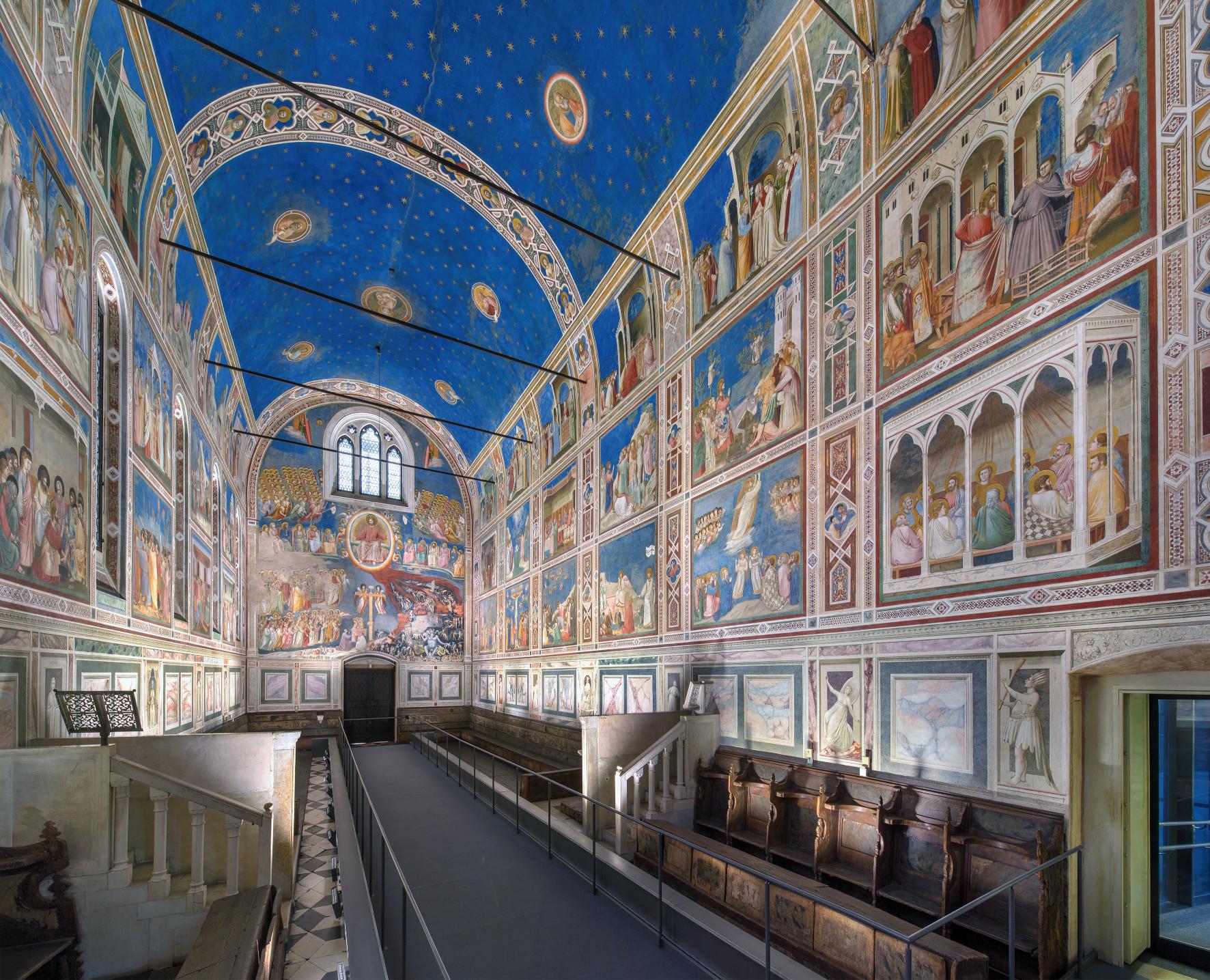
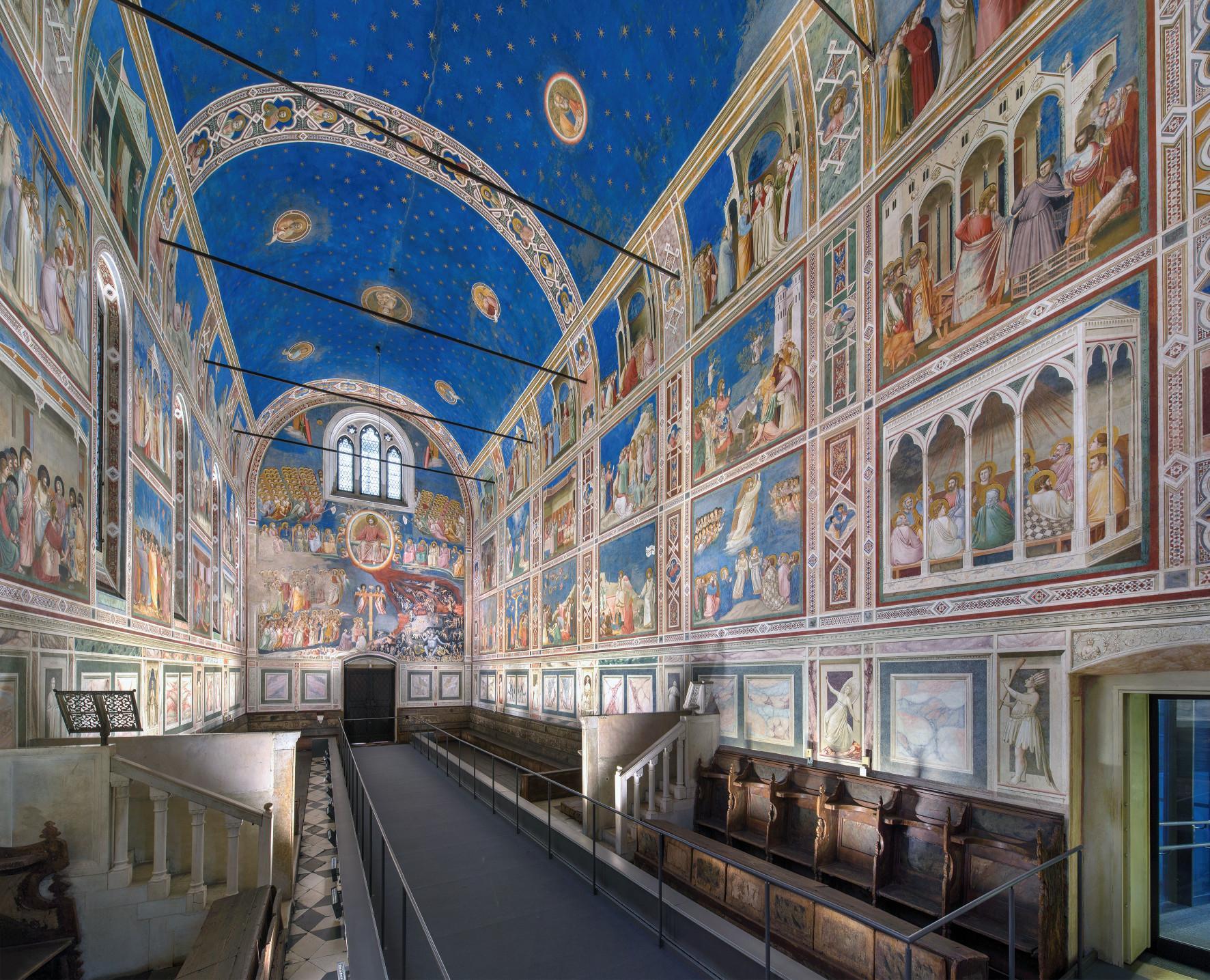
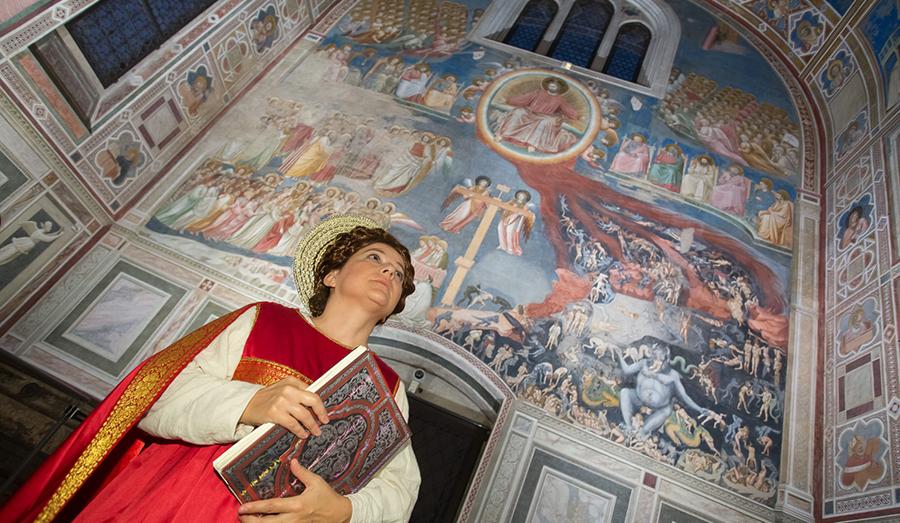
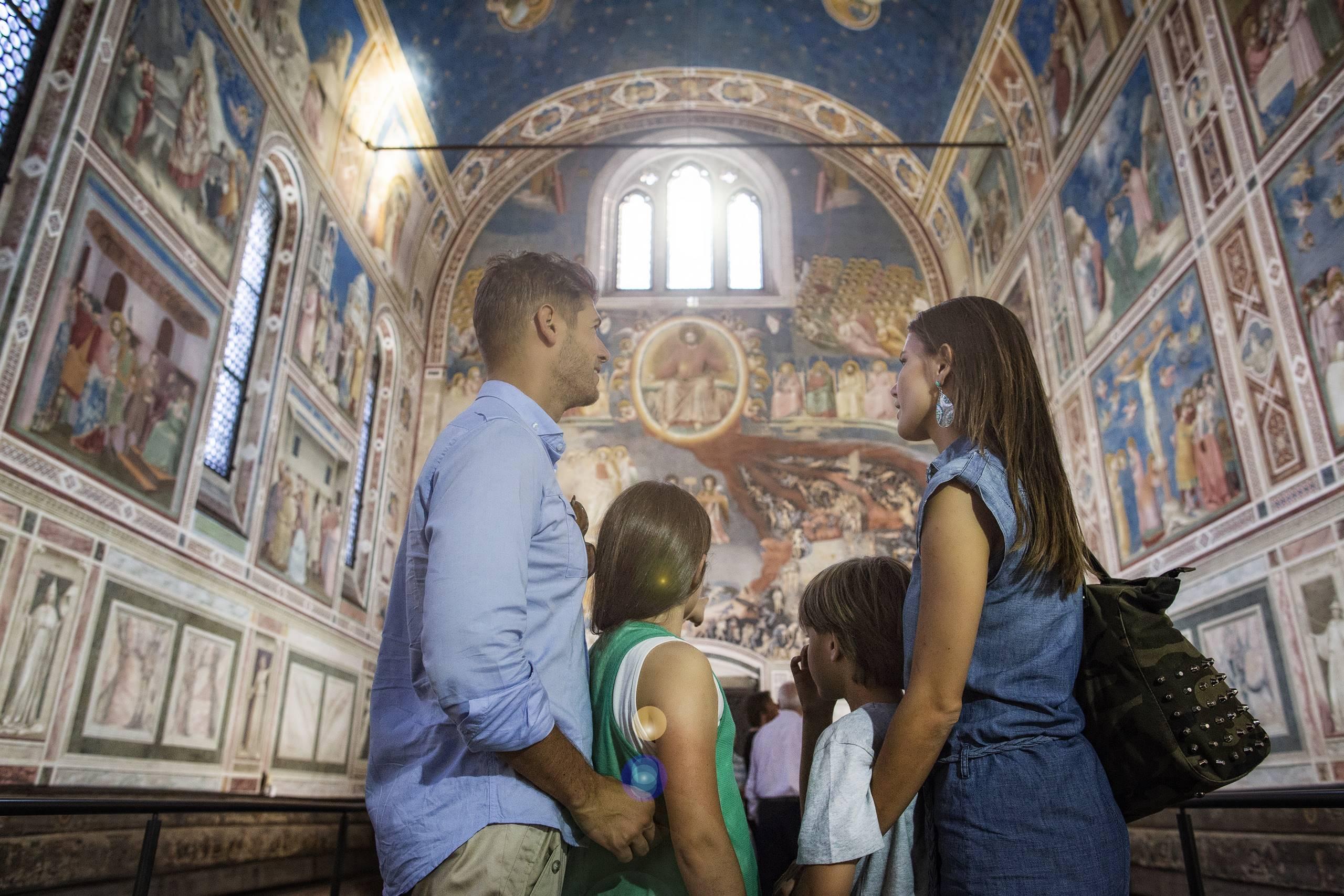
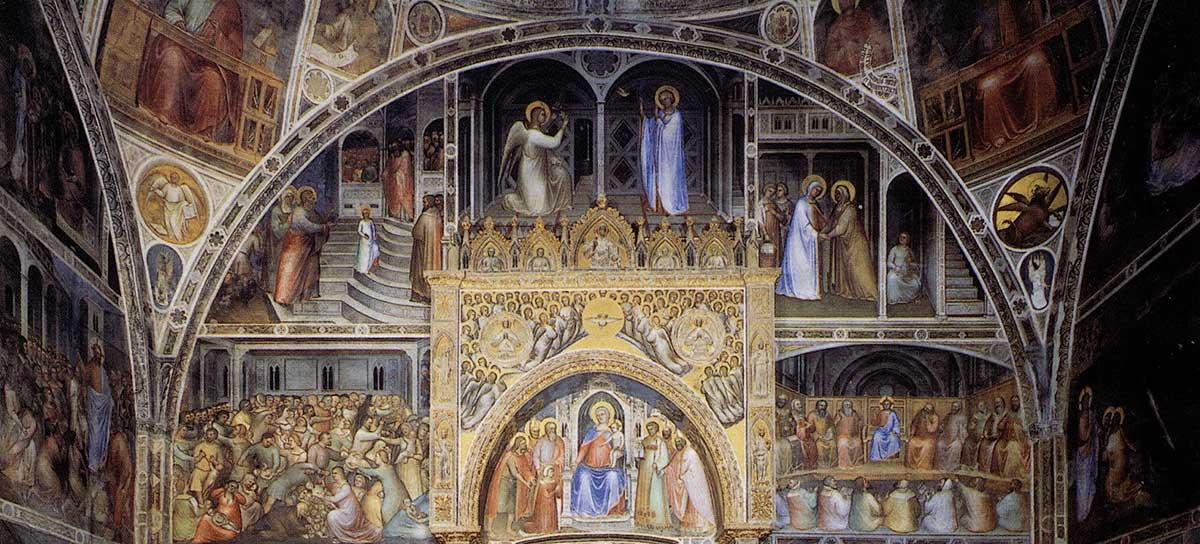
Next to it are the remains of the ancient Roman Arena and the Scrovegni Chapel containing Giotto's fresco cycle.
In the 1500s in Padua, in order to better absorb artillery blows, the old Carrara walls were demolished and with the recovered material the new walls were built, lower, thicker, reinforced inside with embankments, characterized by the presence of 19 bastions, of different shapes in masonry.
The Arena Bastion, an integral part of Padua's 16th-century defensive system, consists of a round tower 30 m in diameter. Two casemates, with barrel vaults, housed the gunboats to defend the rectilinear side curtains.
Recently a group of speleologists and historians, managed to enter the underground area of the Bastion buried for centuries. Five meters below the surface of the Gardens, they discovered the existence of three large intact tunnels that draw an arrow inside the keep. These are the entrance galleries of the two casemates containing embrasures for the cannons, the gunports. The embrasures are walled up today, but from the outside you can still see their outlines.
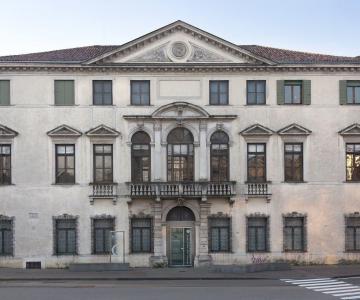
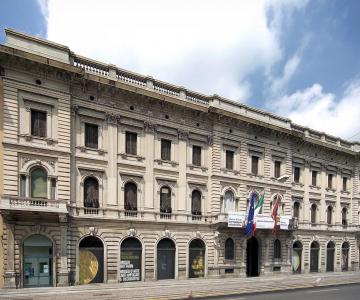
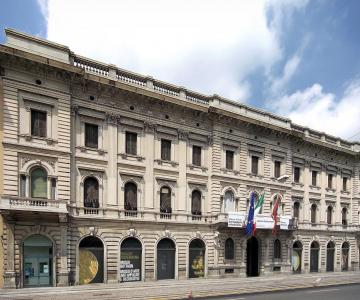
Continuing on, one arrives behind the old former Slaughterhouse designed by the architect Giuseppe Jappelli (1783-1852).
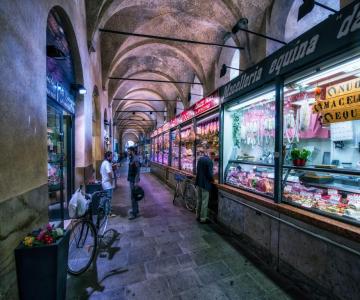
The first public slaughterhouse of which there is record is the one built by the Carraresi in 1398. It was located beyond the Beccherie bridge, that is, the butcheries.
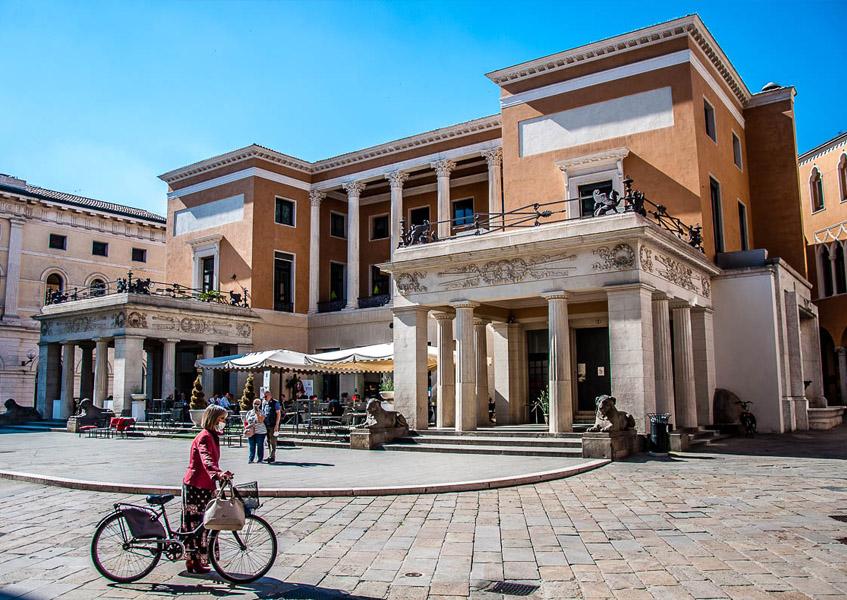
In 1818, the City of Padua, following the extreme deterioration of the old "beccherie" located in the city center and adjacent to the Royal University, entrusted the architect. Giuseppe Jappelli, former designer of the Caffè Pedrocchi, to design the more decentralized "New Municipal Slaughterhouse."
It was decided to build the new structure between the old Santa Sofia canal, now buried and present-day Via Morgagni, and the Piovego.
The slaughterhouse was inaugurated in September 1822. Architect Giuseppe Jappelli made it a work of art with the appearance of a grand and majestic Doric temple, with a mighty colonnade at the entrance. The interior contained a large circular hall, under which animals were slaughtered, and two wide side corridors with Greek columns.
The slaughterhouse was inaugurated in September 1822. Architect Giuseppe Jappelli made it a work of art with the appearance of a grand and majestic Doric temple, with a mighty colonnade entrance. The interior contained a large circular hall, under which animals were slaughtered, and two wide side corridors with Greek columns.
With the rapid development of the city, this room became insufficient, and the City Hall had a new modern slaughterhouse built across St. Maximus Street, which was opened in 1908.
The old Jappelli's Slaughterhouse ended its activity in 1909, being transformed into an Art School in 1910. It is currently the historic home of the Liceo Artistico Pietro Selvatico of Padua, an Art School founded 150 years ago.
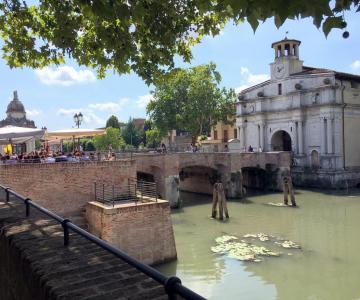
Finally, we arrive at the Portello, Padua's ancient river port with its beautiful 16th-century staircase also portrayed by Canaletto, and the majestic All Saints' Gate, built in 1518, clad in Istrian stone and adorned with eight columns resting on pedestals that seem to rest in the waters of the Piovego. The building is surmounted by a turret with a clock; on the right side, where a lion of St. Mark once stood, a turreted castle, a symbol of Venetian rule on the mainland, is carved in relief; above the triumphal arch are two coats of arms, one of the city of Padua and the other of the reigning Doge Leonardo Loredan.
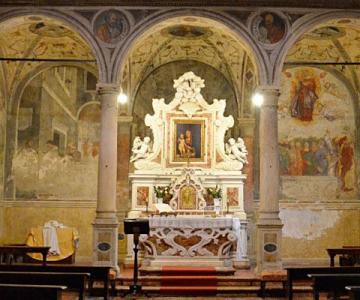
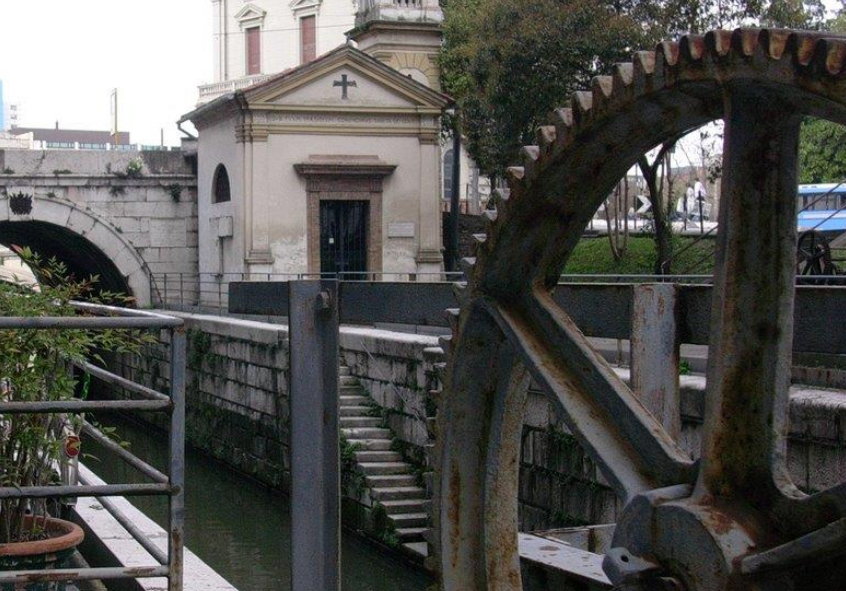
Beyond the bridge is the 1790 Wayside Shrine of S. Maria dei Barcaioli, where travelers attended mass before boarding the burchi.
Return by boat to the Porte Contarine.
Duration: about 75 minutes
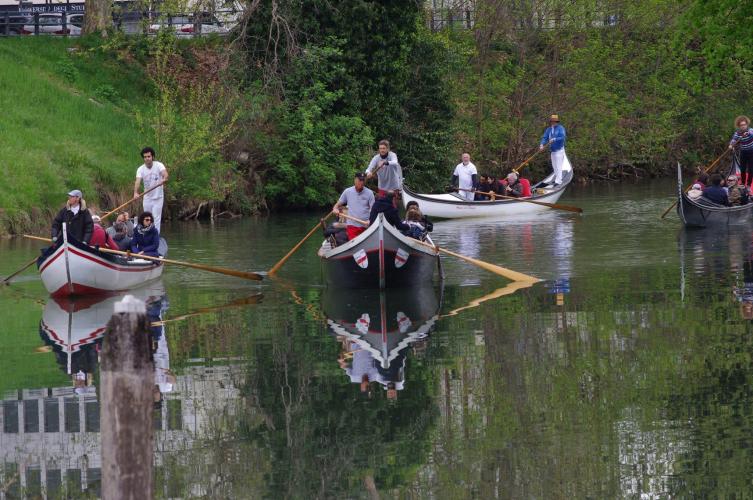
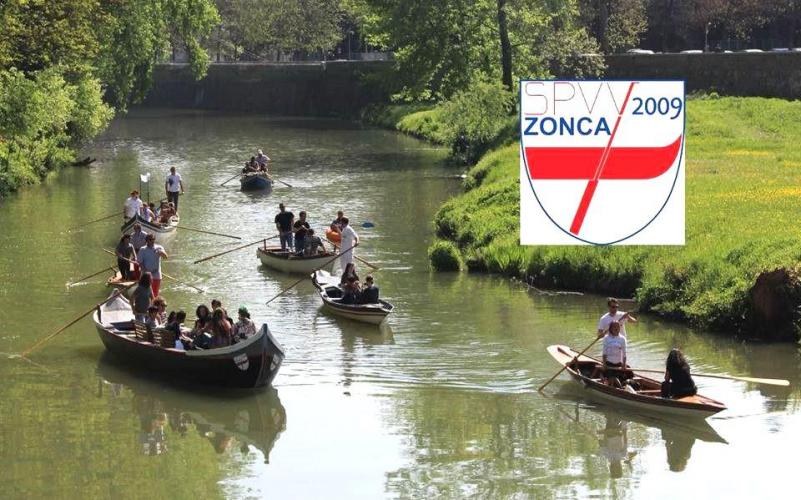
Rowing boat tour from the Porte Contarine to Portello
- Company
- Consorzio di Promozione Turistica di Padova
- Contacts
- Duration
- 1 day