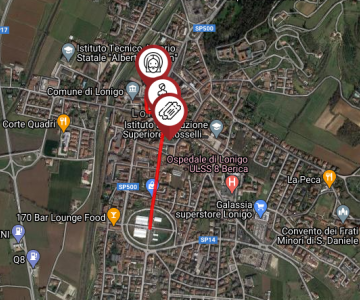
Technical data of the trail:
Car parking: Castelgiuncoli, Poste, Viale della Vittoria, Spermercato Sma Simply
Starting point on foot: Piazza Garibaldi
Technical difficulty: Easy access route
Length of the route: Km 8.5
Elevation gain and loss: about 100 m
Travel time: About 3 hours
The route:
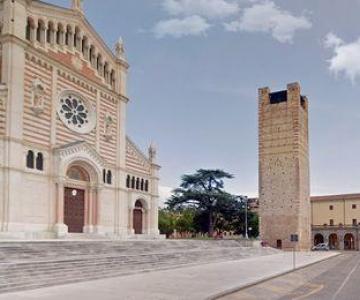
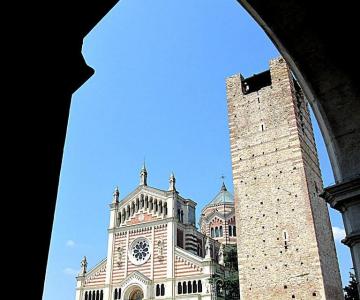
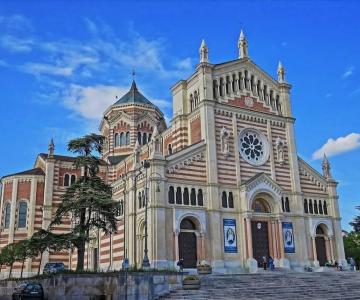
Departure on foot from Piazza Garibaldi. Walk along Via Garibaldi, which still represents the medieval structure of the ancient village within the old castle.
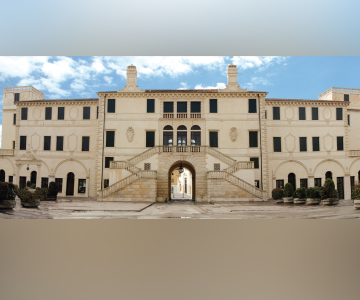
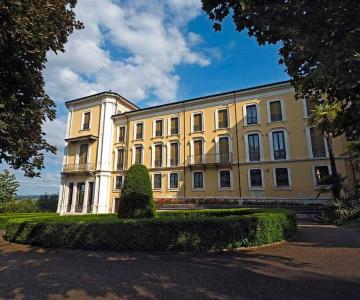
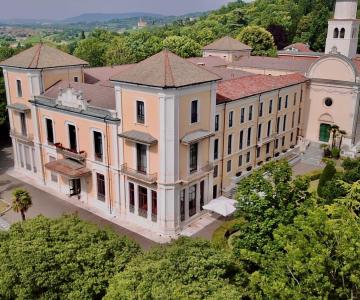
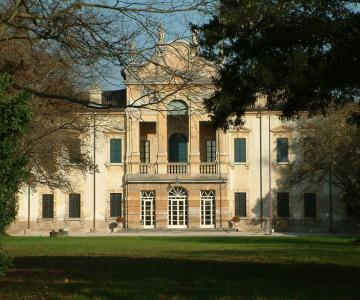
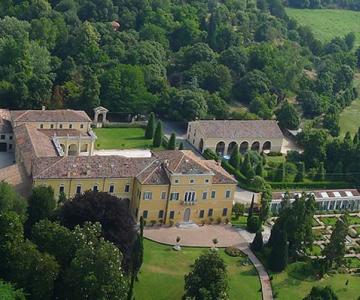
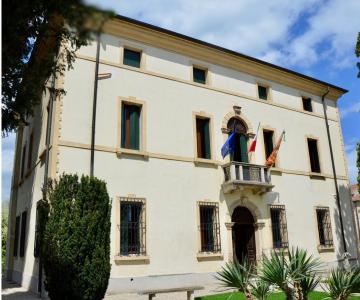
Continue on Via Ognibene, cross the road and find yourself in front of the monumental entrance of Villa San Fermo. Proceed uphill on Via Carlo Ridolfi. After a few dozen meters, turn left and ascend Via San Fermo; continue along a cobblestone path and, shortly after, you arrive at the main entrance that leads inside the property and Villa San Fermo.
You find yourself in the recently created "Ai Cappuccini" park.
Take the pedestrian path that follows the asphalt road. At the first curve, you can observe outcroppings of sedimentary rocks belonging to the Priabonian; a bit further on, on the right, you pass near the skateboard park for kids and a small outdoor amphitheater. You ascend a few cement steps, keep left and take a characteristic stone staircase: this leads you to the entrance of the church of San Bonaventura, the convent of the Capuchins, and San Colomba, (until recently the church and convent were abandoned, now they are undergoing restoration).
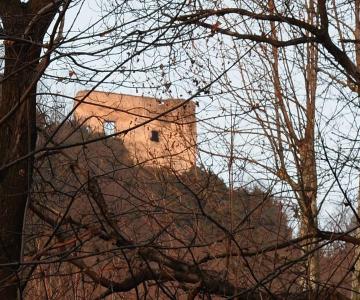
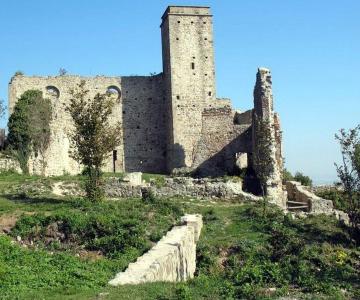
Continue along the pedestrian path and soon, positioning yourself under a large Spaccasassi tree (Celtis australis) you can enjoy the view of the Rocca Pisana.
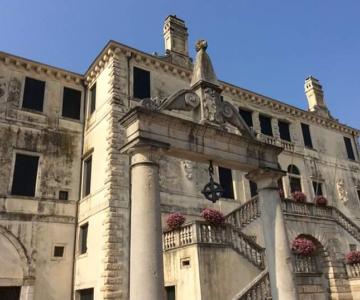
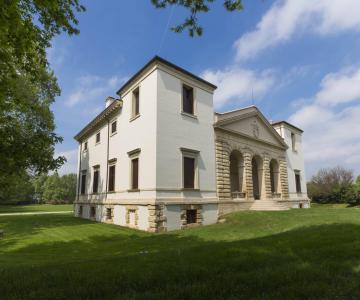
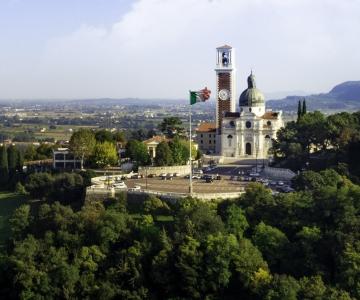
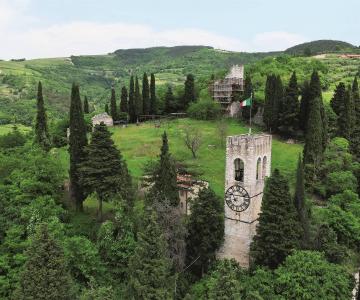
The villa is located on the top of the hill, almost rounded, whose profile gently slopes down to the plain between rows of hedges and once cultivated terraces. Proceed along a flat section, passing in front of the entrance gate that leads to the Rocca Pisana, beside which is a niche capital embedded in the wall of the arch that hosts the image of the Madonna.
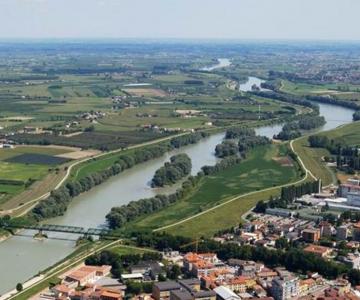
Proceed for a few meters and the view majestically spans the floodplain below; further on the territories of Lessinia vicentina and veronese, in the background from left to right the mountainous reliefs of Monte Baldo, Monte Carega, Sengio Alto, Pasubio, Monte Novegno, Pria Forà, the Altipiano dei Sette Comuni (Asiago) and, further to the right, Monte Grappa.
Continue until the right curve: on the left is Casa Dal Grande in the locality of Cenghia. On the wall of the house facing the road, one can see a wooden cross embedded, placed there by the Dal Grande family to protect the house from the disastrous Allied bombings during 1944. The crucifix had its effect: the house emerged unscathed. After the curve, continue straight along the asphalt road, circling the mountain of the Rocca.
A little further on, at the capital erected by the Pasqualotto family, turn left and immediately again left to enter a beautiful deciduous forest of black hornbeam (Ostrya carpinifolia).
Take the uphill dirt road, pass the right curve and immediately to the left you can see a small doline.
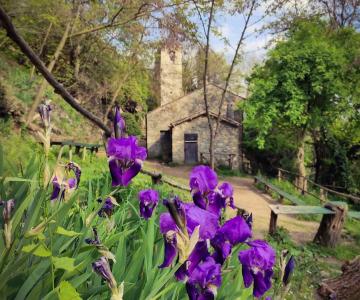
Now proceed straight ahead, leaving the dirt road and following a path that leads to a building. Arriving in front of this building, you can observe the old well, the exterior of the building and the adjacent structures.
From this point, proceed to the left compared to the arrival path by walking along a nearly flat country road in a beautiful and relaxing environment. After a right curve, you ascend a little and shortly after you cross a natural rocky road that connects Balestre to Monte Bandiera. Here you can make some observations about the spontaneous Mediterranean flora.
Keep to the right, descend for a few meters and continue nearly flat.
A bit further on you arrive at Cà Longhe (a cluster of houses, rustic outbuildings, and other structures, recently restored).
Continue beyond on dirt road, penetrate into a woods and shortly after arrive at the road that connects the locality of Acque to Buso dello Giaretta. Cross the road, take the dirt road on the left that continues until arriving at contrà Sandri at Monte Bandiera. The building is modestly sized, complete and functional. After passing contrà Sandri, proceed downhill and shortly after, on the right, before reaching contrà Trestini Soldà, you can see a characteristic covered well built by residents in the early 1900s. A few meters lower lies the characteristic contrà Trestini Soldà, recently restored.
On the opposite side of the contrà, adjacent to the road, outcroppings of tuff are clearly visible. Paying attention, just after passing contrà Trestini Soldà, turn right (sign path 41) and proceed along the edges of the vineyard, until arriving at a clearing.
Cross it, encounter a path, follow it to the left and shortly after to the right. A bit further on you arrive at the contrà of via Monte Bandiera.
After a brief stop to observe the architectural complex, continue along the dirt road and, after a left curve, arrive at the junction with the road that connects the localities Acque and Botteghino. Turn right, continue along the asphalt road. A bit further on, turn right and, after about twenty meters, you arrive at the fountain of Acque di Lonigo.
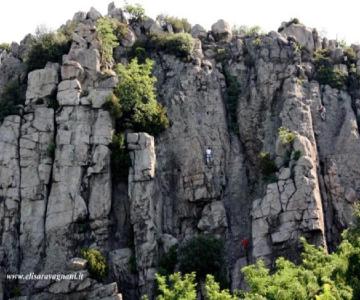
Continue for a while uphill and, before the hairpin bend, turn left and descend via Scaranto Sordina. To the left, a little lower, the area of an old clay pit can be sensed, now reclaimed with fertile soil. You then travel along a slightly uneven path with a natural rocky bottom, where volcanic breccias embedded in the tuff emerge.
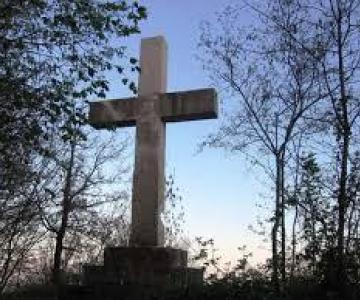
Variant: by taking a little visible path on the left, you ascend to Monte Oselliera where in 1913 a cross was erected, first in wood and then replaced with iron in memory of the Edict of Constantine which in 313 legalized the Christian worship.
Returning to the path of via Scaranto Sordina, continue to descend until you reach the road that rises from Lonigo to the locality of Acque. Cross the road and proceed straight ahead until you reach the Convent of San Daniele; here it is recommended to visit the church. From the square of the church of San Daniele, you can admire the Rocca Pisana, Villa San Fermo with the church and convent of the Capuchins, and the Corrubbio.
Continue along the main road, pass in front of the capital of Sant’Antonio, descend a little and travel via San Daniele, a residential area built in the years 1955-60.
In the middle of the street, on the right, there is a capital in an edicule, with a crucifix and two wooden statues inside. Proceed, pass via San Francesco, turn left and re-enter the historic center.
For more information: https://www.visitterredelgua.it/natura-e-sport/sentiero-41-monti-di-lonigo/#percorso41