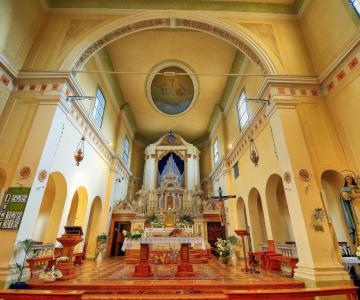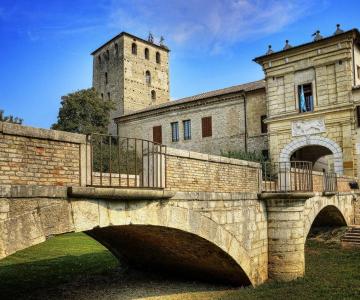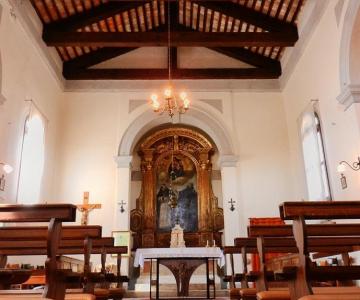
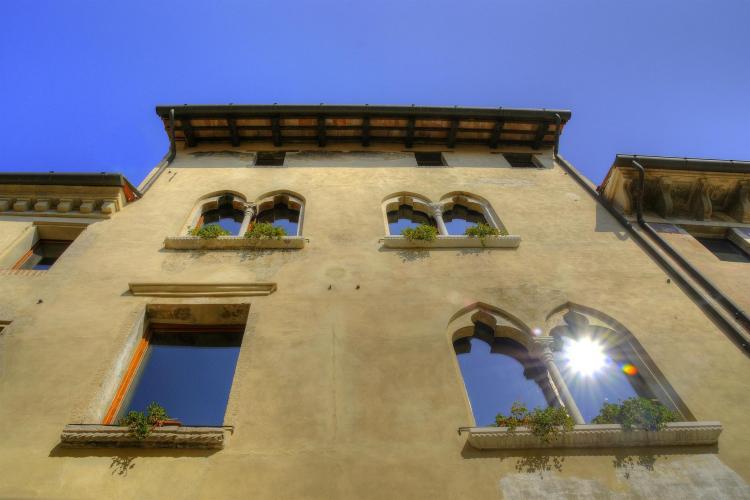
Around 1293, Tolberto Da Camino, already Podestà of Treviso, and Gaia, his wife and cousin, chose Portobuffolè as their official residence, becoming its "Lords" in 1307. In particular, Gaia was a very famous noblewoman in Northern Italy, to the extent that she is mentioned by Dante in the Divine Comedy as a definition of the soul of her father, Gherardo, whom the Tuscan poet encounters on the Mount of Purgatory:
“good Gherardo
… by another surname I do not know him,
unless I were to take him from his daughter Gaia”
( Purgatory, Canto XVI )
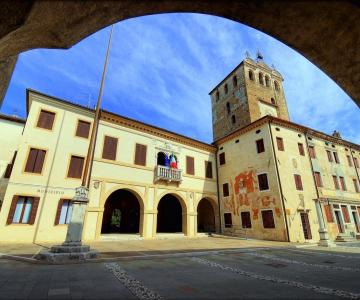
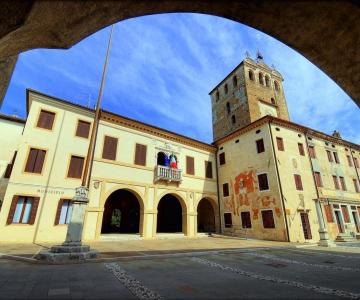
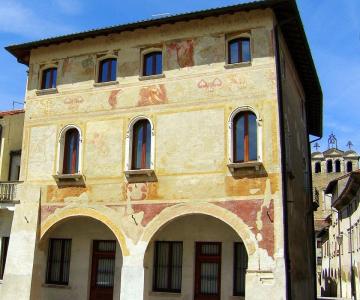
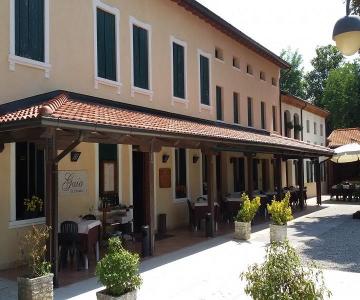
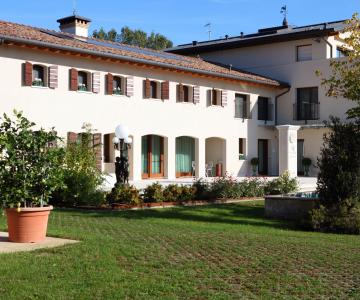
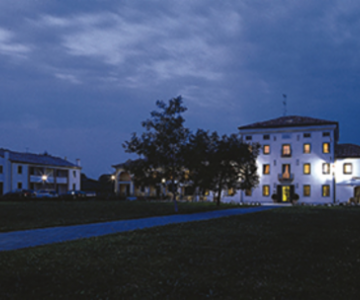
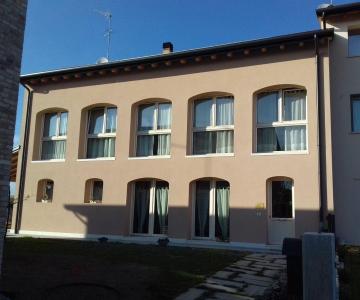
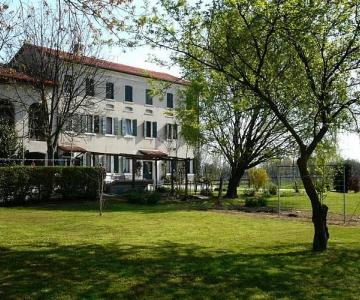
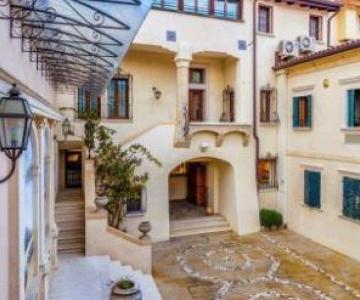
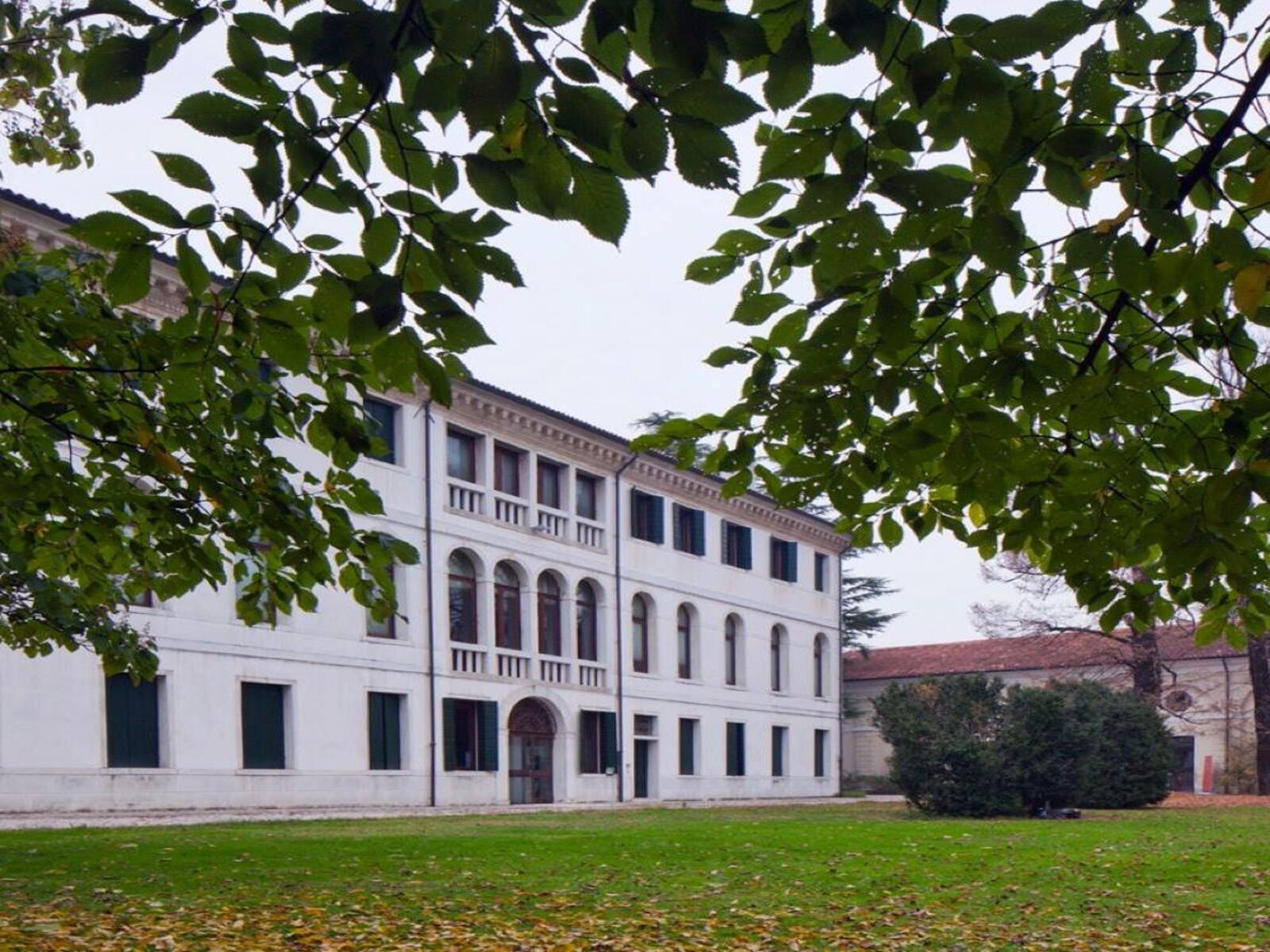
The architecture of Casa Gaia Da Camino is an example of a medieval tower-house with a façade embellished by trilobed windows with lotus-flower capitals.
Generally, the ground floor housed storage rooms and spaces for the servants. The first of the upper floors was the so-called noble floor, composed of a large reception hall (the caminata) with a hearth. This room was likely adjacent to the bedrooms of the lords. Higher up, the domestics and slaves lived. In the most prestigious homes, the kitchens were located directly under the roof, precisely to prevent fire outbreaks that, if spread from the ground floor, could have destroyed the entire house.
Considering the importance of the Da Camino family, it is reasonable to think that the kitchens were placed on the top floor, which unfortunately has been altered today.
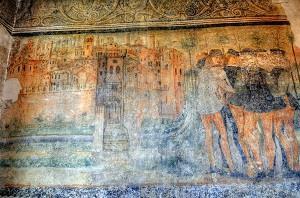
Currently, the most noteworthy aspect of Casa Gaia is the fresco dated to the 14th-15th century.
The upper floors feature delightful paintings whose subject is courtly life, with visits from the countryside, warriors with their sophisticated armor, personifications of the Sciences symbolizing the cultural cenacle that generally arose around a noble family, and landscapes, evocative in the empirical perspective of the Gothic style. Folklore also imagines that in the two monochrome figures framing the first-floor corridor window, one can identify the portraits of Tolberto and Gaia Da Camino, immortalized almost to warmly welcome guests.
To this day, the authorship of this work is unknown. On the first floor, there is an attributive inscription expressed in initials (P.E.F), still not understood. It is customary, in the presence of initials, to interpret the letter “F” with the Latin terms “fecit” (he made) or “fecerunt” (they made), unfortunately leaving the mystery of the number of people who created it.
Some parts differ stylistically to such an extent that they cannot be simply attributed to the age of the executor but necessarily to broad cultural evolutions. It is therefore correct to state that here, at Casa Gaia Da Camino, the ways in which the transition from Gothic style to Renaissance on the territory of Alto Livenza are documented.