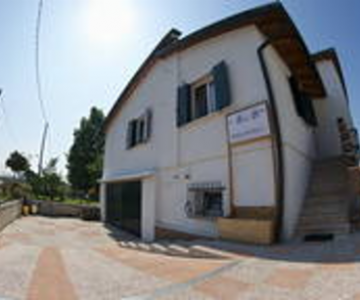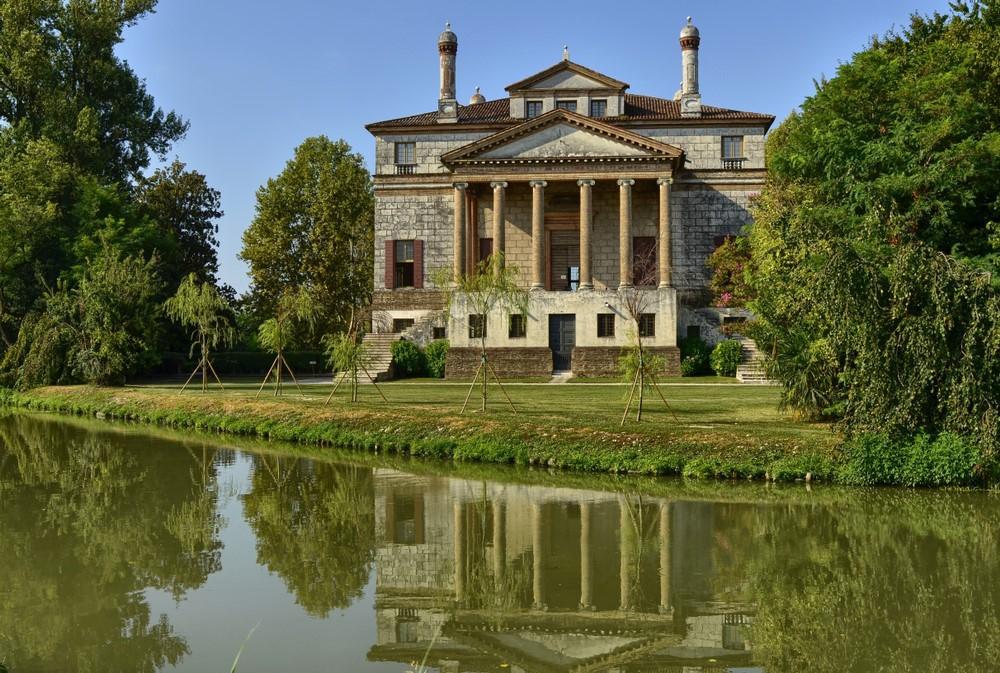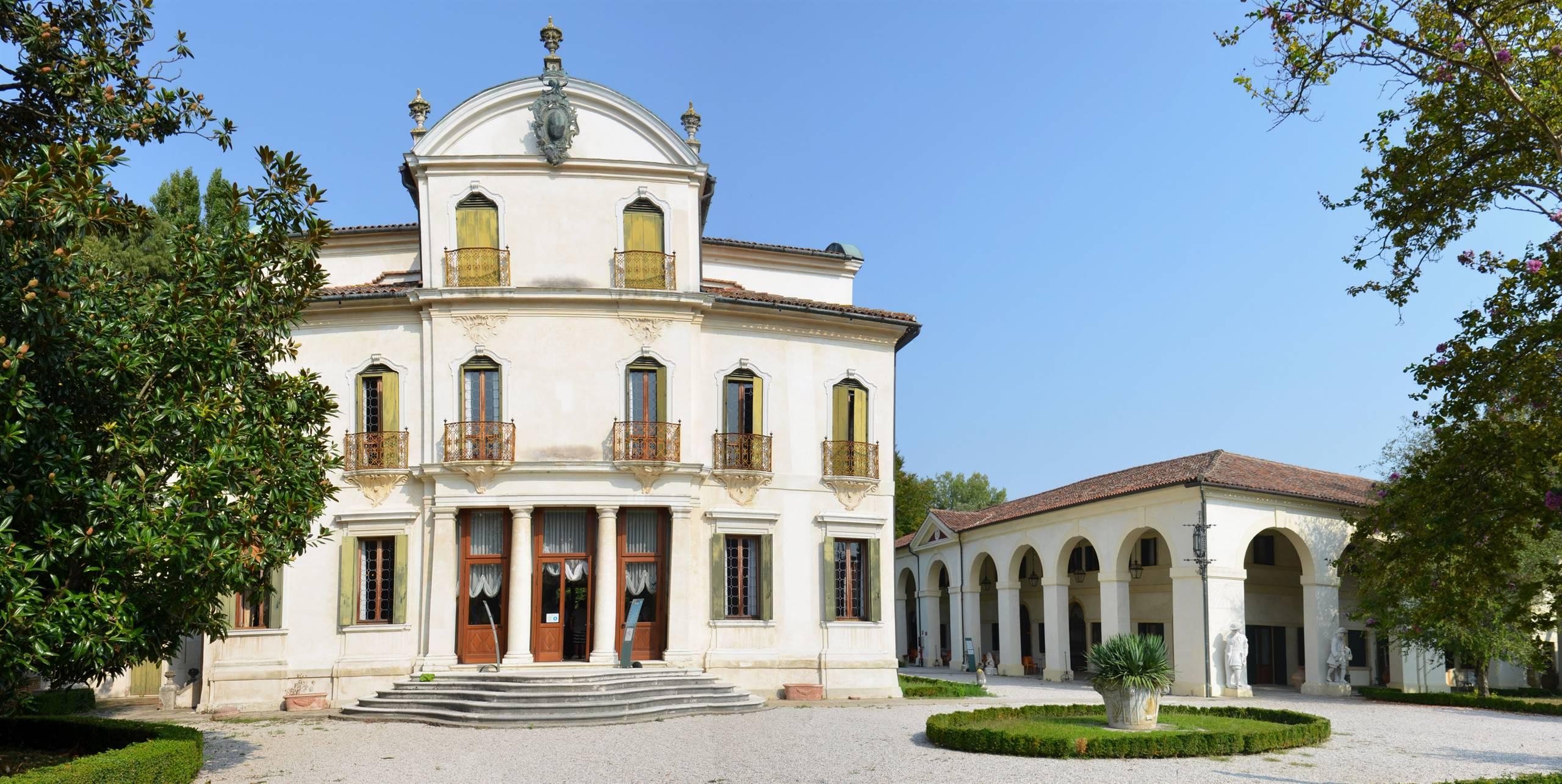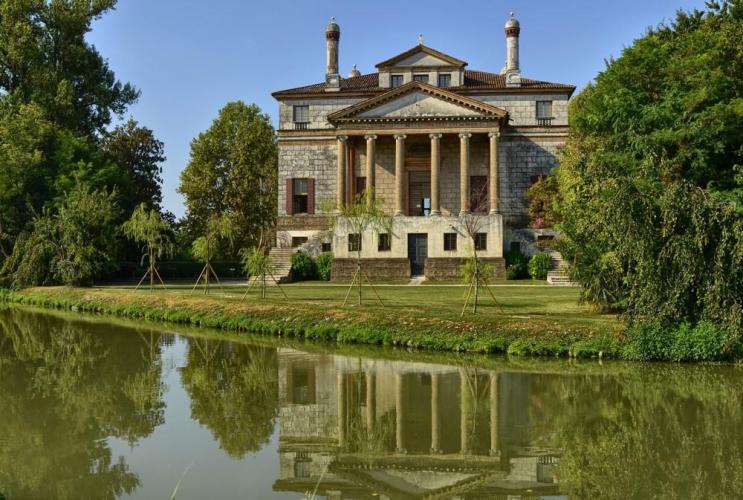


Villa Foscari, also known as La Malcontenta, is the only Villa by Palladio along the Riviera del Brenta.
Designated as a "World Heritage Site" in 1955, it is still without electric lighting, by the owners' choice.
The construction of Villa Foscari was commissioned by Alvise and Nicolò Foscari to Andrea Palladio along the banks of the Brenta River, a natural mirror of Malcontenta. Completed in 1555, it earned the nickname Malcontenta in later times due to a noblewoman, Elisabetta Dolfin, from the Foscari family, who was relegated here to atone for her infidelity. According to other traditions, the nickname comes from the frequent flooding of the river and the consequent inundation of the farmers' lands, who famously repeated "Brenta mal contenta".
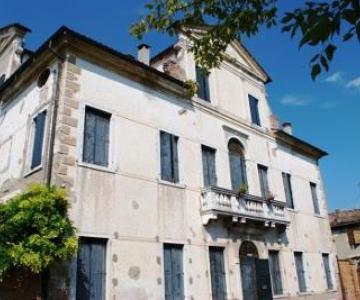
The Villa rises majestically, like a single block, with a façade facing the river in perfect Venetian style, but is enriched by classical references from the 4th and 5th centuries AD.
The side staircases represented a sort of ceremonial pathway for visiting guests. The villa is elevated more than usual (eleven feet instead of five, wrote Palladio), thus allowing for the arrangement of kitchens and other rooms on the ground floor, leaving the other two floors free for the owners.
The fabric designed by Palladio for Nicolò and Alvise Foscari, upon his return from his last trip to Rome (1554), is an expression of extraordinary completeness of his theoretical beliefs.
It has three floors, so that a distinction is made between functional activities (on the ground floor), "noble" activities (on the first floor), and storage of agricultural goods (on the upper floor).
The rear façade is probably one of the highest achievements among Palladian projects, with a system of openings that makes the internal layout of the villa imaginable; The rooms are made "in volto", meaning they have vaulted ceilings: the central room, shaped like a cross, has a “cross vault”, while the side rooms have a “dome vault”.
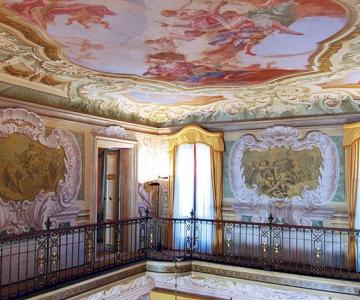
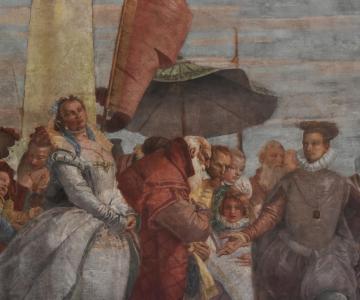
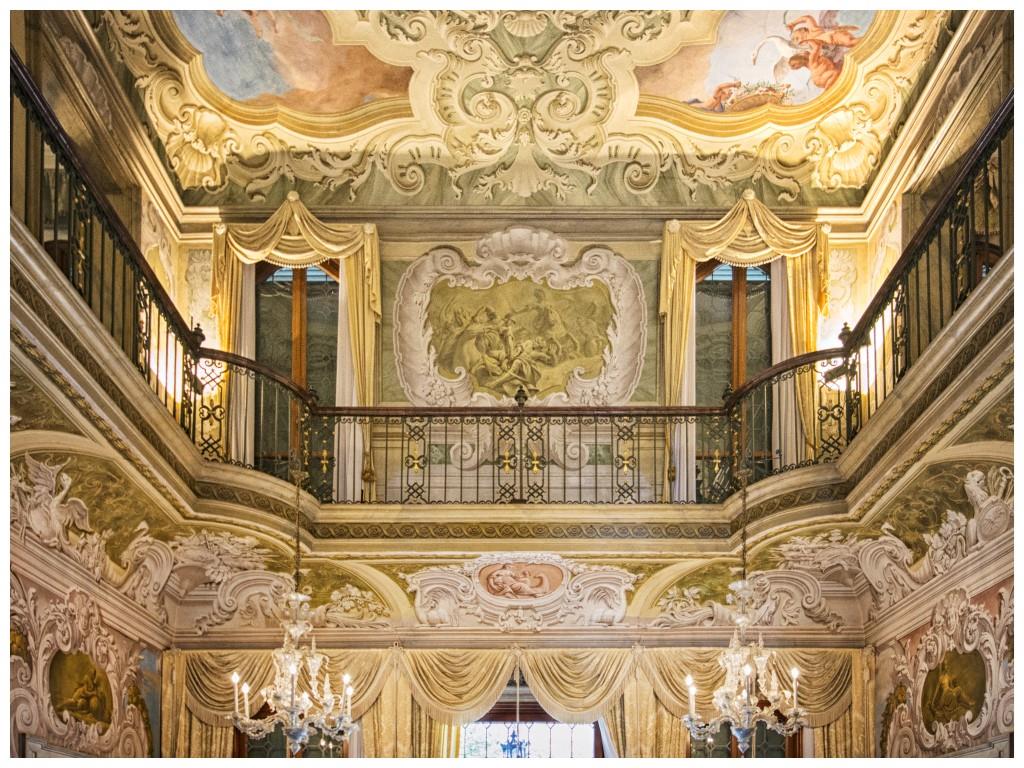
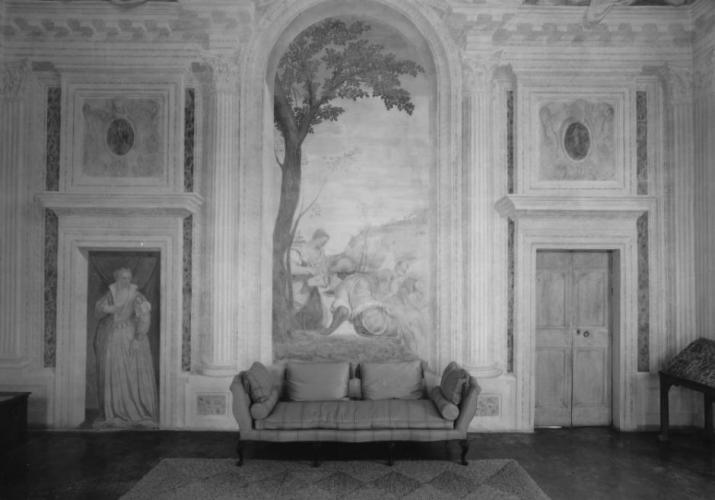
The frescoes of the hall, unfortunately very damaged, were painted with mythological stories by Gian Battista Zelotti. The side rooms have also been frescoed: Battista Franco, known as Semolei (circa 1510-1561), esteemed by Palladio and for whom he had already worked, began painting the Fall of the Giants but died before completing the work.
The work was completed by Zelotti, who also frescoed the room dedicated to Bacchus. Other rooms have been dedicated to the myth of Aurora and Prometheus, while the two to the south, dedicated to Fame and Time, are the only ones to have preserved the frescoes.