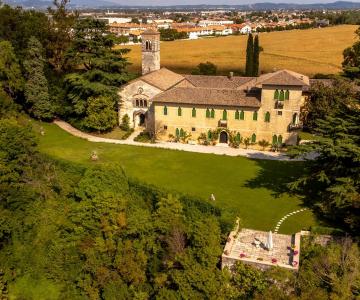
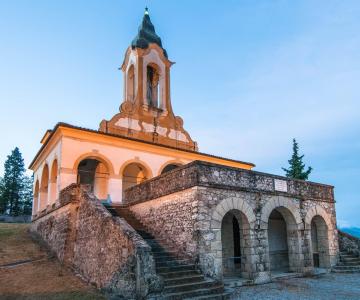
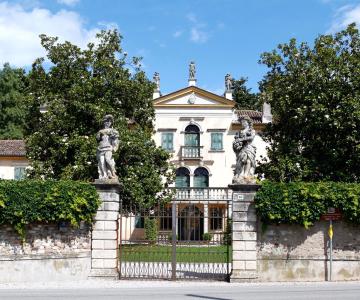
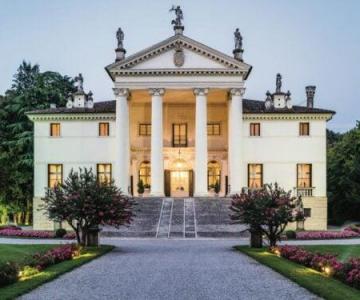
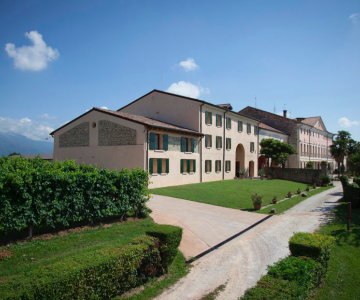
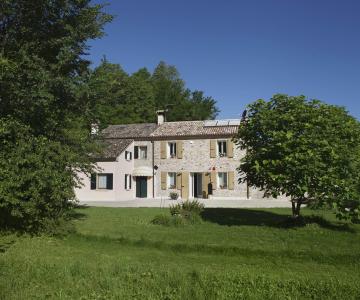
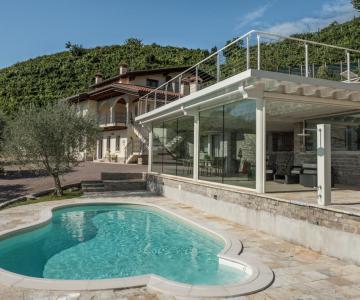
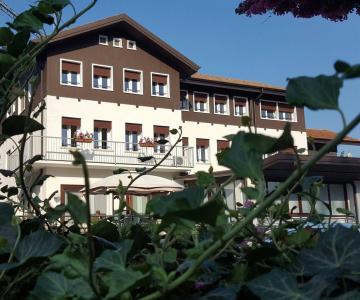
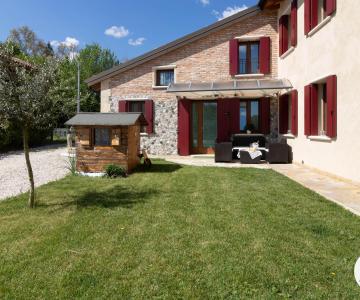
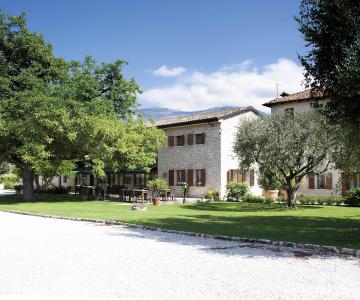
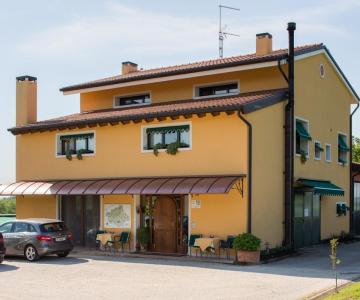
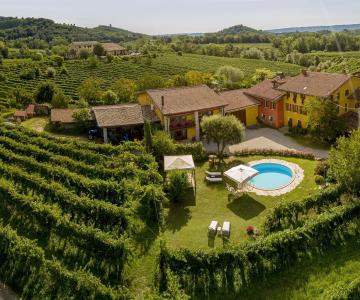
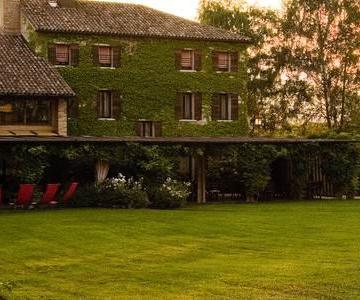
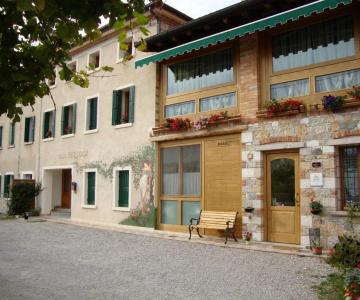
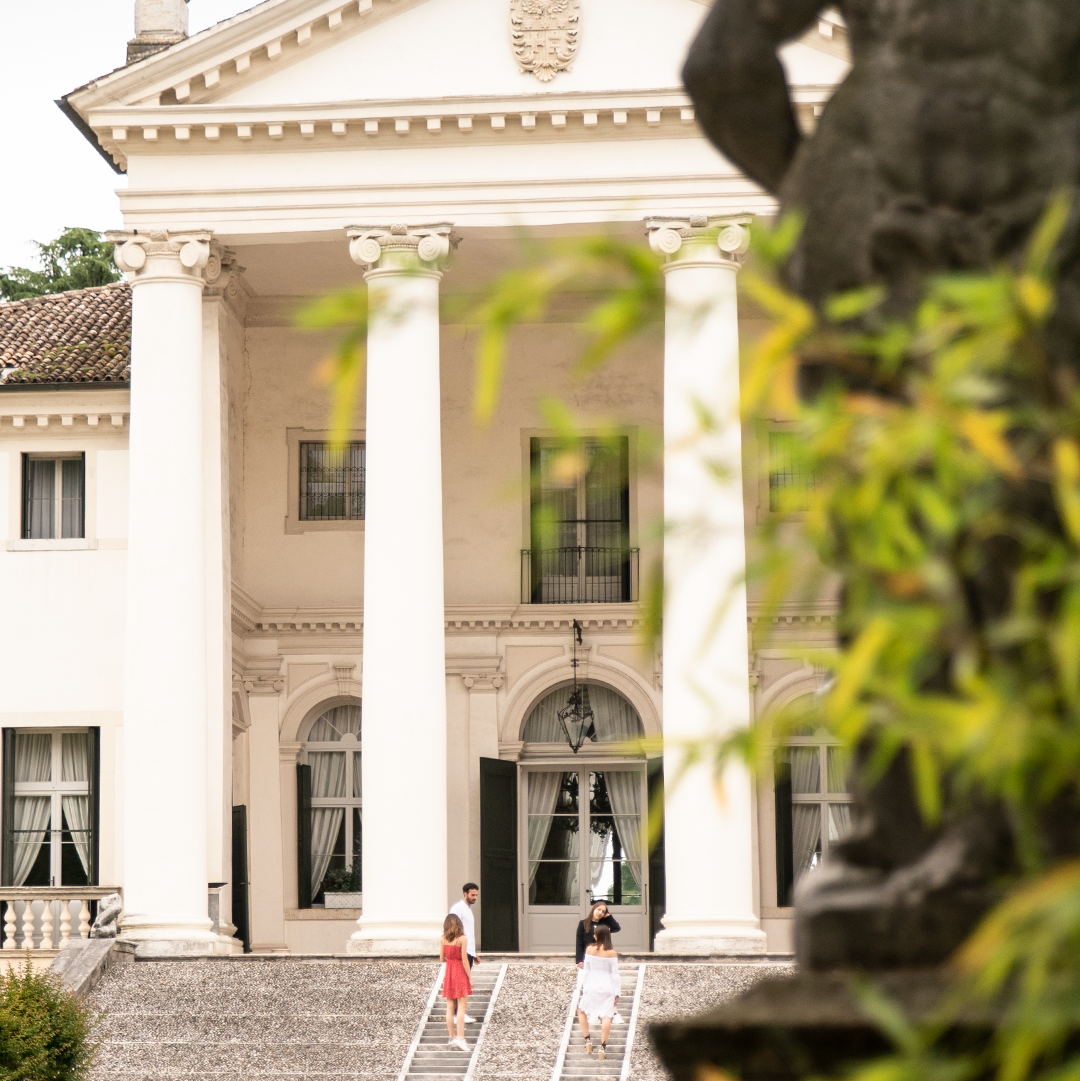
The villa is located within a large park rich in ancient plants, designed in English style and built at the end of the 1800s. The large manor house of the villa is flanked by a series of service buildings, including the barchessa, the stables, and the greenhouse; an original orthogonal turret, used as a birdhouse, rises in the park, while facing the road of Via Guizzetta stood the private Oratory, now in a state of total abandonment.
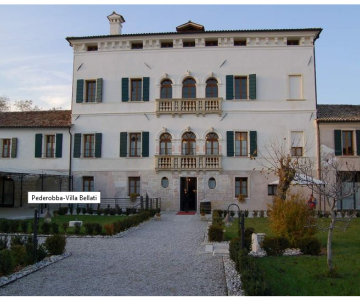
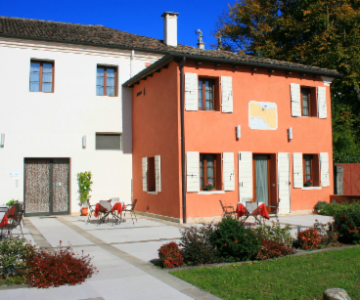
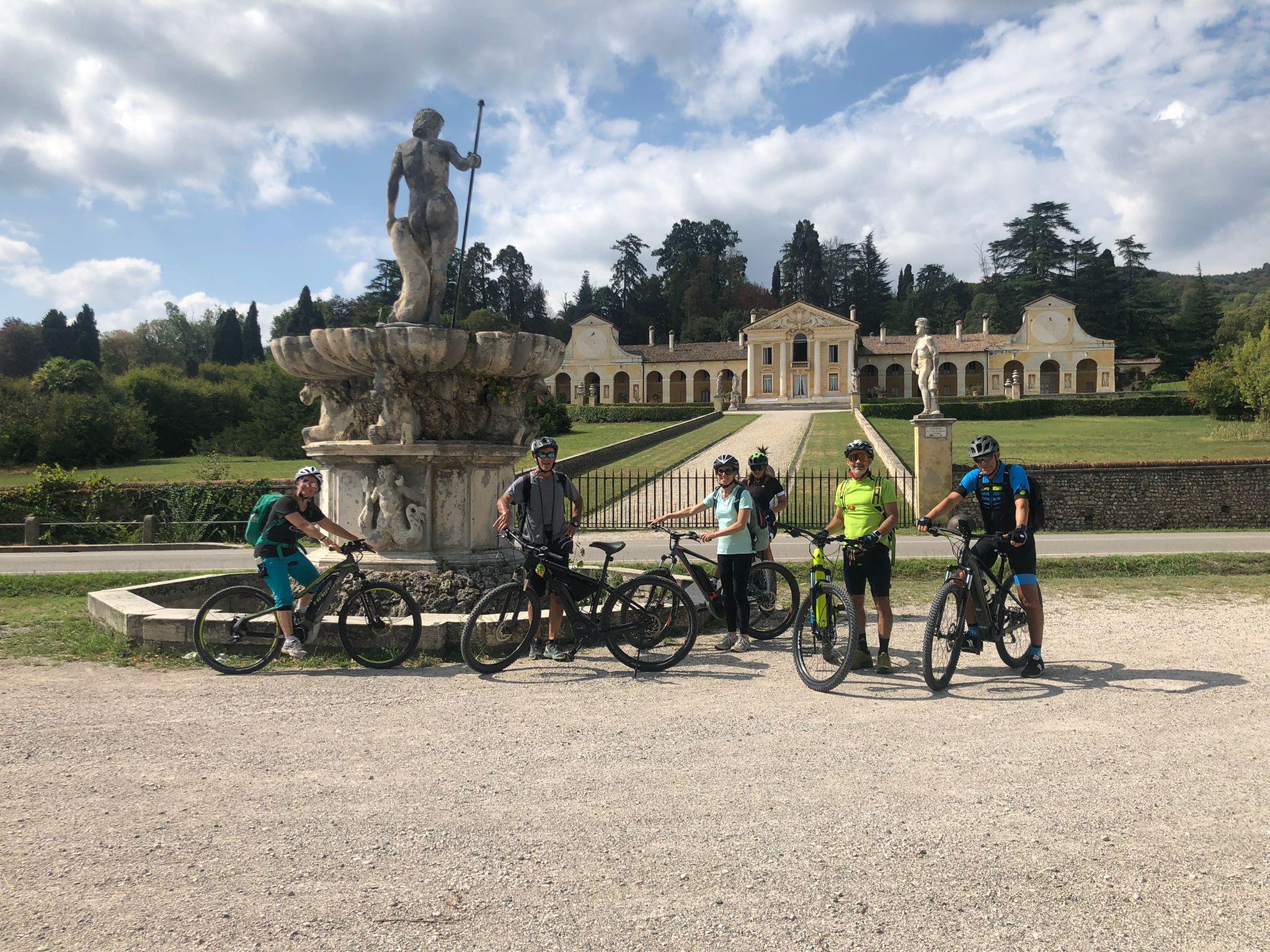
The villa, being close to the Piave River, suffered severe damage in both World Wars. In memory of the Great War, the external plaque at the villa is still visible. In the 1970s, the building underwent a general restoration intervention, from the frescoes to the stucco in the central hall, enriched by an elegant balcony. Access to the villa is through a gate next to a small building with a neo-Gothic turret. From here, a long avenue leads to the noble residence.
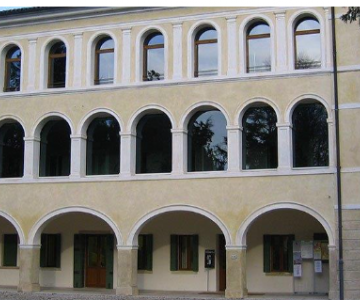
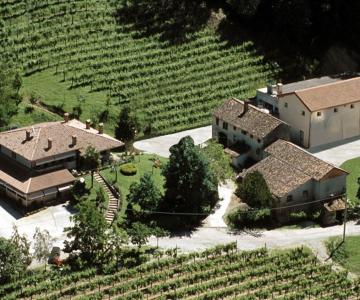
The body of the villa features an extension of the southwest wing, characterized by the presence of a passage hall that connects the courtyard-garden with the park towards the river. This space is identified, on the internal facade, by a low portico resting on columns, while on the opposite front concludes a semicircular greenhouse. At the end of the added wing, a long service building is joined at a right angle, two stories high and with an “L” shaped floor plan; mirroring this, on the north side, develops another system of adjacencies: barchessa and stables that form a single U-shaped structure. This villa also appears in the Catalog of Venetian Villas.