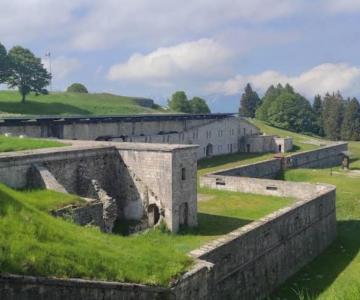
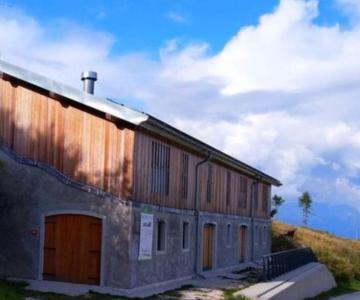
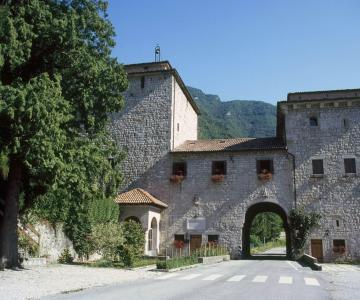
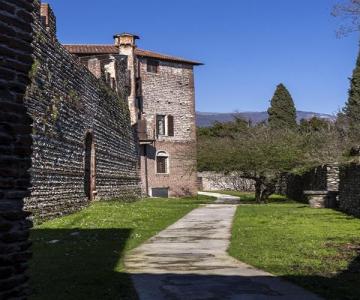
The Lisser fortress was built between 1911 and 1914 and was considered the "Lion of the Plateau" because it was in a dominant position from the Italian defensive viewpoint.
The fortress could control the entire Valsugana and any potential flanking movements on the Melette and the Marcesina Plain.
Inside, it had 4 cannons, rotating turrets, and machine guns placed in various parts of the fortress, two in the retractable armored towers, 5 in concrete casemates, and 4 on tripods integrated into the infantry's firing platform; additionally, as reinforcement, there were another 8 cannons of 75 mm and 4 of 149 G, mounted on siege platforms equipped with rams.
From June 2 to 8, 1916, during the period of the Strafexpedition, the Lisser came into action to support the Italian defense of the Melette but with unsatisfactory results, as the shots were too short, causing them to fall on the Italian troops.
On June 8, the building was struck by Austrian 305 mm mortars but did not suffer serious damage.
In December 1917, after losing the Melette and the retreat of the Italian line to the TreMonti, Val Frenzela, and Monte Grappa, the fortress fell into the hands of the Austrians, though it was never effectively used.