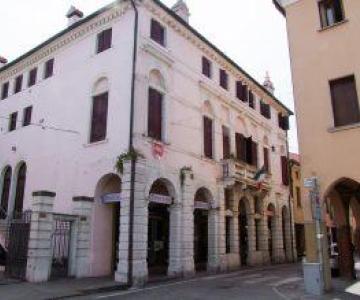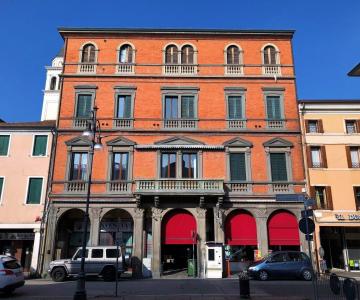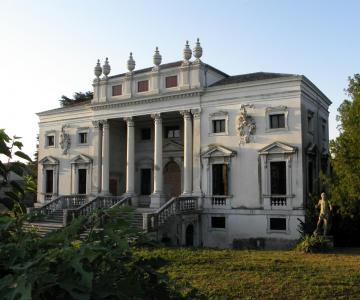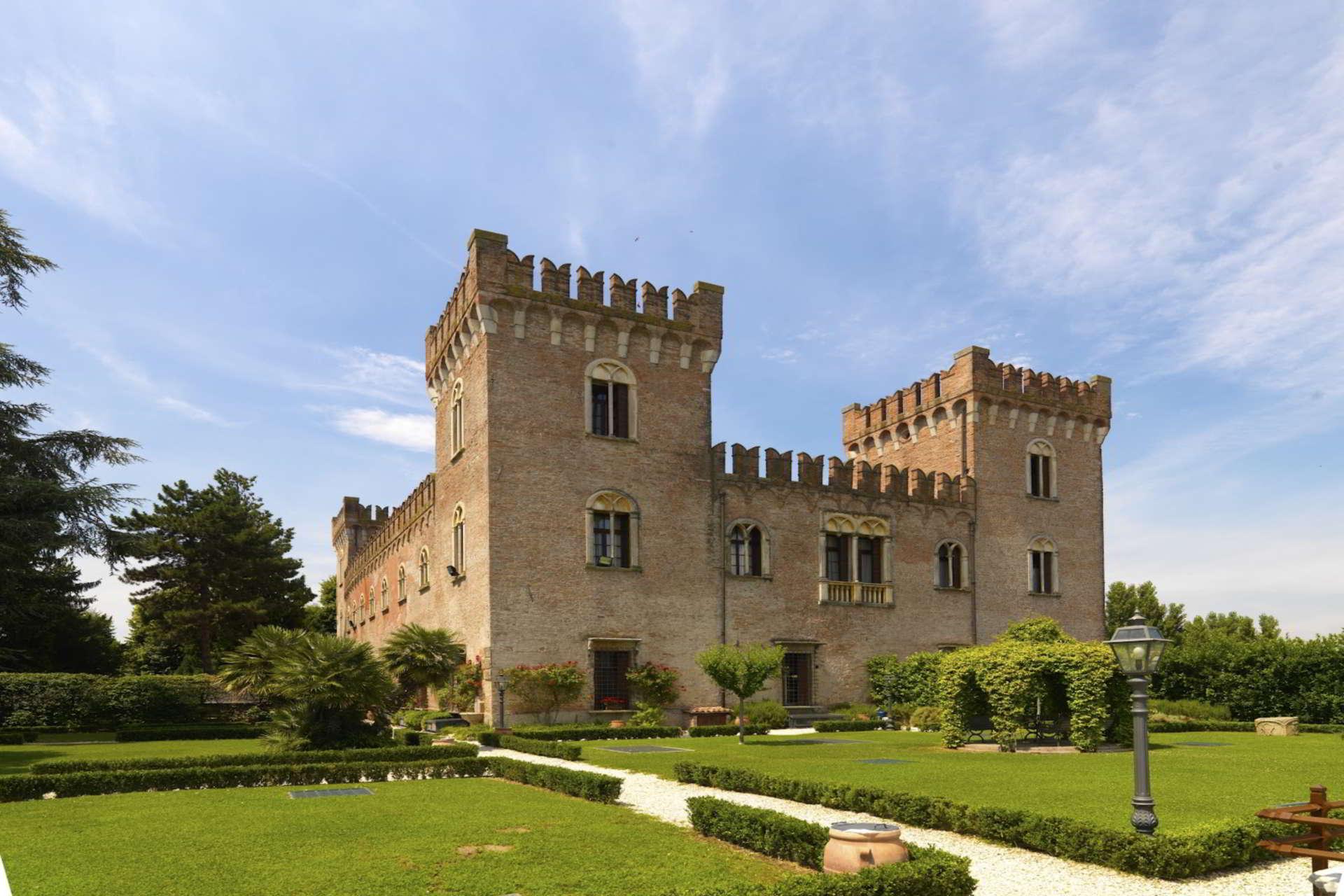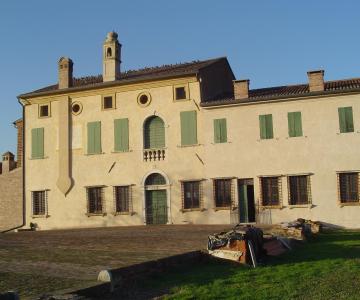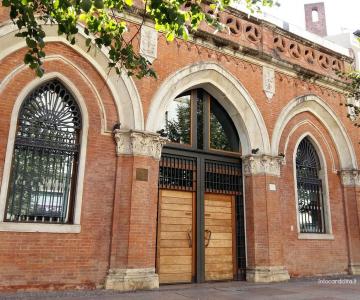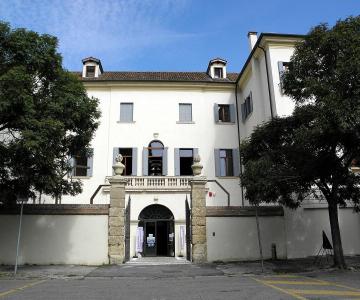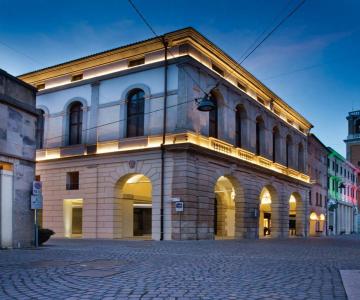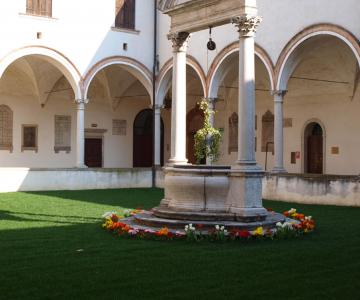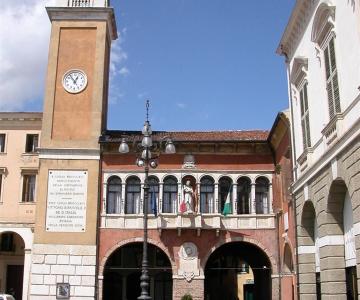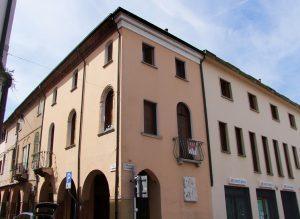
The Palace is a noble building from the 16th century and preserves within it precious memories of the splendor and elegance of a bygone era. It is said that the building was once owned by the Ezzelin family in ancient times and that it only passed to the Venetians after this lordship fell into disfavor, who then ceded it to the Rosini family.
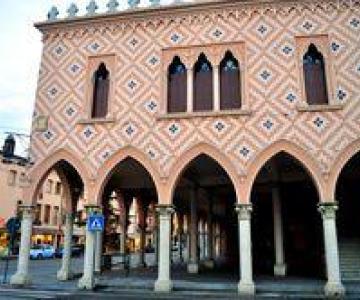
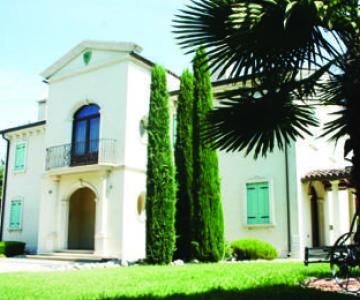
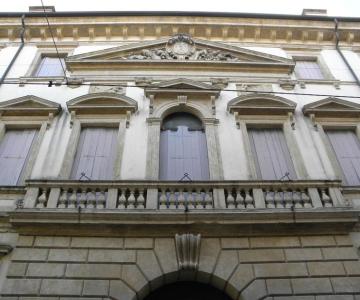
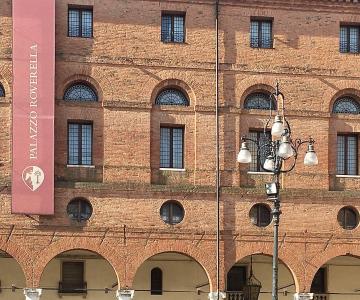
An important feature of the Palace is a very interesting cornice still visible today on the side of the Palace facing via San Giovanni in Renaissance style, made of terracotta and unfortunately interrupted by the construction of a window at the beginning of the 1900s. Analyzing the facade in detail, of considerable interest are the semicircular arched windows made with terracotta decorations and a series of balconies built in different eras. The ground floor, on the other hand, is characterized by the arches of the portico that run through all the buildings of the street up to the former Caffè Grande, now the site of a credit institution. The arches of the portico are from the same period as the entire palace and are supported by terracotta pillars.
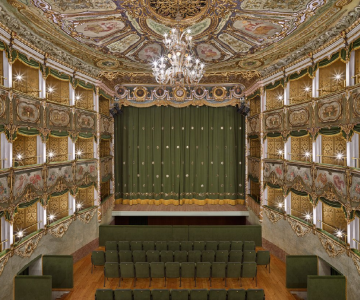
Despite its majestic shape, Palazzo Rosini has undergone various interventions over the centuries that have partially changed its aesthetic appearance, taking away its uniqueness and uniformity: the structure has indeed been divided into different properties that, over time, have distorted the internal spaces of the Palace while one of the owners, with great taste, restored the only room decorated in the first half of the 19th century by Francesco Saraceni, a painter from Ferrara who, along with the Venetian painter Giovanni Abriani, executed the pictorial decorations of the Teatro Sociale in 1855.
Upon entering to visit the interiors of the Palace, it is only one room on the first floor that still retains some pictorial decorations today, which stand out alongside the wooden ceilings: the walls of this room are divided into nine pictorial frames depicting some historical moments related to noble Italian families alternated with some allegorical representations, such as Poetry, two bathers, Agriculture, the Arts, Commerce, and Industry next to episodes from the Medici family and the abduction of Venetian brides by the Cypriots.