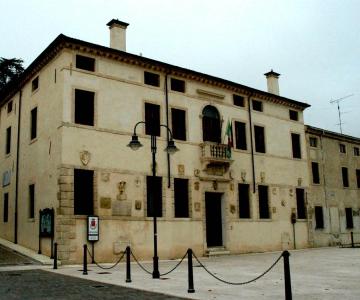
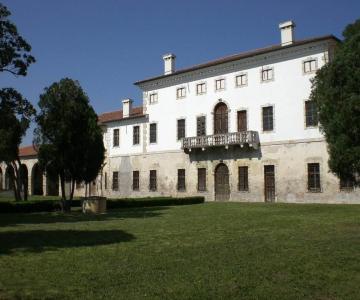
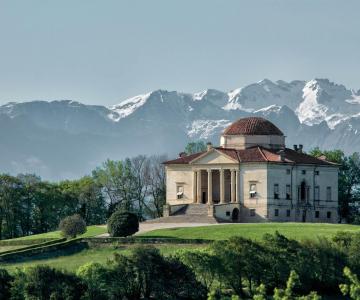
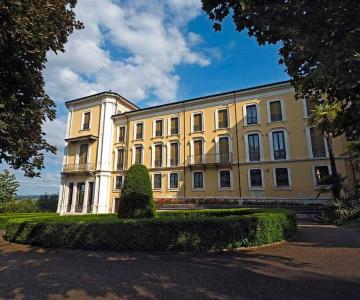
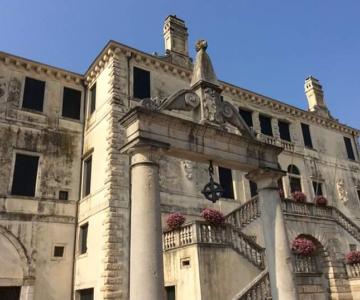
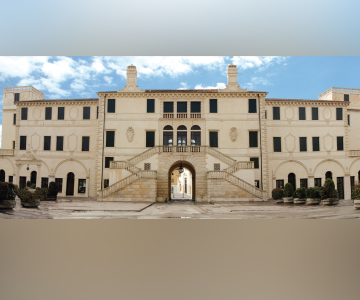
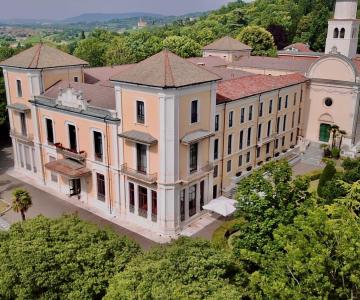
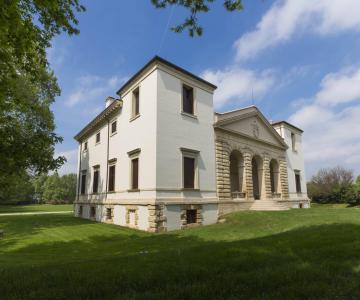
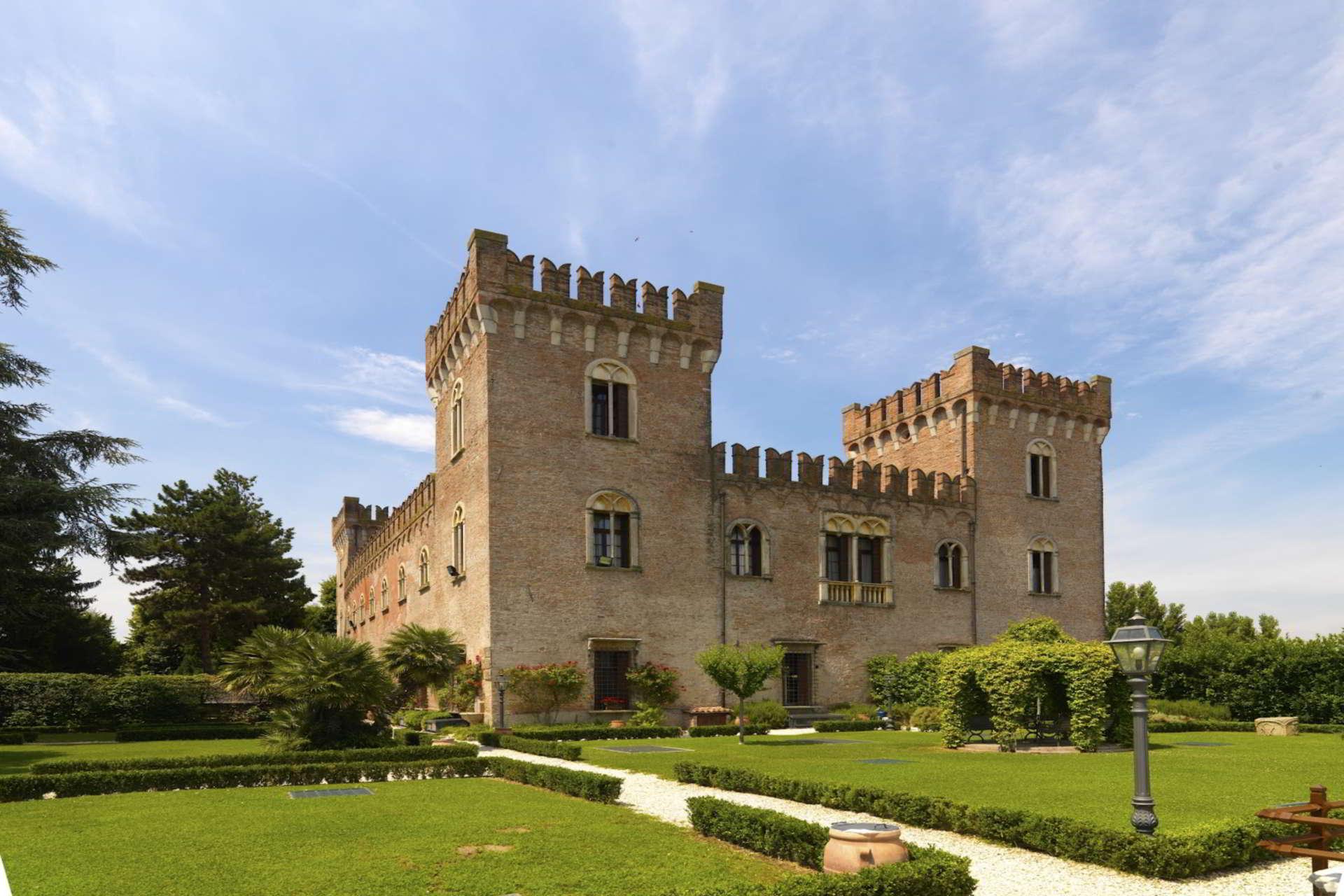
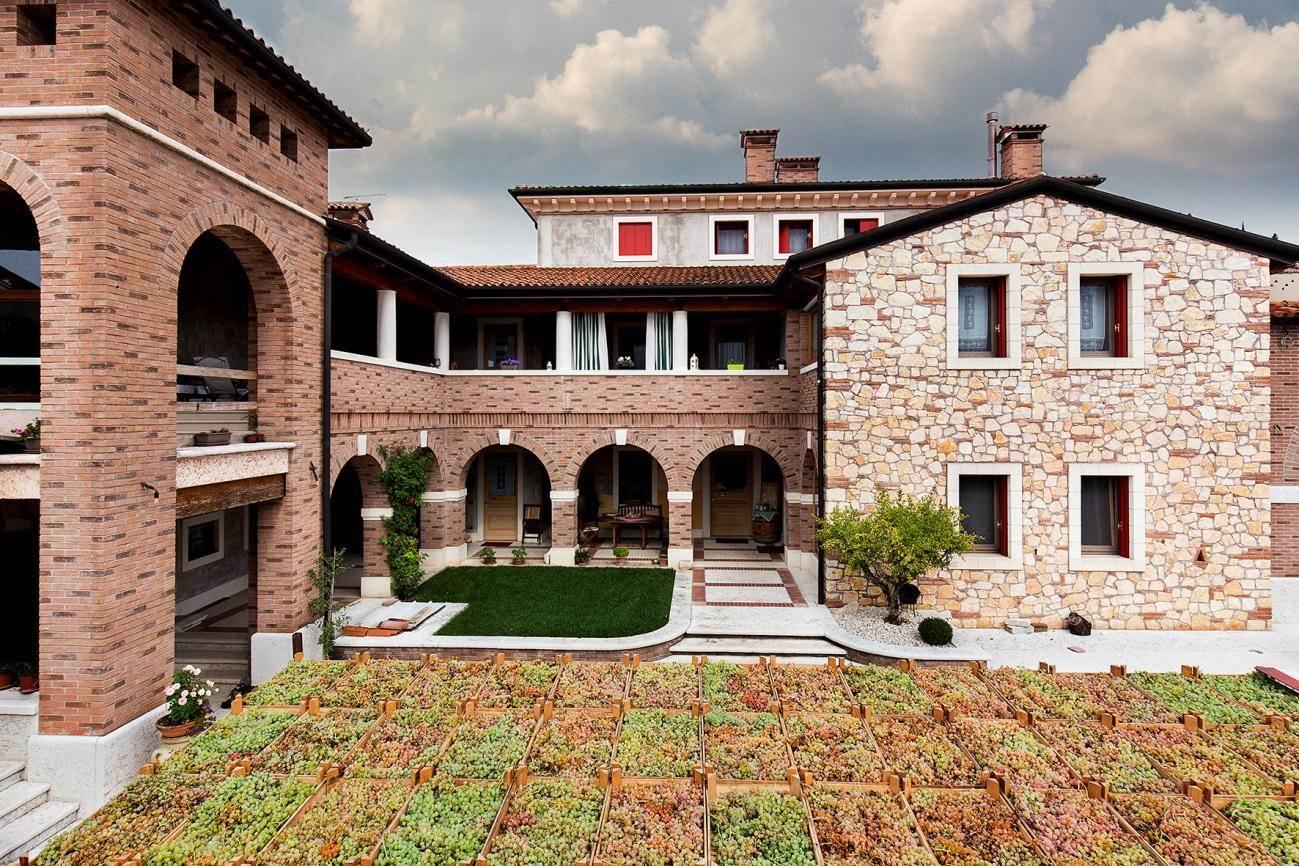
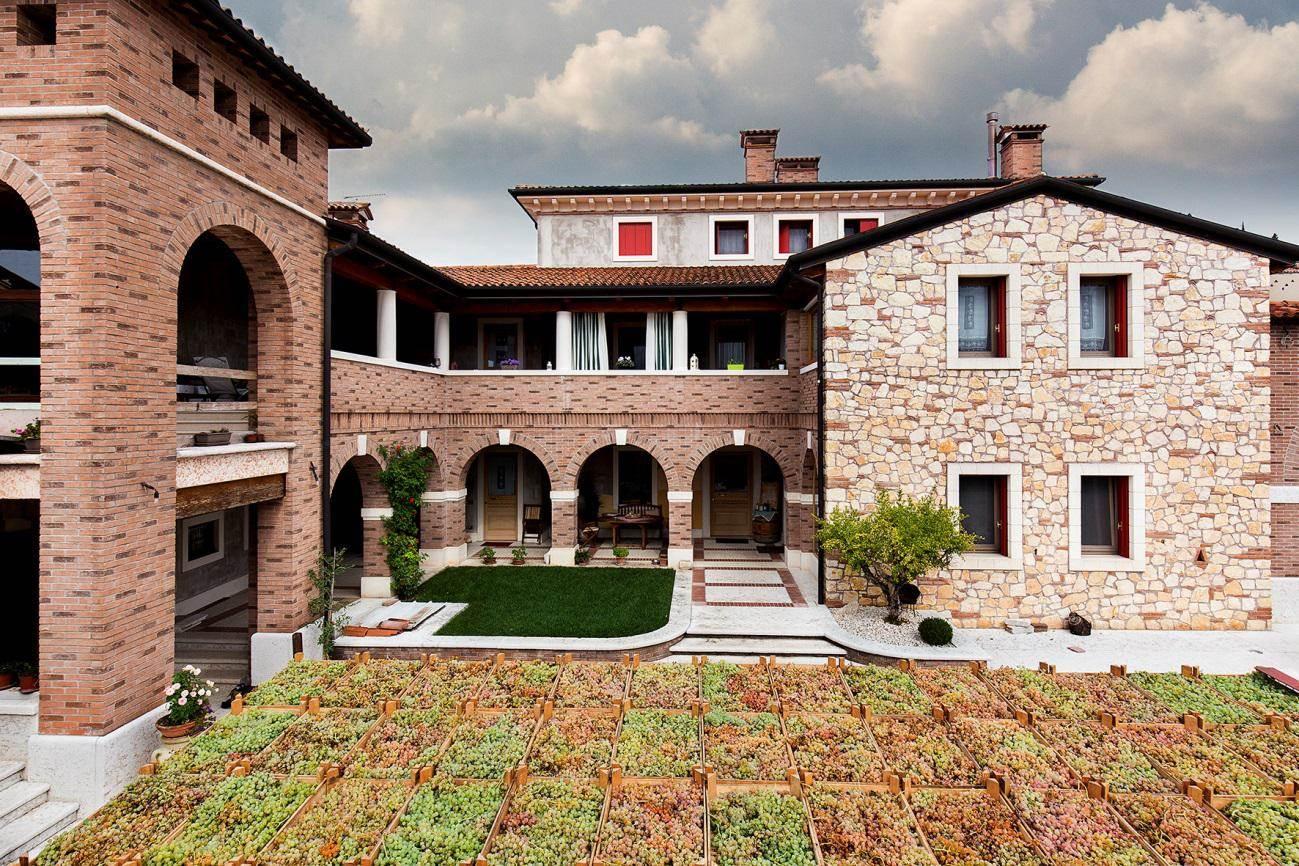
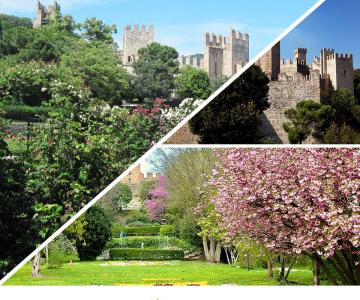
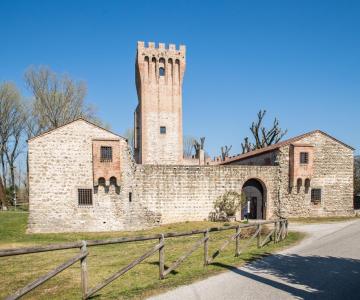
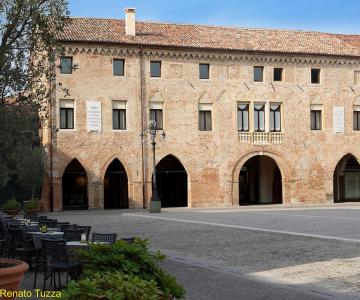
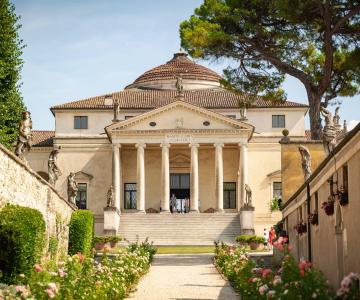
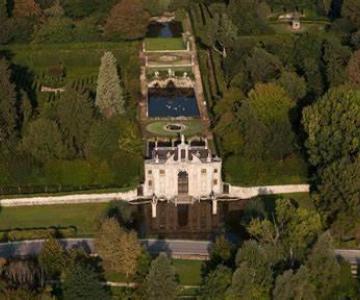
In 1316, the Fracanzan family purchased land and buildings in Orgiano, the original nucleus of the current complex. In the following centuries, the Fracanzans participated in the political life of the area and contributed to the reclamation of the surrounding lands according to the grand projects of the Venetian Republic. In the early 1700s, the Fracanzan family, having become one of the most important in Vicenza, commissioned the Lugano architect Francesco Muttoni to design the villa and garden in order to consolidate their image. The villa hosted an important literary salon and was long frequented by Elisabetta Turra Caminer (Venice 1751 - Orgiano 1796), the first female journalist of the time, known for her Enlightenment ideas. The villa was occupied by Napoleon’s troops after the Battle of Arcole, by Austrian soldiers in 1866, by Italian commands during World War I, and by the Wehrmacht in 1945. In 1870, the assets of the Fracanzans were acquired by the Orgian family and subsequently passed by inheritance to the Piovene family.
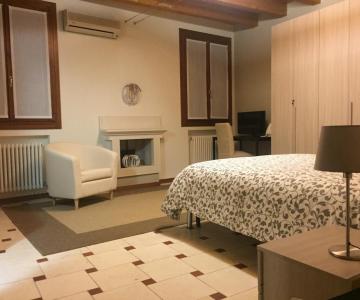
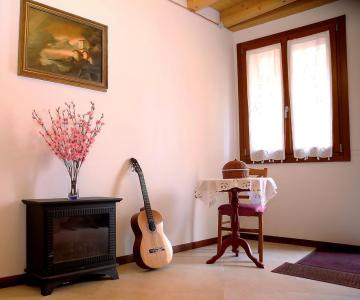
Francesco Muttoni (1668 – 1747), of Lugano origin, was called to Vicenza in the late 1600s. A Baroque architect influenced by Borromini due to his frequent trips to Rome, he studied Palladio and published an important work “Architecture of Andrea Palladio from Vicenza” with tables and observations. Many villas and palaces in Vicenza from the early 1700s bear his signature. When Muttoni was summoned by the Fracanzans to Orgiano to design the villa in the early 1700s, he had to blend parts of the old medieval buildings with the new constructions in a particular and binding environmental context. The monumental Baroque structure designed by Muttoni, rare in Veneto, is the subject of study for the numerous decorative elements of the Palladian tradition. The original projects of the villa are located in Washington at the Library of Congress and in private Italian archives. All the interiors of the villa are perfectly furnished and testify to the lifestyles of past centuries. On the ground floor, the villa is set around the column hall, which overlooks the billiard room, the plebiscite room with historical memorabilia, and the dining room with period plates and services. The famous kitchen, with collections of utensils and branches, is known for the 16th-century red marble sink designed by the Veronese Farinati, which according to tradition Napoleon wanted to take to the Louvre. On the first floor, the large ballroom, the ceramics room, the bedrooms with canopies, the Napoleon room, the bathrooms, and the large old laundry room are located.