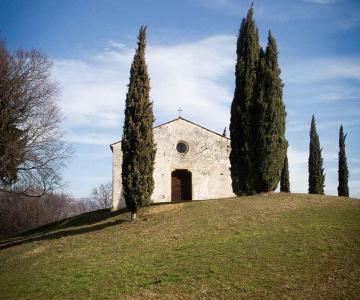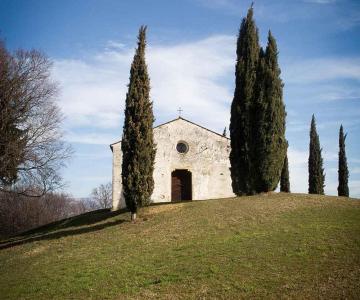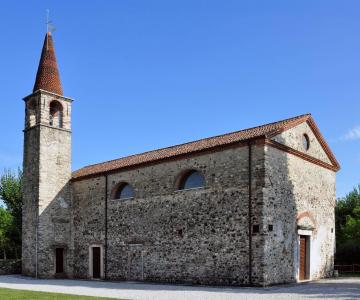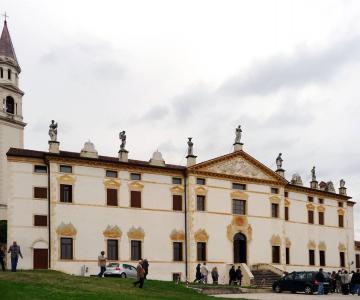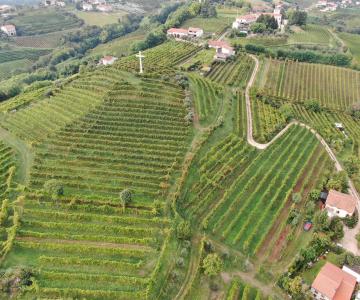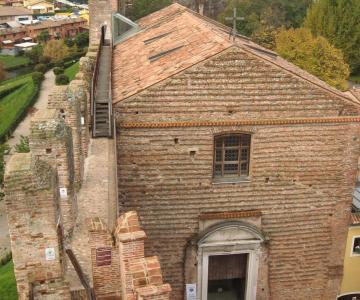
The ancient church built on the hill certainly predates the year 1000. After Berengar's donation of the parish of Breganze to the diocese of Padua in 917, to which it was linked, Saint Andrew was annexed to the parish of Santa Maria di Dueville.
In 1489 it merged with the parish of San Pietro in Bodo, which was under the diocese of Padua.
In the second half of the 18th century, Sarcedo became a foreign vicarage that had jurisdiction over the parishes of Dueville, Novoledo, Villaverla, Montecchio Precalcino, and Molina.
When, in 1818, after 900 years, Breganze returned to the diocese of Vicenza, Saint Andrew of Sarcedo returned to depend on Santa Maria di Breganze, its mother church.
The ancient church was demolished in the early years of the 18th century. It housed the remains of not only the priests but also members of the Peroni, Dal Sasso, Todesco, and Nievo families.
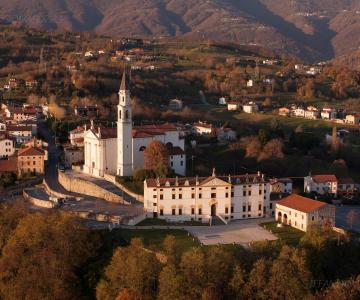
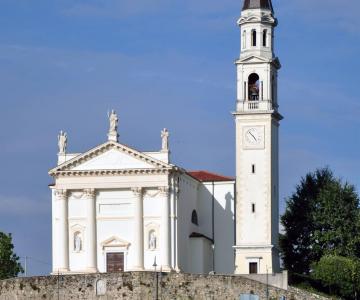
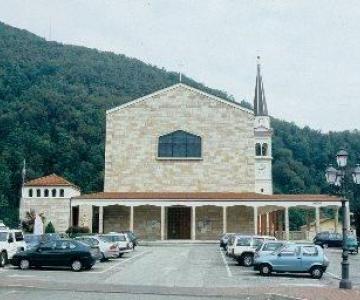
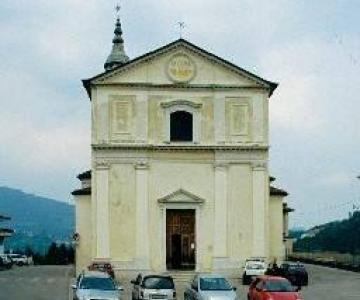
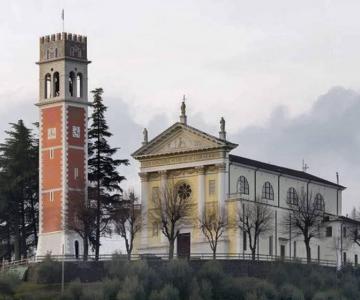
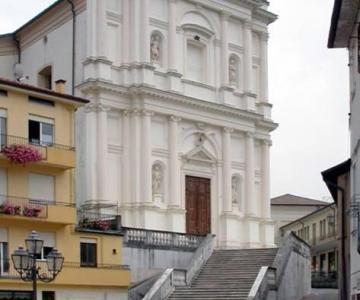
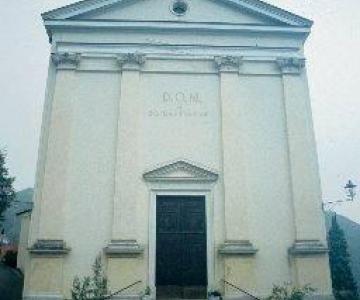
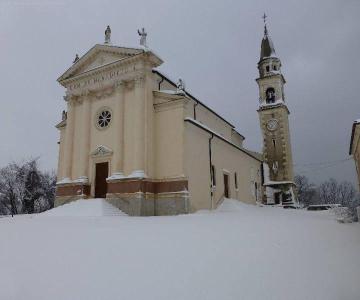
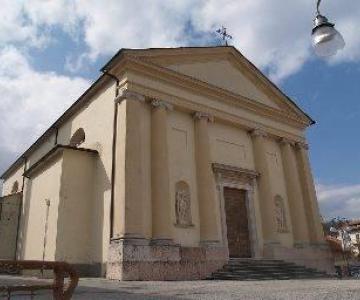
The first stone of the current church was laid in November 1731; the first mass was celebrated in 1735, and it was consecrated in 1744.
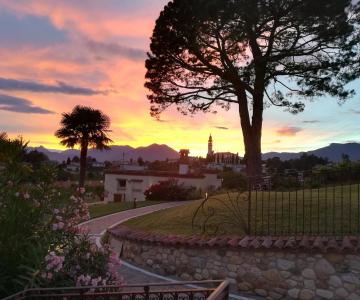
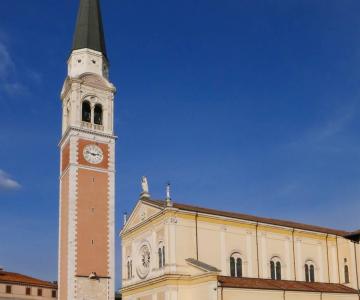
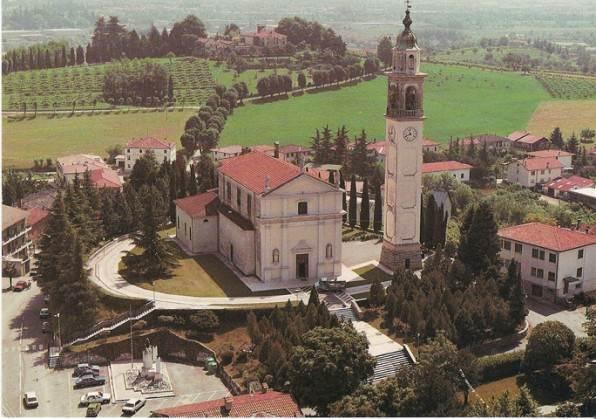
It is one of the most beautiful churches in the Vicenza area, both for its location and for its architectural appearance.
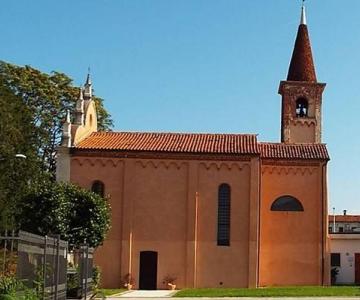
To the right of the main body is connected the chapel of the Daughters of Mary, built in 1885 at the behest of Isabella Ballardi.
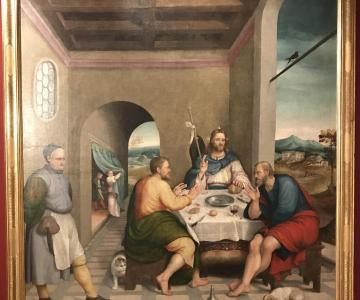
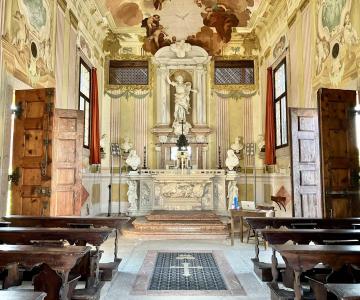
Inside, the church consists of a single wide and bright nave, a main altar, and four side altars, all made of polychrome marble from the 18th century. It houses: the Virgin and Saints by Alessandro Maganza (approximately 1556-1630), the Crucefission of Saint Andrew by Giovanni Battista Mariotti (approximately 1685-1765), the Madonna and Saints by Francesco Verla (dated 1517), the Transito of Saint Joseph by Antonio de Pieri known as the Lame, other paintings by Costantino Pasqualotto (17th-18th centuries). The Via Crucis in relief is noteworthy.
The bell tower, standing 50 m tall, was built between 1774 and 1795.