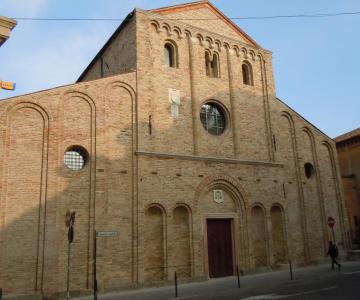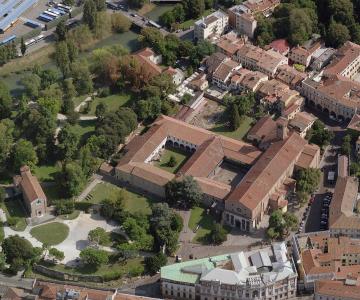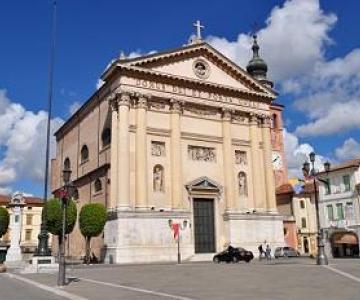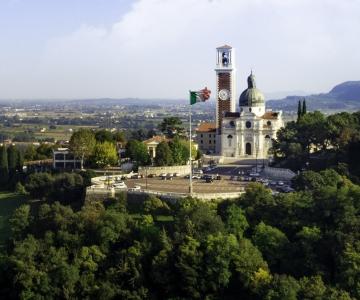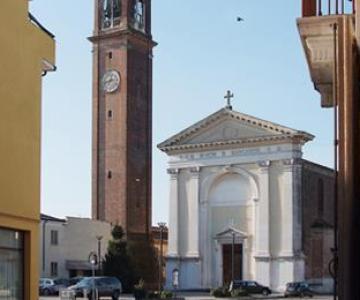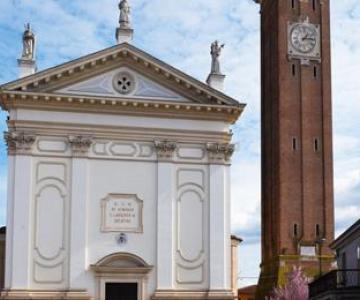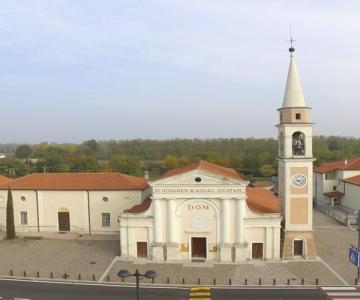

This place of worship was once dedicated to the Holy Apostles Simon and Jude and stands alongside what was the monastery of the Humiliati Order of monks. Nowadays, however, it is named after the famous preacher Gaetano da Thiene, the founder of the Theatine Order, who settled in the city in 1530. Having taken over the monastery, they commissioned Vincenzo Scamozzi to renovate it and to give the church a more modern appearance. The results can still be seen in this beautiful building, which was consecrated by the Bishop of Urbino on 23 October 1588. The imposing facade is split into two levels and divided by large pilaster strips, which are surmounted by entablature and an attic storey.
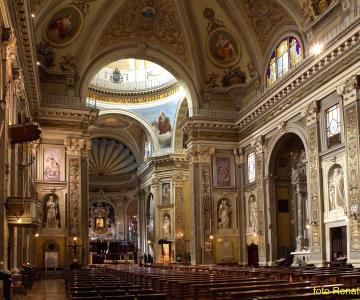
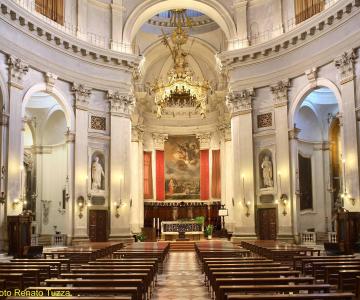
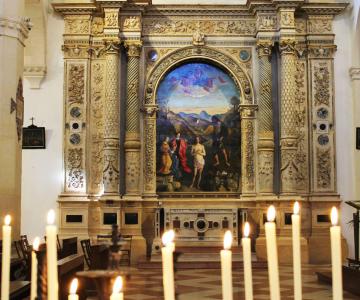
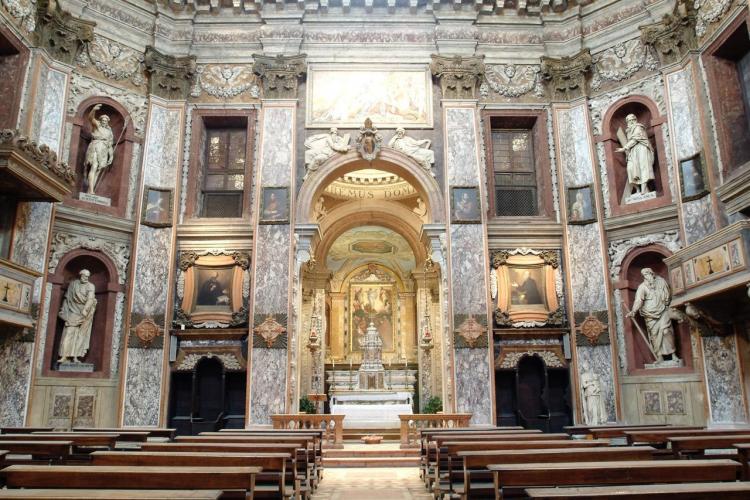
The original octagonal floorplan of the church shows that the building was intended as the chapel of the Theatine monastery. Richly adorned with eighteenth-century work in polychrome marble, the interior is enlivened by the fascinating spatial distribution of the pilasters, which run up beyond the trabeation to meet at the top of the ceiling.
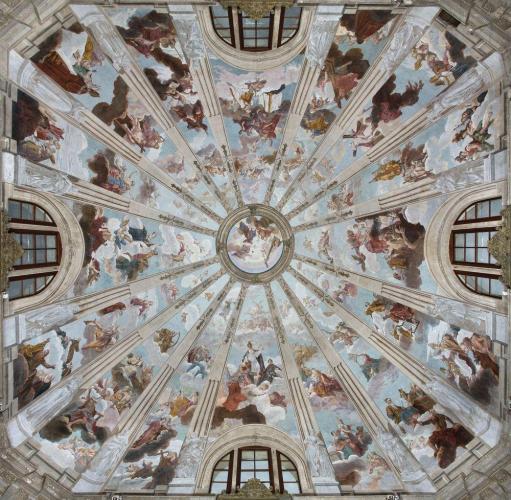
Subsequent additions to the late-sixteenth century interior decoration may have altered the original simplicity, but they created a church which is a splendid example of Baroque art: for example, at the cupola, whose vault is divided into sixteen equal segments decorated with a marvellous fresco of Paradise, the work of the French artist Guido Luigi Vernansal (completed in 1724).
Particular mention should be made of the Holy Sepulchre Chapel, which was built as part of the original sixteenth-century church; this bears witness to the profound contemporary devotion to the Crucified Christ and the numerous pilgrimages that were typical of the period.