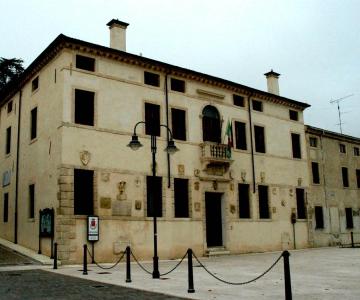
The first document mentioning the “house with chimneys of the Canons” dates back to 1187. This name was due to the presence of chimneys inside the building, where the canons lived in community, following the rule of Saint Augustine with vows of poverty, obedience, and chastity.
Over the centuries, the Palazzo fell into ruin, until the restoration in 1530 by Paolo Godi.
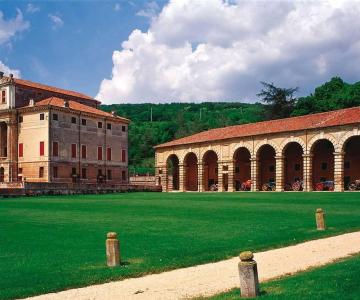
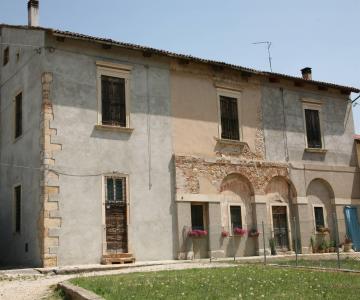
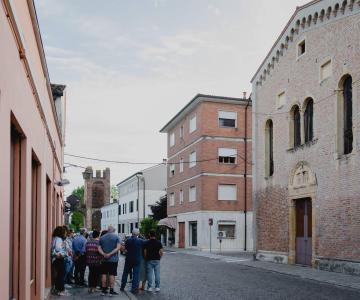
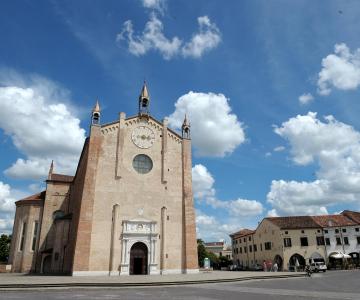
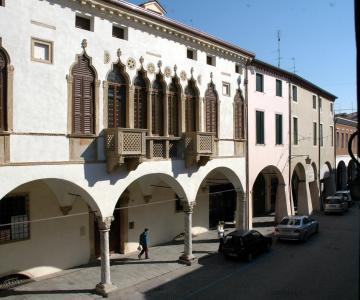
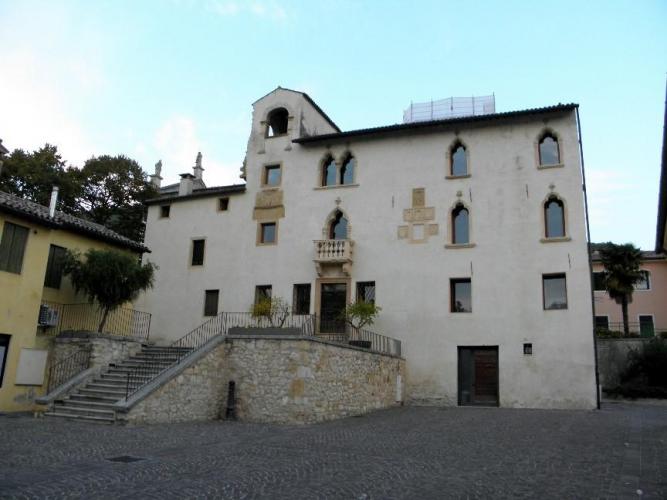
The main facade features several architectural styles, due to the interventions that have taken place over time. The top floor, the oldest, has a Gothic style; the central floor shows the modifications made during the restoration of the 1500s; the ground floor dates back to the 1700s.
On the facade, at the height of the first floor, one can observe the coats of arms of the families and institutions that were once present in the area.
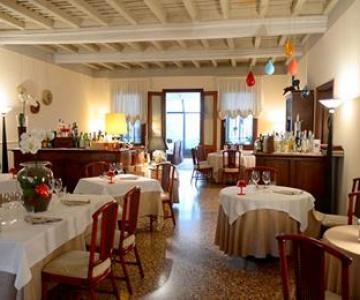
The floor plan is repeated on all three floors of the building: a central hall with wooden beams on the ceiling and rooms on the sides.
The central hall of the first floor features two recently retouched frescoes depicting the coats of arms of the Corner and Pojana families.
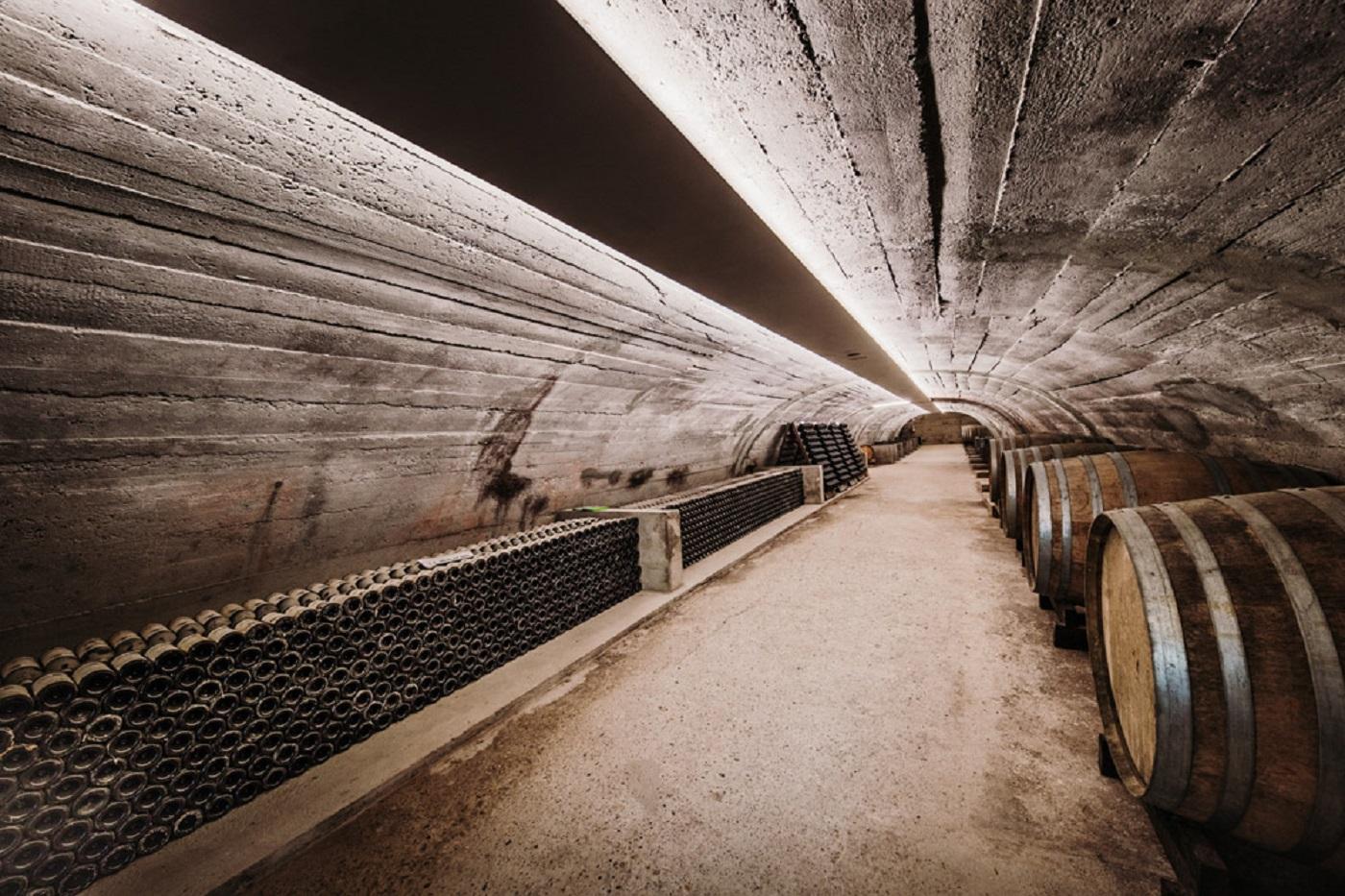
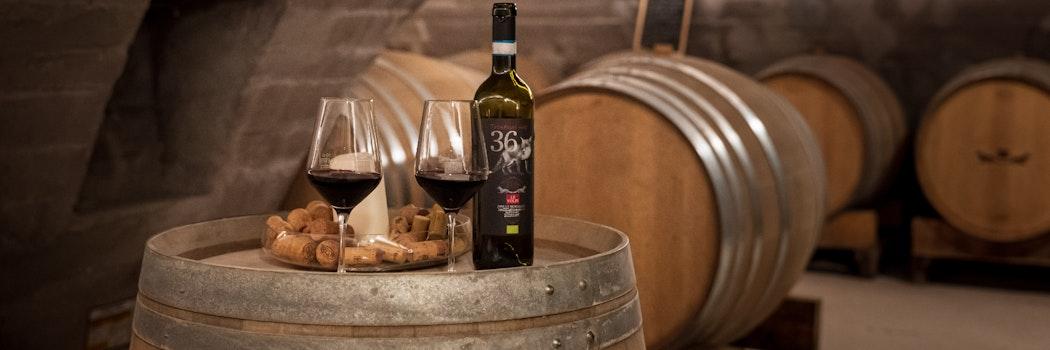
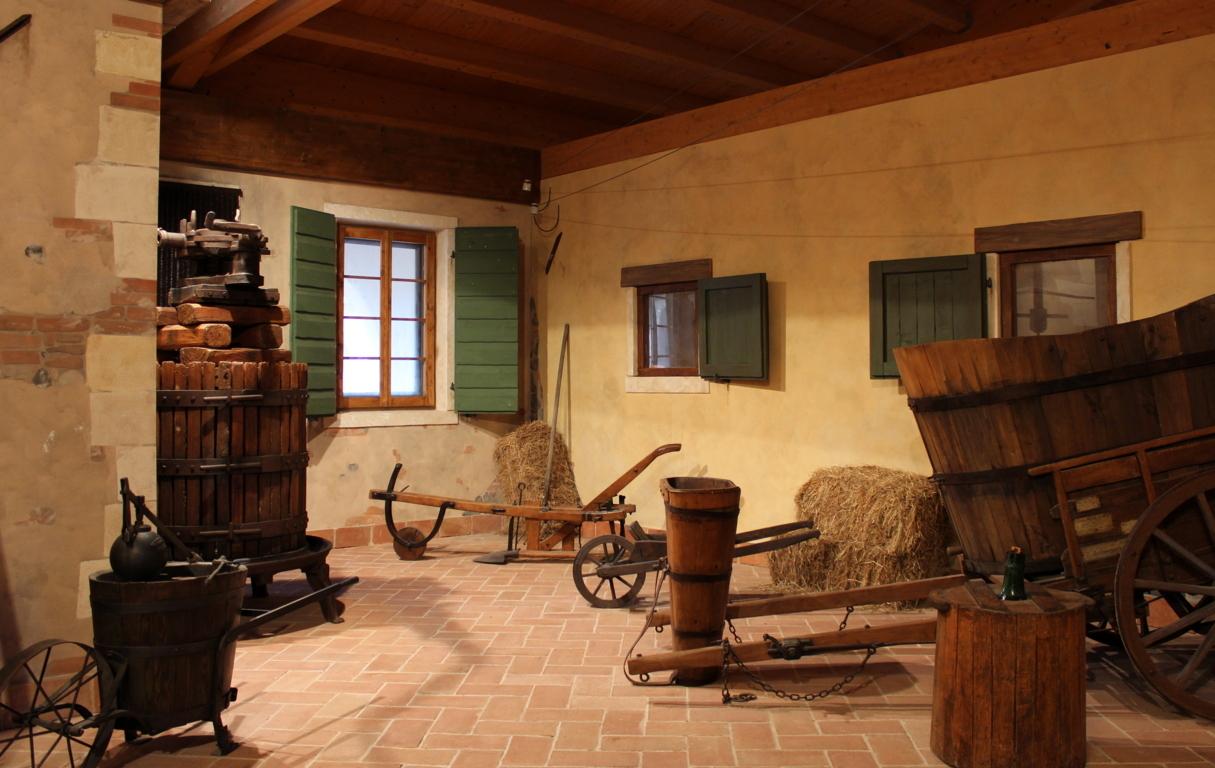
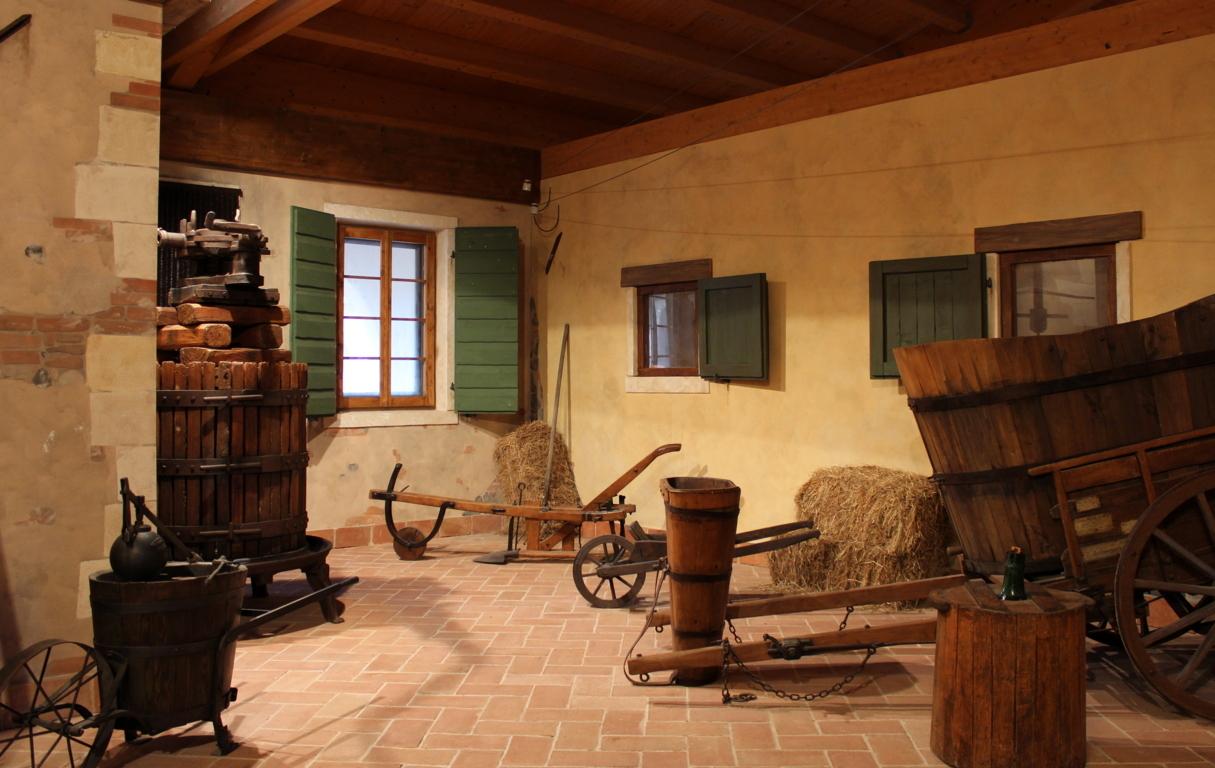
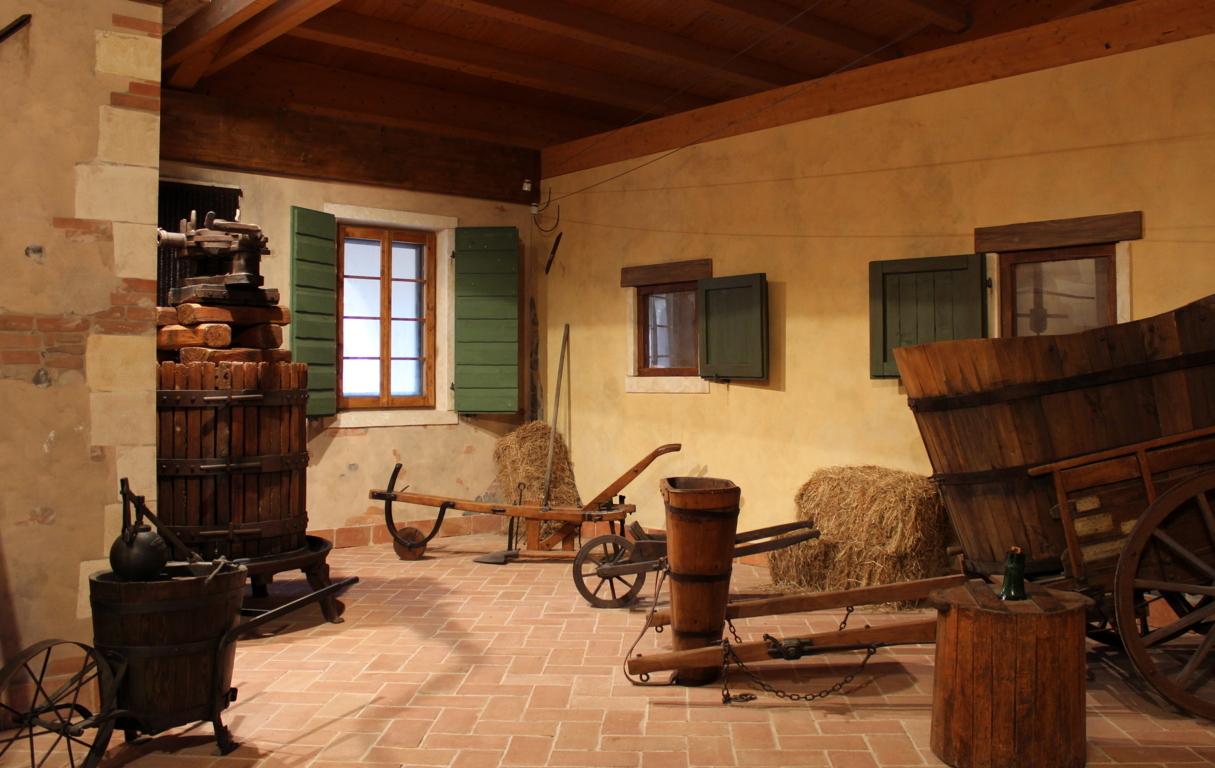
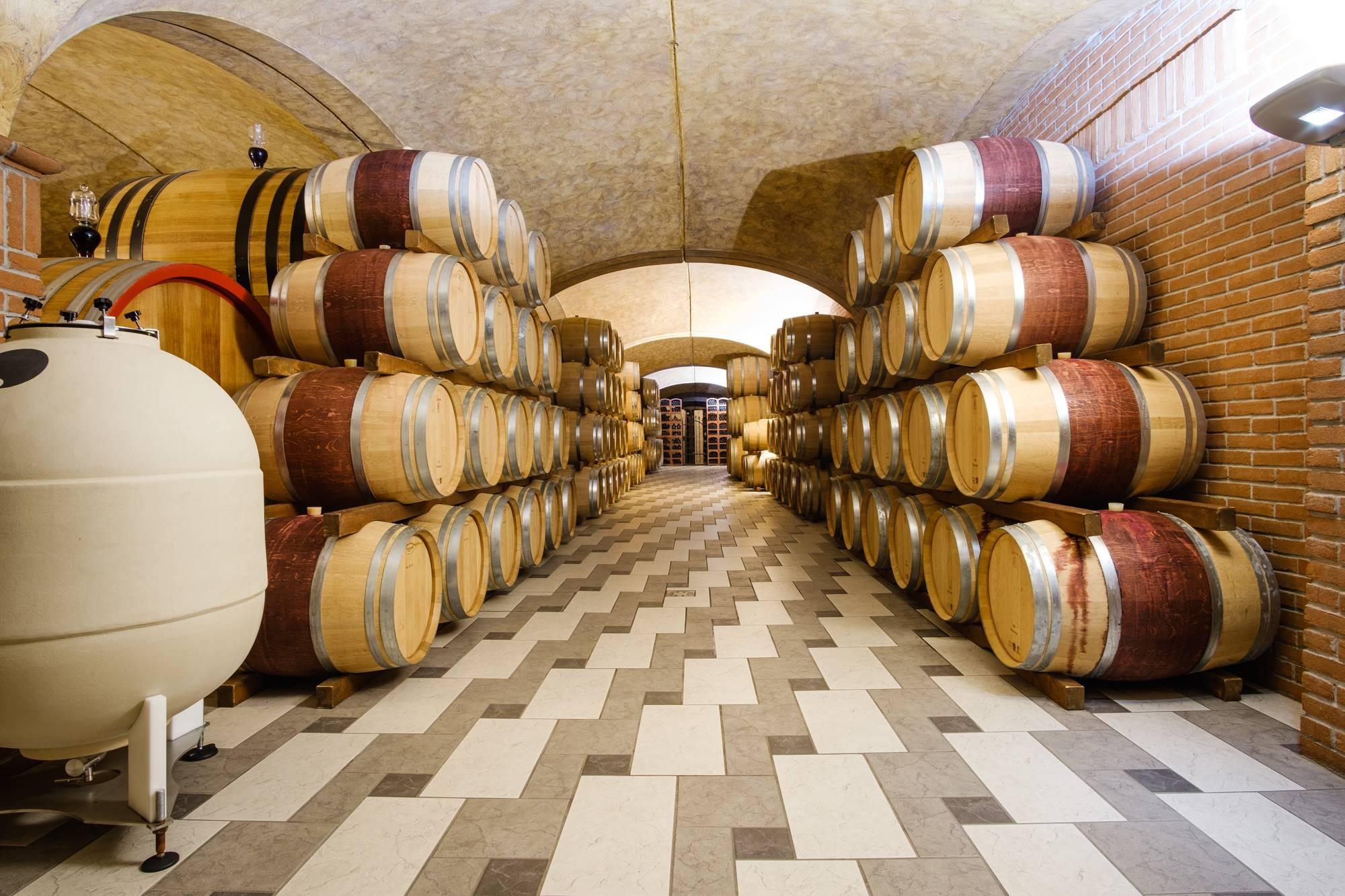
The basements of the Palazzo were historically used as a cellar, as evidenced by the deformed doors through which barrels were passed.
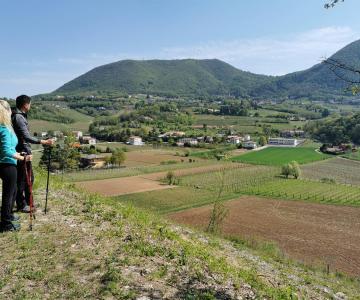
Above the second floor, there is a loggia, from which one can observe the center of the village and the Berici Hills.
The Palazzo dei Canonici houses the Civic Library of Barbarano and is the venue for temporary exhibitions and cultural events.