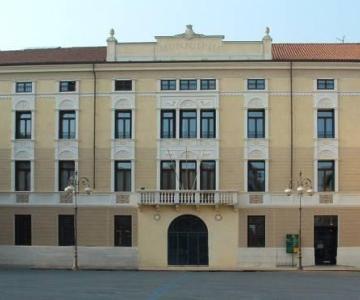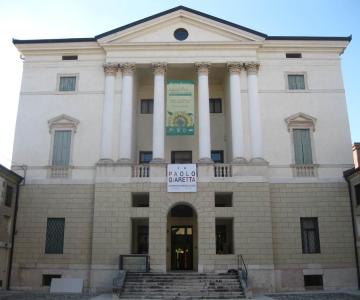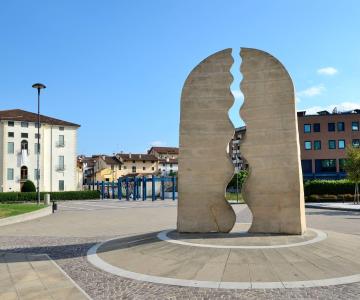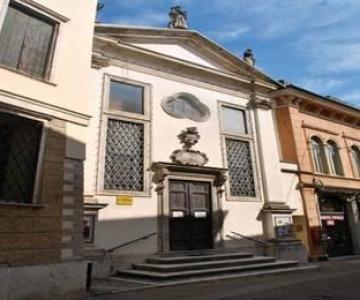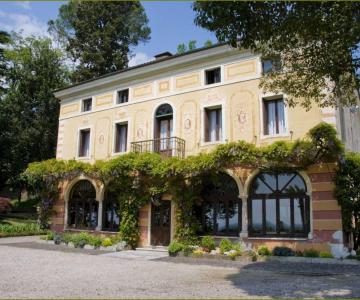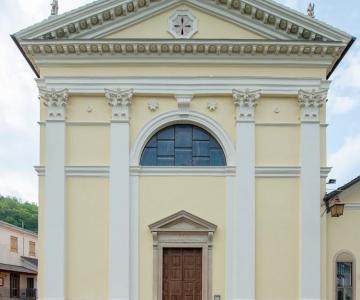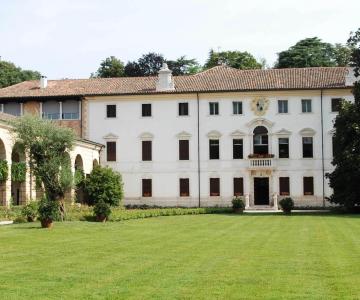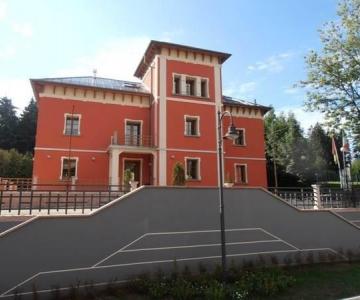
Palazzo Maraschin is the result of the 19th-century conversion of ancient spaces used for various purposes into a civil residence. In 1810, the Napoleonic provisions regarding the secularization of ecclesiastical properties led to the closure of the ancient monastery of the Augustinian nuns in Schio, and the Maraschin family from Magrè acquired part of the premises next to the church of Saint Anthony the Abbot to adapt it into a residence. Some of the acquired parts also involved the spaces of the sacred building.
In 1877, at the request of Francesco Rossi, son of Alessandro and Maria Maraschin, the architect Antonio Caregaro Negrin completely restored the palace, seeking a strong neoclassical setting, giving it the shapes it still presents today.
The complex origin of the building can be noted in the somewhat unharmonious arrangement of the interior spaces.
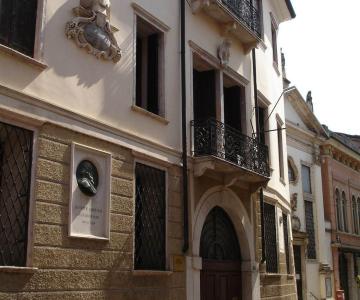
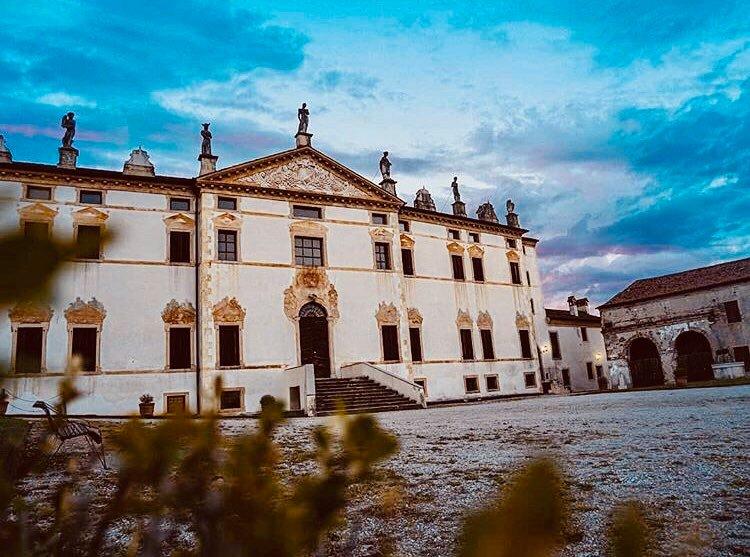
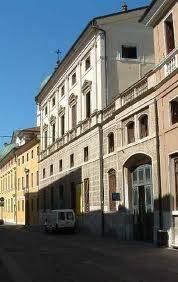
The facade is striking, especially due to the presence of the high rusticated base that marks the ground floor and mezzanine. The upper floors are rhythmically adorned with giant order pilasters that enclose, on the noble floor, the crowned windows, alternately topped with triangular and circular pediments. In the attic, the openings are square and shaped.
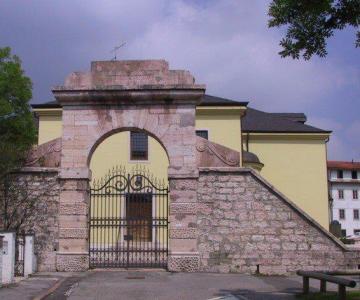
Once, the passing entrance led to the inner garden of the palace, while today, it leads through a parking lot to Piazza Falcone e Borsellino.
Currently, the palace houses municipal offices.
Photo: archive of the Municipality of Schio.