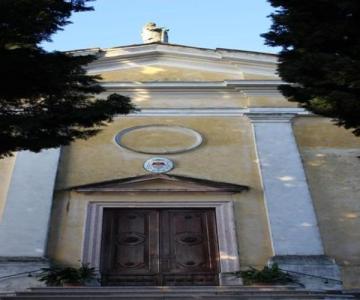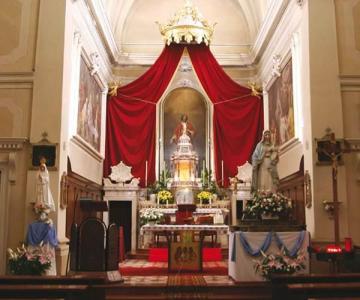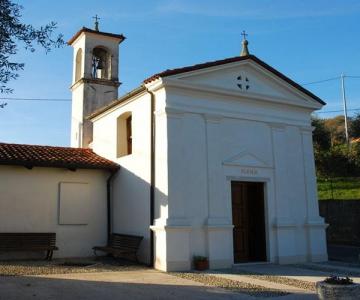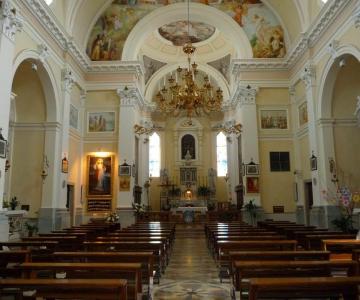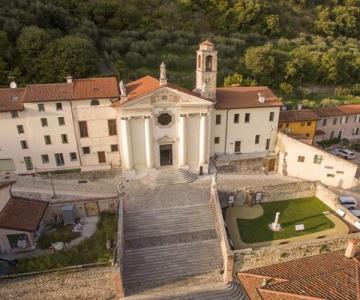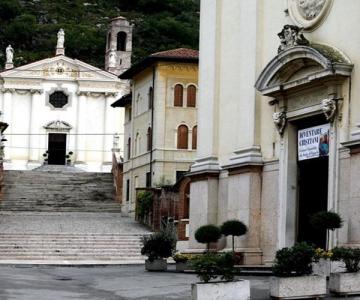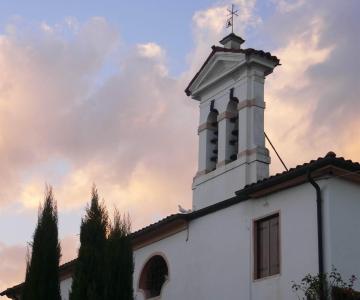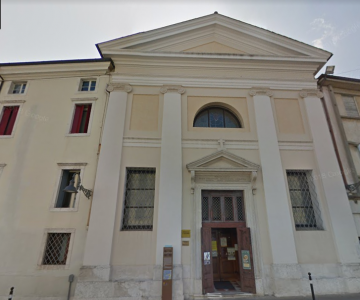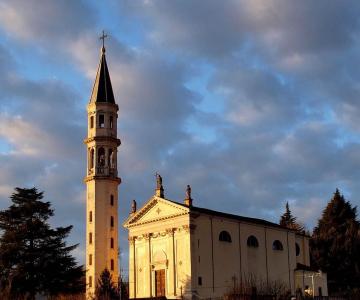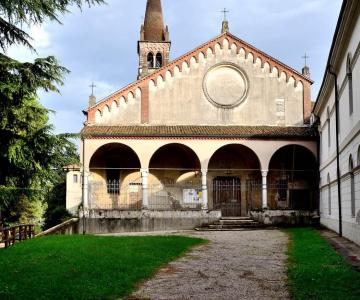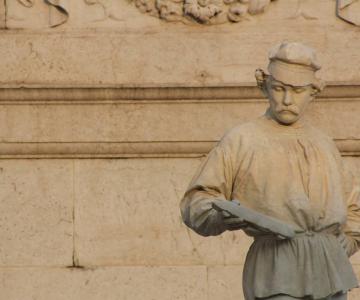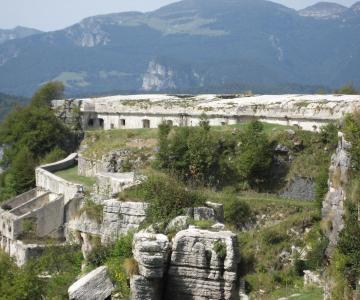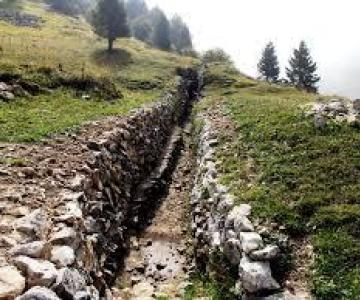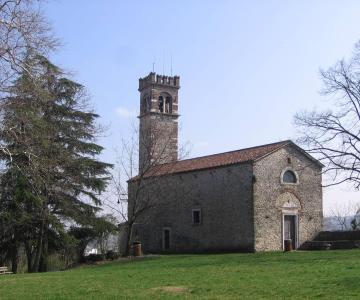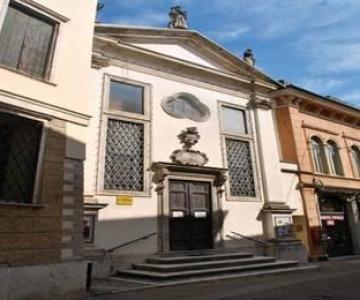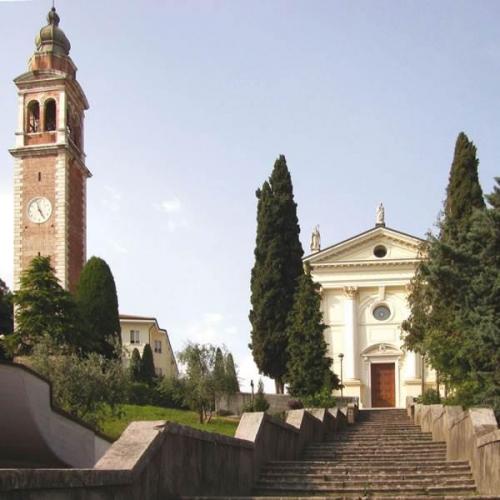
Set on a hillside, the Church is dedicated to San Zenone, bishop and martyr. Inside, harmonious and with a single nave, the main altar stands out with two large side statues in Carrara marble of San Zenone and Sant'Antonio da Padova.
It is mentioned for the first time in a document from 1025. It began as a wayside chapel for the use of the Pedàola noble family and to receive offerings from the faithful.
In a document from 1189 - which reports the acts of a trial of the Pedàola family held in Padua in the Curia of the bishop's vassals - its foundation is also mentioned. In the Rationes Decimarum of 1297, it appears dependent on the church of Marostica.
It was expanded in the 15th century and rebuilt between 1761 and 1784 in neoclassical styles. Set on a hillside, it is dedicated to San Zenone, bishop and martyr. Inside, harmonious and with a single nave, the main altar stands out with two large side statues in Carrara marble of San Zenone and Sant'Antonio da Padova.
The altar of the Madonna del Rosario, made of red marble from France inlaid and with twisted columns, is of excellent craftsmanship; the niche where the statue of the Virgin is placed is surrounded by painted medallions depicting the Mysteries of the Rosary.
There are two works by Leandro da Ponte: a tabernacle door featuring the Supper at Emmaus and a panel representing the Blessed Virgin, Bishop San Zenone, and San Sebastiano, works that existed in the church prior to the reconstruction.