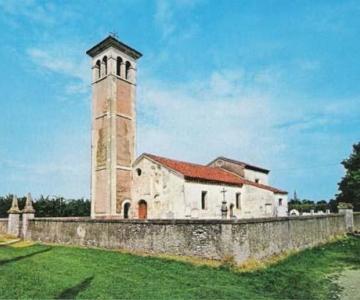
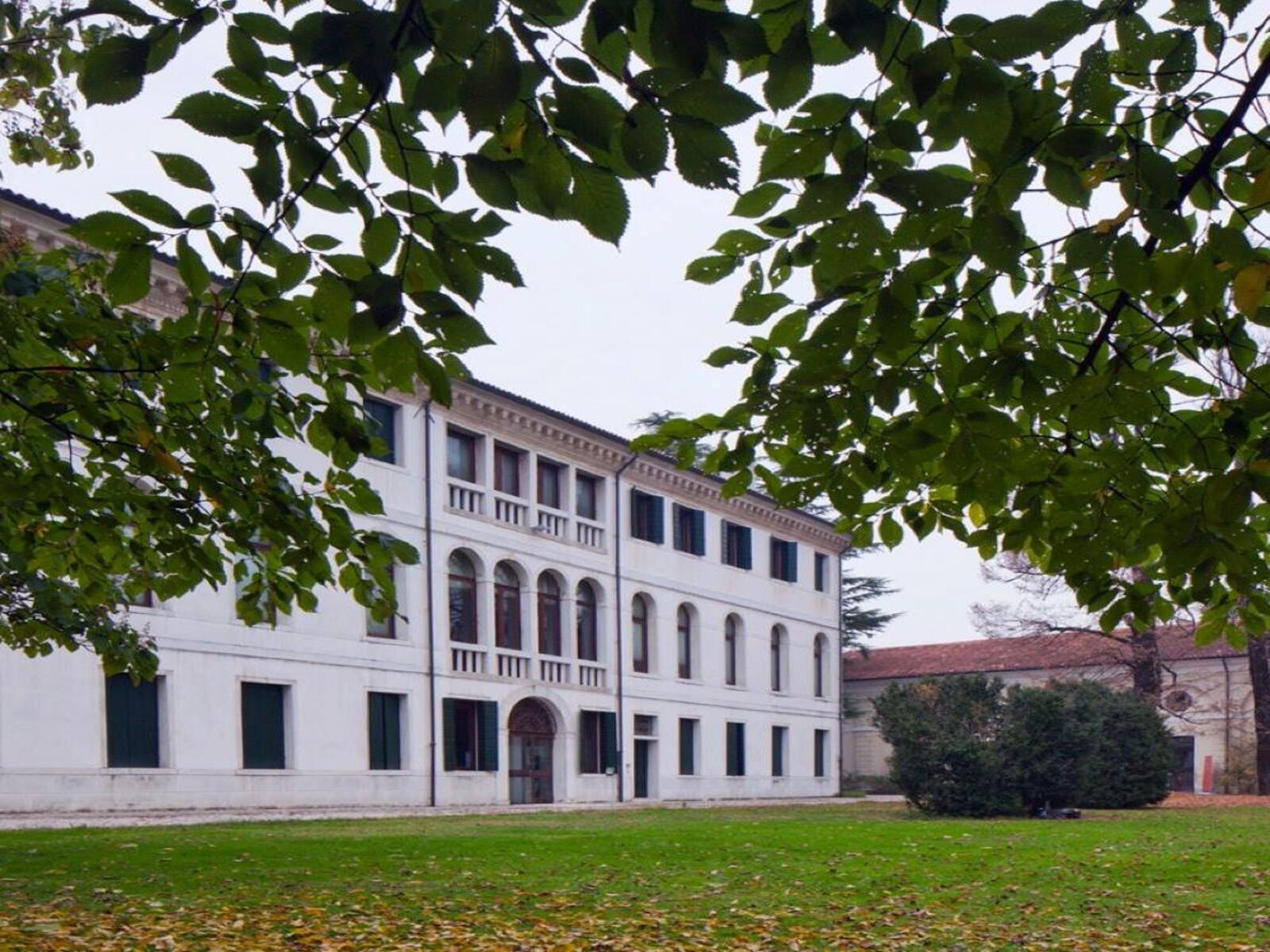
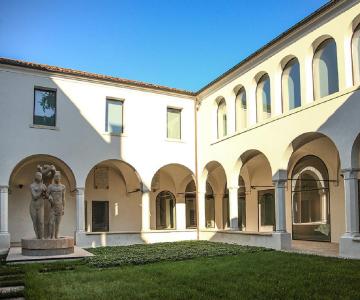
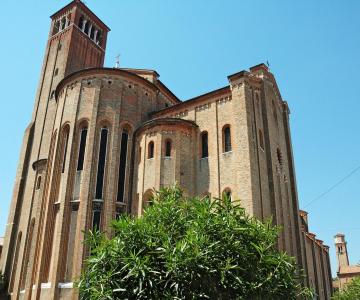
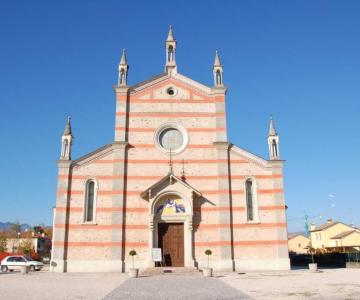
The church is the only surviving structure from the Templar period, while the other prefabricated buildings, still in existence today, belong to the Order of St. John (14th-18th century). The religious complex, as it appears in 17th-18th century documents, is an autonomous entity physically separated from the rest of the territory. Although it now only serves as a collector of the revenues derived from the Order's property, it is enclosed by walls on three sides with a small tower and a main masonry door; only the southeast side lacks an outer wall, being instead protected by two significant watercourses, namely the Piavesella and the Lia.
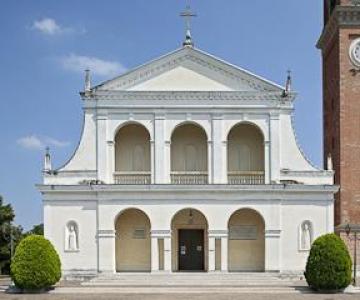
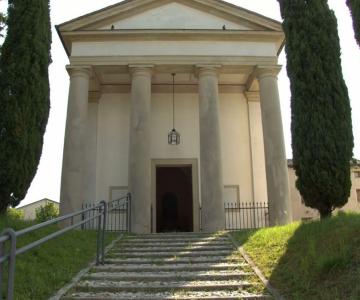
The image of the complex transmitted by 18th-century drawings is historically late and tied to a function very different from its original one as a hospice for pilgrims. The original Templar structure is recognized by various contemporary scholars but is not unequivocally described in acts and documents; moreover, it remains to be established how the complex was renovated when it passed to the Knights of St. John and what further transformations it underwent between the 14th and 17th centuries. The present building exhibits many characteristics of Romanesque architecture, both in its construction system and in the decorative elements used: it is characterized by a single nave oriented along the east-west longitudinal axis, and a colonnade developed on the south and west sides. The northern lateral façade highlights the numerous transformations that have occurred over time, particularly showing the outline of the door that led to the cemetery. The appearance of the masonry up to about three meters high and the larger dimensions of the bricks used confirm the building's structure belongs to the 12th century. The interior, simple and austere, evokes the proportions of ancient architectural space: essential, lacking in solemn light, with a single nave that ended with three apsidal chapels, the central one being wider, following an architectural typology reminiscent of ancient models that has been present in northern Italy since the 7th century. The bell tower belongs to a different construction phase, as it is attached to the façade without any structural connection, currently presenting a façade look resulting from building interventions carried out in the 1960s, while in the 1700s it was plastered with marmorino and cocciopesto.
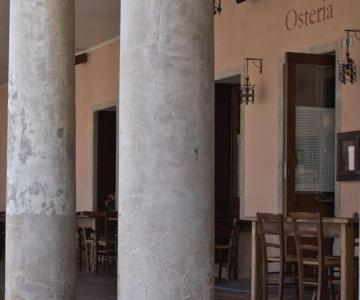
The later added colonnade supports arches with capitals of various shapes and materials, such as Aurisina and Cugnan stone, "but sign," "trachyte." Between 1723 and 1731, an extension was made on the southeast side corresponding to the now bricked-up lateral door: this intervention was motivated to protect the entrance from the weather, thus ensuring that the procession route was entirely covered; this seems to be confirmed today by the greater length of the span of the last arch compared to the others on the same side, as well as by other constructive details.

Chiesa dei Templari
Viale Caduti , Tempio di Ormelle (TV) - 31024
- Contacts
- tel. (0039) 0422745051
- Opening
- From 2025/05/17 h. 07:00 To 2025/12/31 h. 23:59 - All days
- Links
TAKE ME HERE: Viale Caduti