Marostica became "scaligera" following the conquest of Vicenza by Cangrande della Scala in 1311. The Scaliger domination lasted almost the entire fourteenth century and ended in 1387. A border outpost of the Scaligers fighting against the Padovans, Marostica was involved in the Padovan-Scaligero war of 1312-1314, during which the village of Marostica, which had emerged and developed to the east of the current walled city, around the pieve of Santa Maria, was assaulted and looted by the Padovans (but the strong castle on the Pauso resisted).
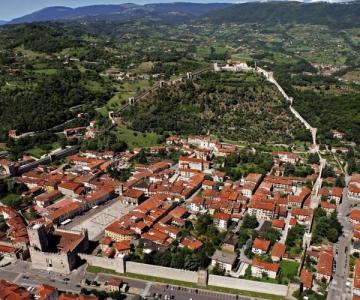
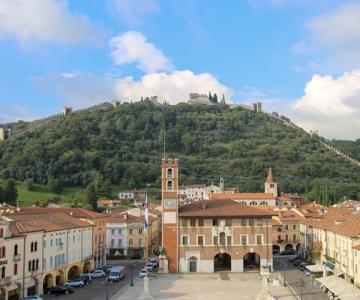
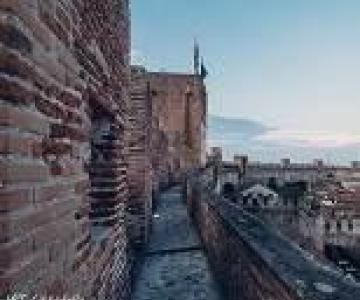
Subsequently, in 1338, Marostica, although for a few months, fell under the dominion of Sicco da Caldonazzo, but then returned to firm Scaliger hands. These events certainly prompted the Scaligers to think in new terms about the city fortifications and during the fourteenth century, they fortified it, leading to the construction of the walled city, with the two castles, the Lower and the Upper.
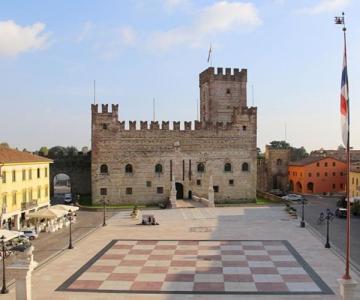
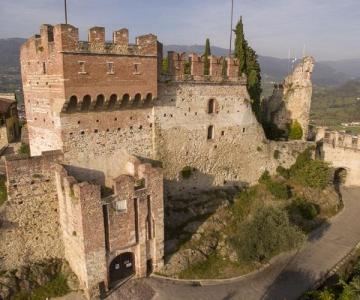
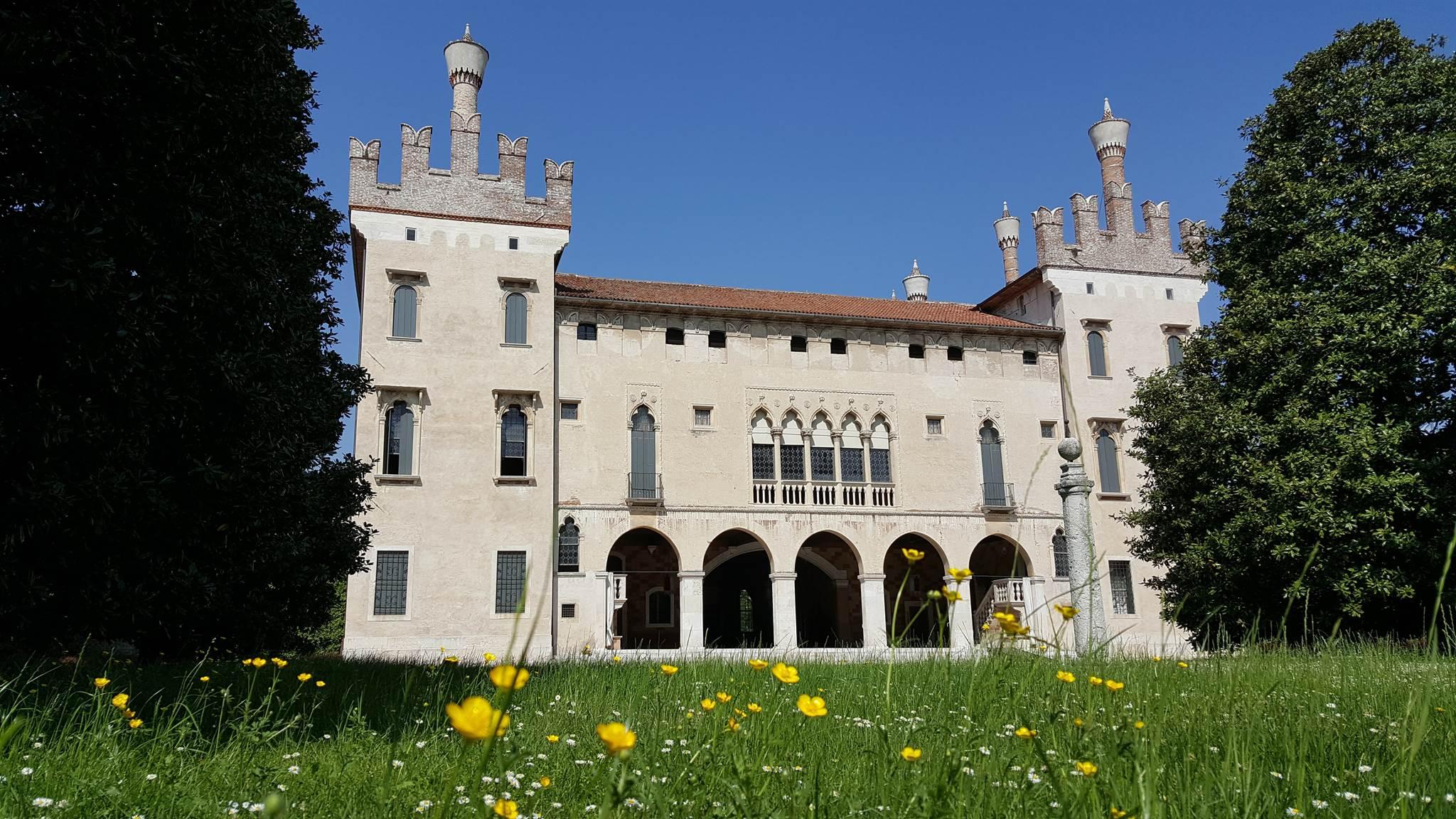
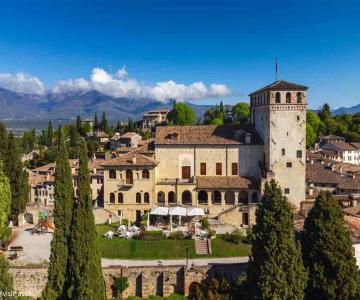
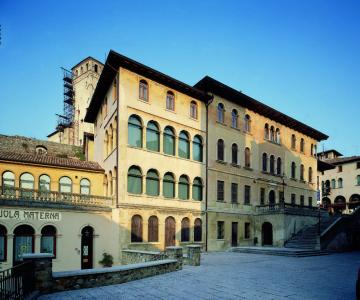
The Lower Castle presents itself in its voluminous structure as a quadrangular crenellated enclosure with a high central tower. It was largely built using local sandstone and limestone, with little use of fired bricks (a very expensive material). There are two drawbridges, over the moat, to the north and south of the respective facades. Above the entrance to the south, there was a recently rebuilt bertesca.
Of particular interest are the two internal loggias, the ground floor one supported by robust terracotta pillars, and the upper one. Specifically, the Lower Castle increasingly transformed from a fortress to a public palace, that of the podestà or rector who resided there during the Venetian age, administering civil justice and overseeing the good governance of the community. The Lower Castle hosted the Council of Thirty, the municipal council of the Venetian age. It also housed the prisons from the Venetian era until the early decades of the twentieth century.

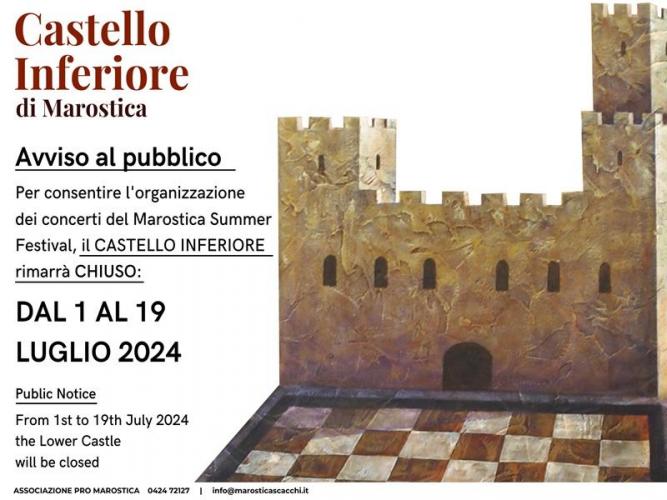
Castello Inferiore
Piazza Castello , Marostica VI - 36063
- Contacts
- Opening
- From 2023/09/01 h. 09:00 To 2040/12/31 h. 13:00 - All days
- From 2023/09/01 h. 14:30 To 2040/12/31 h. 18:30 - All days
- Links
TAKE ME HERE: Piazza Castello