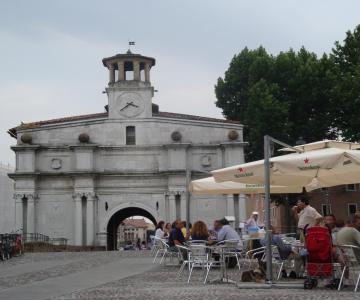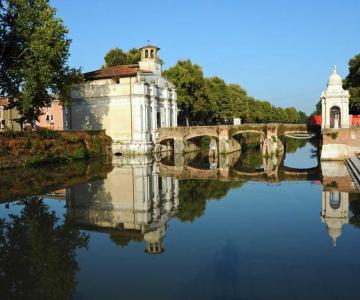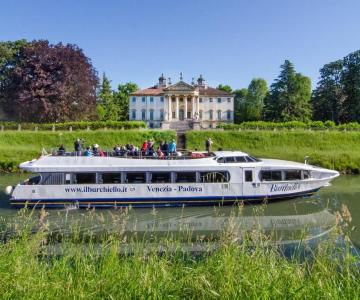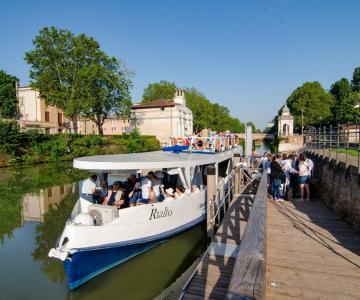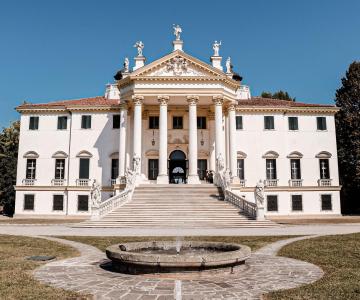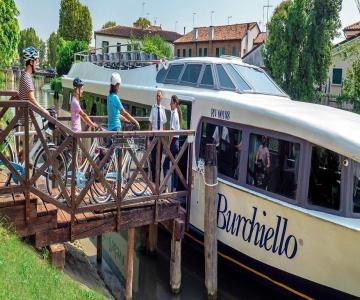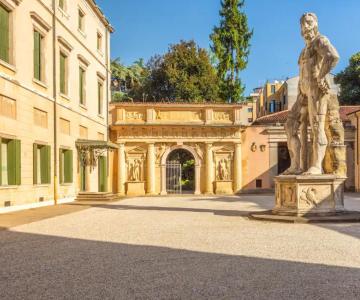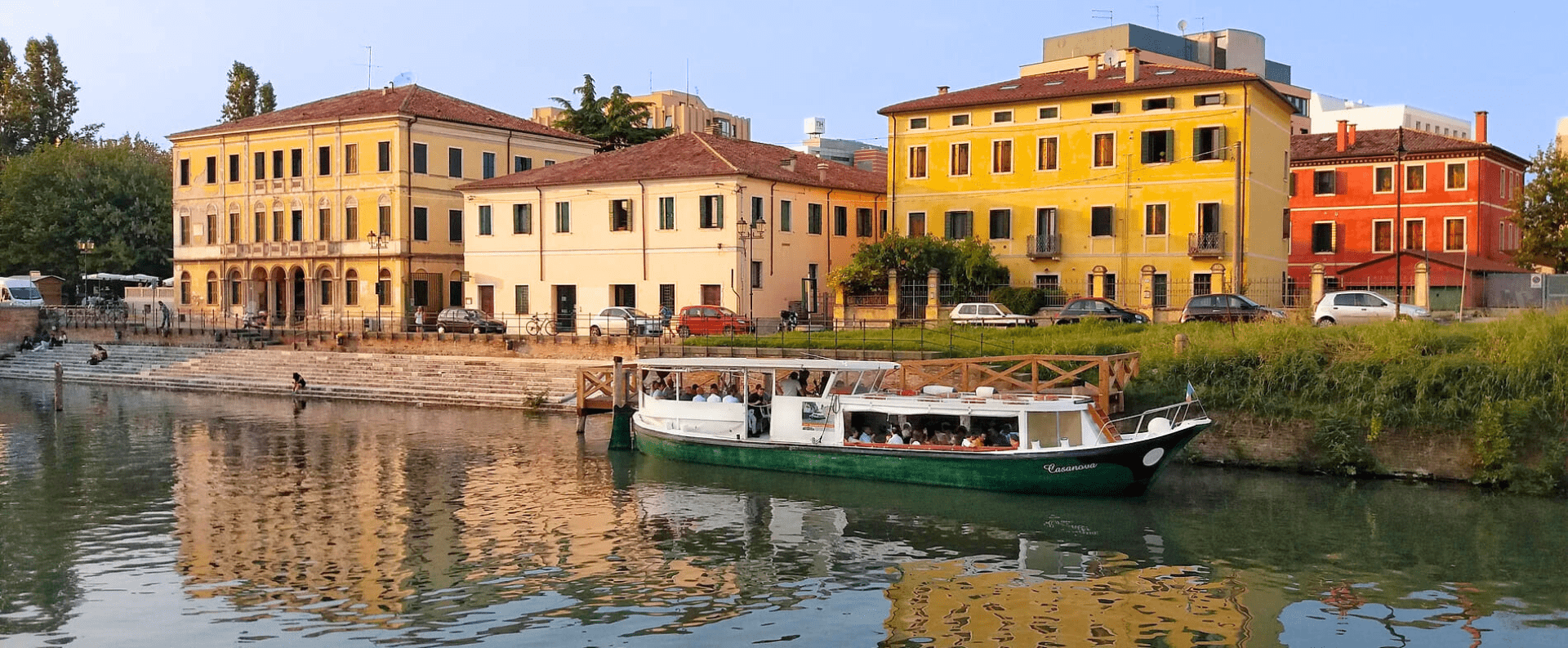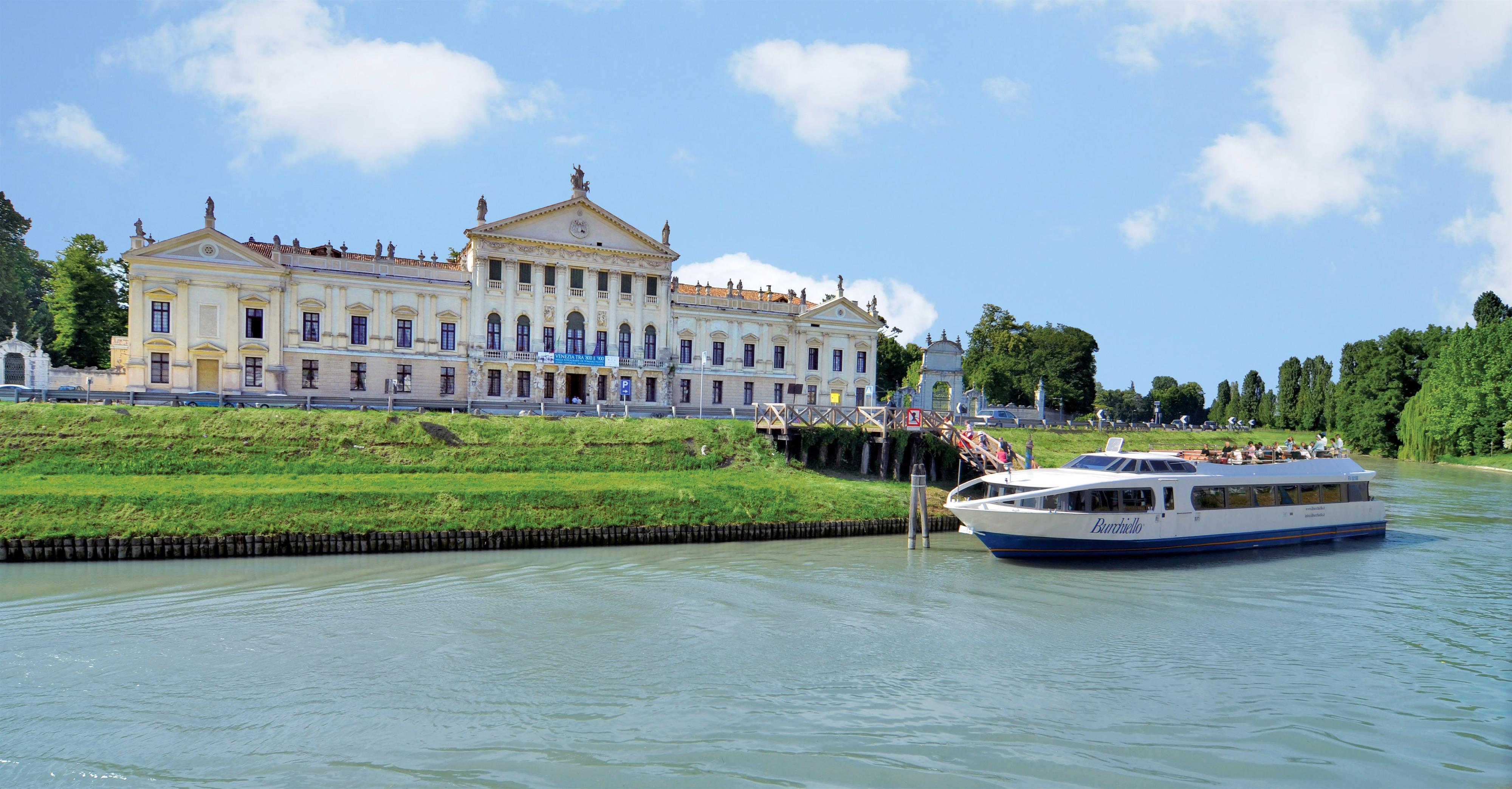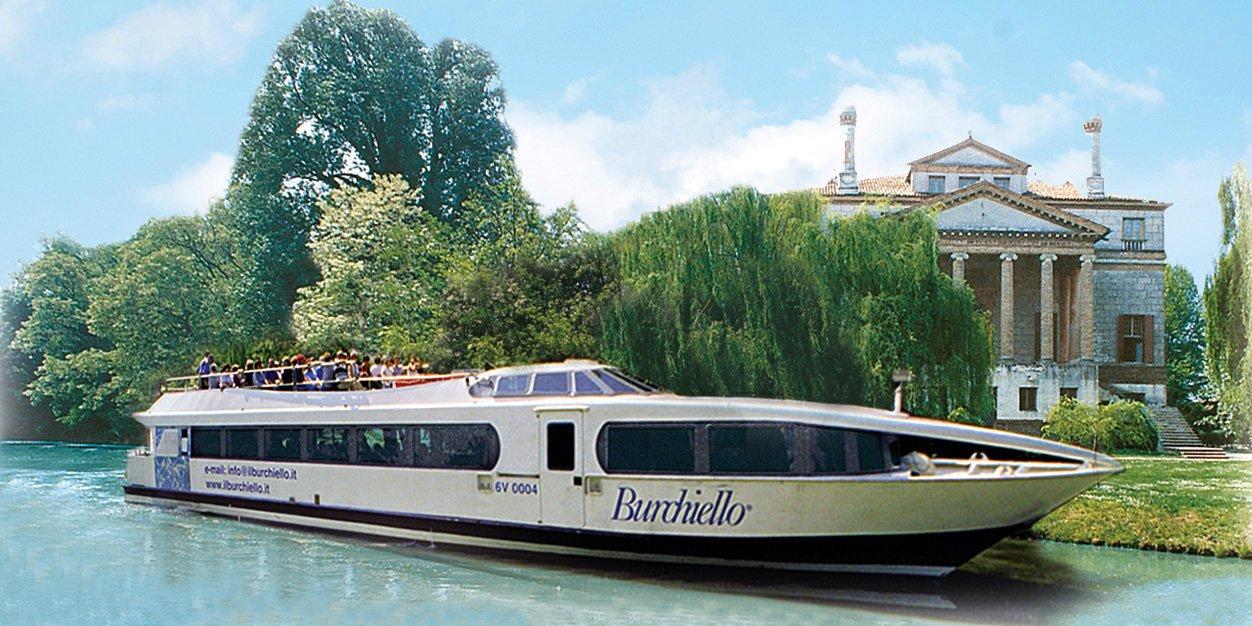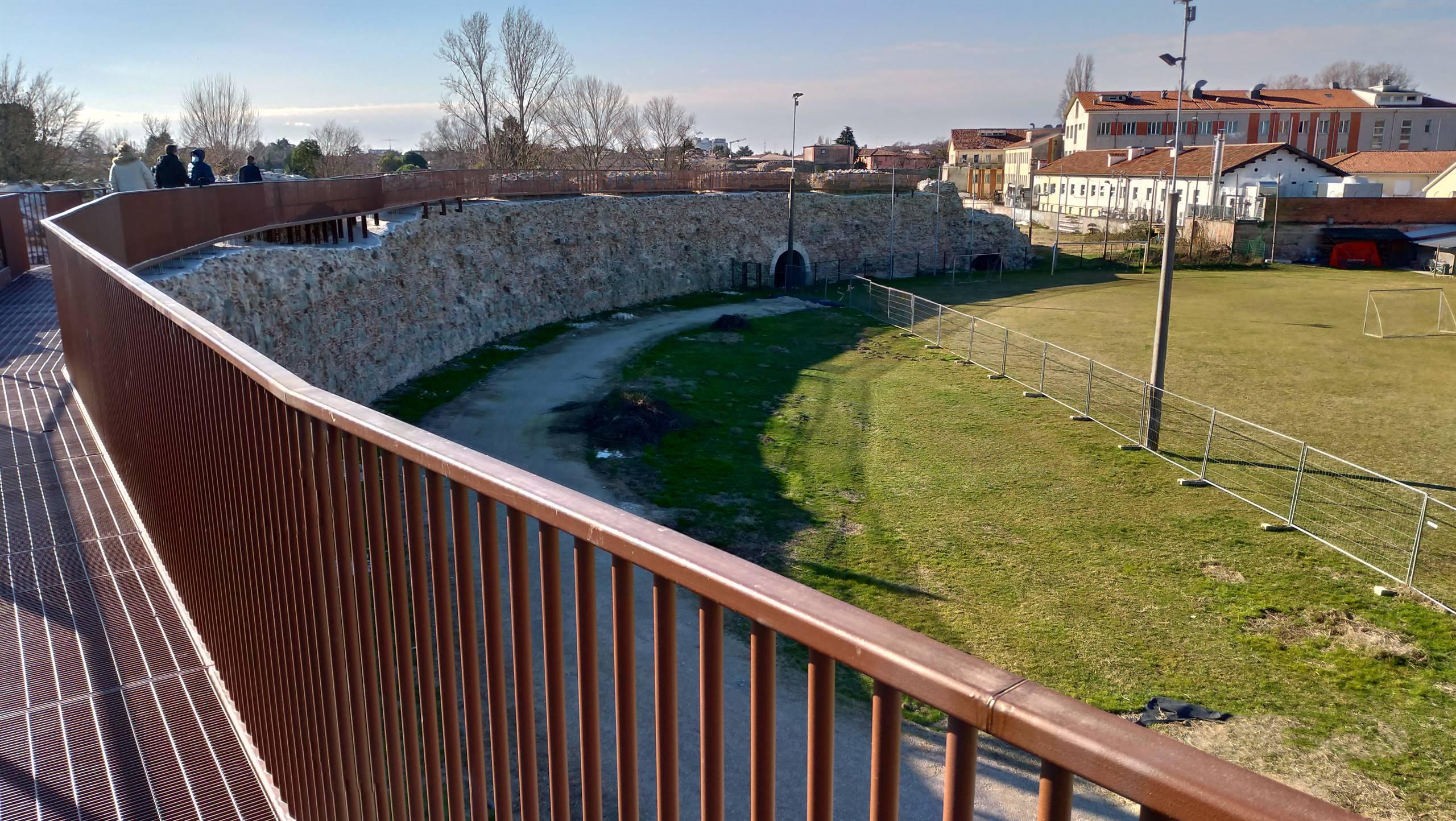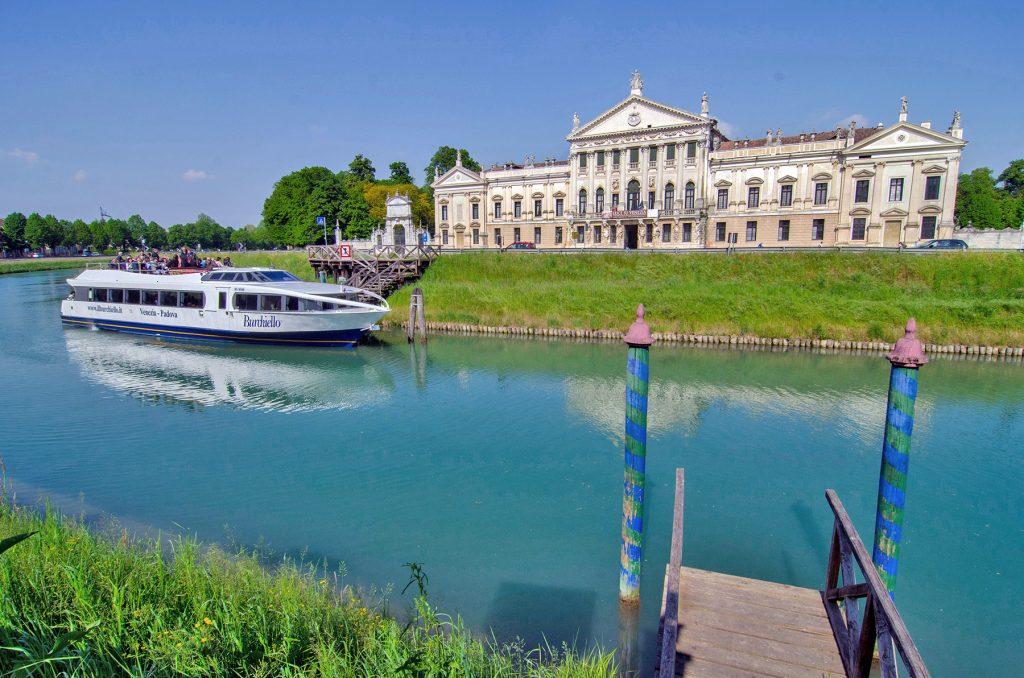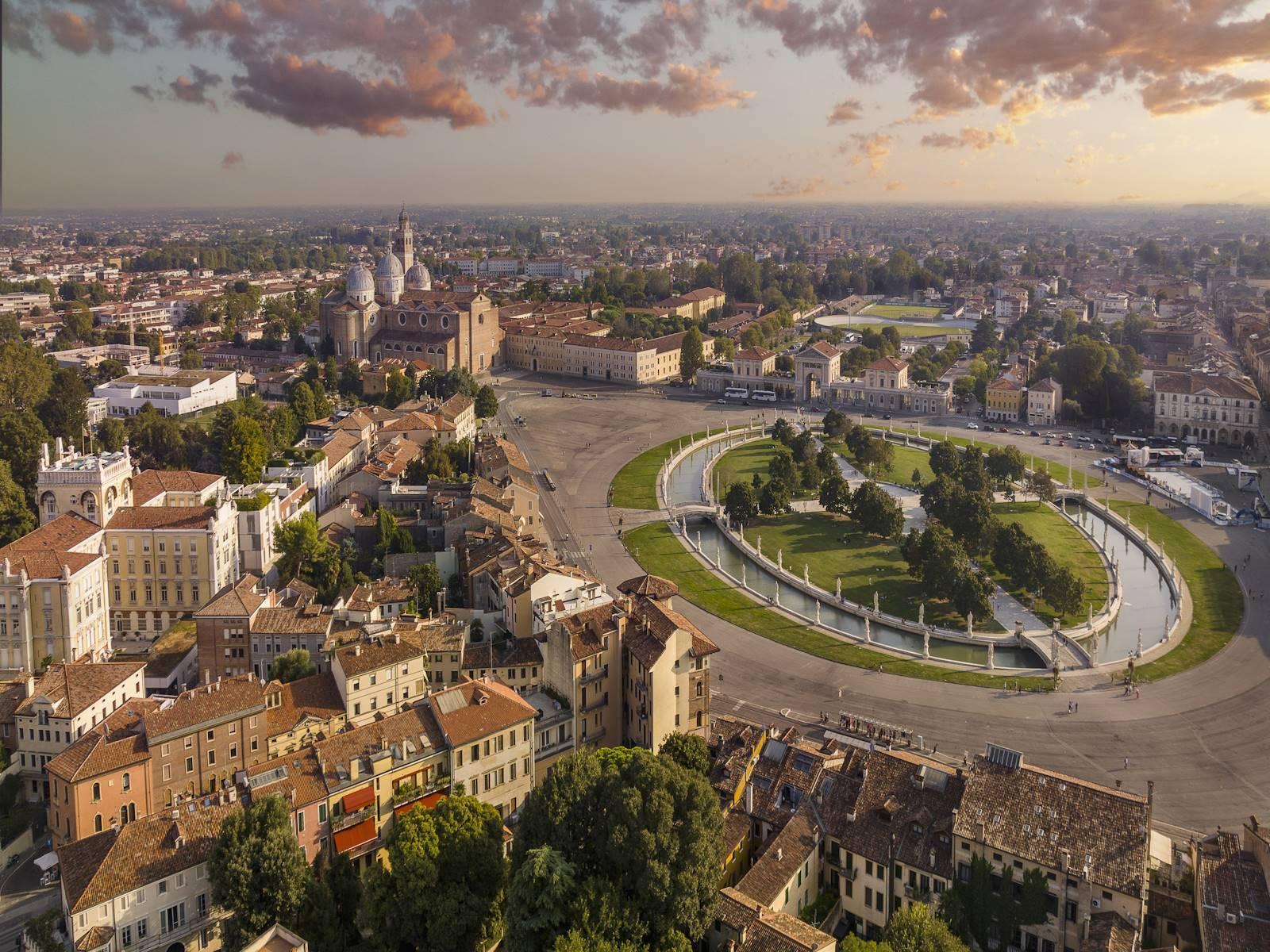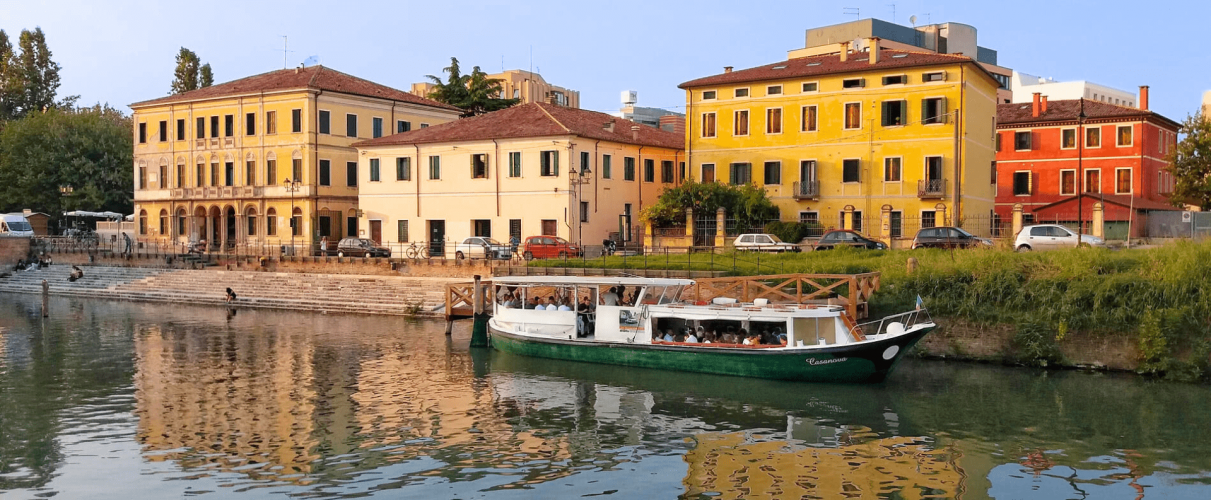
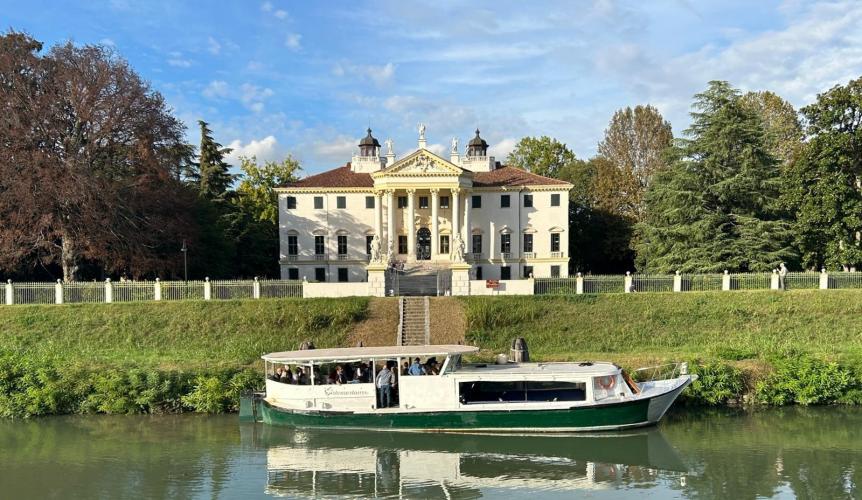
Boarding the boat at Porta Portello in Padua, navigation along an evocative river route, among the city's inner canals; skirting the ancient Venetian Renaissance walls, we arrive at the ancient Bastione del Portello Nuovo and then, at the Bastione di Castelnuovo. Continuing to the Graissi Bridge, we then reach the striking and superb Villa Giovanelli in Noventa Padovana; one of the most beautiful late 17th-century villas in the Veneto region, Villa-Temple with its characteristic pronaos and beautiful staircase adorned with statues.
Disembarkation and exterior illustration of Villa Giovanelli.
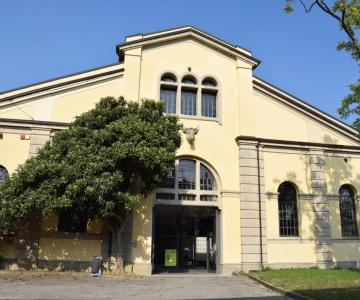
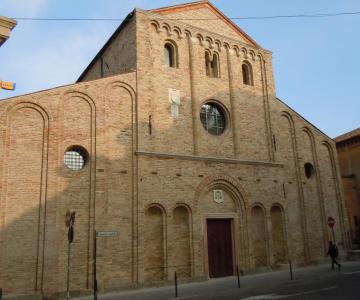
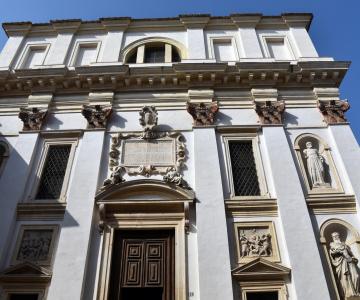
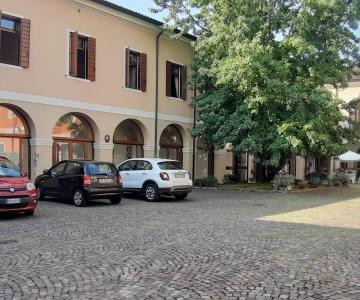
Walk through the historic center of Noventa Padovana, the ancient river port of Padua until the 1200s, with illustrations of the monumental realities visible along the way such as Villa Vendramin Cappello Collizzolli, built in the mid-16th century and then radically renovated in the 18th century; the ancient medieval Church of Saints Peter and Paul, rebuilt in 1747, recalling the style of the Venetian architect Giorgio Massari and containing works by Danieletti and Bonazza; , the eighteenth-century Villa Marcello Todeschini, classical with a central tympanum and flanked in 1805 by a small church.
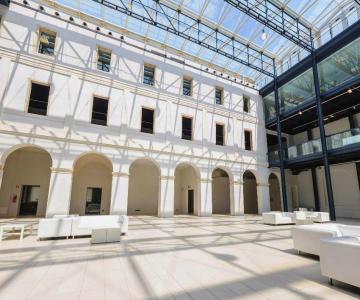
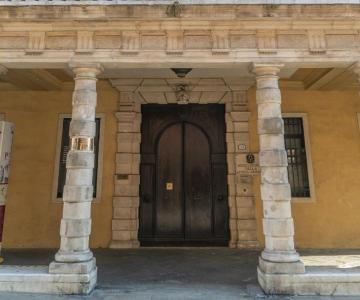
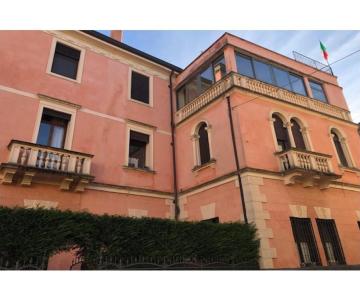
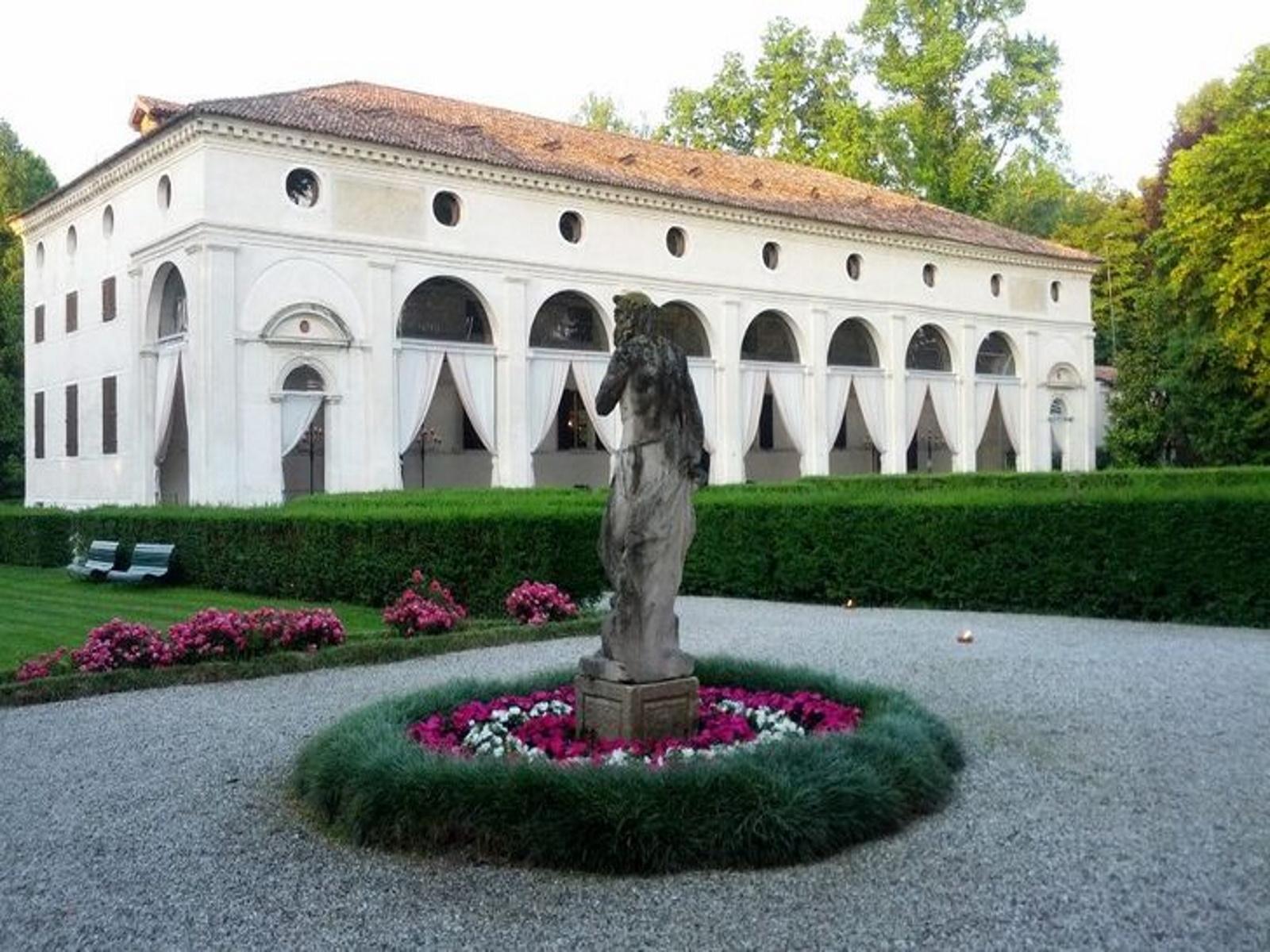
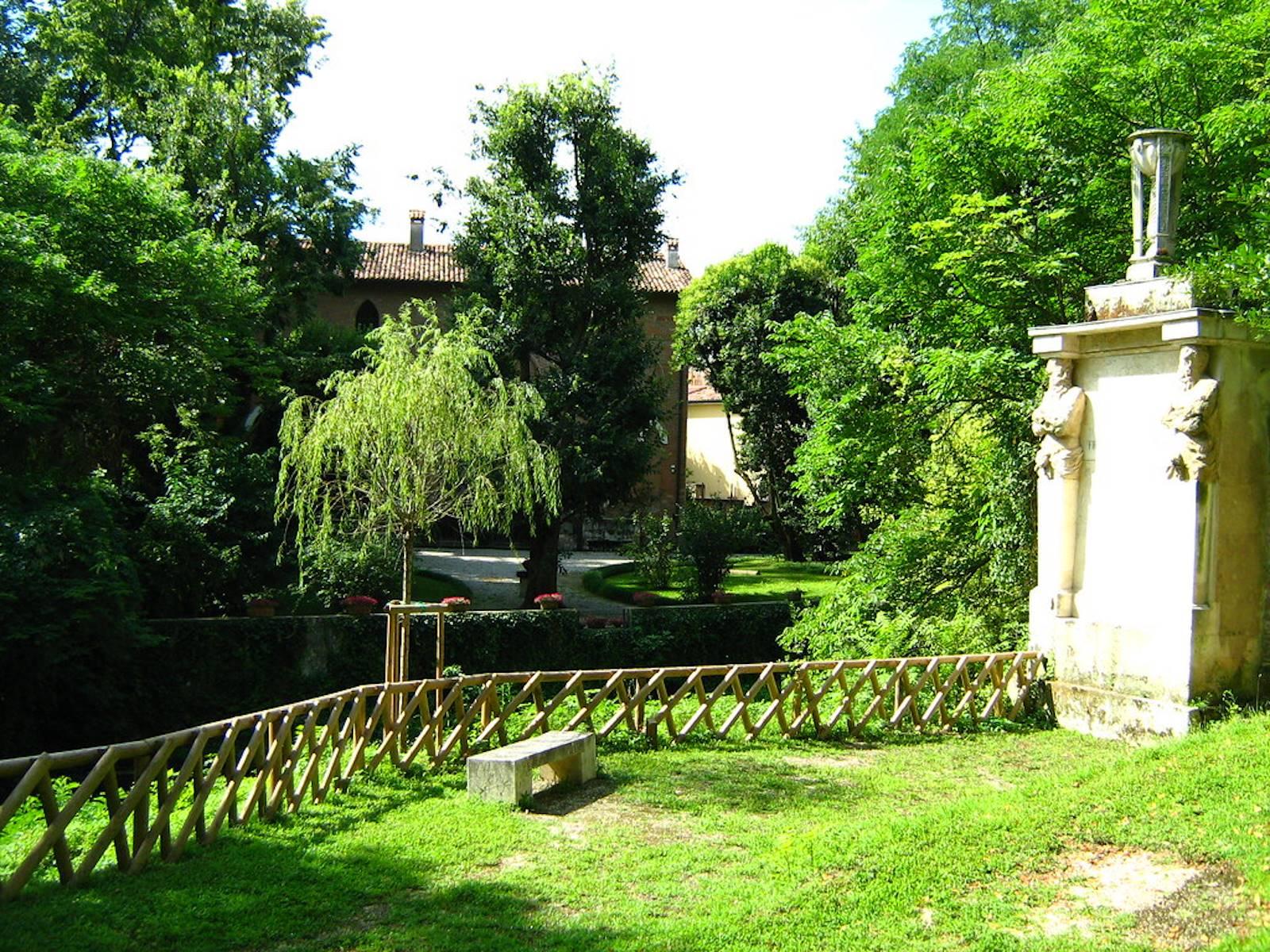
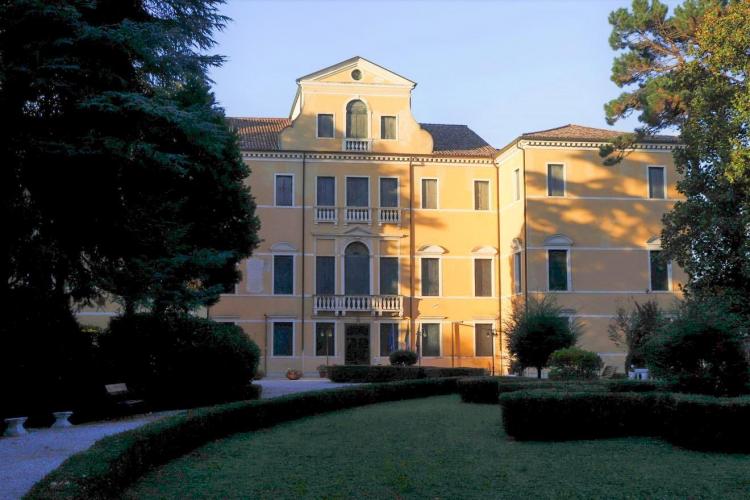
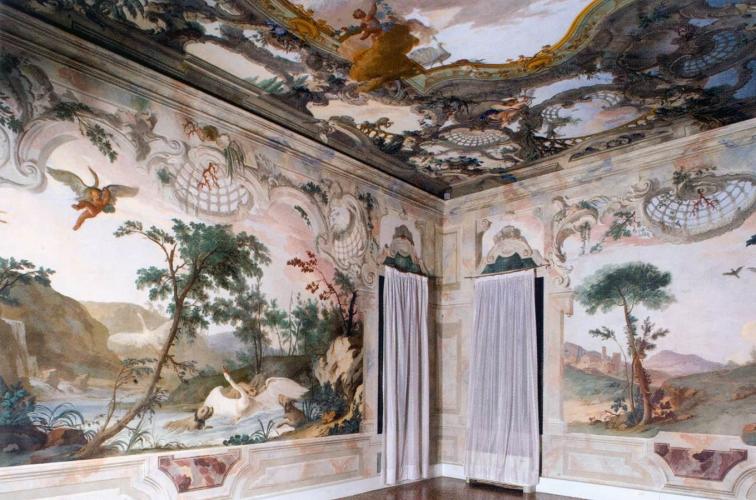
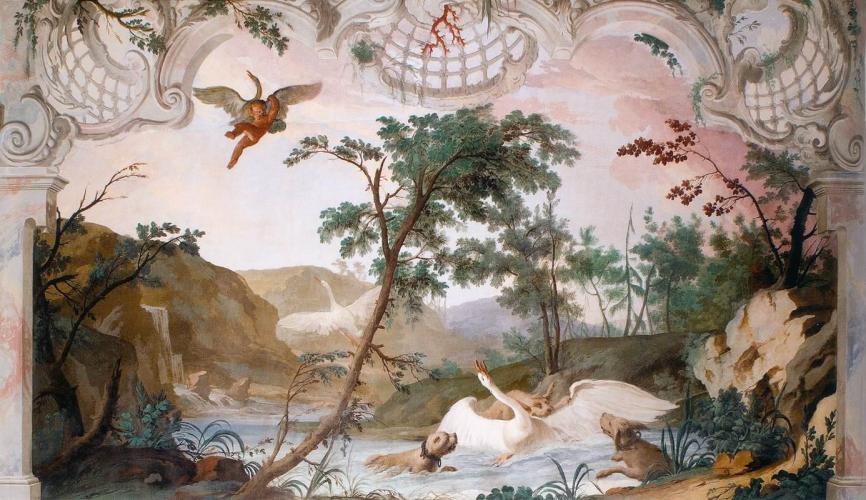
And finally, an inside visit to Villa Grimani Vendramin Calergi Valmarana.
The villa stands on a medieval castle of the Delesmanini family, who ceded the land on which the villa stands to Enrico Scrovegni. In 1502 the villa “a large house in masonry with a courtyard all around enclosed by a wall with a few fields near the Brenta River” was sold to the patriarch of Aquileia Domenico Grimani; in the early 1600s the villa followed a young Grimani married Vettor Calergi, scion of a powerful Venetian patrician family; inherited in 1738 by Nicolo Vendramin, his great-granddaughter Elena Marina Maria Vendramin-Calergi married Count Andrea Valmarana, who left her a widow in 1861: the countess bequeathed the villa in her will to the municipality of Noventa Padovana with the obligation to establish a school for deaf-mute girls and not to move the portrait of the countess and her husband from its original location.
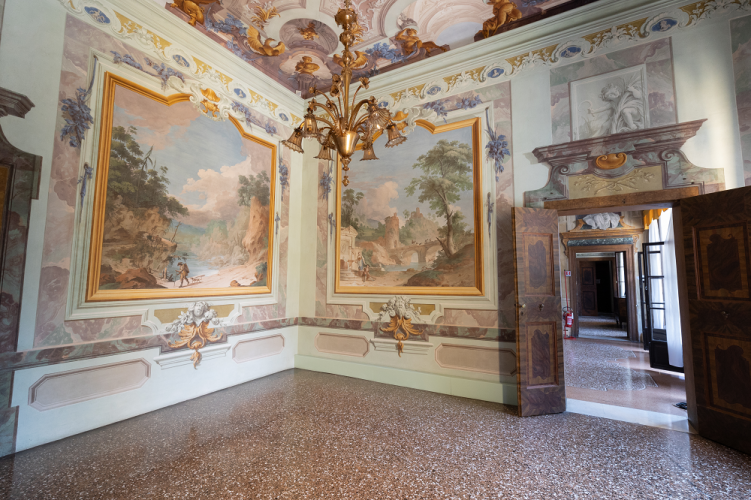
Inside the villa are extensive eighteenth-century fresco ensembles and Rococo chinoiserie decorations that embellish the main floor works by set designer and painter Andrea Urbani.
Behind the villa passed the Brenta River; in fact, originally, the facade was at the rear of the present villa.
After the visit, walk back to Villa Giovannelli, board the boat and return to the Portello.
Duration: 3 hours and 30 min
Excursion in collaboration with Artemartours.