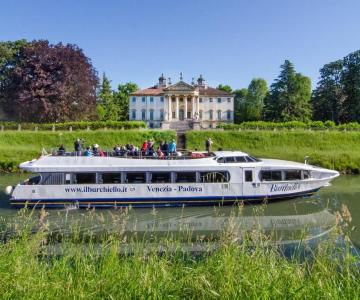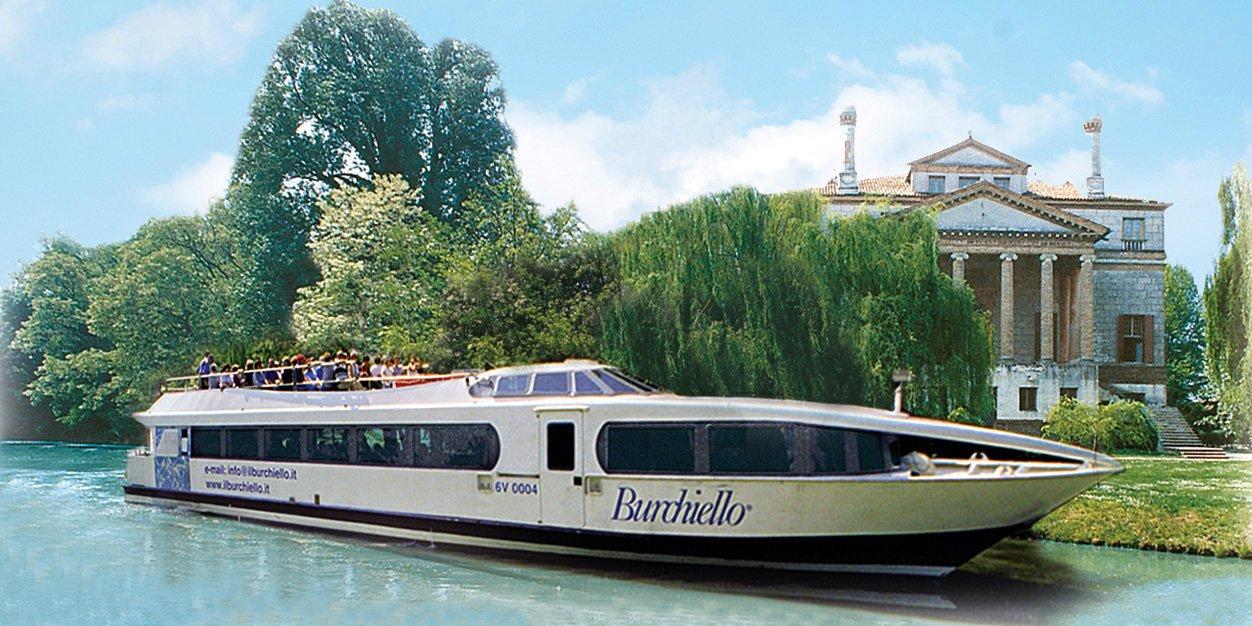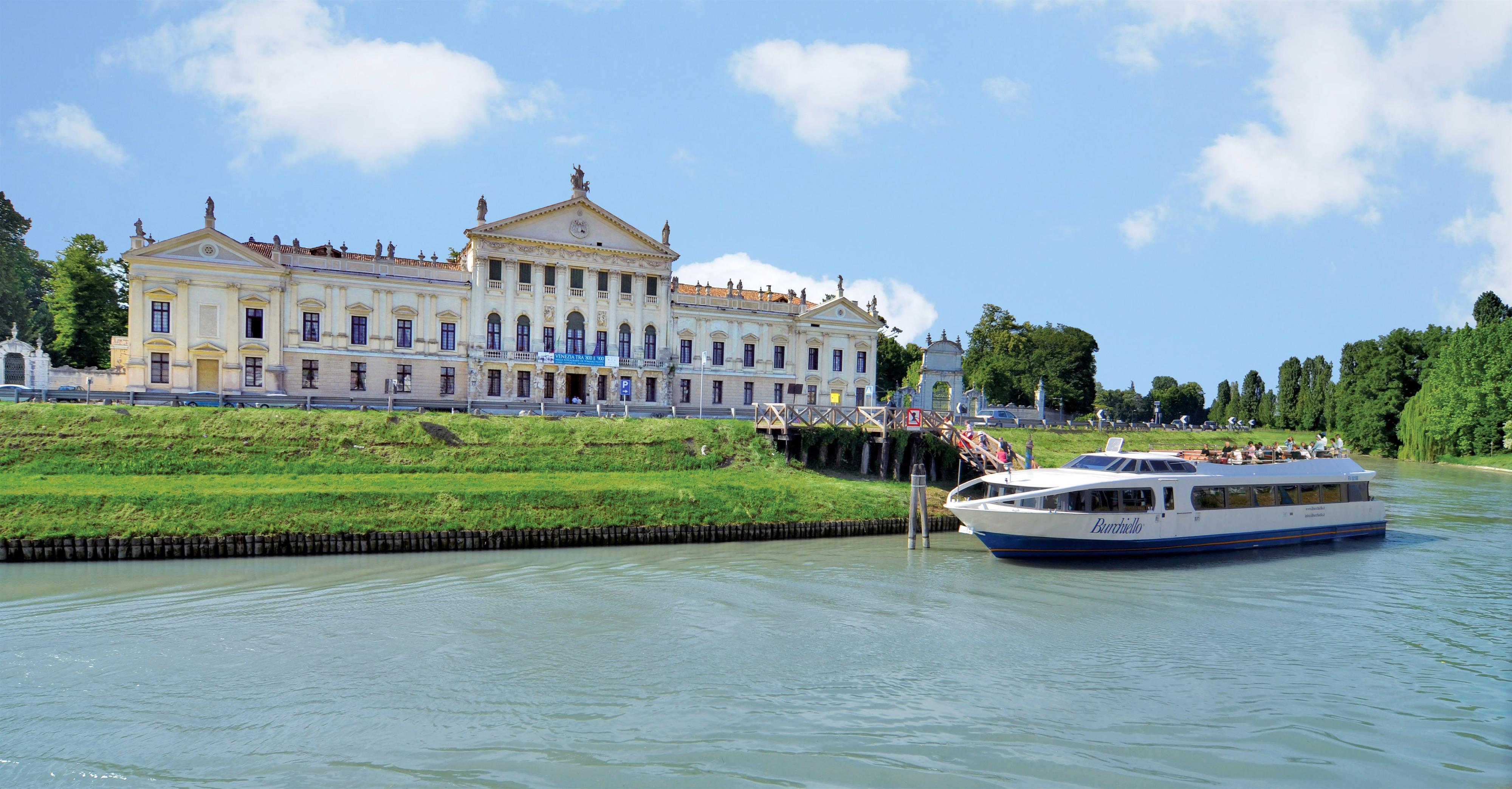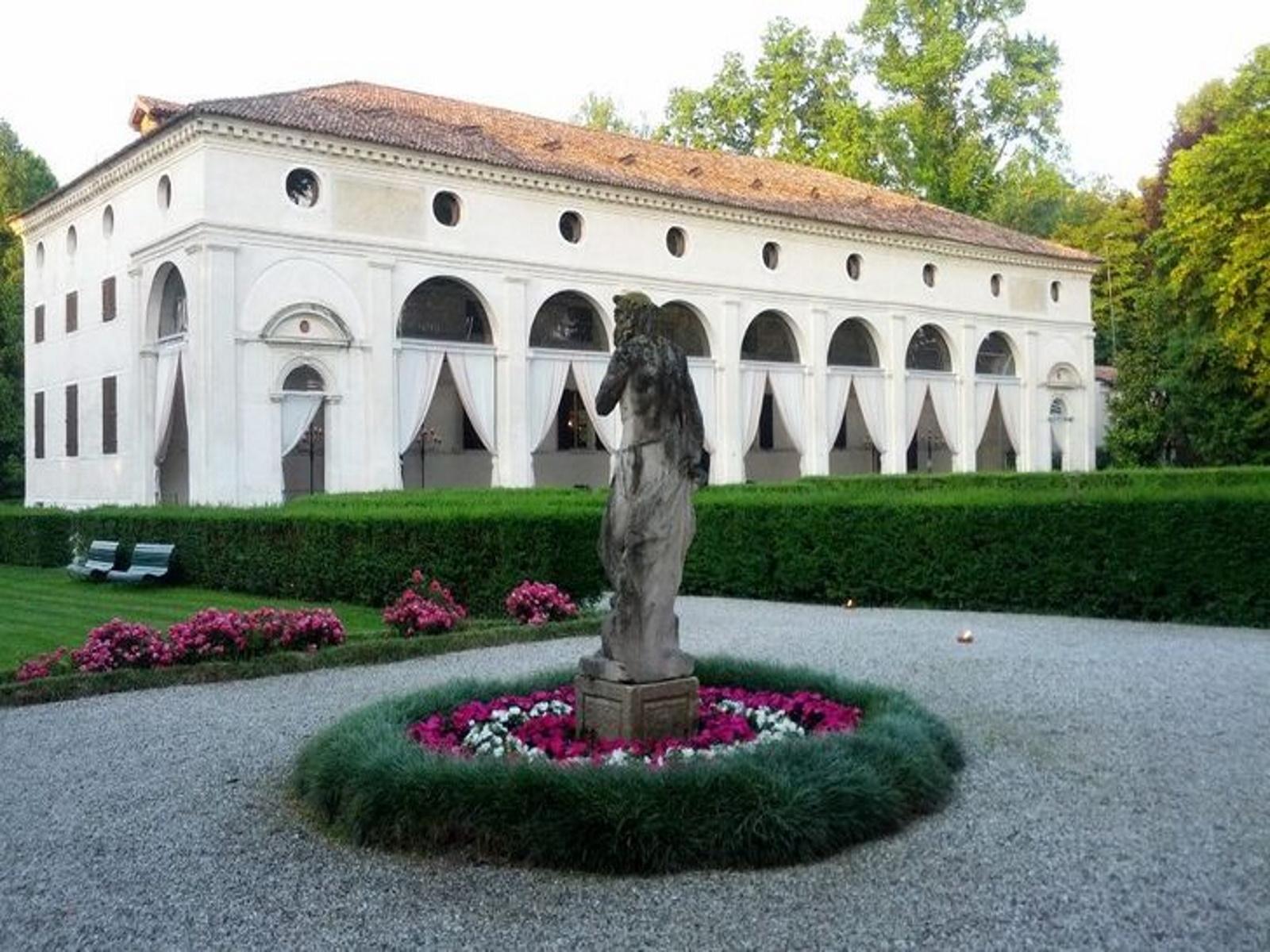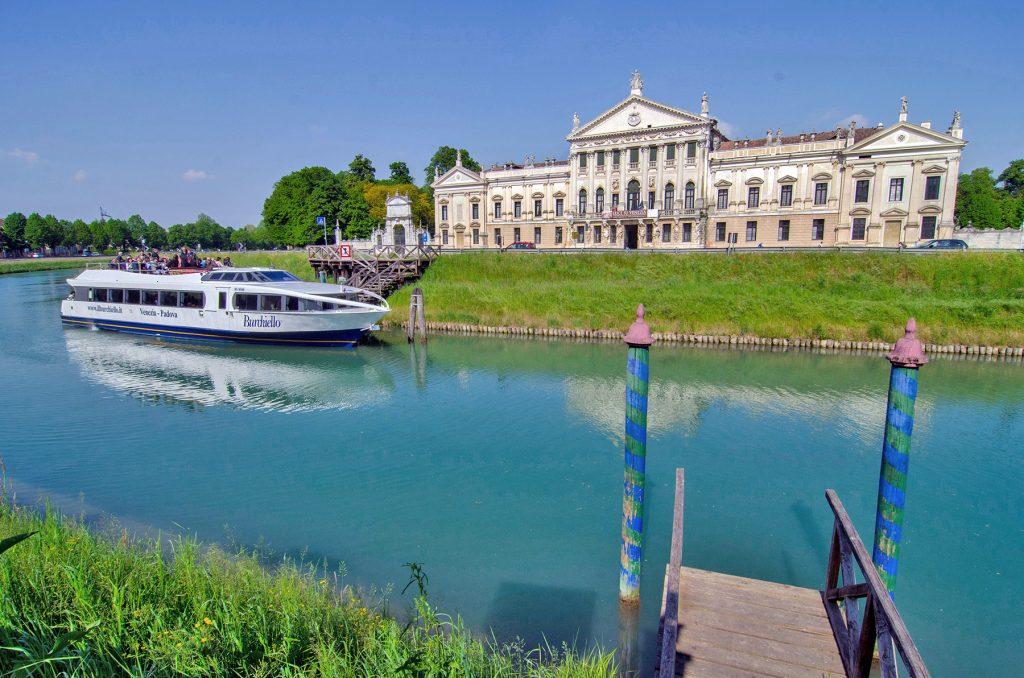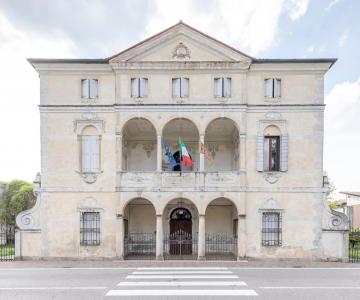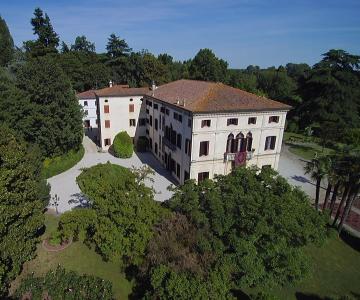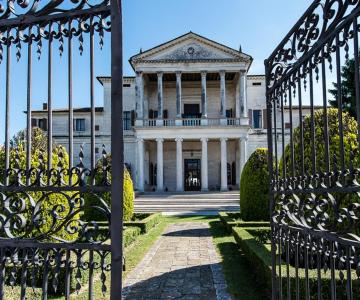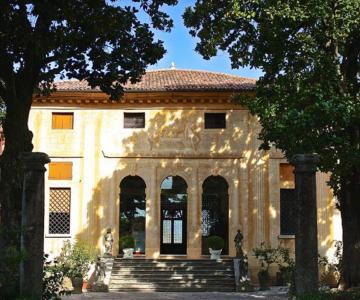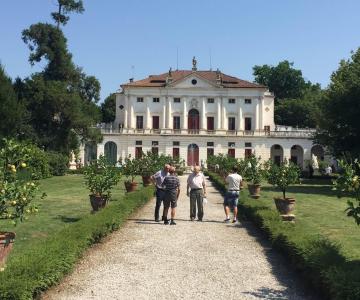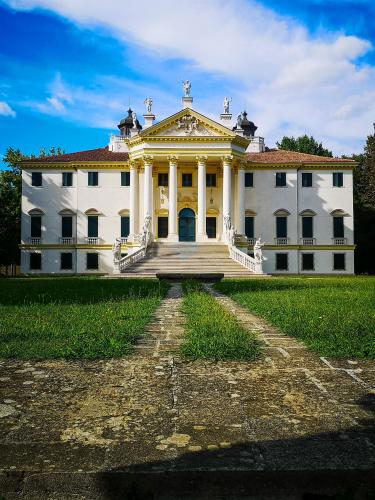
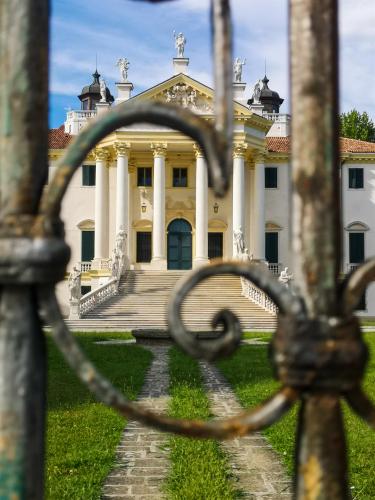


It is undoubtedly the most monumental among the many villas still existing in Noventa and one of the most remarkable Venetian villas, it appears in the banner of the municipality as a symbol of a historical and artistic peculiarity of the country. Built in the final decade of the seventeenth century by the Venetian patrician family, but of Bergamo origin, of the Giovanelli, it is a very interesting example of Palladian return to the Baroque era, thanks to the monumental pronaos with large pediment columns.
It seems to have been erected under the direction of Antonio Gaspari, a pupil and continuators of Longhena, while the wide staircase, embellished with statues of renowned Venetian craftsmen, is due to an intervention by Giorgio Massari, the well-known architect of Villa Cordellina in Montecchio Maggiore and the church of the Pietà in Venice, around 1738.
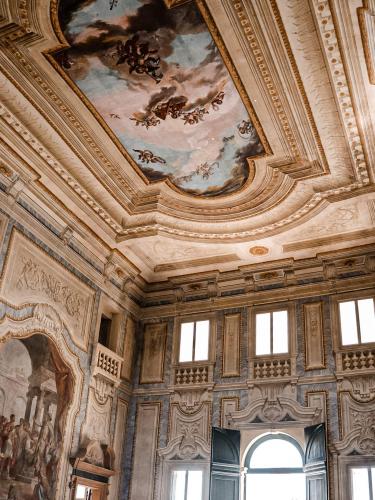
The plan, characterized by a large central hall developed in height, on whose walls are visible the remains of wall paintings made around 1760 by Giuseppe Angeli, a pupil of the Piazzetta, and by side apartments with small hall stairs, clearly denounces the post-Longhenian style.
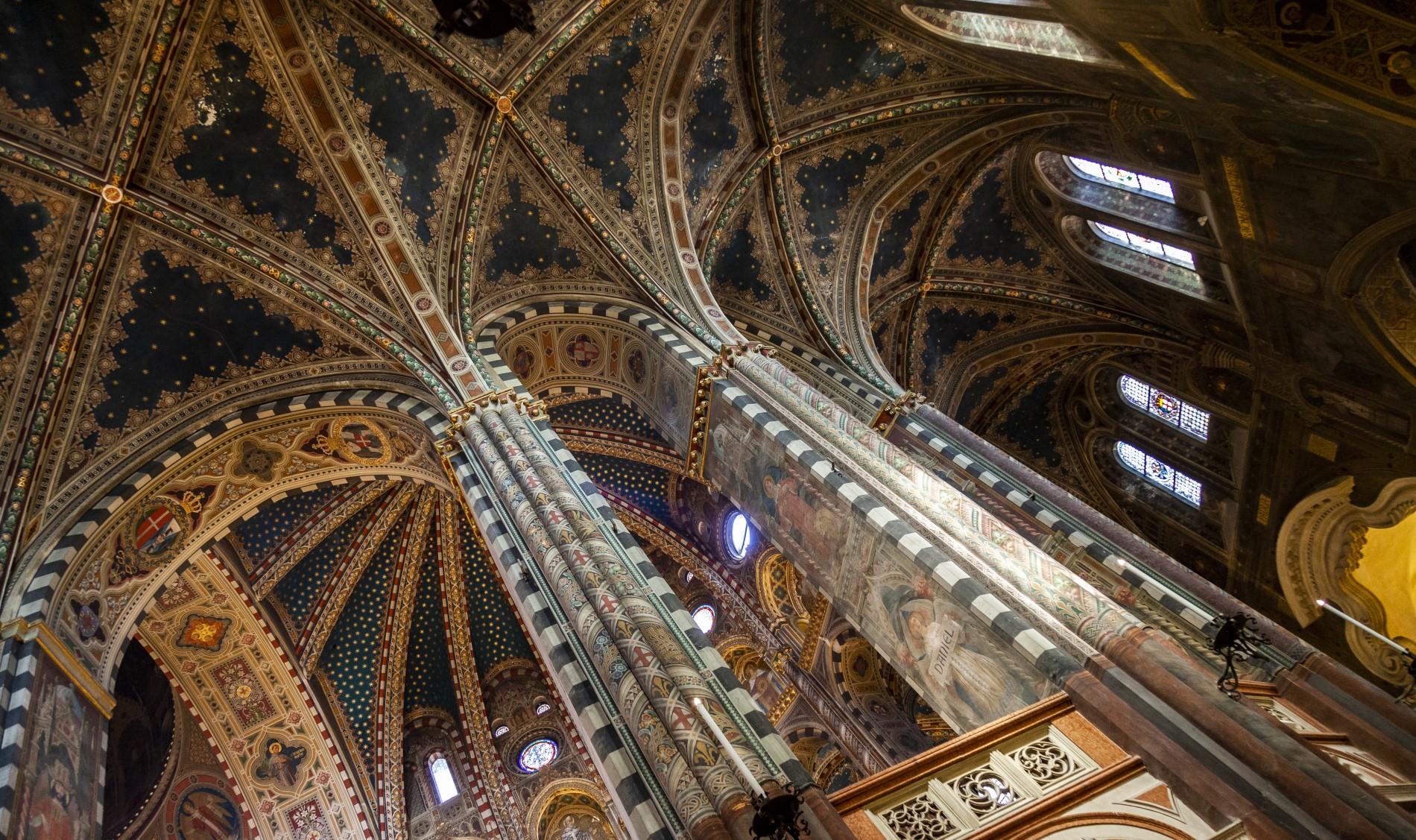
The interiors of the rooms are decorated with a profusion of stucco, of exceptional level, in the most lively Baroque style; the abundance of cherubs and medallions with figurative scenes reveals the work of skilled plasterers of the early eighteenth century, probably coming from the Canton of Ticino; other stucco on the walls are late.