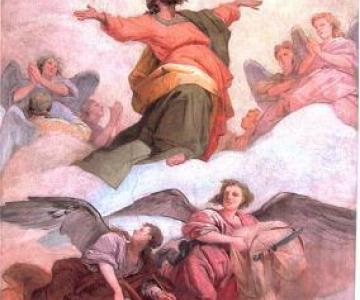
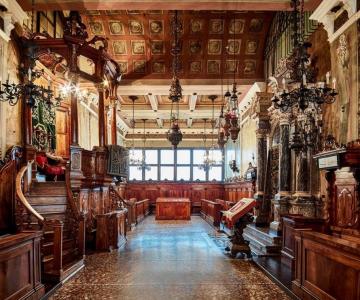
Thanks to documents preserved in the archives of the Bishop's Curia of Padua and the State Archives of Venice, it is possible to know the founding date of the church, which dates back to November 7, 1774, the feast day of Saint Prosdocimus. The wide nave, the Sacristy, the façade with marble paving, and the baptistery, created by the Padua stonecutter Giuseppe Danieletti, date back to the first phase of the church's construction. Later, frescoes were created, and a series of works were imported, including the pulpit in Carrara marble and red French marble, coming from the Jesuit church of Padua. Finally, in 1792, the church was completed, and on April 12, 1812, it was consecrated. This also marks the year when the most significant acquisitions were made, such as the two statues made of Carrara marble representing Saint Peter and Saint Paul, which are still visible in the building today. Particularly noteworthy are the frescoes of the Assumption of Mary and Saint Prosdocimus present on the main altar's altarpiece. The Virgin is the protector of the church, while Prosdocimus, whose etymological meaning of the name in Greek is "the awaited," represents, according to Patavian tradition, the first bishop of Padua.
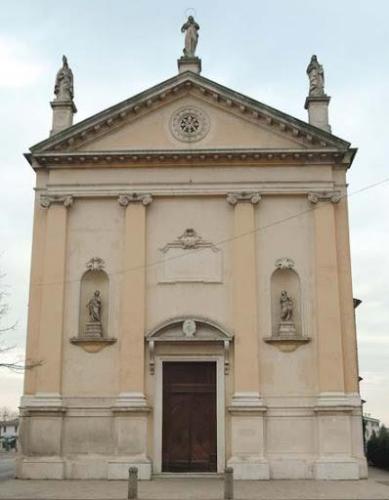
Chiesa S.M. Assunta e Prosdocimo
Piazzetta Don Gomiero, 1 , Camponogara - 30030
Among the lesser-known artistic beauties that can be admired in the territory of the Riviera del Brenta, the Church of Saints Mary Assunta and Prosdocimo certainly stands out, especially for its Main Altar.
Thanks to documents preserved in the archives of the Bishop's Curia of Padua and the State Archives of Venice, it is possible to know the founding date of the church, which dates back to November 7, 1774, the feast day of Saint Prosdocimus. The wide nave, the Sacristy, the façade with marble paving, and the baptistery, created by the Padua stonecutter Giuseppe Danieletti, date back to the first phase of the church's construction. Later, frescoes were created, and a series of works were imported, including the pulpit in Carrara marble and red French marble, coming from the Jesuit church of Padua. Finally, in 1792, the church was completed, and on April 12, 1812, it was consecrated. This also marks the year when the most significant acquisitions were made, such as the two statues made of Carrara marble representing Saint Peter and Saint Paul, which are still visible in the building today. Particularly noteworthy are the frescoes of the Assumption of Mary and Saint Prosdocimus present on the main altar's altarpiece. The Virgin is the protector of the church, while Prosdocimus, whose etymological meaning of the name in Greek is "the awaited," represents, according to Patavian tradition, the first bishop of Padua.
- Contacts
- Opening
- From 2020/01/01 To 2020/12/31 - All days
TAKE ME HERE: Piazzetta Don Gomiero, 1