The Environments of the Garden
Sandy Vegetation
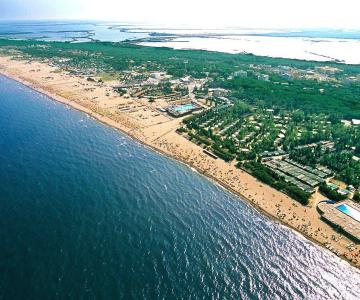
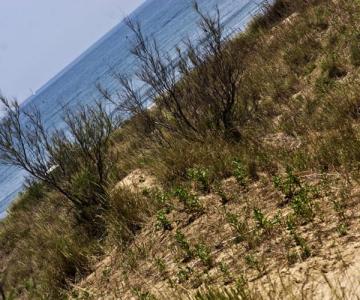
By the sea, the typical vegetation of loose sands is composed of very adaptable pioneer species, such as sea kale (Cakile maritima), pepperwort (Xantium italicum), and sea holly (Eryngium maritimum).
On the first dunes, still unstable, the flora begins to be enriched with elements such as bulrush (Cyperus Kalli), beach couch grass (Agropyron junceum), and seaside bindweed (Calystegia soldanella).
At the summit of these dunes, dense clumps of sand dune grass (Ammophila littoralis) dominate, which, by forming a barrier to the wind, cause the accumulation of sand contributing to the development of the dunes.
In the backdune area, various forms of vegetation can be observed depending on the degree of stabilization reached in the dynamics of dune development; thus, one can find plants such as hare’s tail fescue (Vulpia membranacea) or beach scabious (Scabiosa argentea).
Mediterranean Scrub
In the more sheltered areas, shrub vegetation with common juniper (Juniperus communis) and Phillyrea (Phillyrea sp.) establishes itself, leading to a thicket typical of Mediterranean scrub.
Freshwater Wetlands
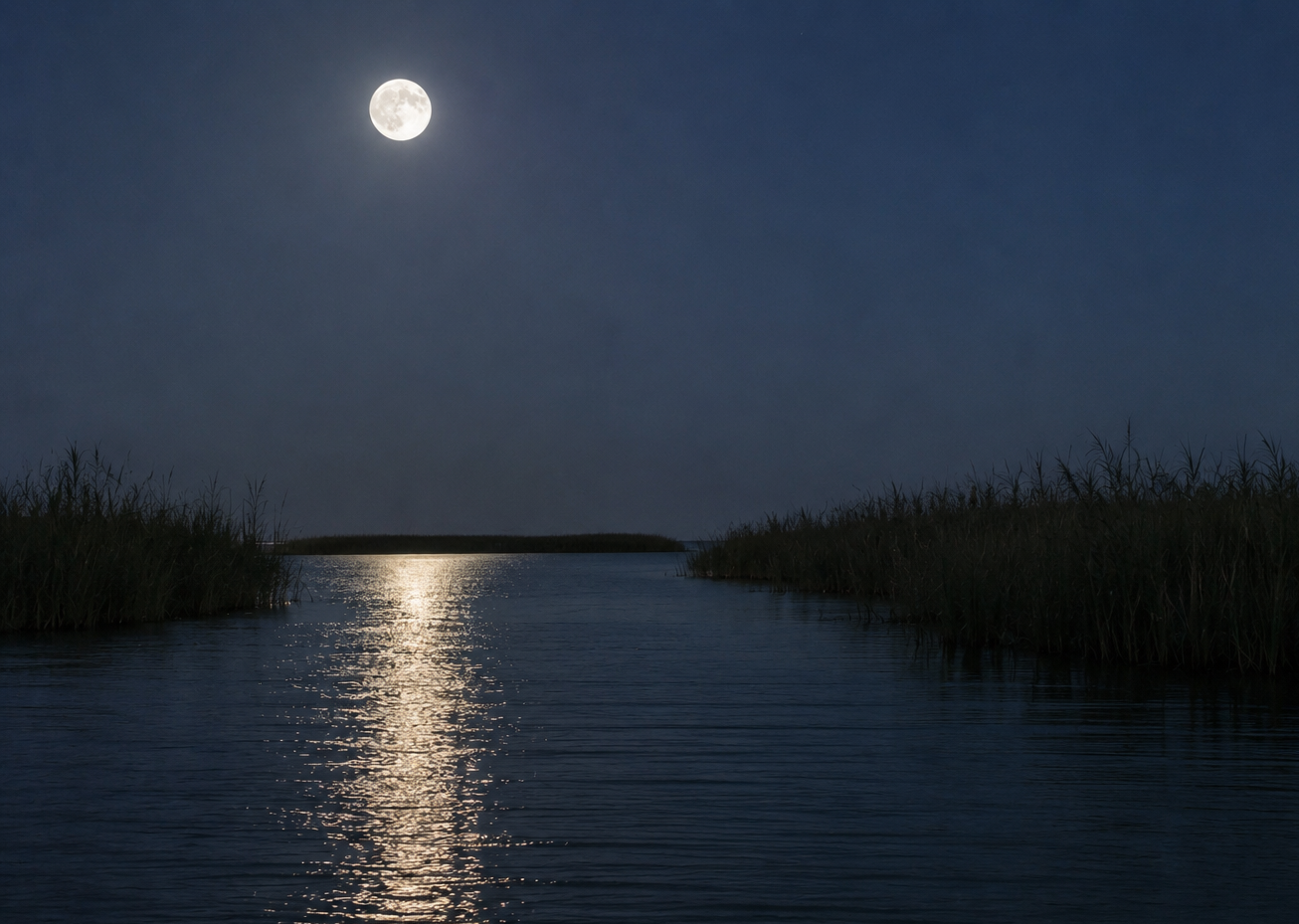
Where the water table emerges, in the dune depressions, the vegetation is enriched with hygrophilous species including bulrushes (Typha sp.), sawgrass (Cladium mariscus), and common reed (Phragmites australis).
Pine Forest
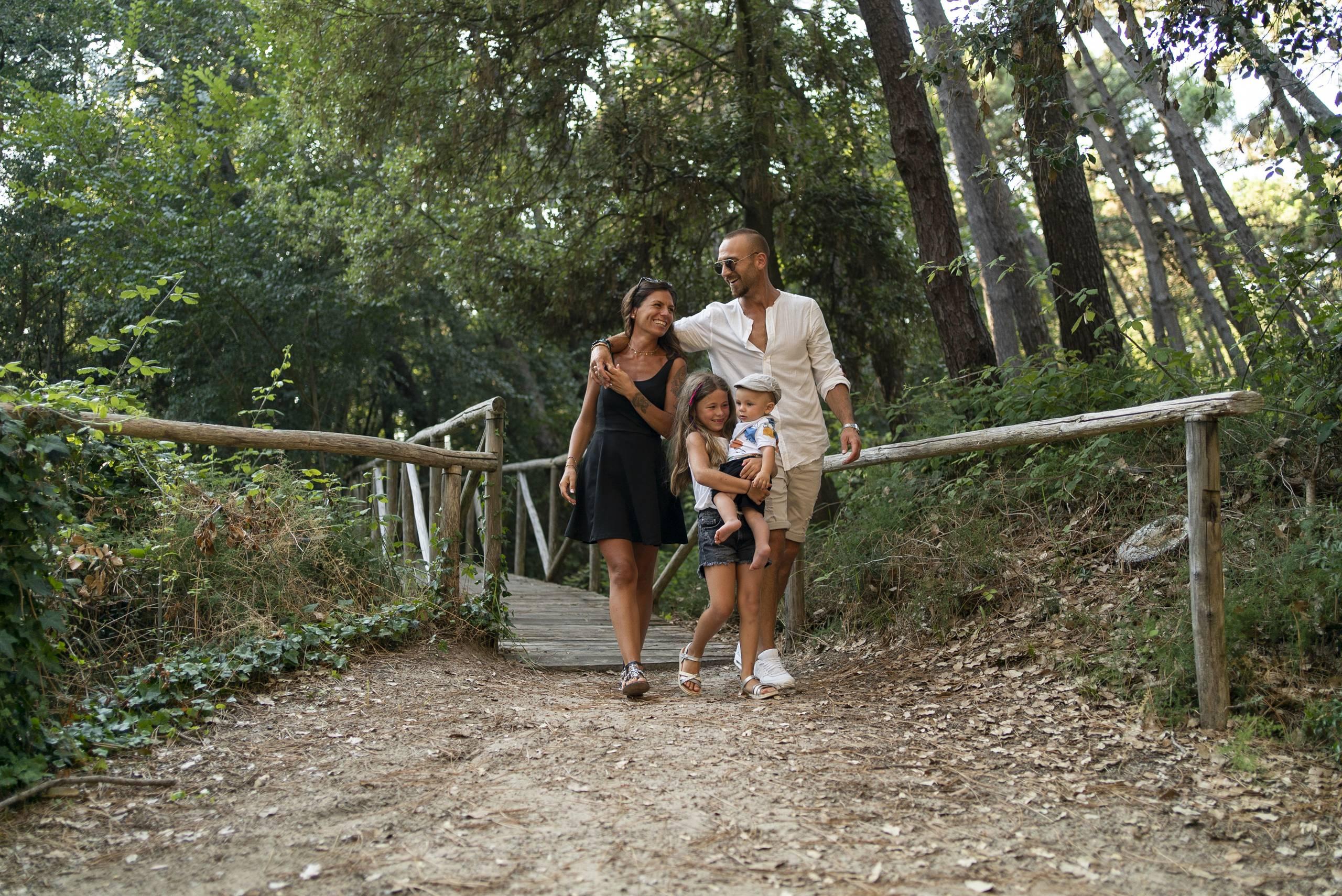
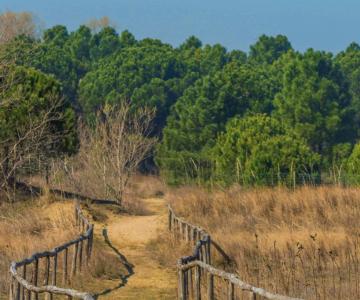
The pine forest behind, consisting of maritime pine (Pinus pinaster) and stone pine (Pinus pinea), is the result of reforestation carried out in the 1940s and 1950s and has spontaneously enriched its understory with rare elements such as orchids from the genera Cephalantera, Ophrys, and Orchis. The presence of holm oak (Quercus ilex) is also noteworthy, a witness to the spontaneous tendency to form Mediterranean-type forests.
In the western area, an area rich in elm (Ulmus minor) can be observed, indicating a natural environment favorable to the formation of a floodplain forest.
Brackish Wetlands
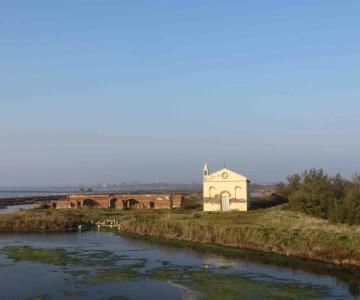
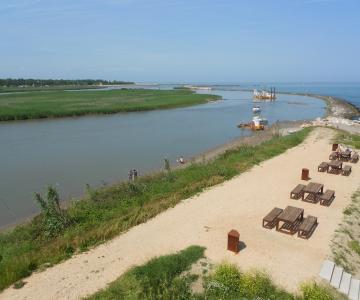
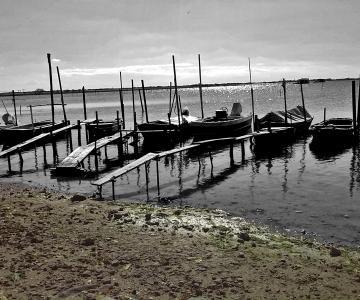
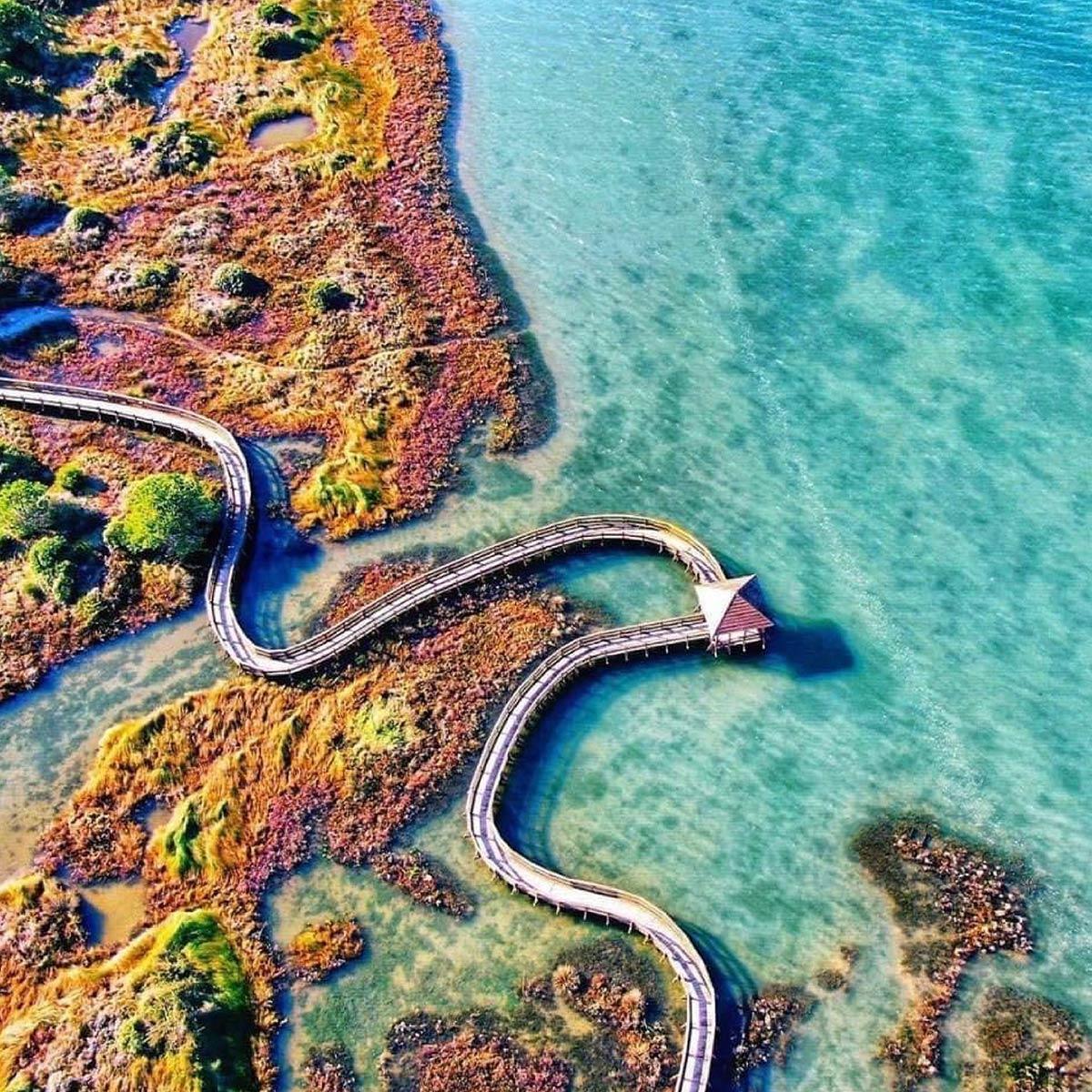
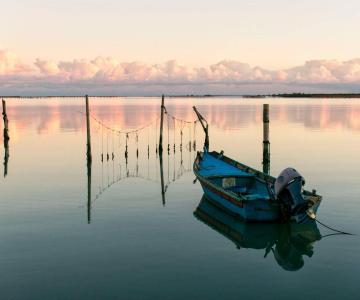
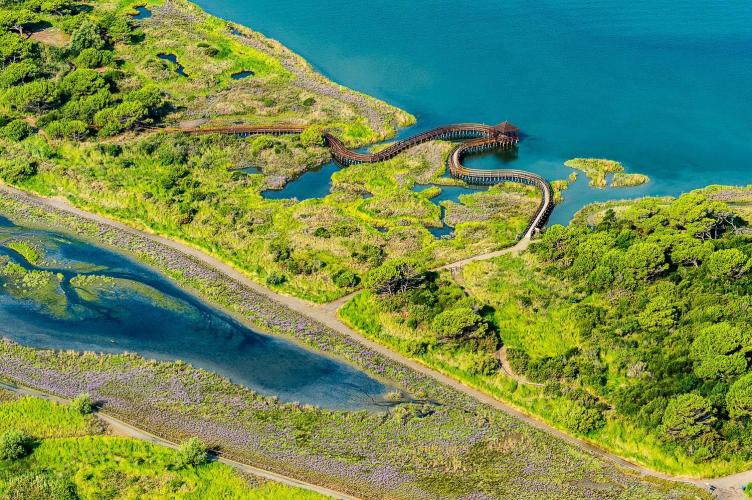
Since 1992, an equipped path has been created through the brackish environments near the Caleri lagoon.
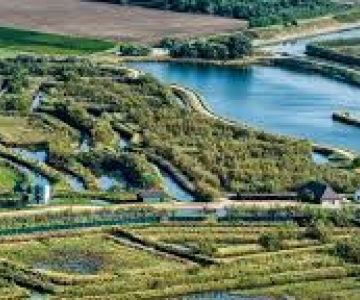
The itinerary includes an initial stretch that crosses an area facing the mudflats, characteristic tabular islets of the lagoon, clayey in nature and covered with a dense halophyte vegetation made up of perennial plants resistant to the strong salinity of the soil.
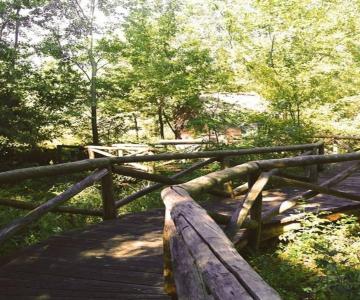
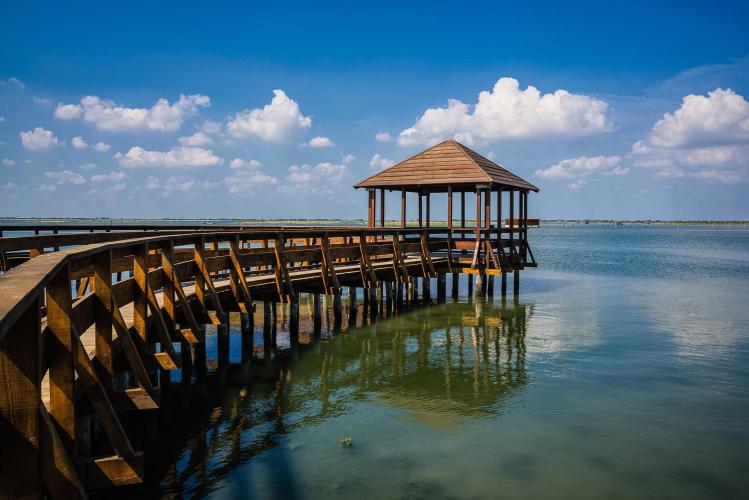
The path winds along the mudflat, and with special walkways, it is possible to easily cross the channels where, if the water is clear, one can observe benthic fauna (crabs, fry, etc.), submerged flora (Zostera noltii), and algae (Ulva, Enteromorpha, etc.).
On the margins of the mudflats or near the "salina" land, a seasonal halophyte vegetation develops formed by Salicornia veneta, Suaeda maritima, and Salsola soda.
In some stretches, stabilized margin areas by Spartina maritima are also evident.
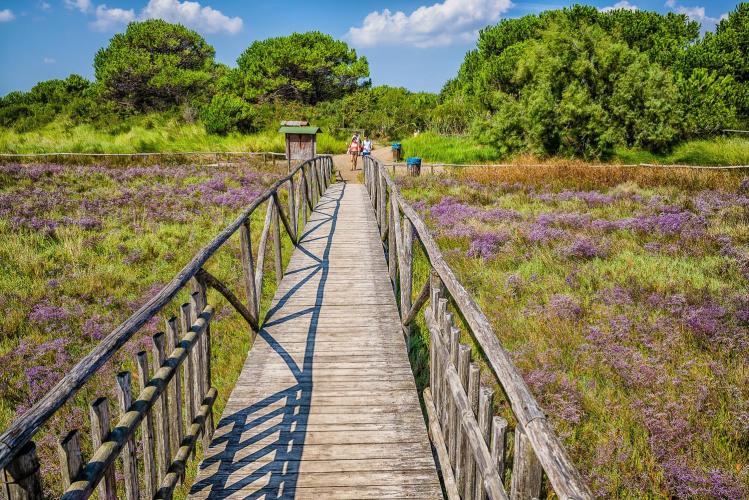
After crossing the mudflat, the "halophytic path" concludes by traversing the dune lands to the southeast; here, the halophytic vegetation mixes with more typical dune vegetation, the soils are less salty and more loose, and there is a significant development of Juncus maritimus, Inula crithmiodes, and other typical species.
Useful Information
◾Ticket: Euro 2.50
◾Opening Period: from April to October
◾Guided Tour Start Times: 10:30 AM and 3:30 PM, 4:30 PM in the summer months