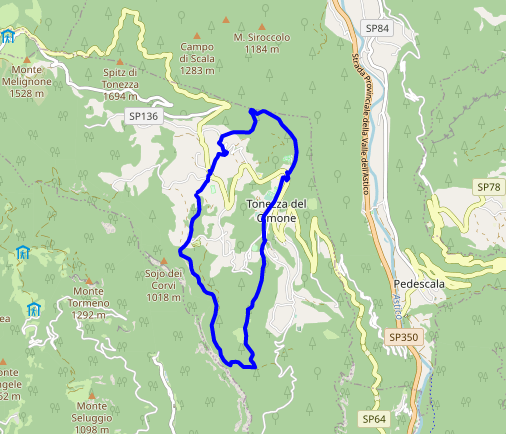
Location: Tonezza contrà and surroundings
Difficulty: Medium
Length: 7 km
Elevation Gain: 150 meters
For the Tour of the High Contradas of the old village of Tonezza, we start from the parking lot at contrà Via, to the left of the junction between the provincial road to Folgaria and the municipal road to the contradas Fontana and Grotti.
Start of the tour
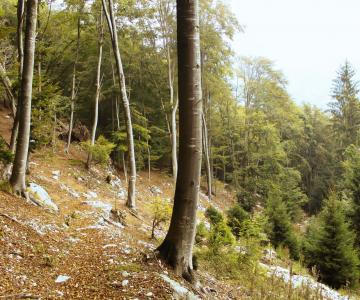
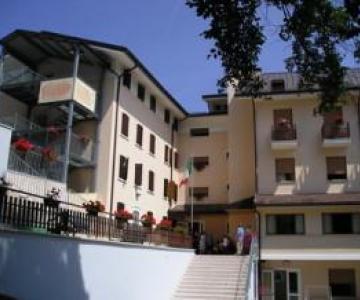
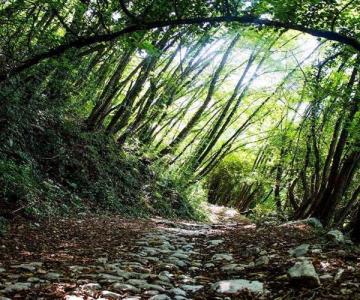
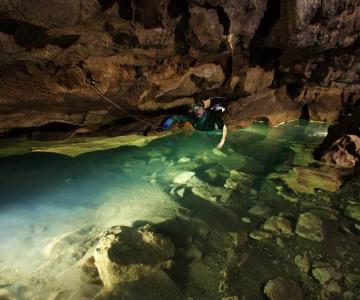
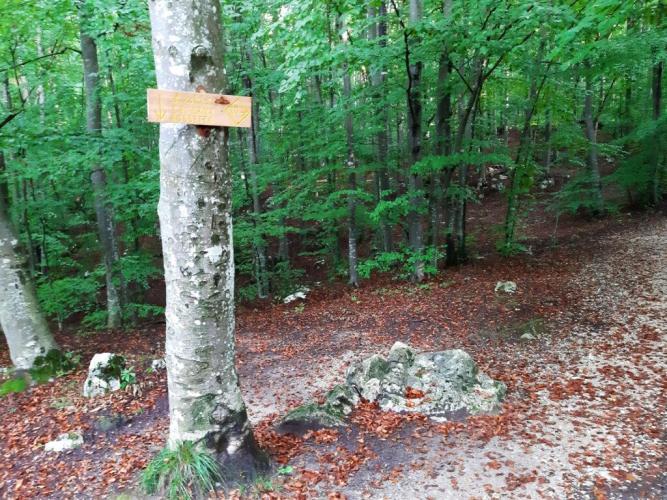
We descend towards the center of the village by taking the first road on the left that goes up to the hospitality school (former Umberto I Colony, information board located at the entrance). Beyond the school, we enter the beech forest, and shortly after we turn left onto the wide trail that intersects shortly after the dirt road coming from the provincial road. Here some stones close the Cave of Rossetta, known because on May 1, 1945, 18 German soldiers were killed and foibed here.
The woodland path and the watershed with Valpegara
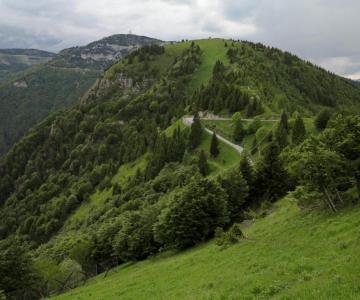
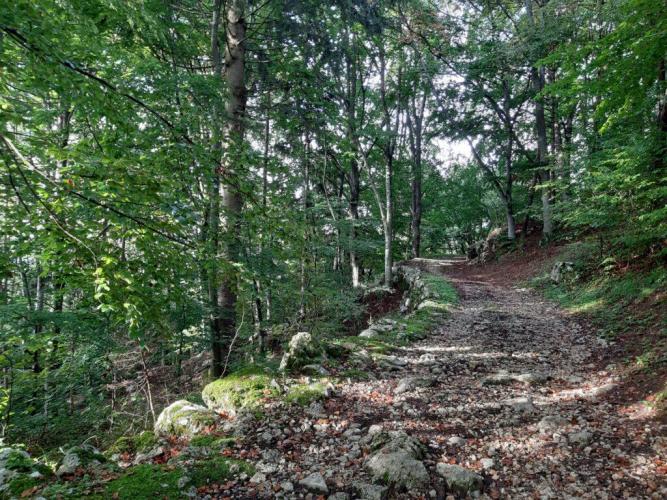
Turning right and following the dirt road to the curve, one can glimpse radio-television antennas. At the left curve, a small unmarked path starts, which cuts straight through the beech forest and joins, after a few dozen meters, the path that ascends in the area called the "Ospoli". On the left, instead, begins the ascent with the road that goes from wide to narrow. Continuing the walk along the edge of the road, it is noticed that we are on a watershed that separates Tonezza from Valpegara, between beeches first and larches later.
The Ospoli area and the Carincia huts
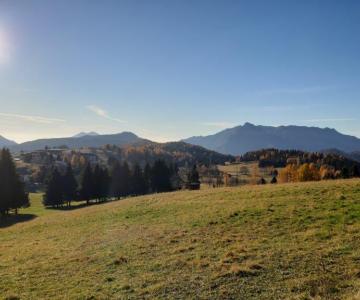
After about twenty minutes from the start, we enter the pasture area of the "Ospoli". We turn left, catching a glimpse of the huts of "Carincia". The area is occupied by cherry trees and larches.
Contrà Giotti
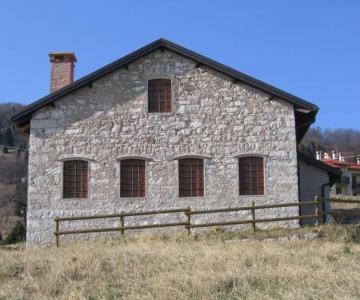
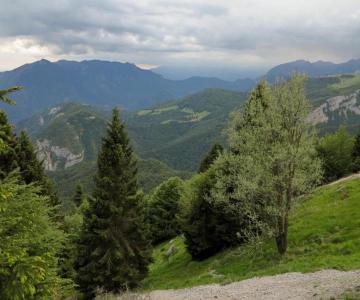
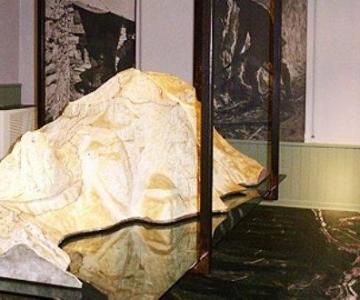
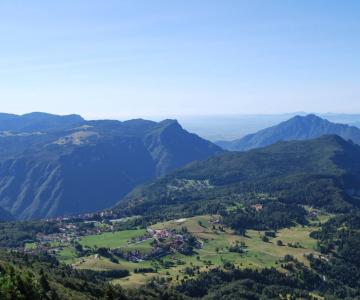
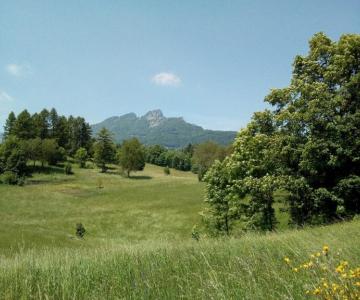
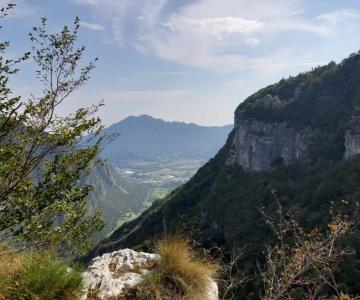
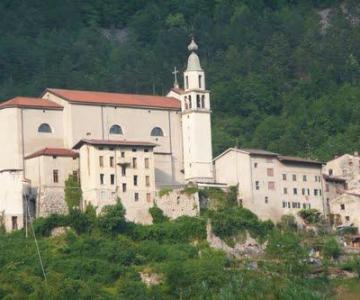
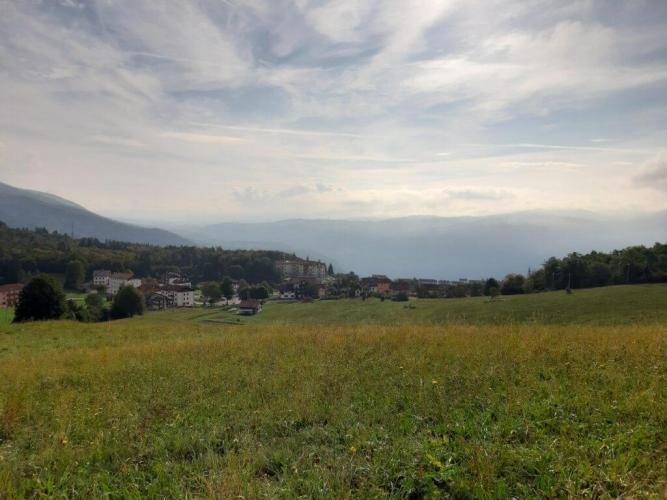
After about ten minutes, following the dirt road, we reach the vicinity of contrà Grotti. In the Tour of the High Contradas, especially in this area passing behind the contrada, we can see some buildings constructed with the predominant use of biancone. Besides the buildings, the landscape is extraordinary because there is a full view of Tonezza.
The fifteenth-century capital
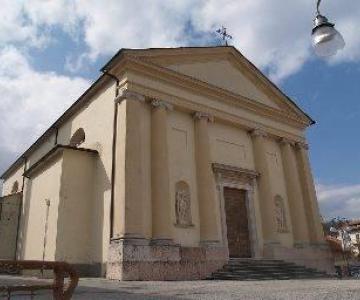
Descending towards contrà Fontana, we pass in front of the ancient capital built in 1427, the oldest artifact still present in the village, moved and restored multiple times.
The path to the Ethnographic Museum of Casarto and contrà Sella
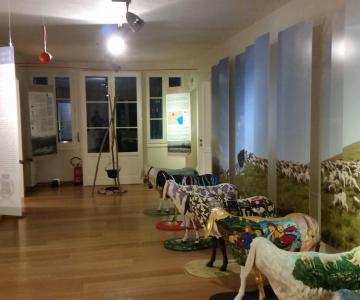
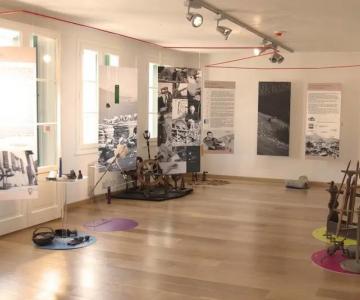
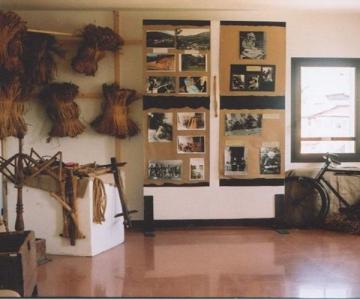
We descend the paved road. Once we make the curve, we divert to the path that passes in front of the casèlo of contrà Grotti, now the Museum of the Casaro. On the bend below the museum, we notice, to the right, the detour for Sella. Upon reaching the houses, it is immediately noticeable that Sella is located on the w watershed between the Astico Valley and the Rio Freddo Valley (hence its name).
Beyond the capital, the entrance to the Fontanelle and Excalibur
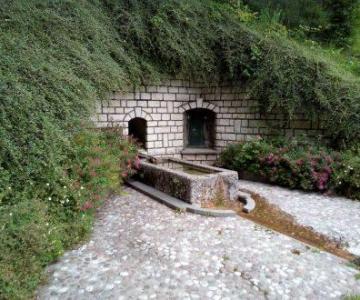
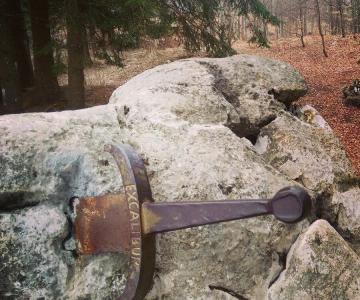
Beyond the capital of the Madonna del Carmine, we descend through the contrada, and at the beginning of the road to contrà Valle, beyond the advertising board, we take the Fontanelle path on the right, passing behind a rural building (el casarin, the only one left with a red ammonitic roof) to join a little further down the Excalibur path, following it to the left until contrà Vallà. These two paths, together with the Tour of the High Contradas, are the most famous in Tonezza, and compared to the others, this one is of medium difficulty.
Passing through the Quarries of Lasse towards the return
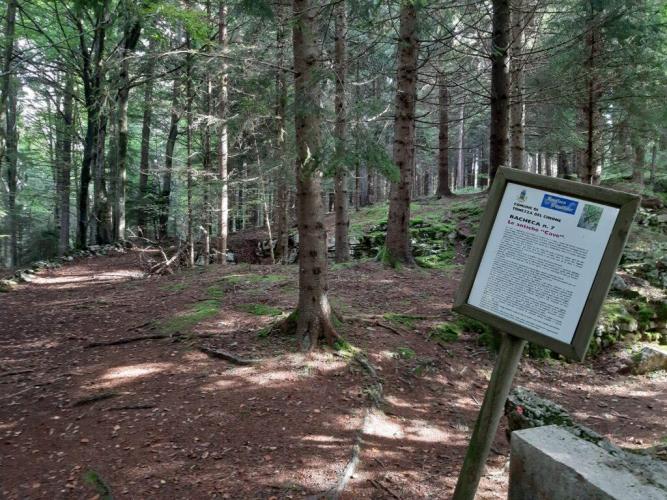
Crossing contrà Vallà and returning into the forest, one sees a sign that explains the entire area outlined by the Quarries of Lasse. At the exit of the forest, one can see a beautiful view of the plain of Lain. Continuing on the paved road and then turning left, we arrive at contrà Pettinà without leaving the paved road, to return to the starting point, one simply needs to go down towards the center of the village by taking the path that starts in front of the contrada. We pass through a part of the Fontanelle path and continue until we reach the hospitality school (former Umberto I Colony) where our journey began.