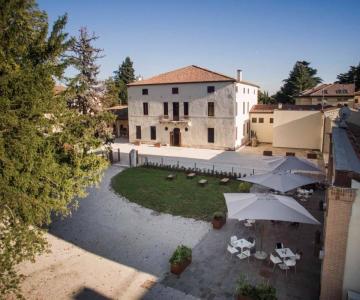
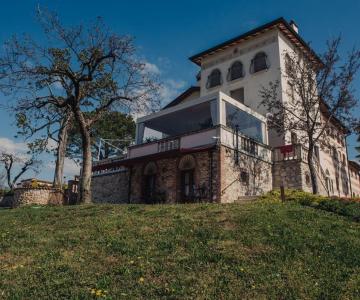
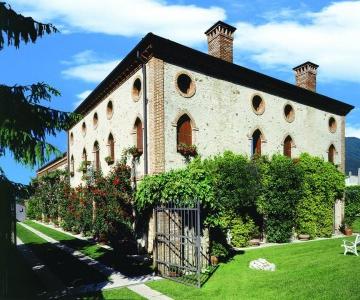
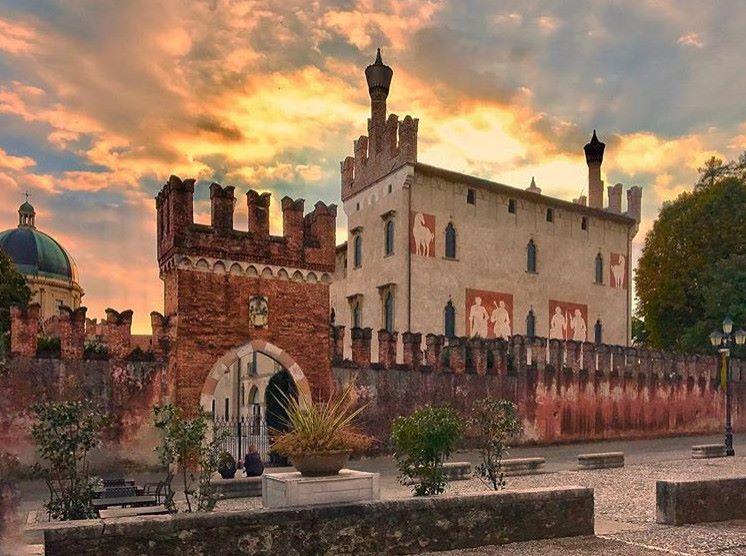
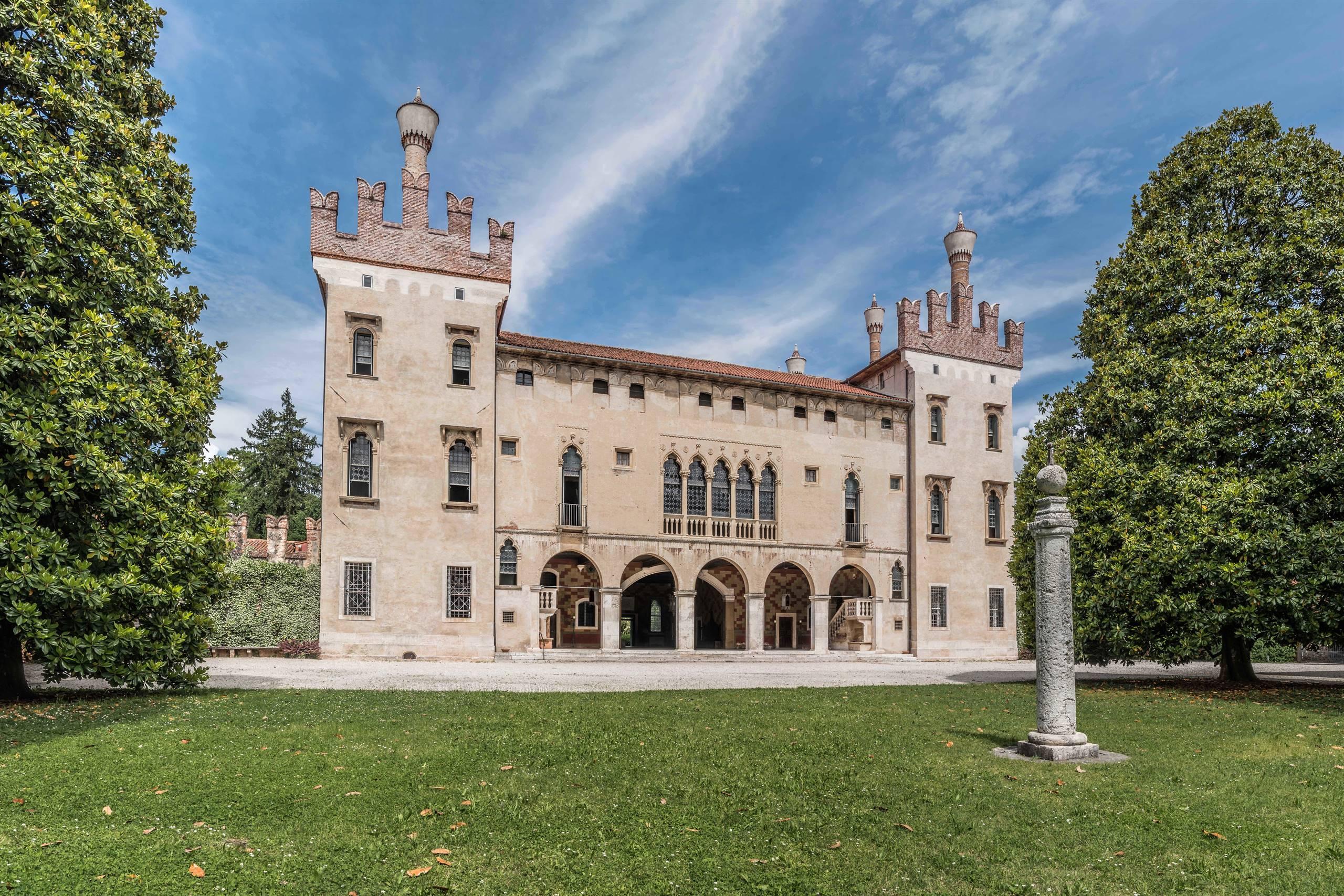
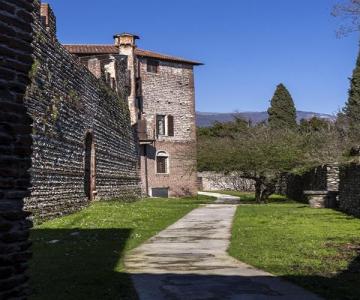
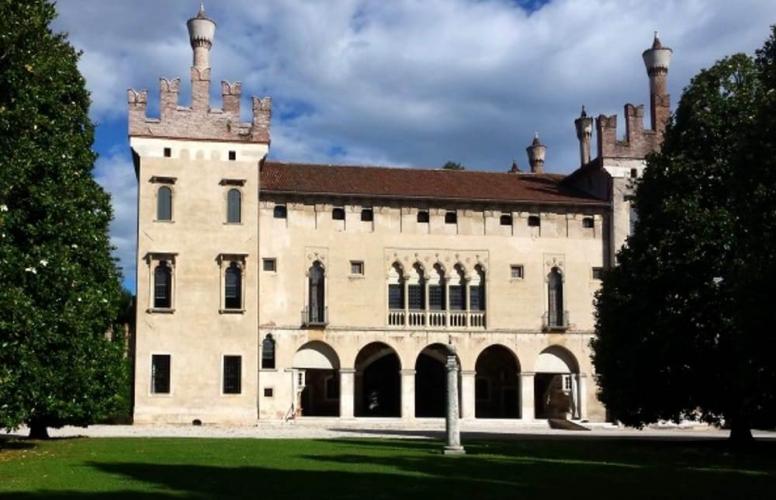
The Thiene Castle is considered the most significant Gothic building of the 15th century that arose in the Vicenza area for residential use. An extraordinary example of pre-Palladian villa, it is a unique specimen of its kind, both for its architectural features and for its functional purpose, a cornerstone in the evolution of Venetian villas.
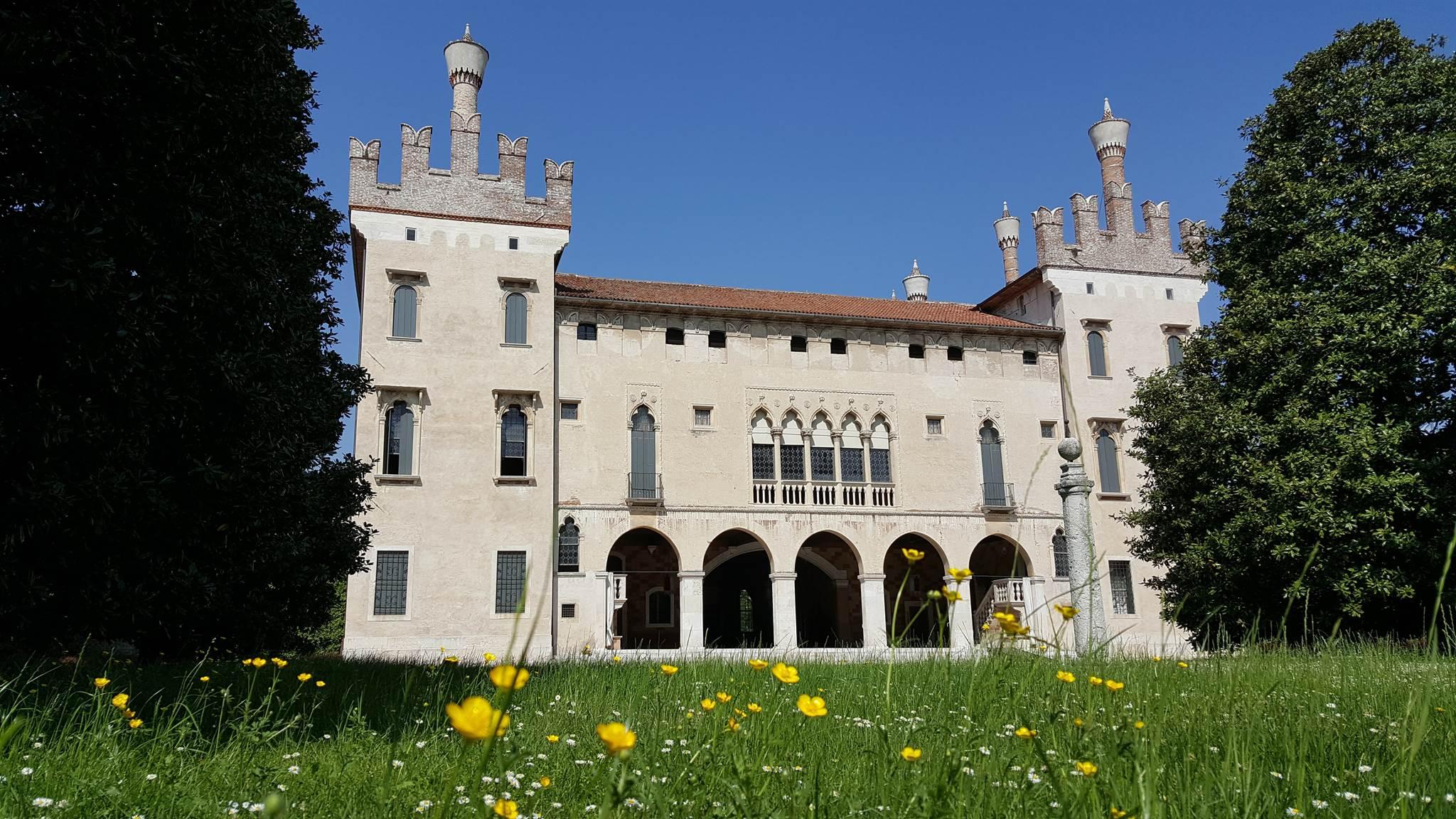
The residence combines the characteristics of a castle with those of a Venetian palace, particularly the "casa-fondaco", which serves as both residence and warehouse/trading place. This function is suggested by the five large rounded arches on the ground floor. The first floor is characterized by the large pentafora (one of the few present on the mainland outside Venice) flanked by two monofore.
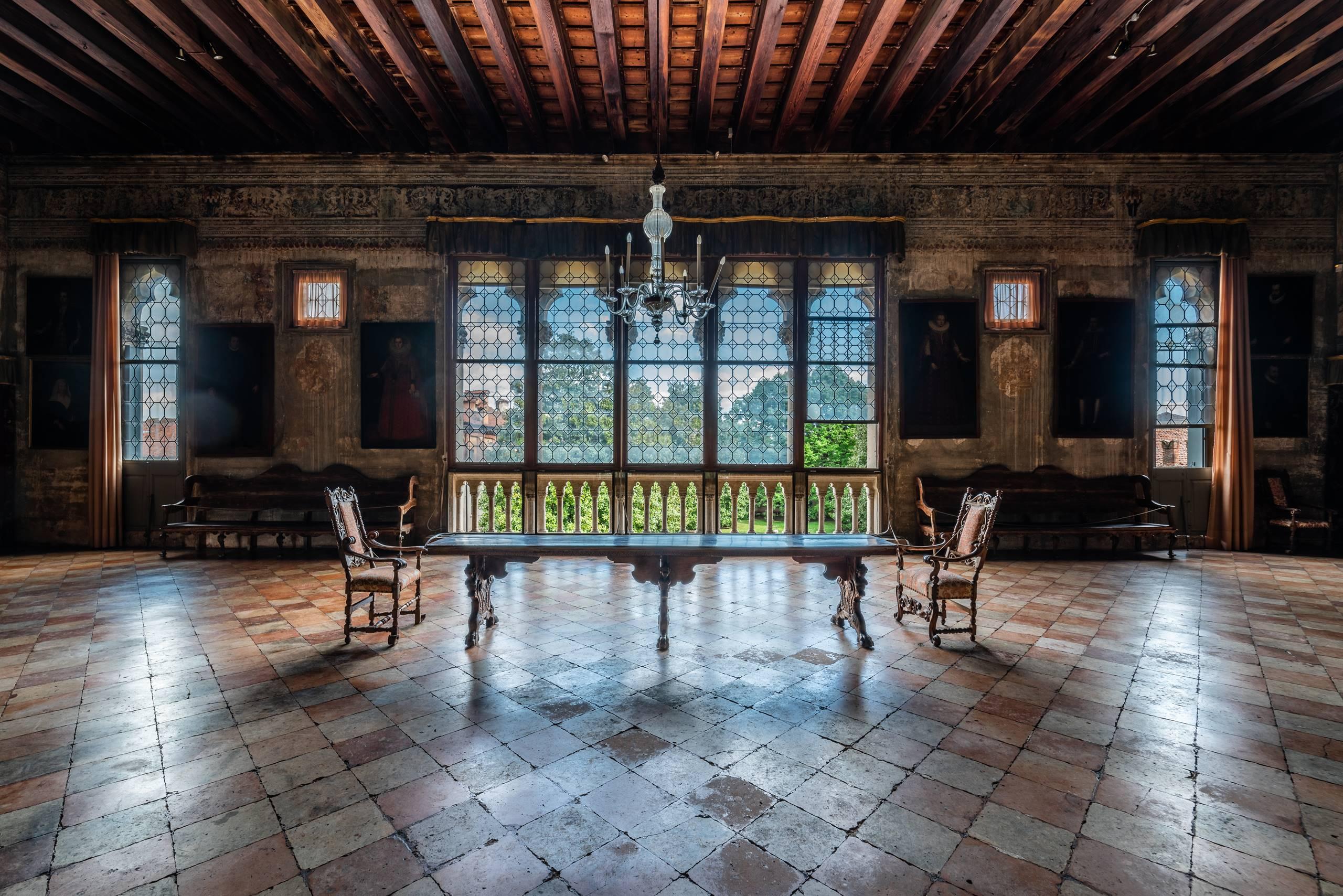
In the course of the sixteenth century, the building was raised with the creation of the second floor, intended for storage, achieved by closing off the battlements on the central body and installing a sloping roof; the first floor was transformed into the noble floor, furnished and inhabited. The lateral wings were also elevated, remaining taller and protruding compared to the central body, while maintaining the original battlement.
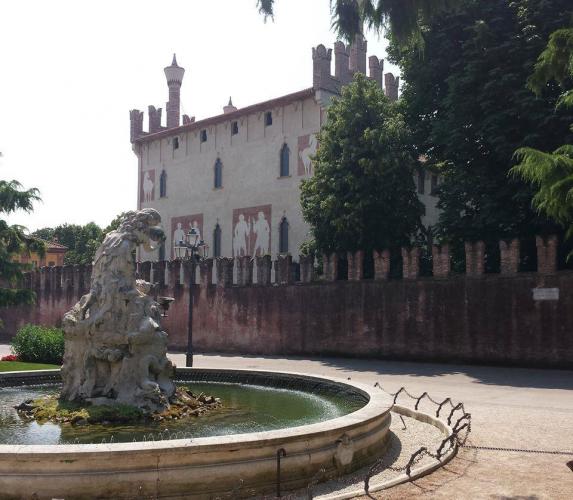
The two different phases of construction are clearly visible in the lateral wings: while the windows on the first floor are Gothic, the windows on the second floor are Renaissance. The elevation work, along with the construction of the two symmetrical staircases on either side of the loggia leading to the upper floor and the crenelated wall, is the work of Francesco Porto junior, nephew of the senior.
The Porto family maintained ownership of the Castle until 1816, when it was inherited by the Colleoni family, which in turn kept the property for three generations until 1918, when it was finally inherited by the Thiene family, the current owners of the Castle.


Castello di Thiene
Corso Garibaldi 2 , Thiene - 36016
- Contacts
- Links
TAKE ME HERE: Corso Garibaldi 2