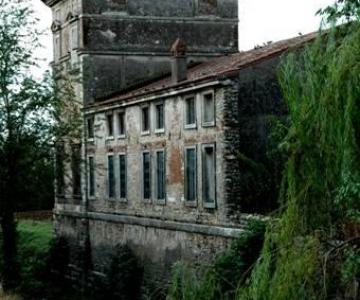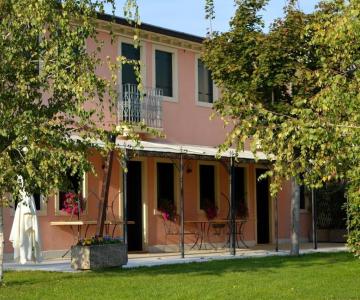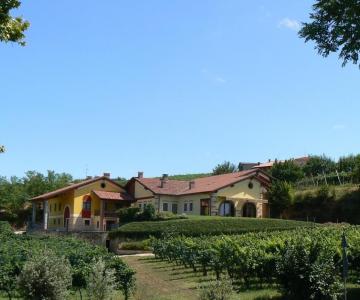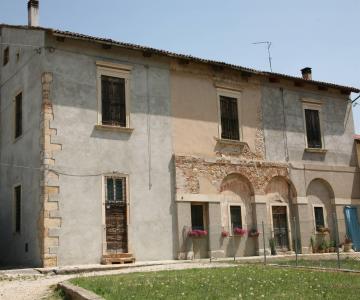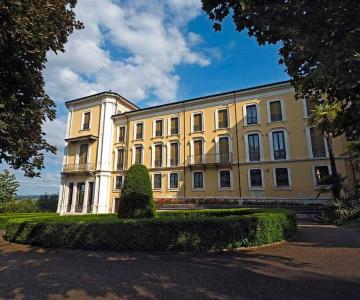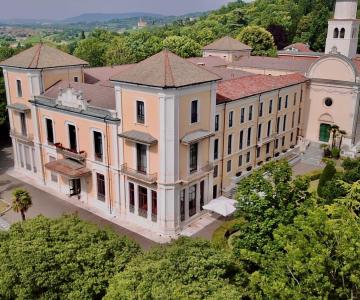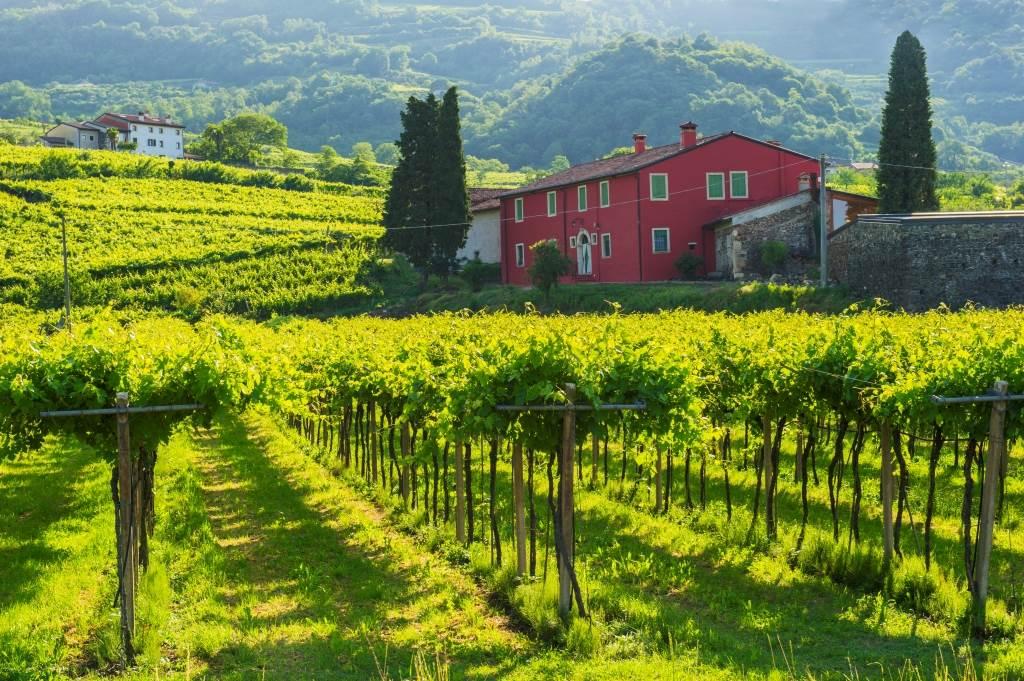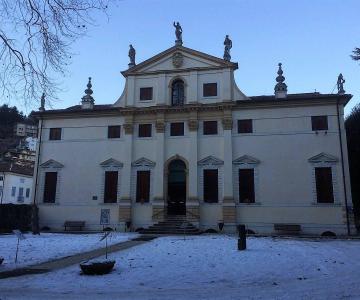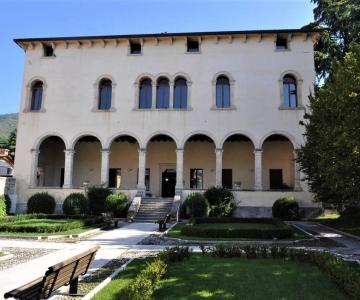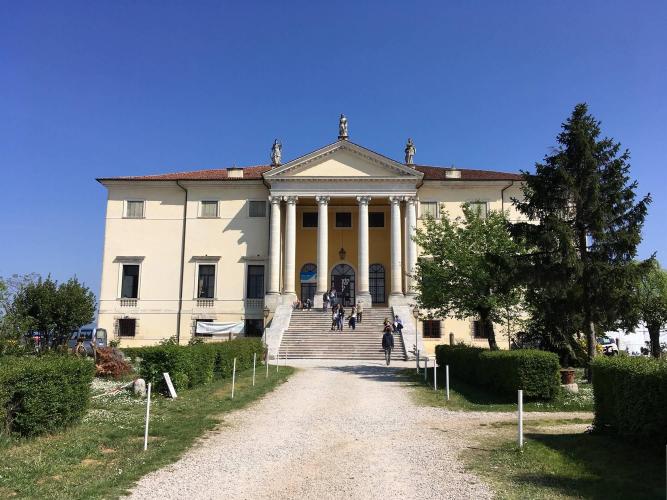
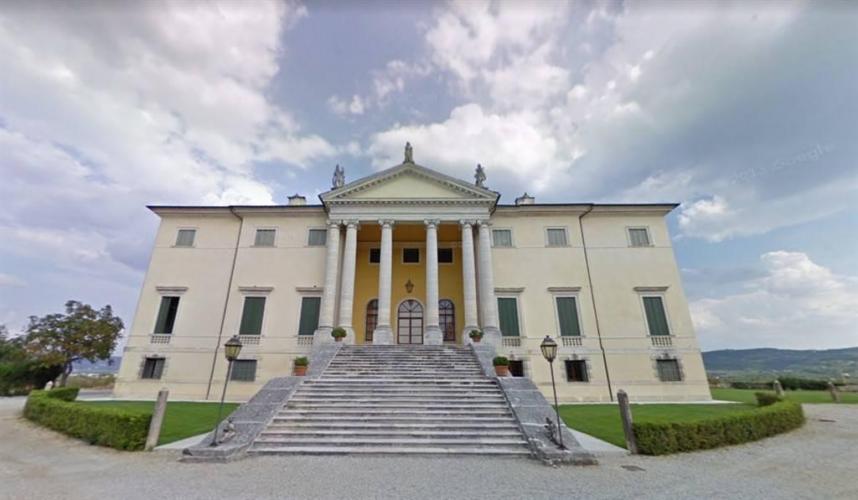
The Villa Da Porto, known as "La Favorita," is configured as a Venetian villa in Palladian style, commissioned by Giovanni Battista da Porto in 1714-1715 and designed by architect Francesco Muttoni.
It is located on a hill, in a dominating position. The interior painted decoration, whose author remains unknown, was probably completed in the years 1717-1718.
In the early years of the 19th century, the villa changed ownership to other Venetian families, including Balbi, Ziggiotti, Manin, before returning to the Da Porto family at the end of the century. In 1947, the villa was purchased by the parish and was used as a church for a period.
The villa is reached through a long and scenic tree-lined avenue and consists of three floors.
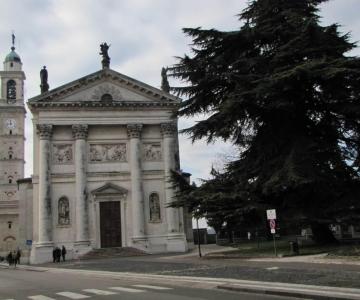
The main facade features a high staircase leading to the Ionic-style pronaos, topped by a triangular pediment adorned with statues of Apollo, Minerva, and Mars. The eastern facade, on the other hand, has three openings with masks on the keystones, enclosed by elegant loggias.
At the top, there are statues of Mercury, Hercules, and Onfale.
The structure is articulated around a large central room with double height, forming two wings of smaller rooms.
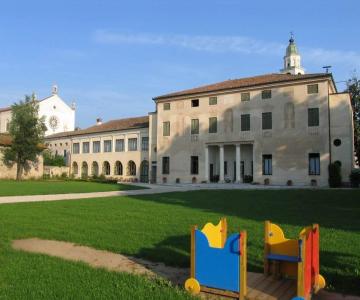
There are also two porticoed barchesses, detached from the main body, with a serliana opening in the center.
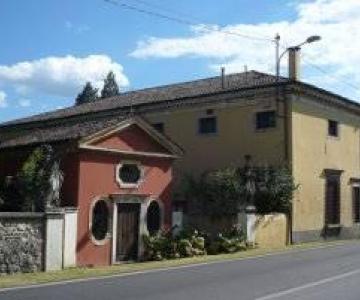
Outside the walls, there is the Carmine chapel, built in 1697.