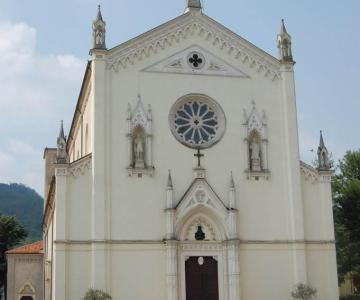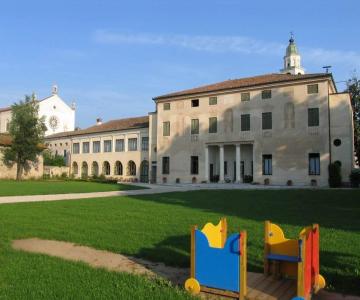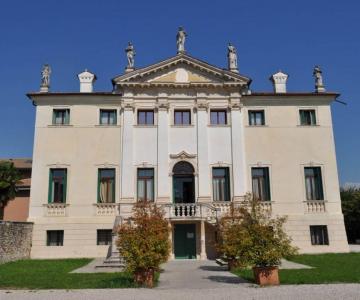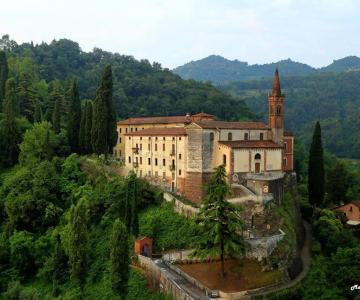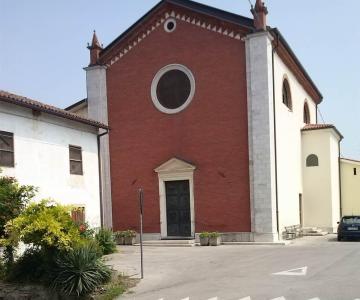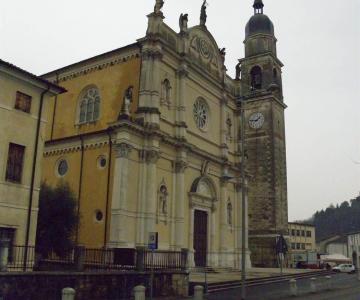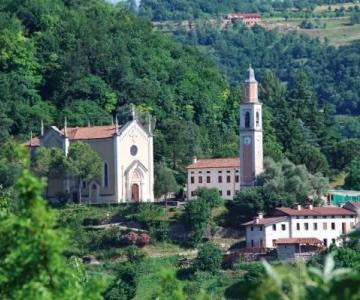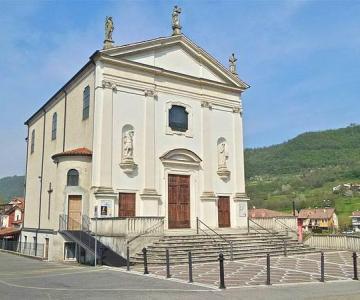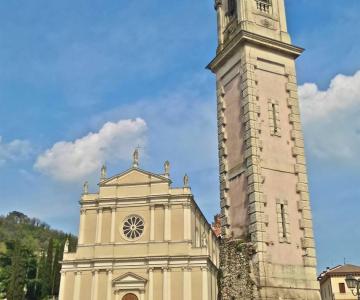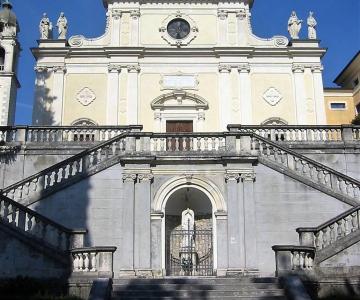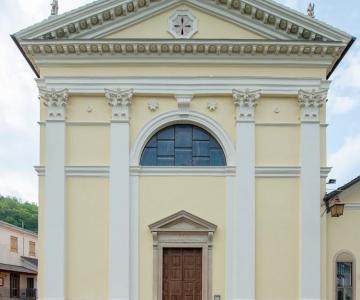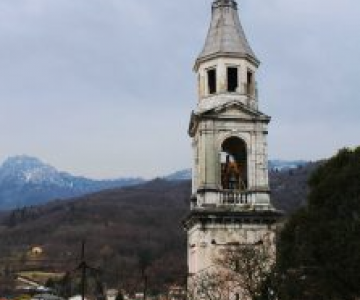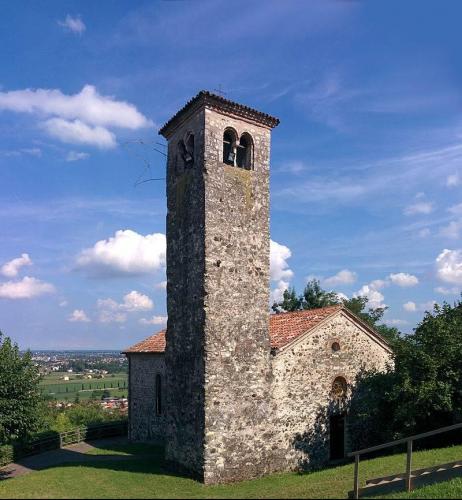


The church of San Lorenzo in Castelnovo, perched in a panoramic position, is of considerable interest for its architectural layout and ancient history.
There is no definitive information regarding its origins, but a fragment of stone placed above the rose window of the facade features decoration dating back to the 8th or 9th century.
In 1166, the small church was restored and enlarged: the previous flooring was reused as foundations to level the new structure, the external appearance was rectangular and the interior had a single nave. A trick was adopted so that, while the east side appears flat externally, it features two adjacent apse concavities internally (of which the one to the north was part of the original structure).
Evidence of this reconstruction remains in a window on the north side which, in one of the stones constituting its arch, bears the inscription: "I made this, Marcillo, during the reign of Emperor Frederick, in the year One Thousand One Hundred Sixty-six from the incarnation of the Lord".
During the 1200s, the church of San Lorenzo lost its centrality in the city's liturgical life due to the growing prominence of the new church of San Vitale, the current parish church of Castelnovo, built at the foot of the hill. The frescoes preserved in the right apse date back to the 1300s, and the wooden statue depicting San Lorenzo placed on the main altar is from 1656.
During the 17th century, the church of San Lorenzo underwent some restorations and renovation work on the now very dilapidated building: the facade and the roof were fixed, bricking up the old tiles and hiding the wooden truss with a horizontal ceiling (compromising the lighting provided by the existing windows).
The restoration work carried out in 1984 included the renewal of the roof and the exterior plaster, thus bringing to light the stones carved in 1166. In the 1990s, the slope that was at risk of crumbling was also stabilized: the ancient access road was made pedestrian and the old path on the northeast side became the main road.