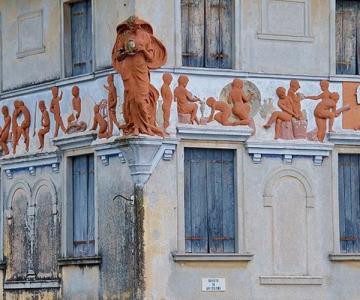
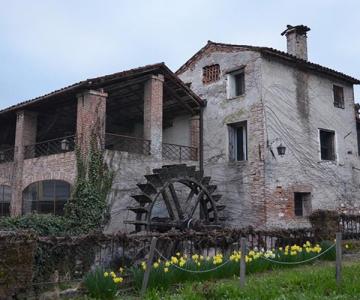
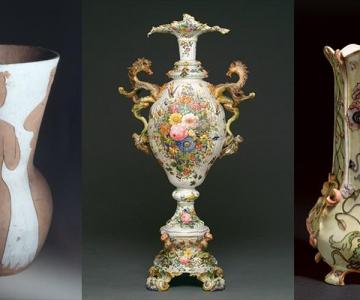
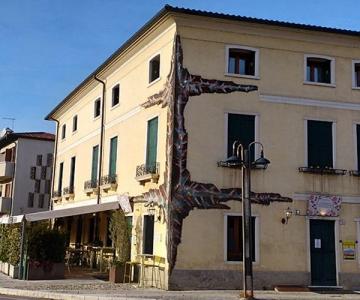
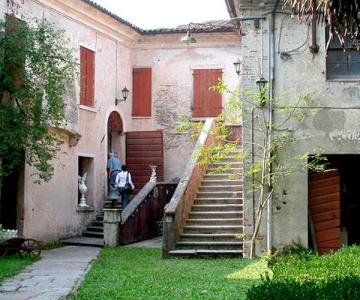
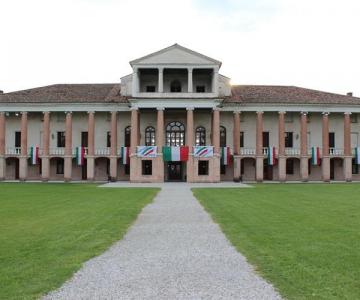
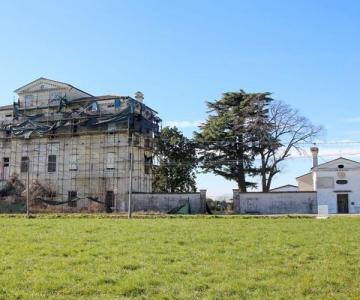
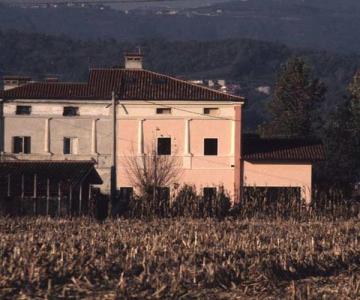
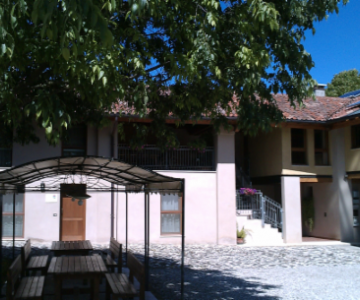
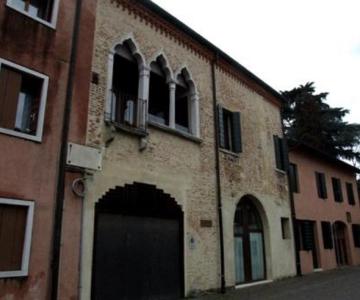
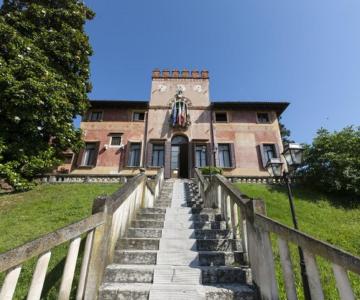
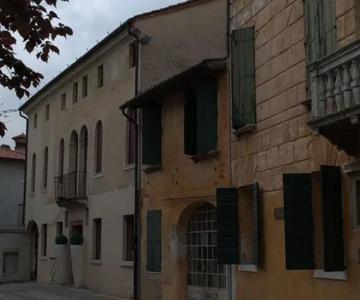
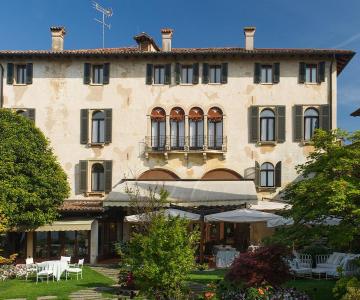
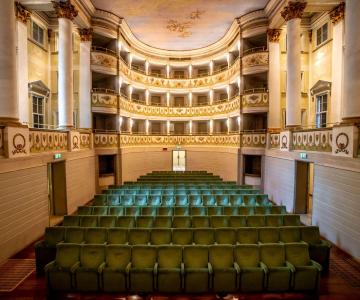
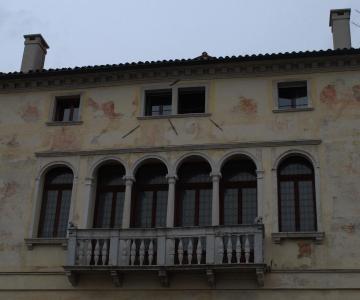
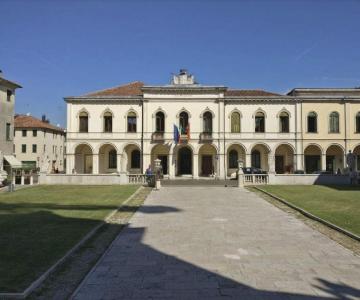
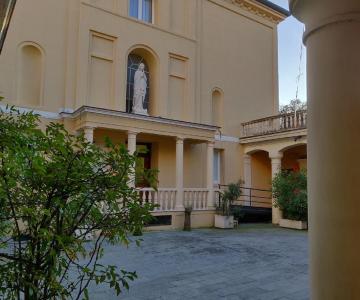
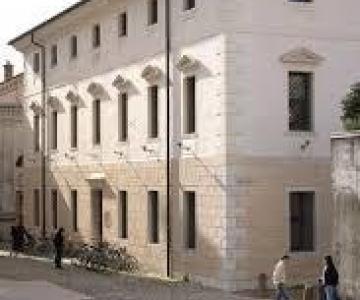
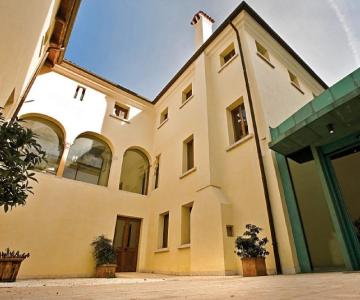
The Palace was constructed in the late 18th century by Giovanni Maria Baccin, a successful ceramic entrepreneur, stands as a testament to his prosperous career within the Antonibon manufacturing company. His accomplishments enabled him to amass significant wealth, allowing him to acquire various properties, including houses, land, farms, hydraulic mills, and even establish his “english” earthenware production.
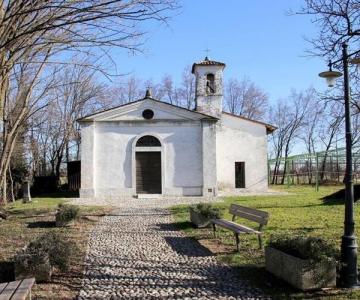
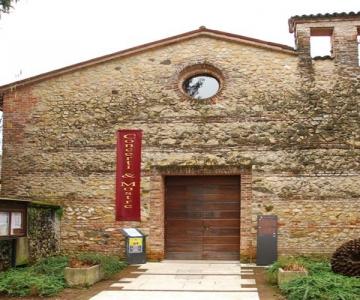
The Baccin Palace, as we know it today, represents only a segment of the family's residence, along with a priest's abode “that served as a school for the children of ceramists here in my home in le Nove”. This establishment, a Library-Museum today, operated as Nove's inaugural privately initiated and supported school during the late 1700s and early 1800s.
Following different successions through the late 19th century, the property underwent divisions and partial sales until 1922 when three ceramists from Nove—Teodoro Sebellin, Sebastiano Zanolli, and Alessandro Zarpellon—initiated an enterprise. Driven by the allure of the palace and its strategic location, they began a series of acquisitions aimed at reuniting the original complex, eventually establishing their manufacturing site within this historical space. This endeavor played a pivotal role in almost


BiblioMuseo Palazzo Baccin
Via Munari, 22 , Nove (VI) - 36055
- Contacts
- Links
TAKE ME HERE: Via Munari, 22