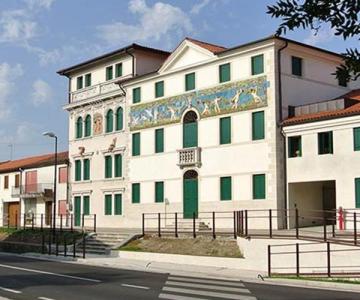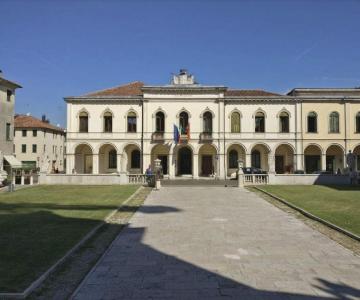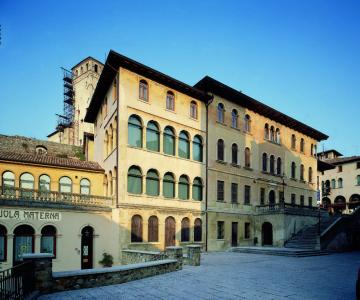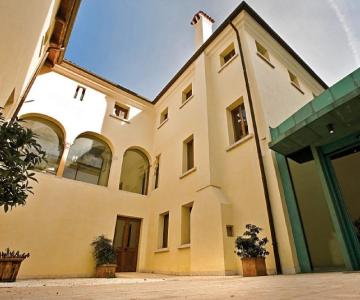
The desire to create a Civic Museum in Nove was explicitly expressed as early as the mid-20th century. Since then, the people of Nove began to form a collection of valuable ceramics to establish an initial museum collection within the 19th-century building, home of the School of Drawing, later Royal School of Art, and then secondary Art School. This building was erected according to the testamentary will of a generous patron, the sculptor Giuseppe De Fabris (Nove 1790 - Rome 1860), the most celebrated Novese for artistic stature and civic commitment.
At that time, his father Gioacchino was the director at the famous Antonibon ceramics manufacturing company, where the young De Fabris gained his first experiences in technical knowledge. At the age of sixteen, he moved to Vicenza; later, he stayed in Milan and finally settled in Rome in 1814, where he died in 1860. He was in contact with famous figures and artists of his time, including Antonio Canova. He created the monumental tomb for the great architect Andrea Palladio in the Monumental Cemetery of Vicenza.
He was the Director of the Vatican Museums and held numerous academic positions.
From his substantial legacy, the Institute of Ceramic Art came into being. When in 1961 said Institute became entirely the responsibility of the State, the collection of ceramics, until then gathered by the people of Nove to constitute a specific museum, became state property.
In the 1980s, the Municipal Administration committed to establishing a Civic Museum of Ceramics, offering the population the opportunity to have a tangible testament to their history and cultural identity.
The Parish Priest Don Sante Grego, President of the Charitable Work of Giuseppe De Fabris, and its Board of Directors, in 1986 decided to donate the 19th-century building, formerly the seat of the Art School, to house the Civic Museum of Ceramics.
The residents of Nove and the 'Nove Terra di Ceramica' Association pledged to donate many valuable ceramics to the forming collection. In 1983, the first institutional act founding the Civic Museum of Ceramics was launched, and it was inaugurated in April 1995.
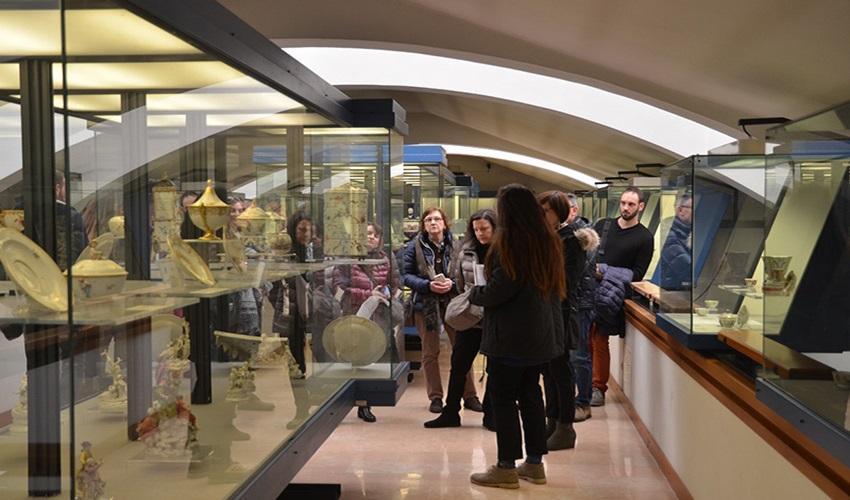
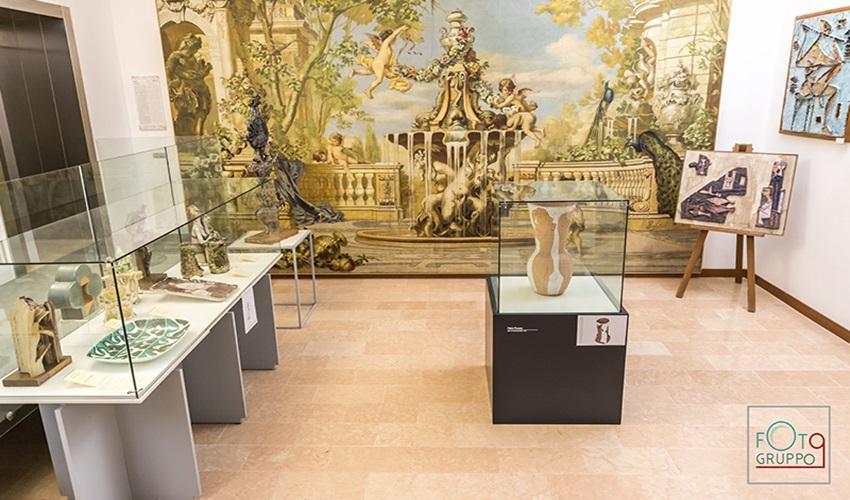
The collection documents the history of Nove ceramics, a significant international presence, from the 1700s to the present day. In the section devoted to twentieth-century works, there's a remarkable collection of ceramics that received awards at the International Ceramics Exhibition from 1949 to 1975, permanently loaned by the Vicenza Trade Fair Authority.
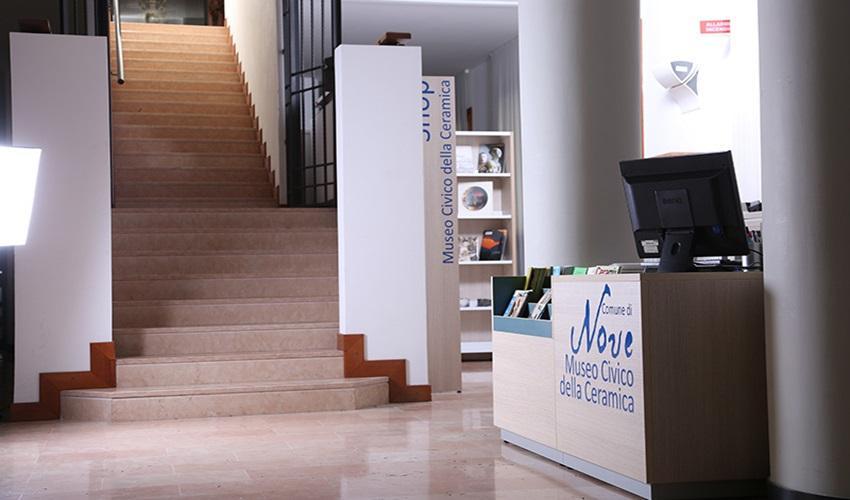
The museum tour spans three floors, commencing from the top with ceramics from the 1700s, continuing through the nineteenth-century section, and concluding with works from the 20th century and contemporary pieces.