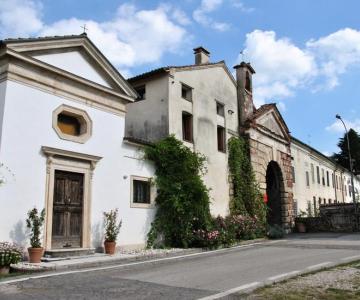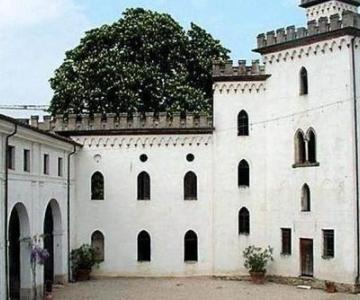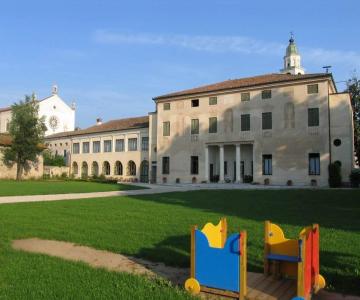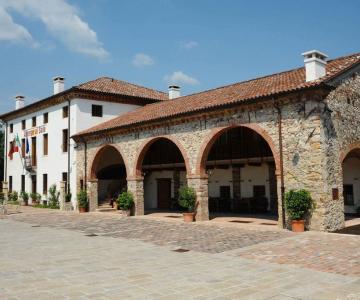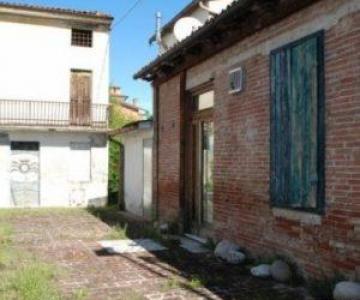
In the Fifteenth century, in what is now the courtyard of Villa Checcozzi, there was a farmhouse belonging to the Loschi.
In the mid-Sixteenth century, the courtyard was renovated, and the master residence, the stables, and the barns were built. They also owned the Serraglio, a large area then cultivated with fruit trees.
In the Seventeenth century, the Court and the Serraglio became the property of the Ghellini family and then passed in the Eighteenth century to Matteo Checcozzi, a lawyer from Vicenza.
The current layout of the villa was designed in the Eighteenth century by Muttoni, who preserved a pre-existing, yet evocative, room from the Sixteenth-century alcove.
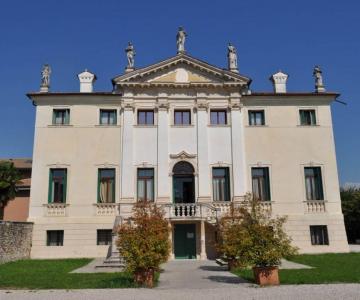
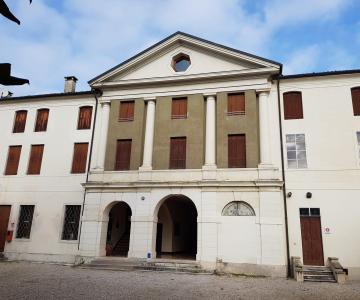
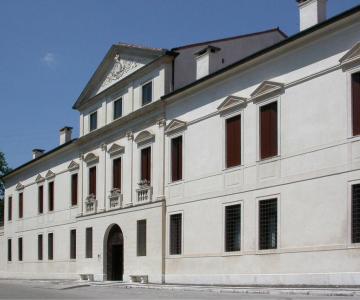
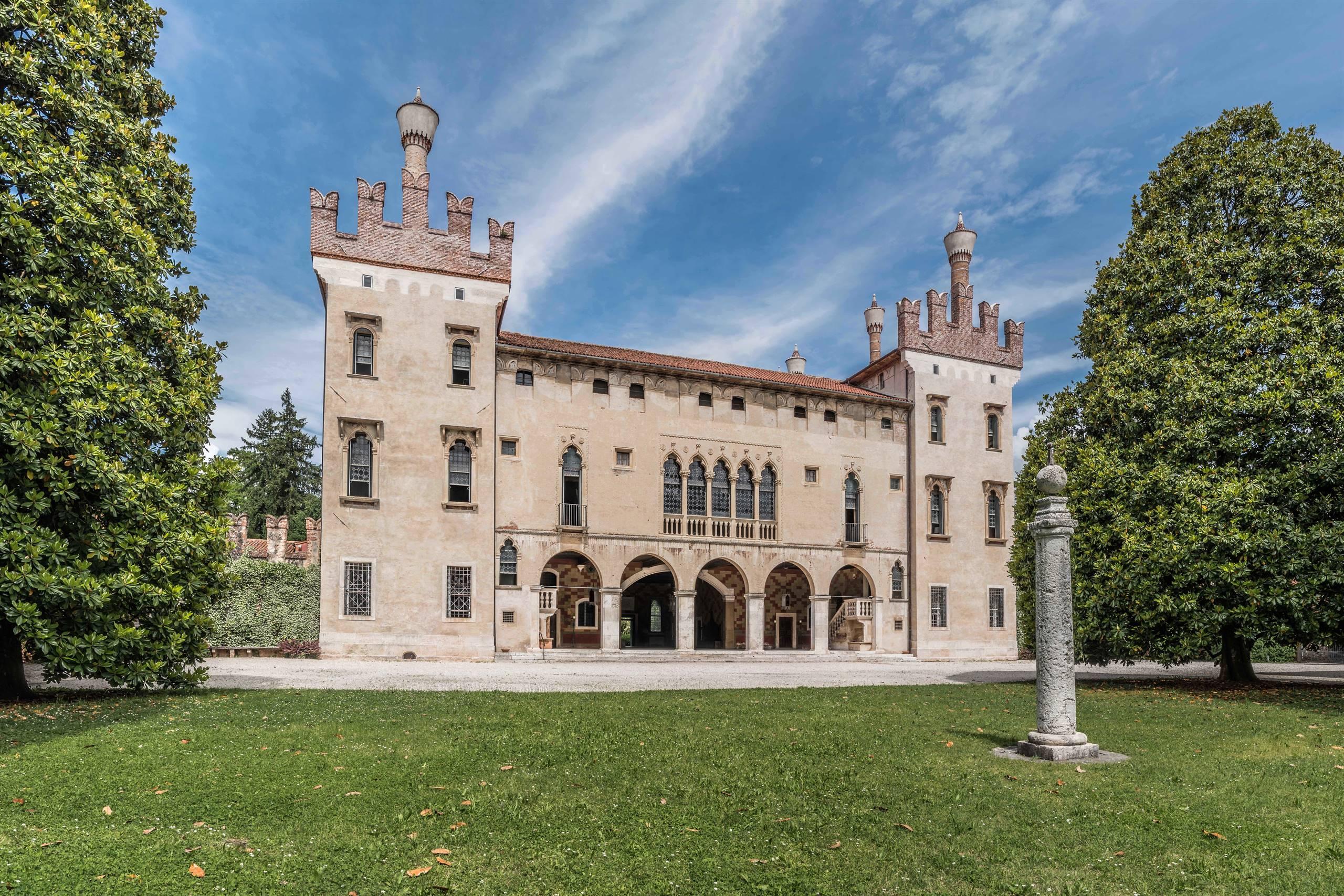
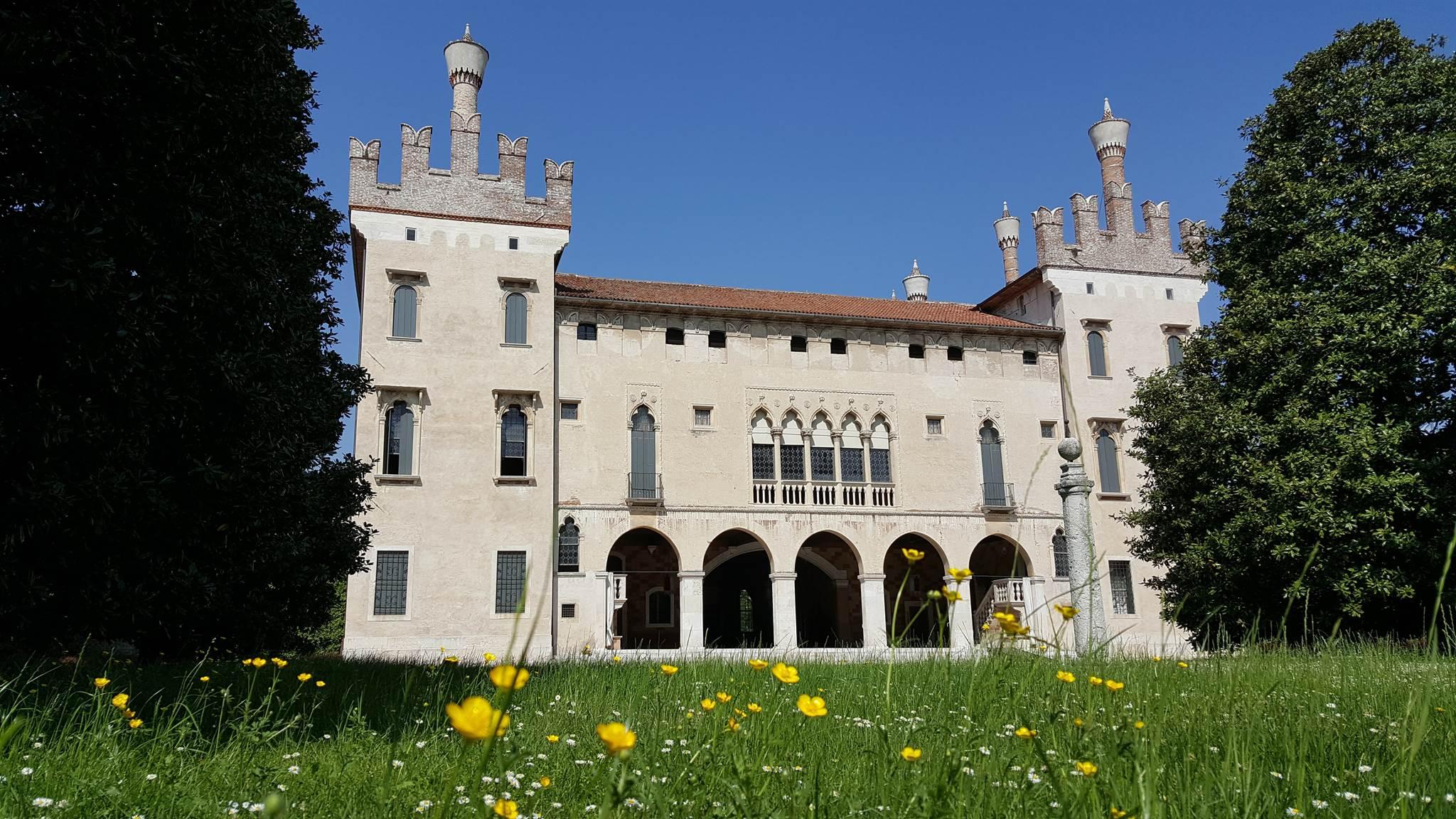
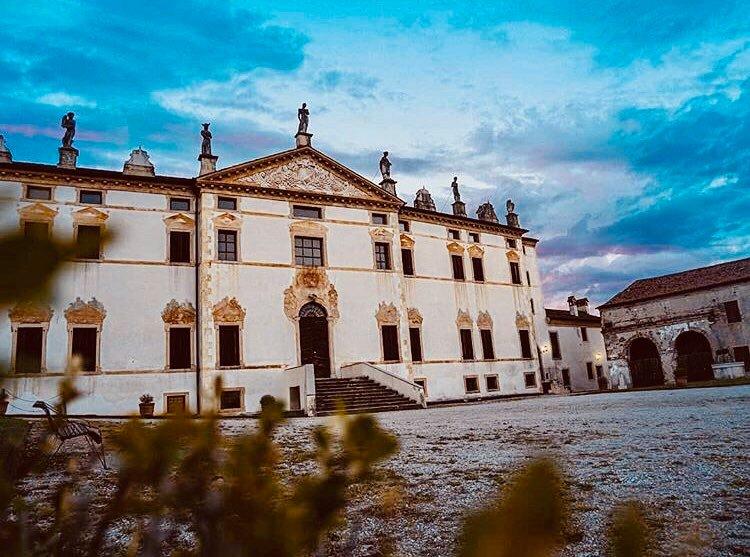
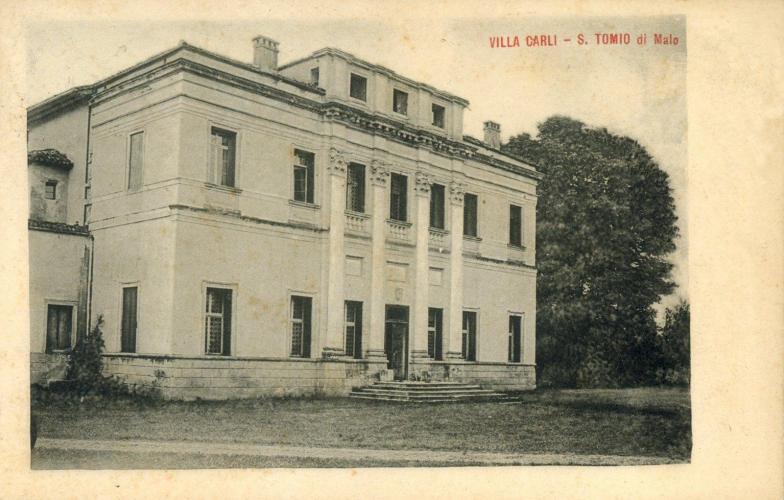
Commissioned by Matteo Checcozzi as a place for representation, the villa appears more like a city palace, thus contrasting with the rural context in which it is located.
The facade has a symmetrical layout and concentrates the architectural elements in the central part, which slightly protrudes.
It is characterized by four Corinthian pilasters that rest on a gentle rustication redone in the Nineteenth century.
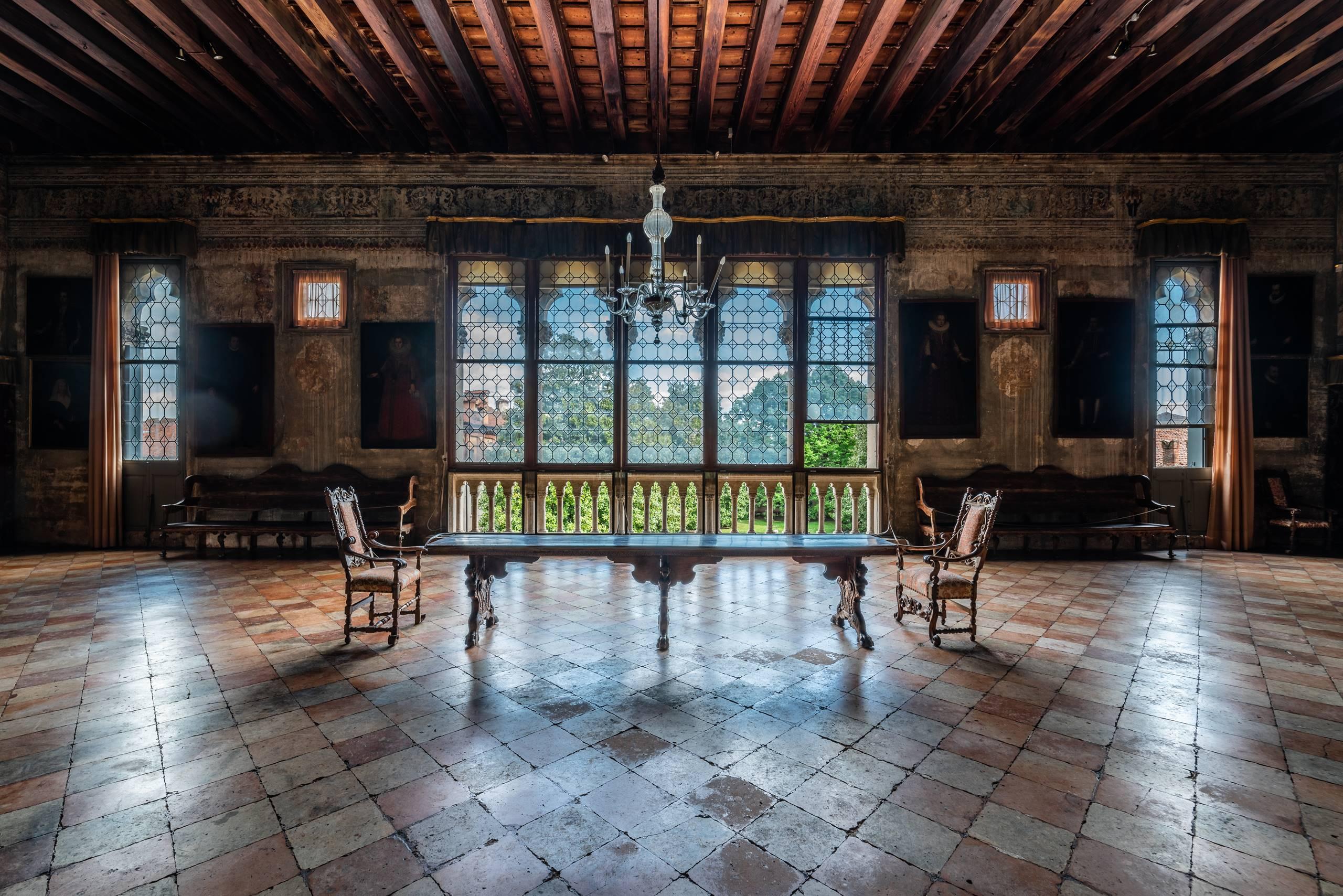
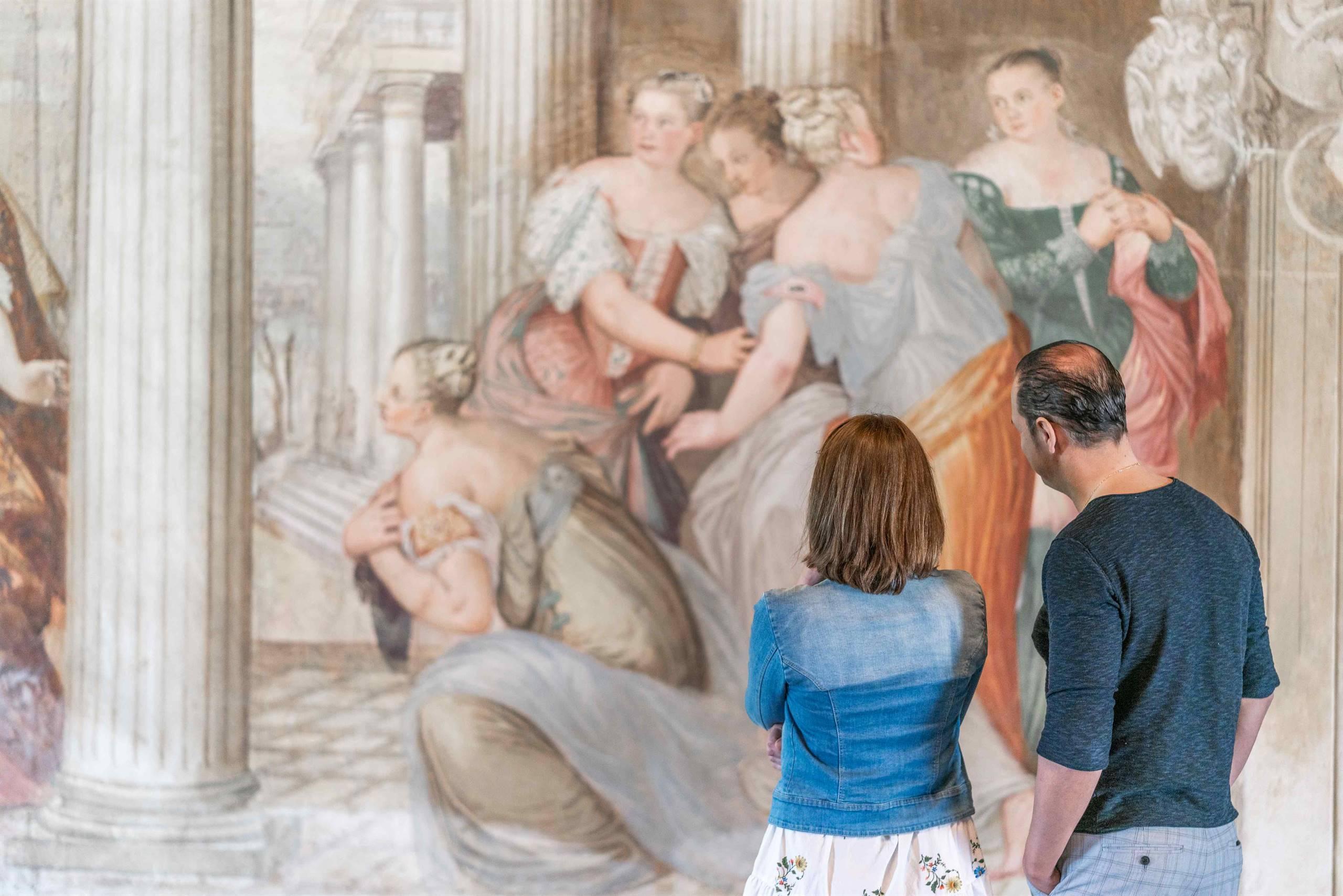
The decorations and frescoes of the Hall, completed in 1717, which is meant for welcoming guests, are astonishing. This space also features a wooden balcony, which participates in the play of optical illusion of the paintings.
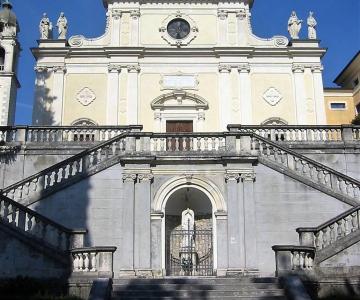
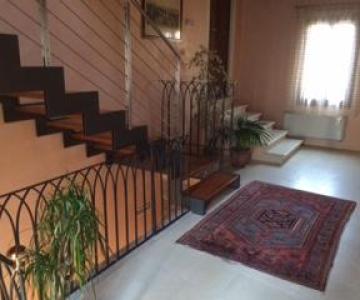
Equally extraordinary are the grand staircases, also conceived as elements of representation. The symbolic statues of the Honor Staircase are attributed to Angelo Marinali.