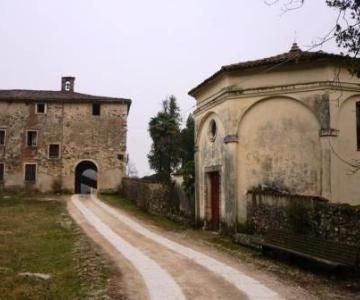
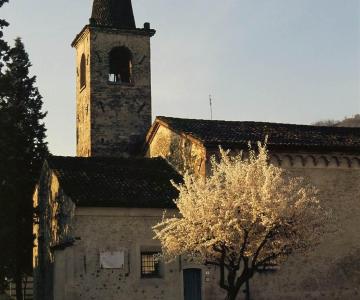
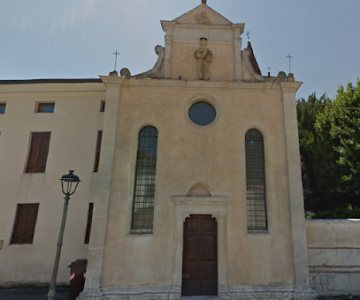
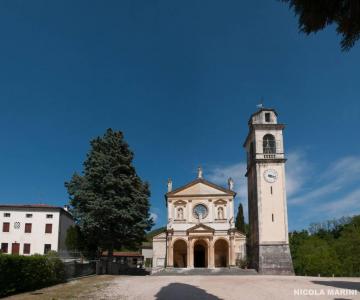
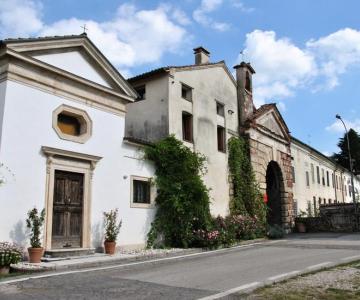
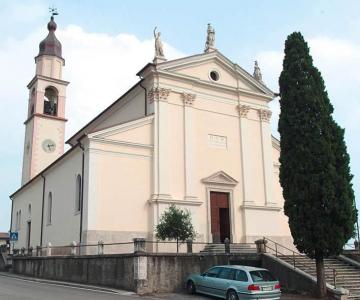
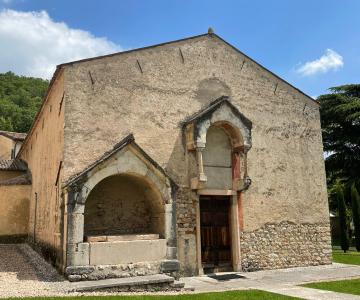
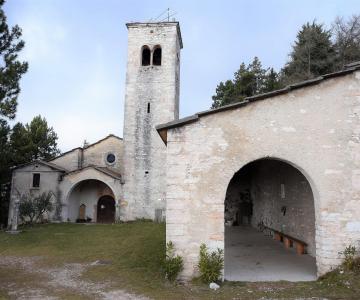
The chapel, restored in 1997, features a single nave and a small belfry with a terracotta spire shaped like a pine cone. Inside the bell tower, there is a small bell from 1729, which escaped the plundering of Napoleon Bonaparte.
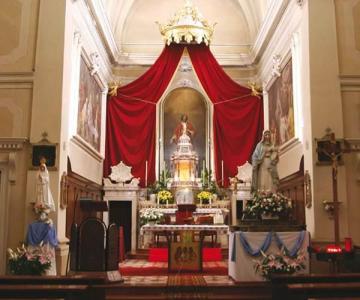
Inside the chapel, above the altar, a painting represents St. George the Knight as he strikes the dragon. The devotion to St. George, along with the legend of this act of courage, is ancient.
St. George's act of courage was chosen as a symbol of religiosity and valor by many peoples, especially by the Lombards, a warrior population par excellence.
The area of the current contrada Fochesati was inhabited by a small Lombard settlement. After the Lombards, the contrada Fochesati was inhabited by the Cimbri. Another tradition concerns silk worms: every year on April 23, silk farmers would meet, attend the celebration of Mass, and bring with them the eggs of the silk worms, which were blessed at the end of the celebration along with all the participants for the good outcome of their activities. This ceremony likely dates back to the fifteenth century and continued until the silk worm farming lasted, that is, until 1975/76.
The chapel was also managed by religious hermits who prayed, studied, and lived on charity.