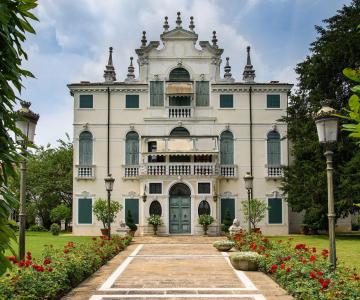
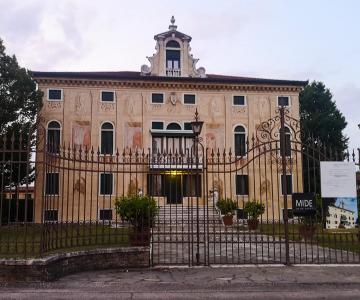
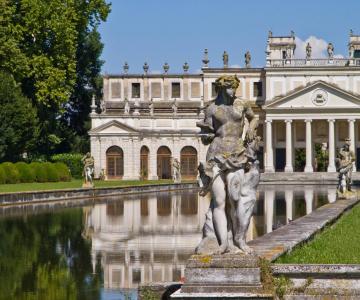
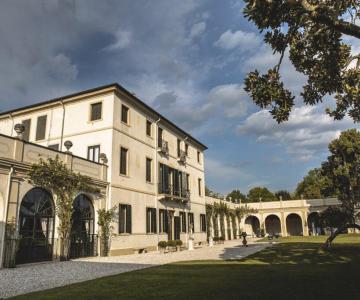
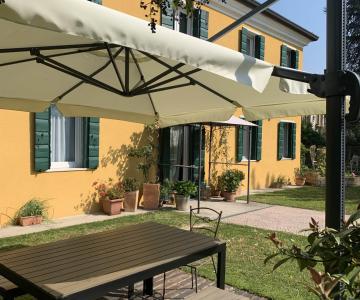
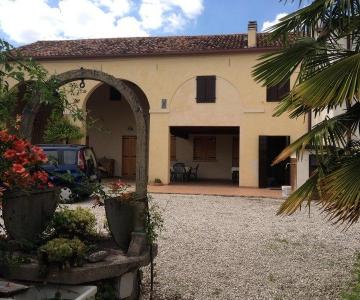
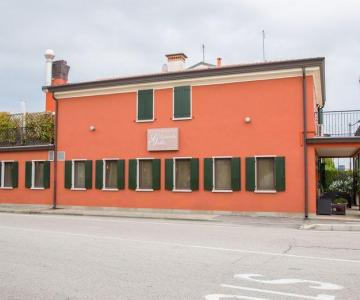
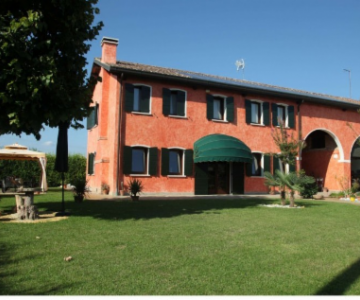
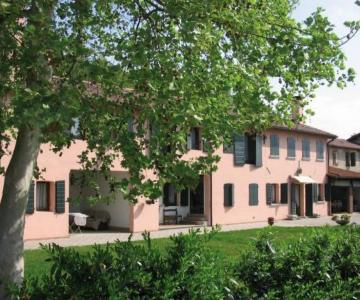
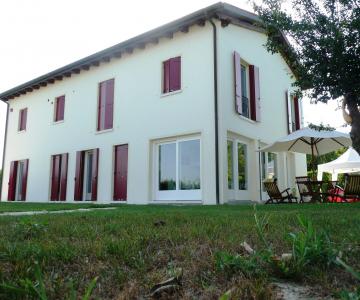
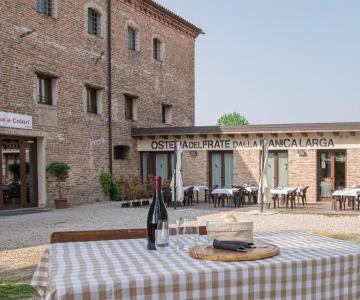
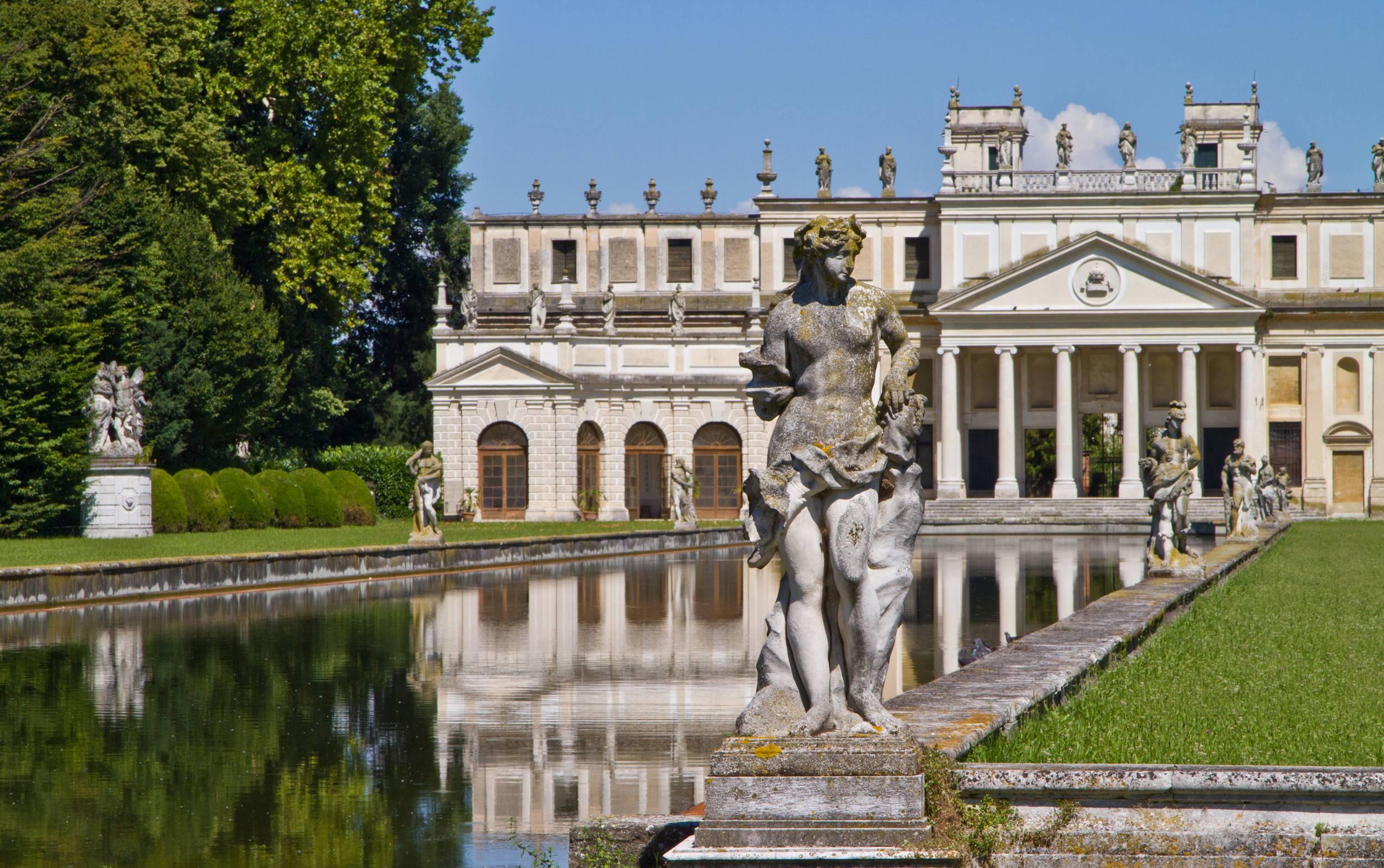
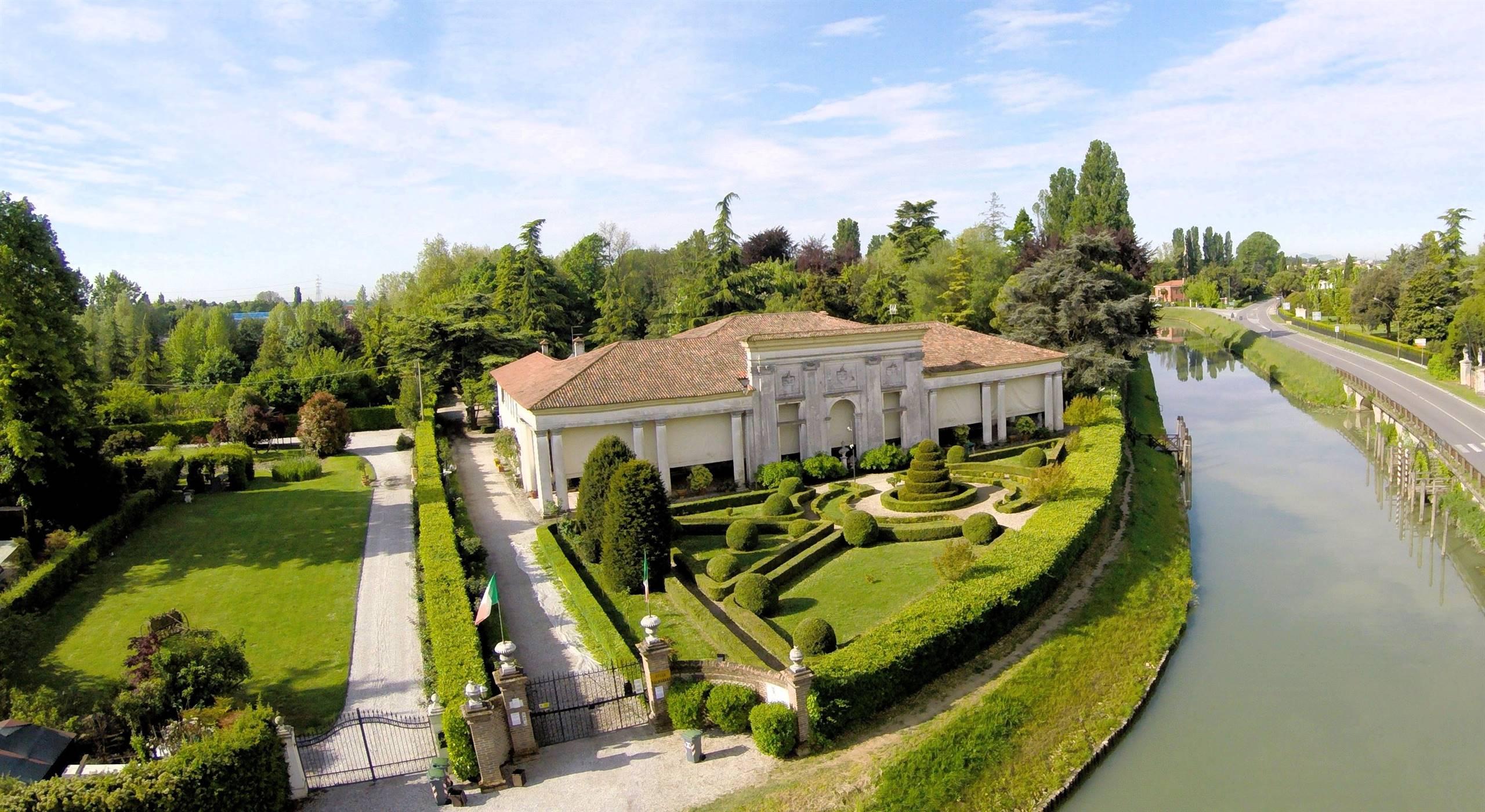
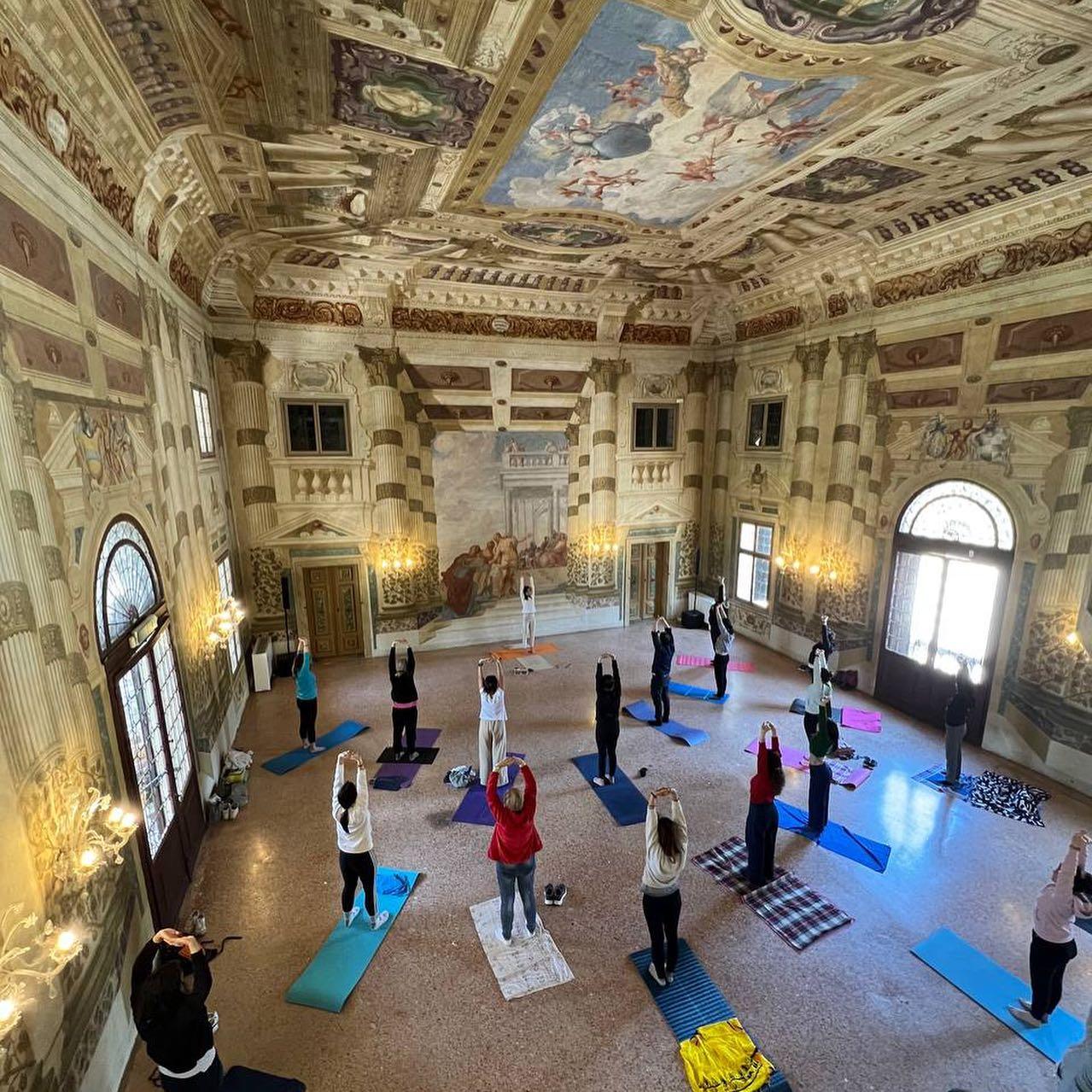
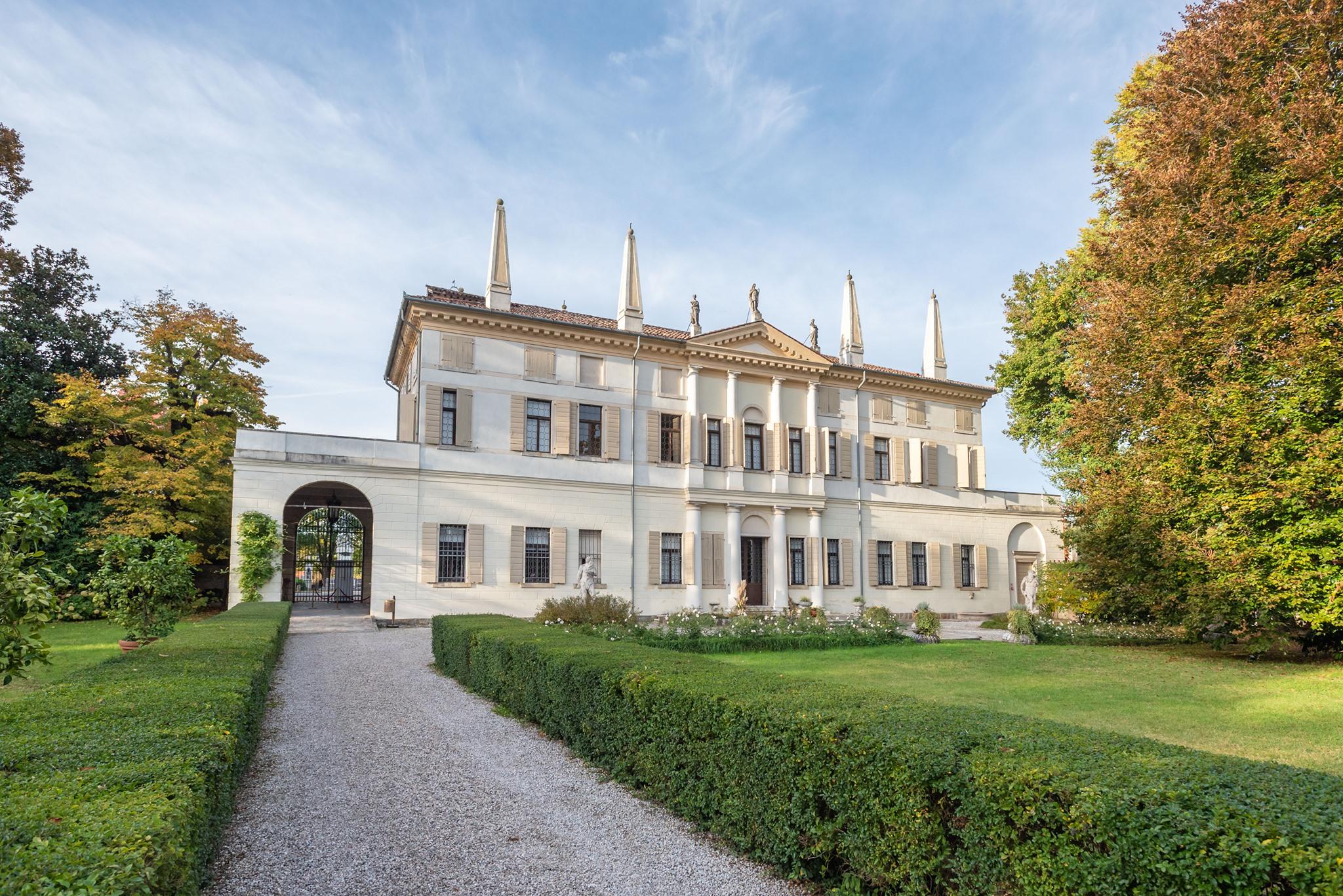
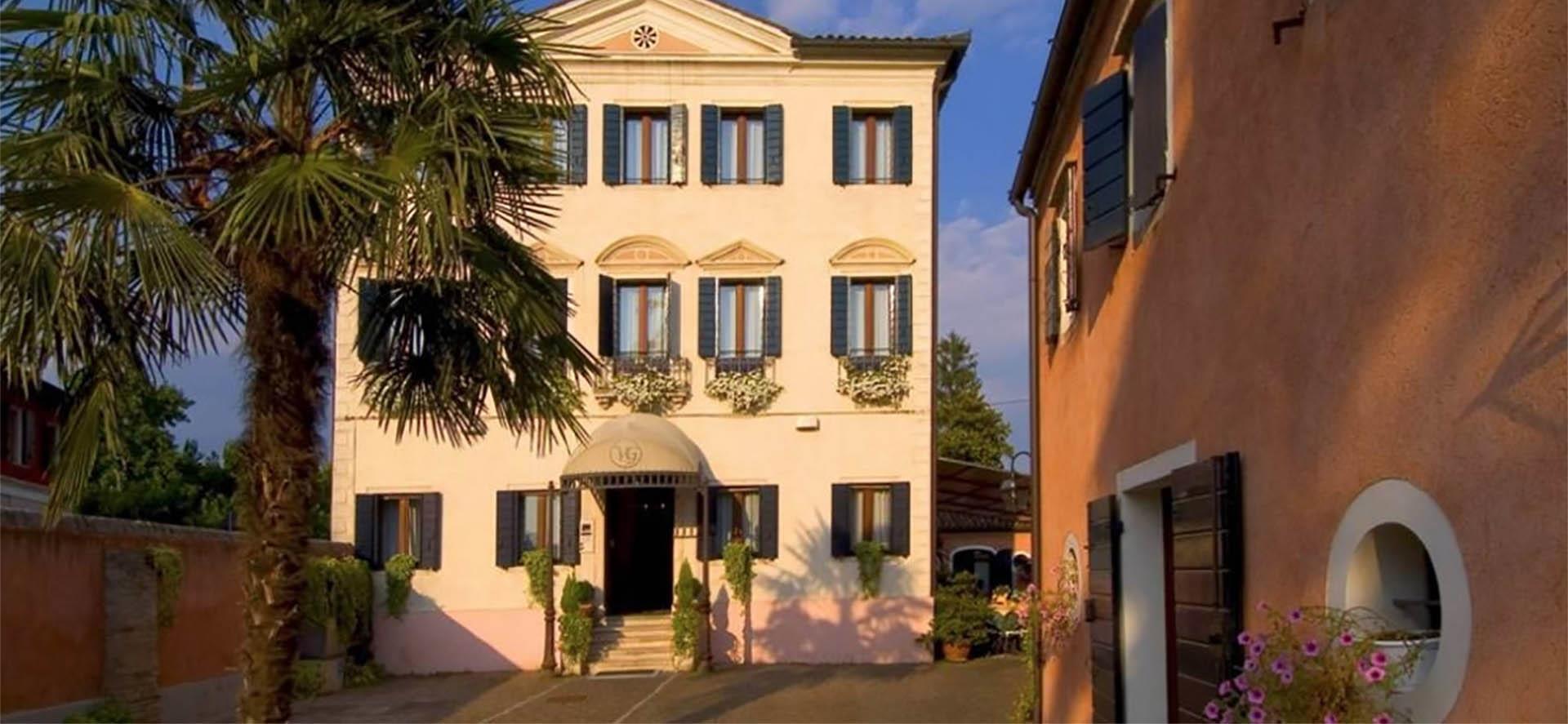
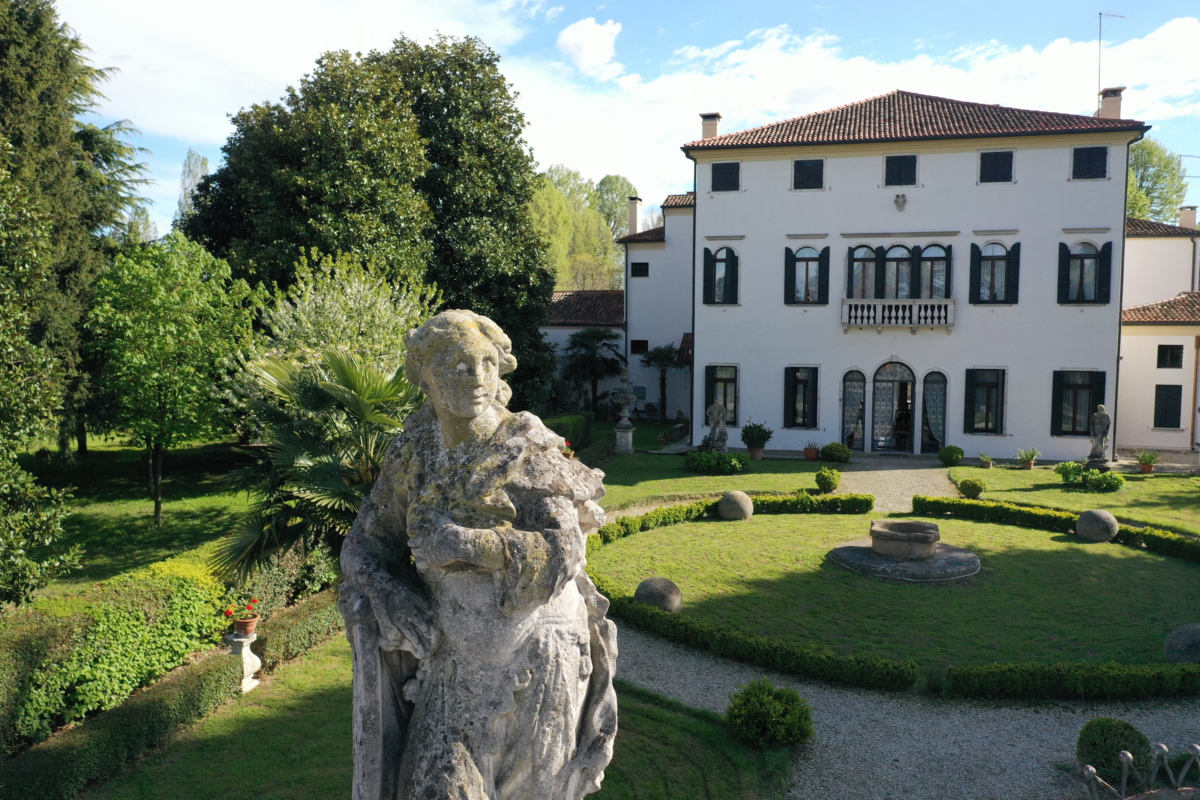
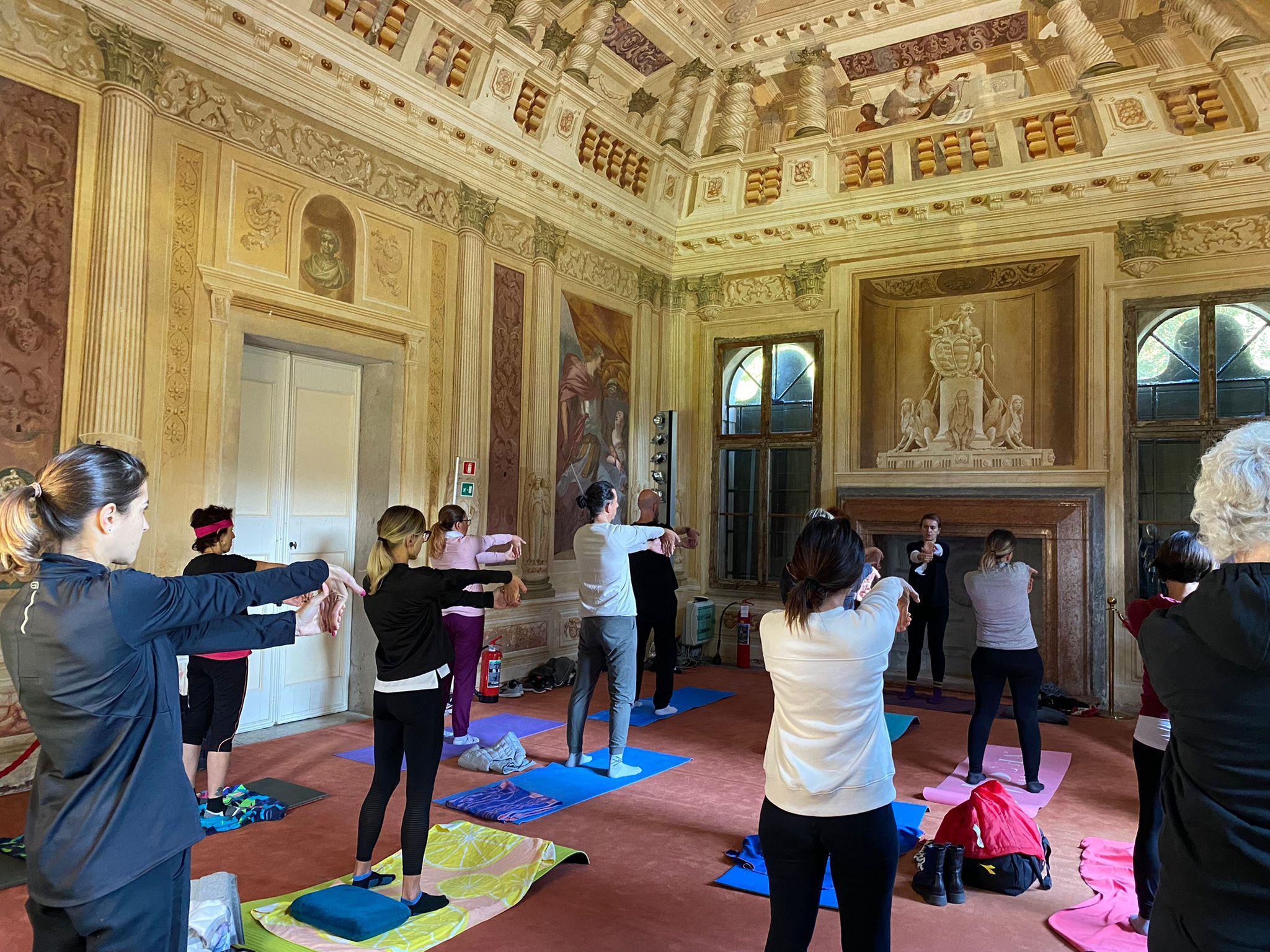
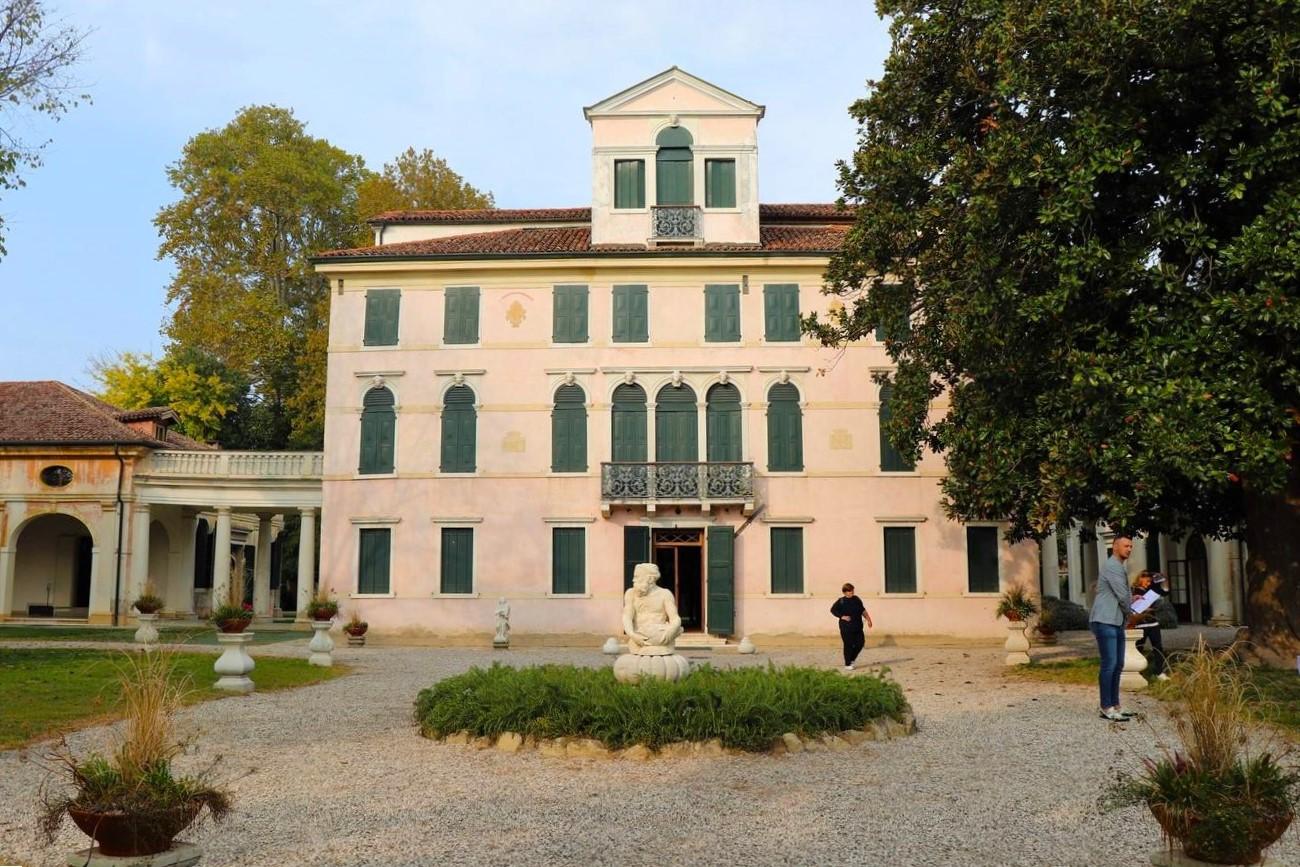
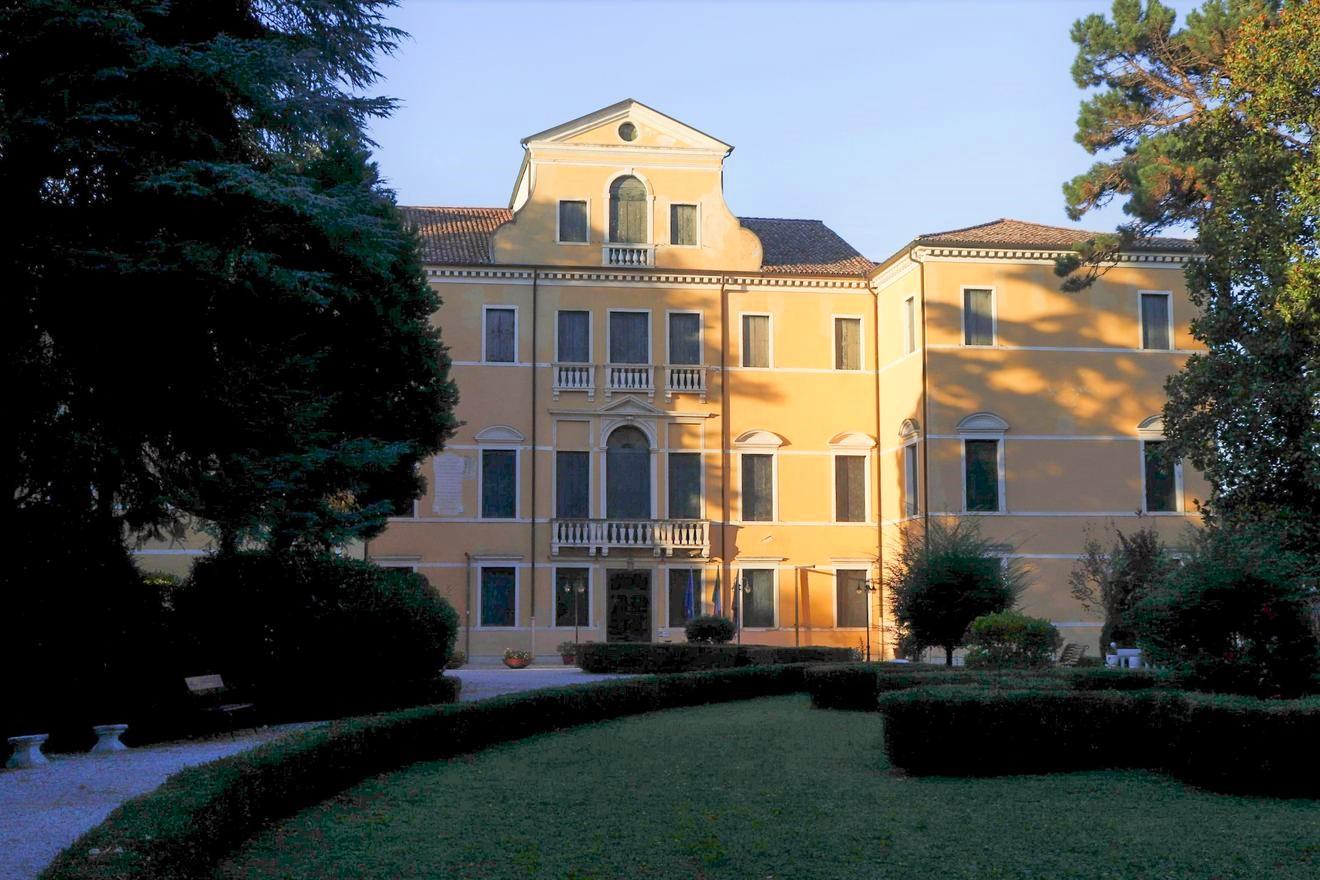
Inserted together with the two outbuildings and the chapel in a large park, the villa is an interesting manor house in the shape of a parallelepiped, perfectly fitting into a square. Due to its balance in shapes and the harmonious search for parts, it is hypothesized to have a sixteenth-century origin. The internal layout refers to a tripartite type, with a central passage hall flanked by the usual four side rooms.
To the northeast, symmetrical on both sides, are the two outbuildings, probably built between the late eighteenth and early nineteenth centuries during the ownership of the Armenian fathers.
"We do not know who founded the complex; it is, however, known that throughout the seventeenth and eighteenth centuries, extremely wealthy Greeks owned it, whose names intertwine with the urban history of Venice" (Bassi, 1987). Indeed, the Villa is documented in the State Archives of Venice and Padua since 1617, the year it was owned by the Venetian merchant Vidal Vidalli Antonio, who in 1632 sold it to the lawyer Tommaso Flangini, originally from Corfu. Upon the death of his daughter Marietta, her husband sold it to the extremely wealthy Fini family. In 1701, bankers Domenico and Nicolò Cottoni acquired the property of Fiesso. As early as 1757, the residence passed to Giovanni de Serpos, who "focused on embellishing the interiors of the building with decorations inspired by the oriental style, which are still present today on the doors of the central hall on the ground floor" (Bassi, 1987).
In 1794, the Armenian fathers purchased the manor house and subsequently had the two side outbuildings erected, probably not yet existing at the time of Coronelli's representation.
Abandoned for a long period and even used as a field hospital, the villa has today regained its original residential function after a long restoration.