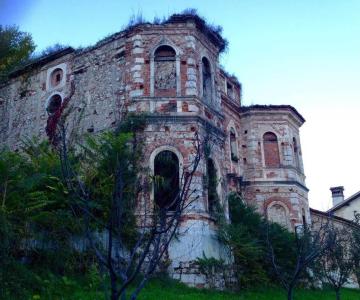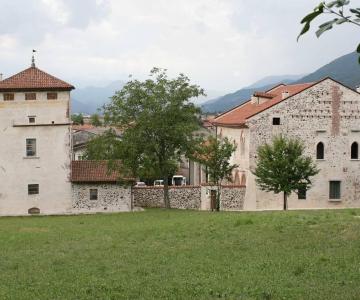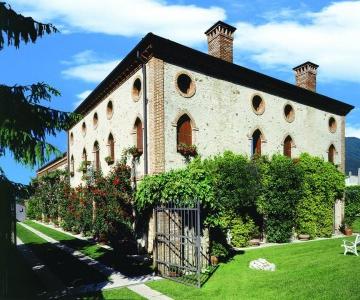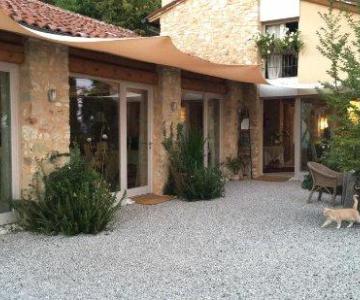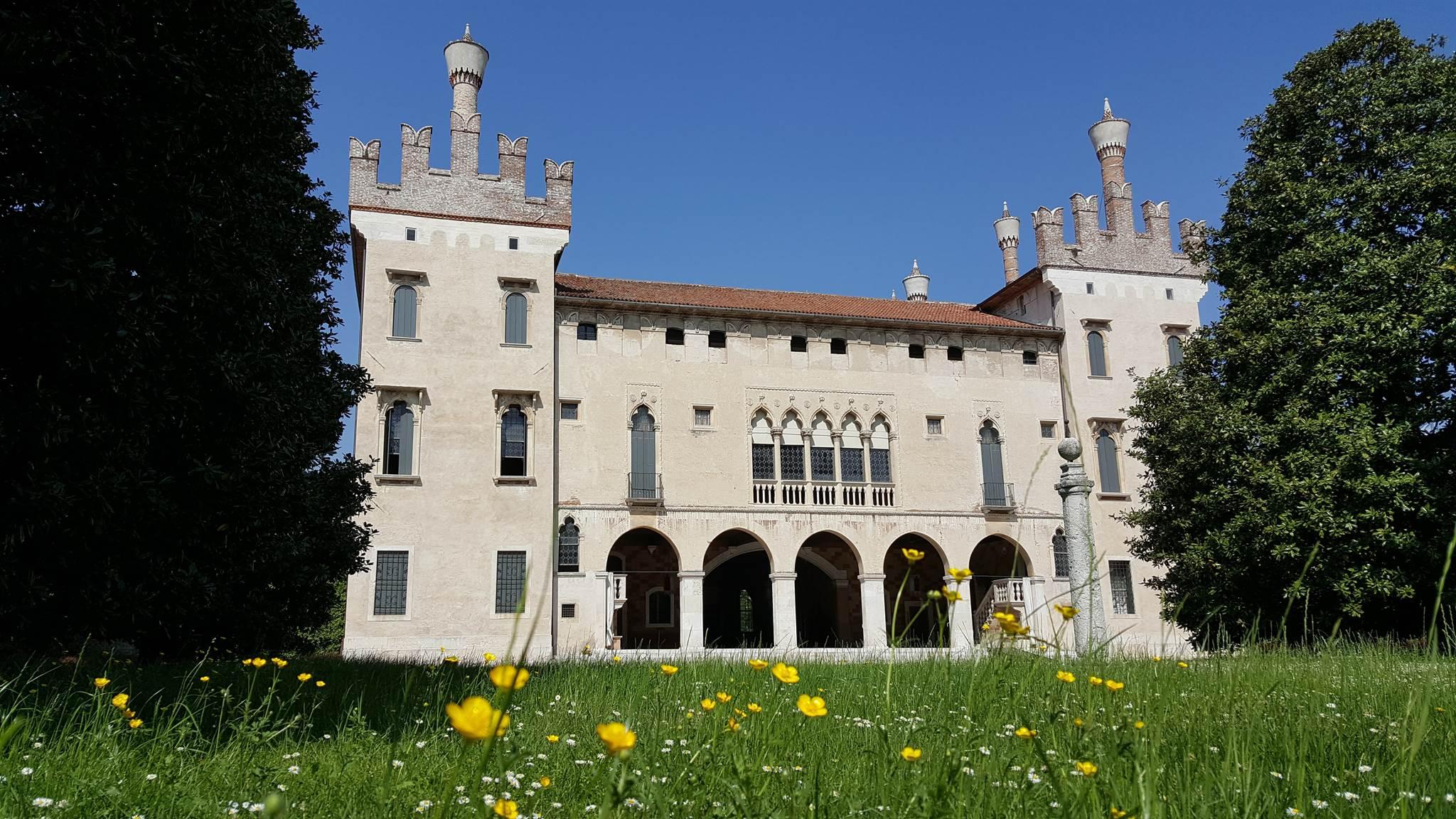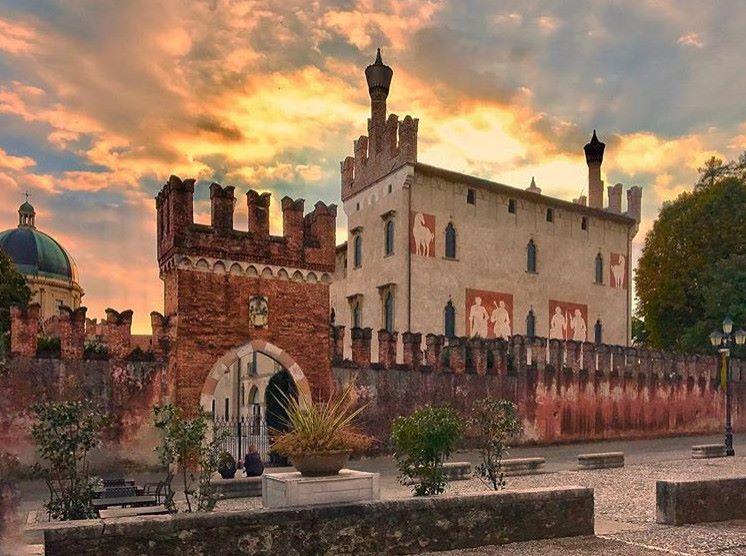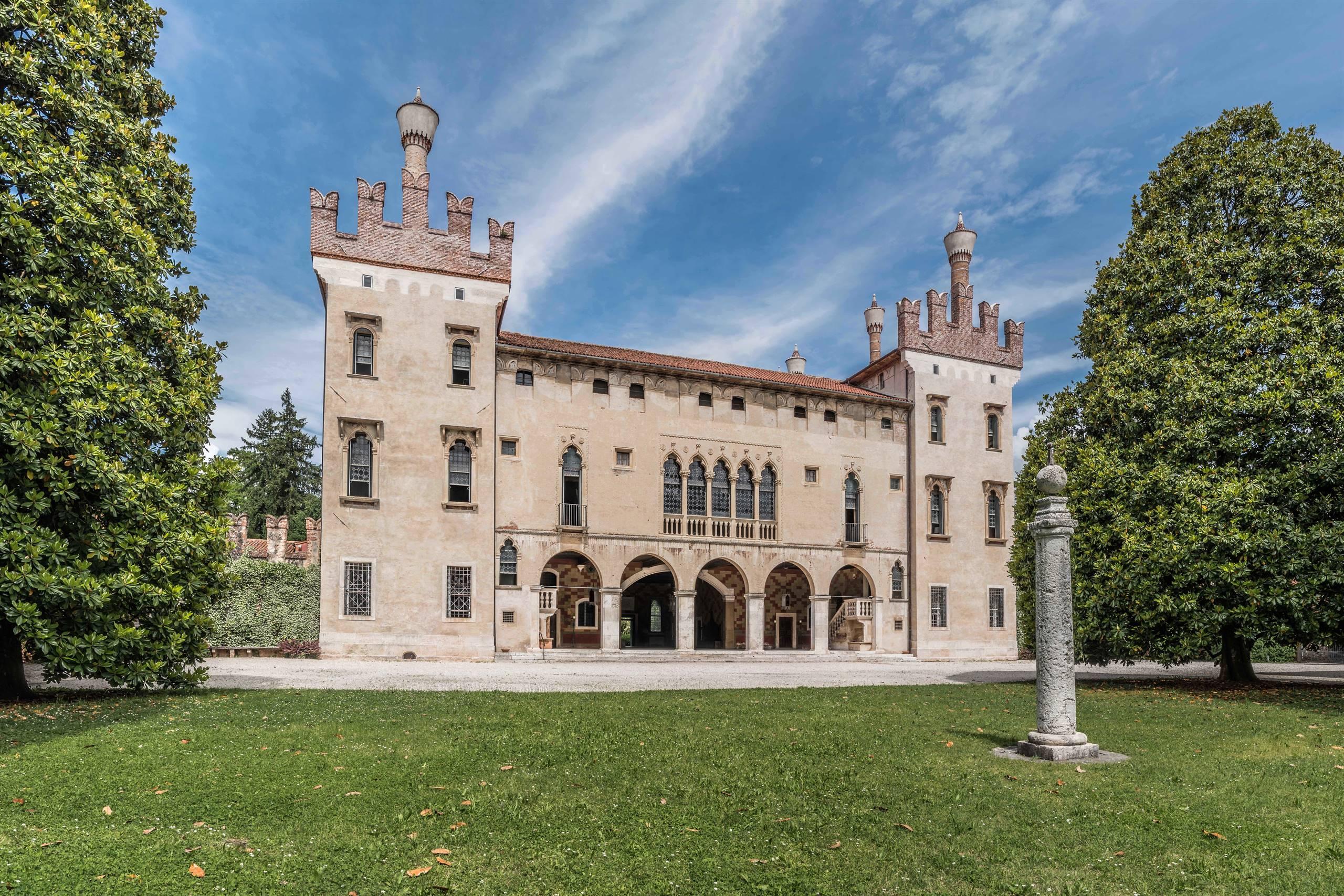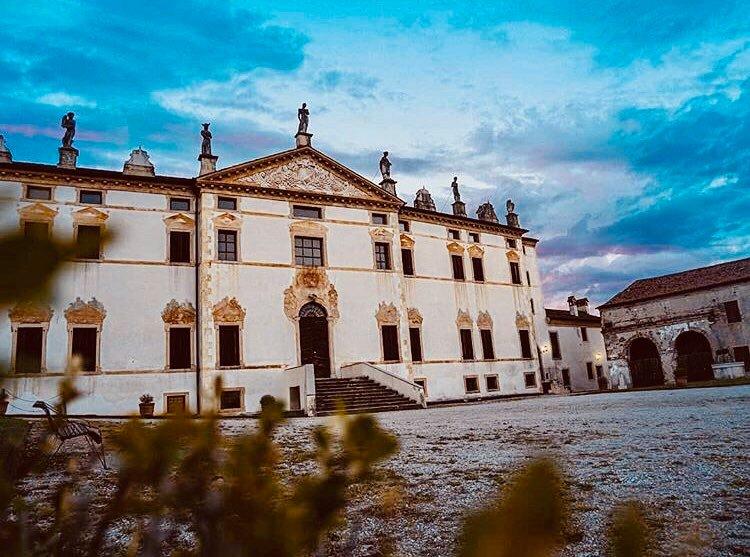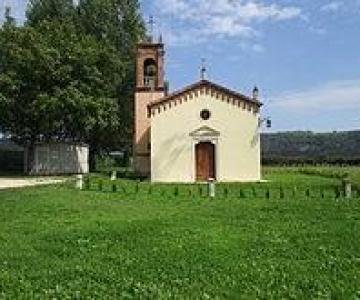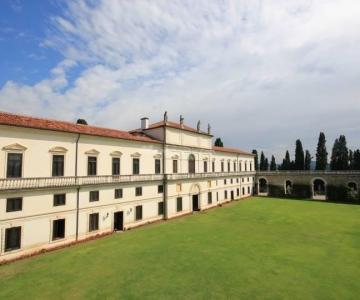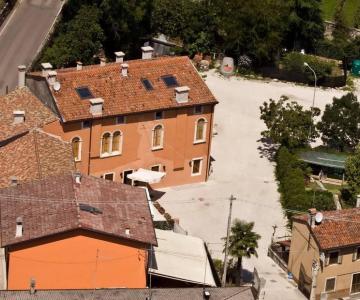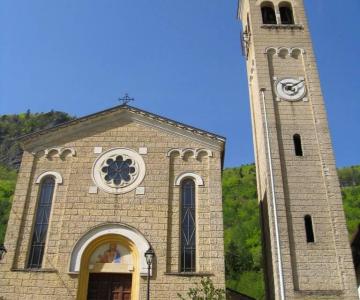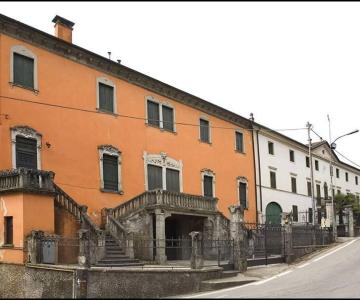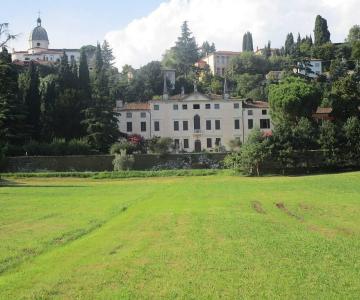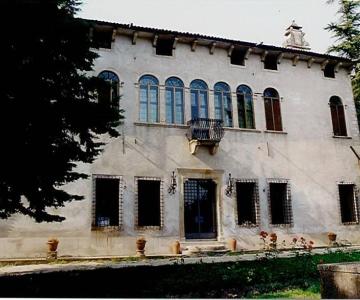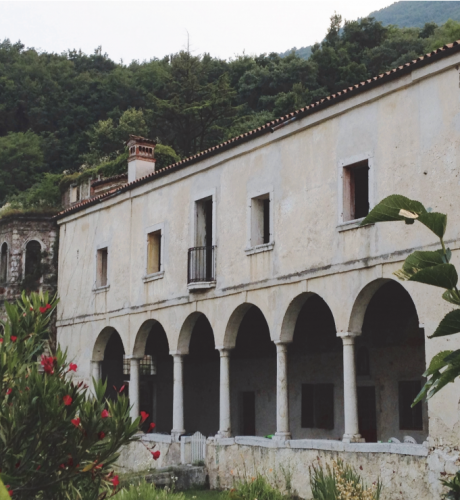

Located to the west of the historic center of Piovene Rocchette, Casa Verlato is a splendid example of a country noble residence from the 15th century, as well as being the oldest home of the Verlato nobility.
The construction spreads horizontally, with a ground floor where one can admire the portico with six arches resting on Tuscan columns, corresponding to the upper noble floor with the central balcony and small windows with a living stone profile.
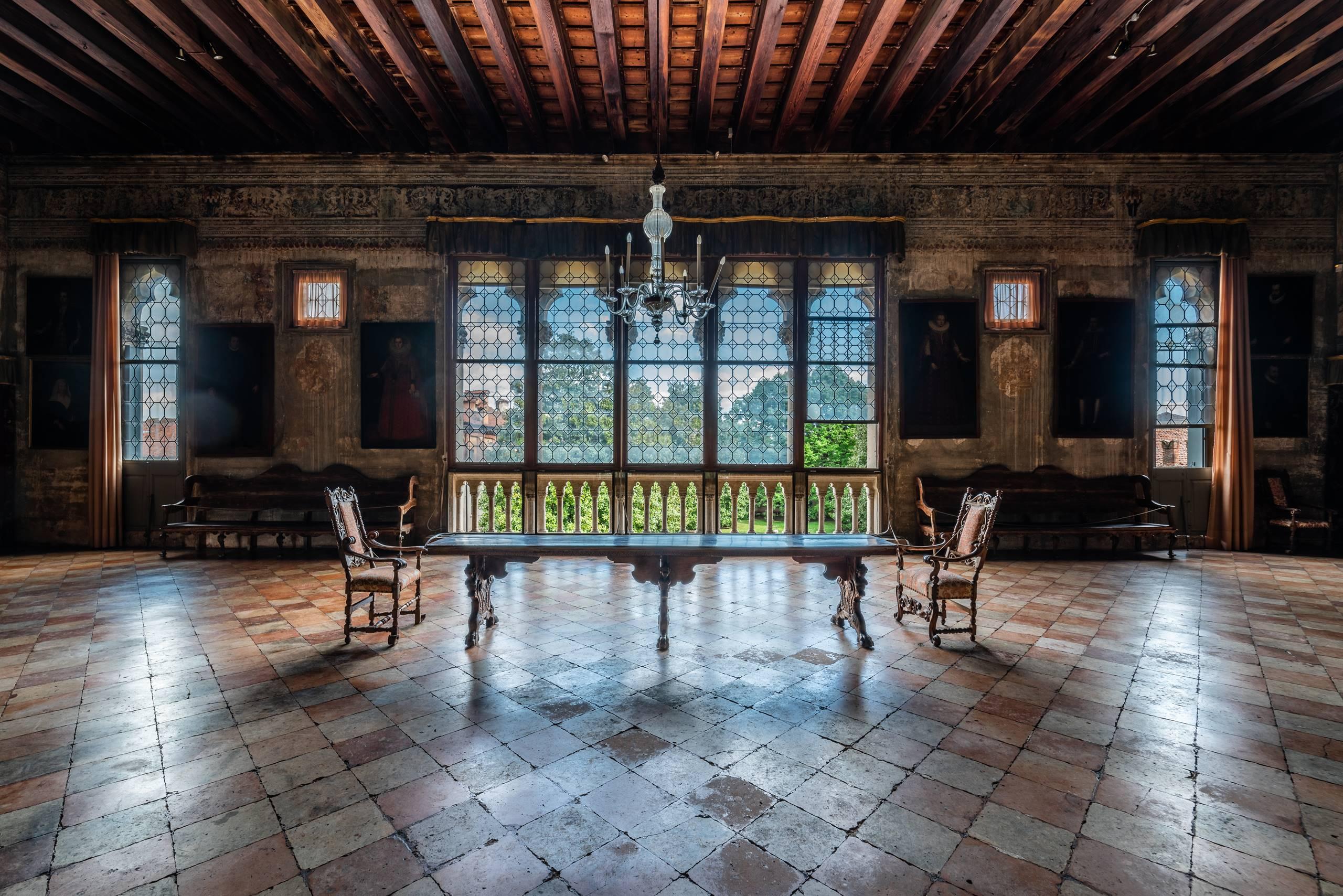
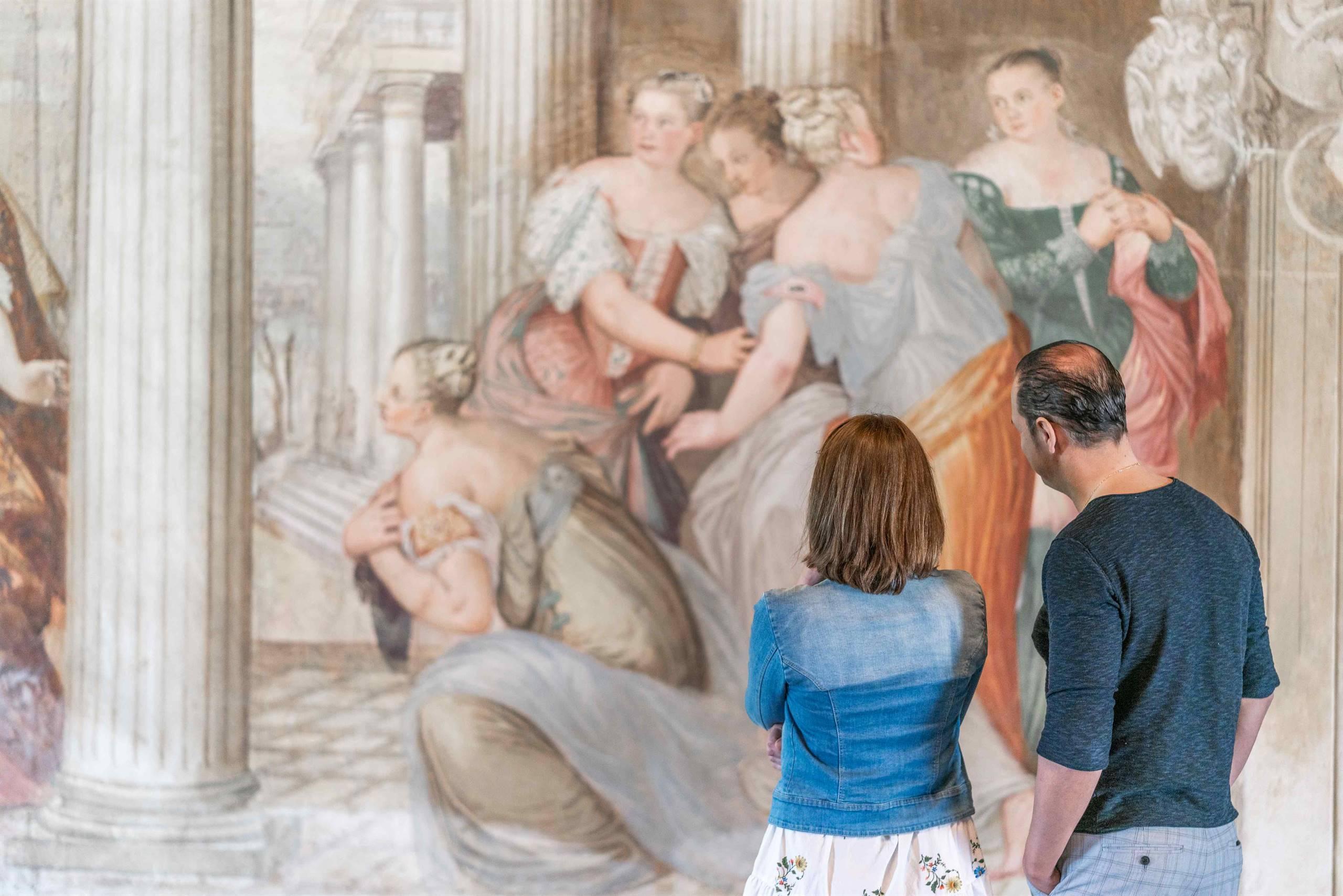
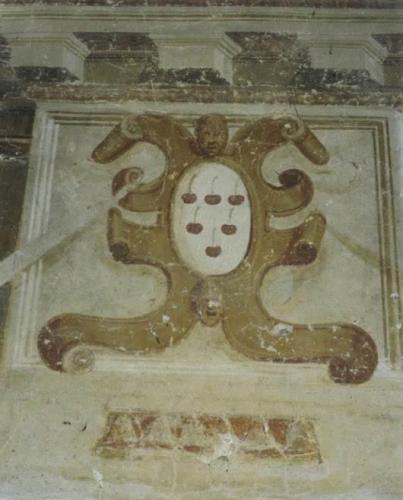
Inside the villa, a small cycle of frescoes is preserved, attributable to the craftsmen who also adorned the interiors of Villa Godi and Villa Emo. In the first room to the left of the ground floor, a series of herms (small pillars of quadrangular section, topped with a sculpted head in the round, which in ancient Greece represented Hermes) supports a fake loggia beyond which landscapes of mythological stories open up.
Today, Diana is still clearly visible trying to dissuade Adonis from hunting.
The surname VERLATO is undoubtedly linked to the town of Villaverla, in the province of Vicenza.
In April 1004, say Vicentine historians, Emperor Henry II (known as “the Saint,” a descendant of Henry I of Saxony known as the Birdcatcher) came down to Italy from Germany to assert his authority over the insubordinate feudal lords and prepare the ground for his imperial coronation.
Upon his return to his homeland after the coronation in Rome, he left some of the knights of the Teutonic Order of Santa Maria in Italy, investing them with the fief of vast areas as a reward for their valiant deeds. Among these was Captain Giovanni Verla, originally from the town of Verla in Saxony (Verlaburgdorf). He established his home in that village, which in the documents of the following decades began to be called Villa dei Verla, and later Villaverla.
Giovanni Verla and his brother Negro Verla began the noble and ancient Verlata family in the city of Vicenza.