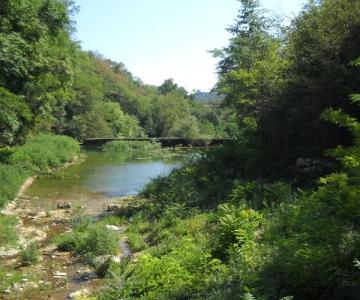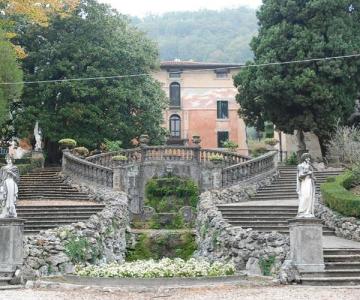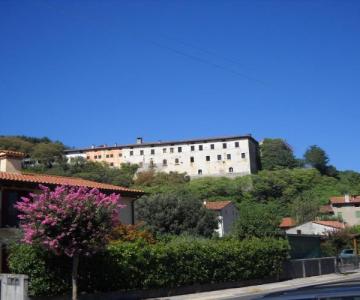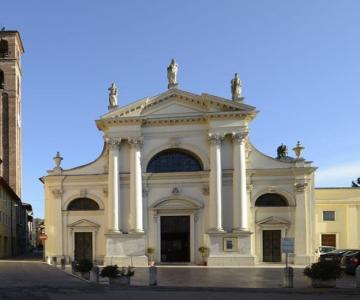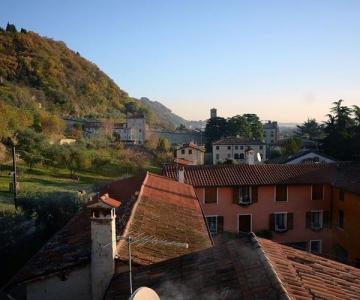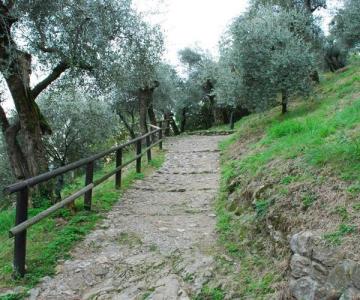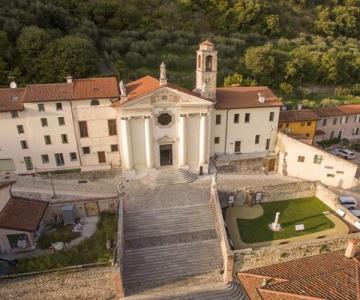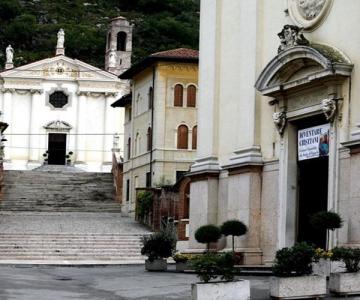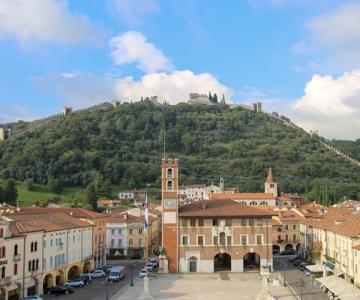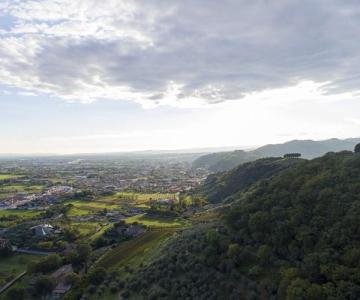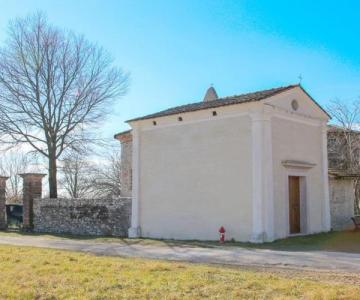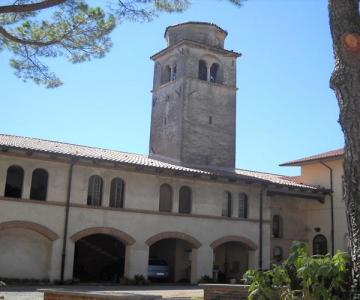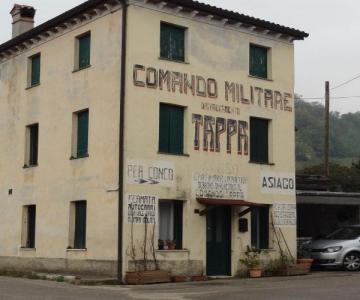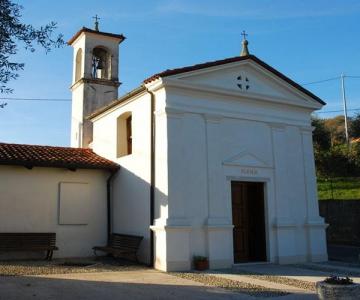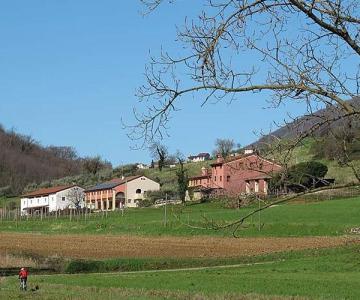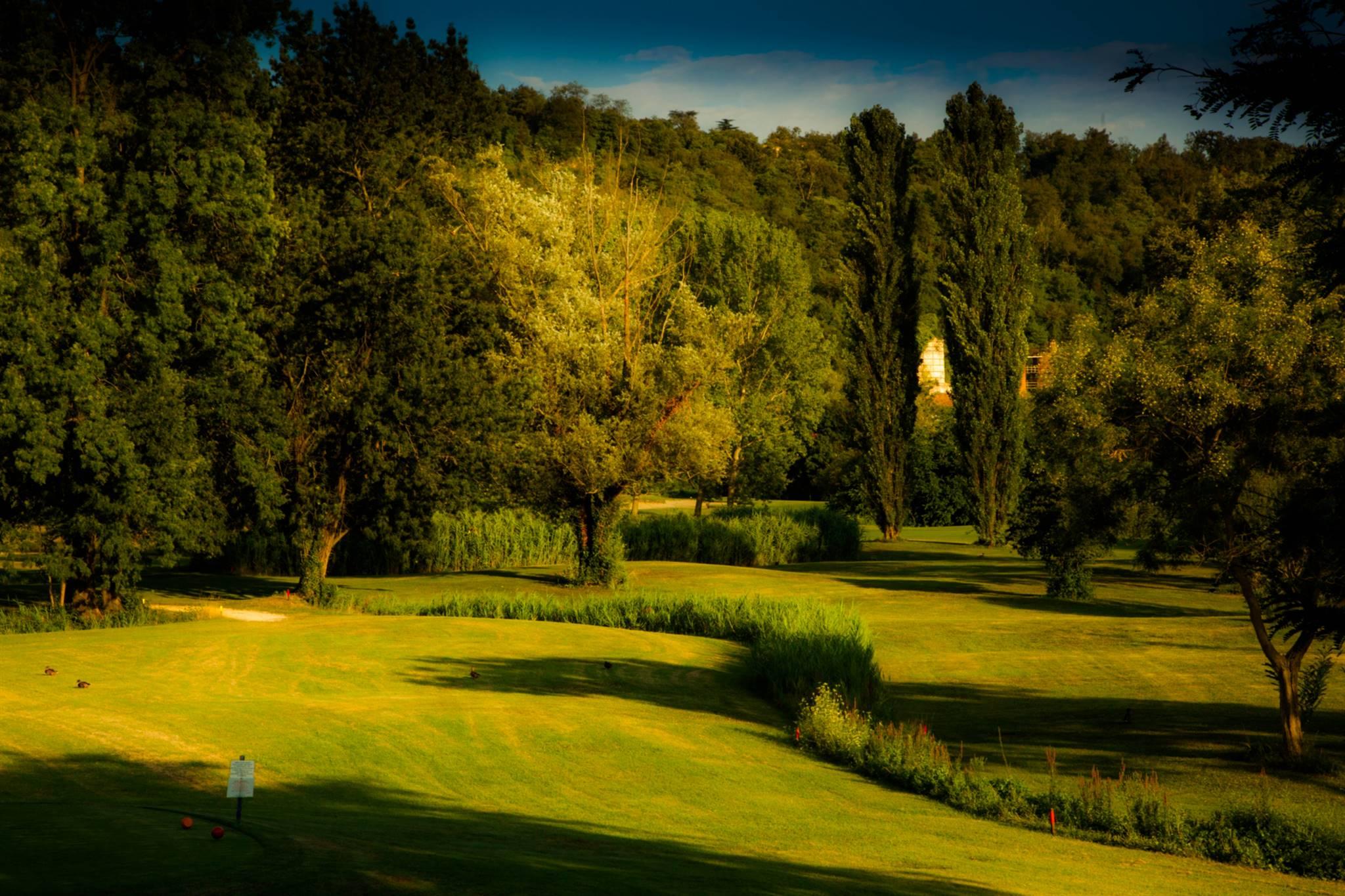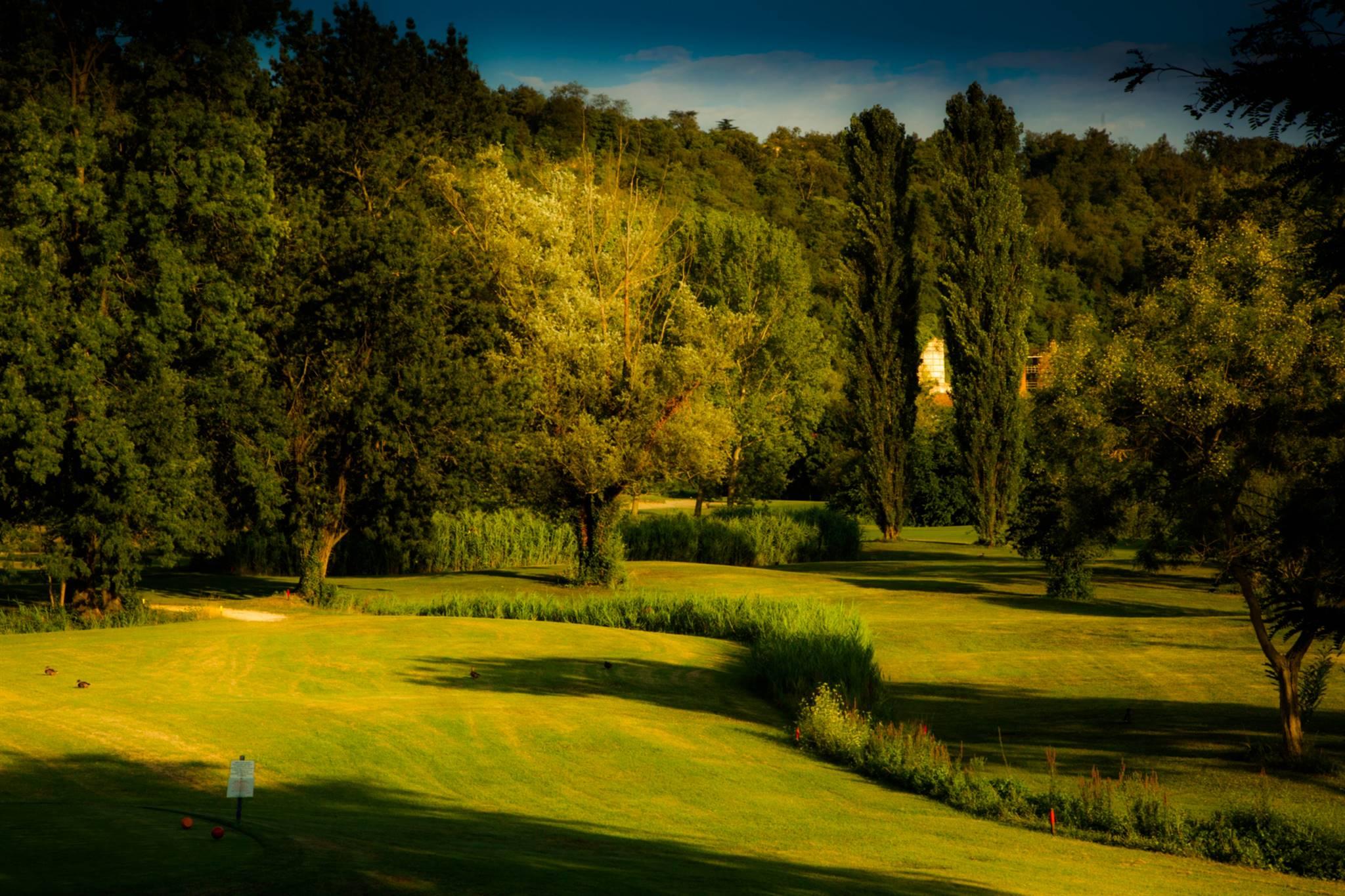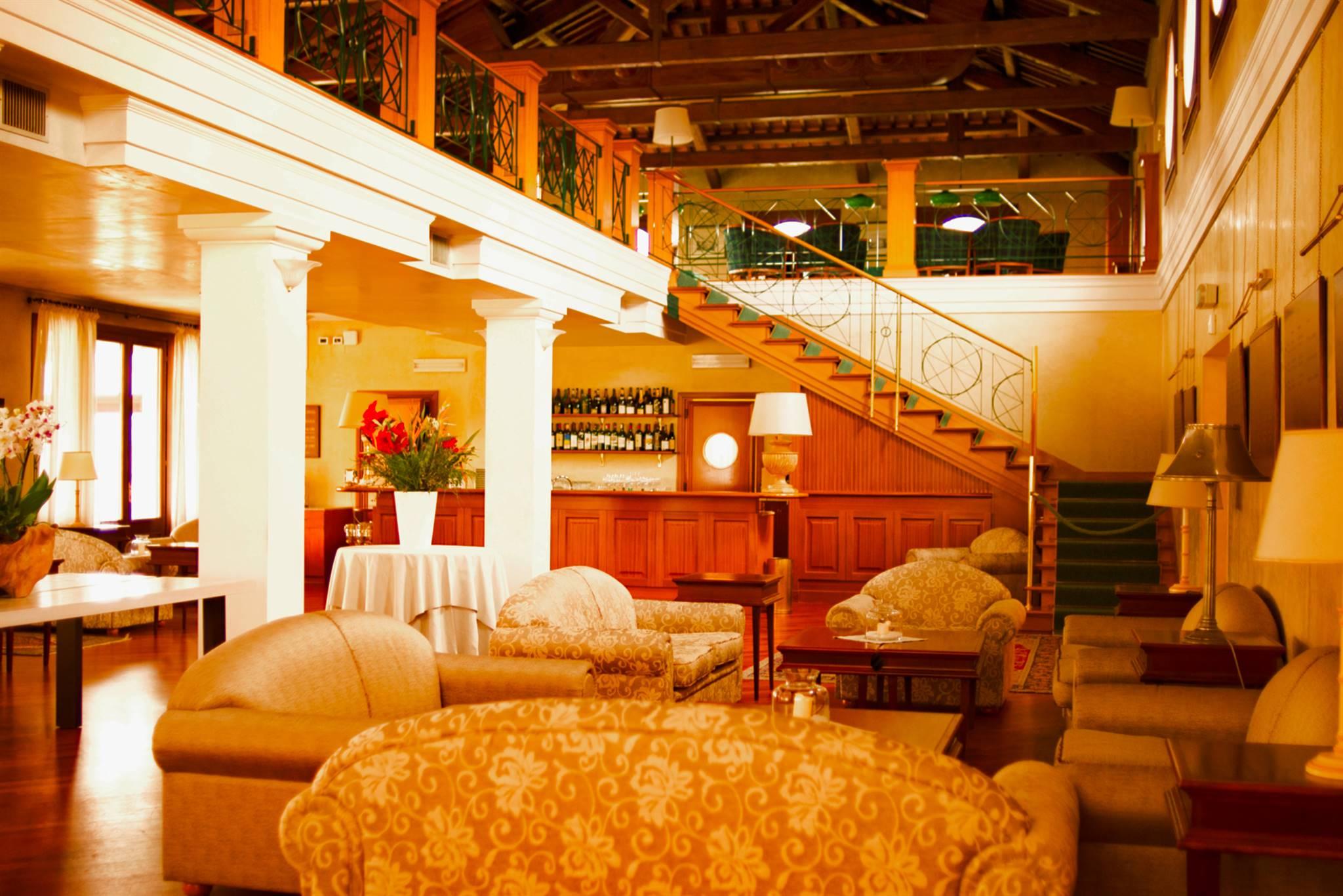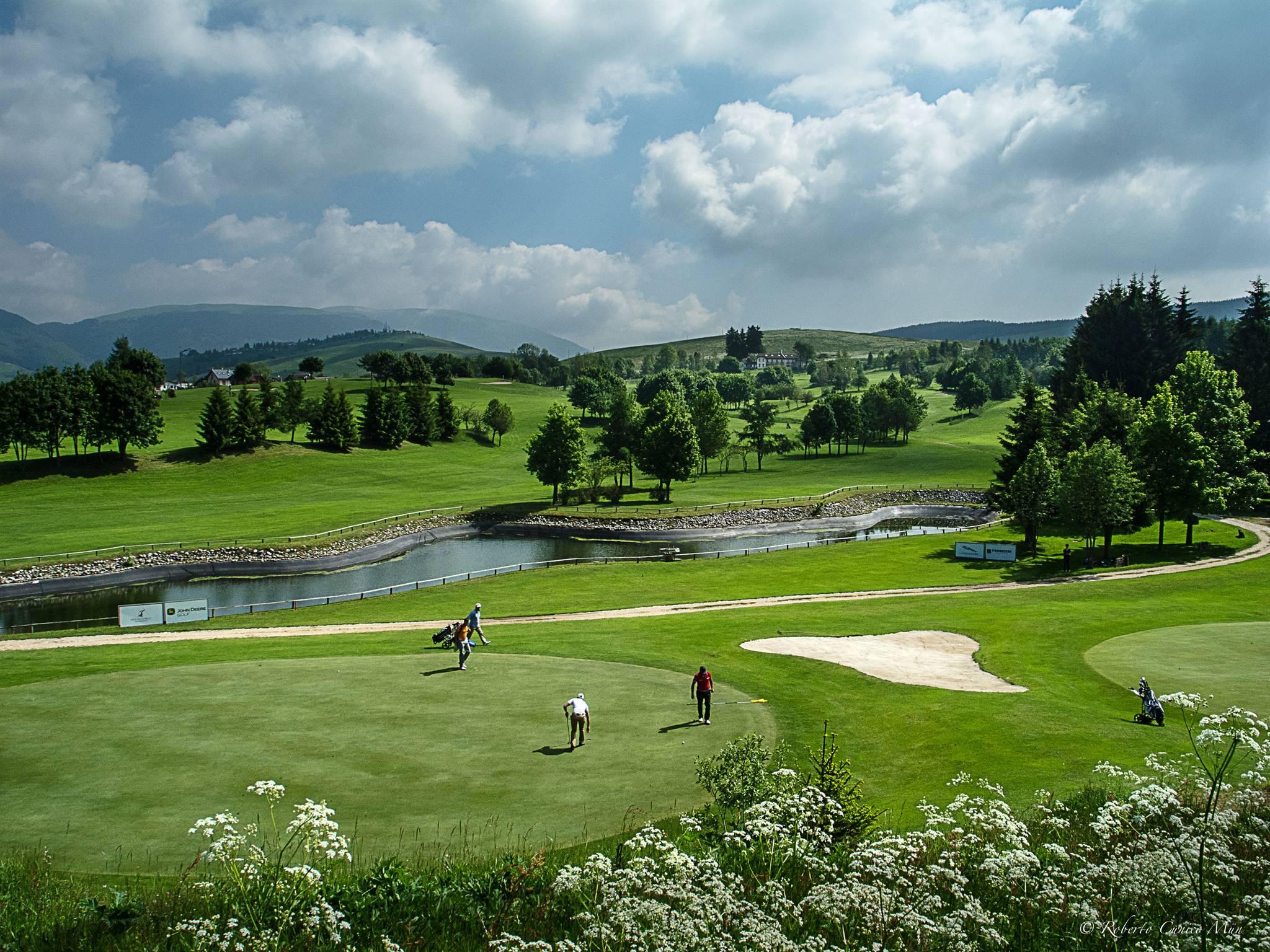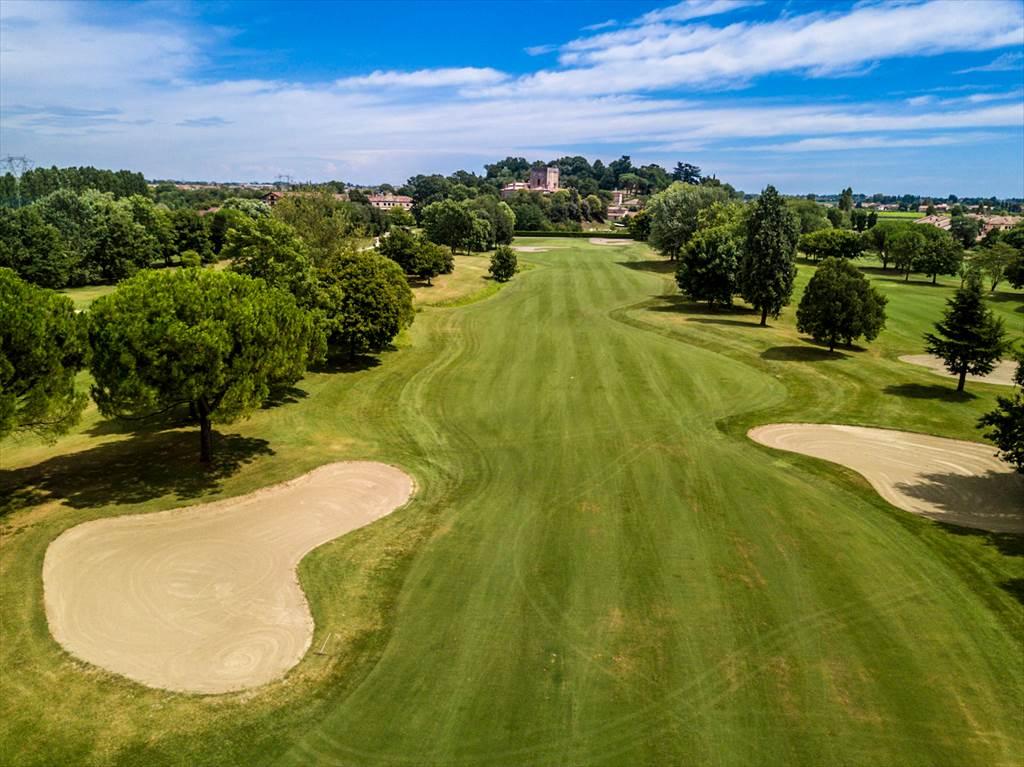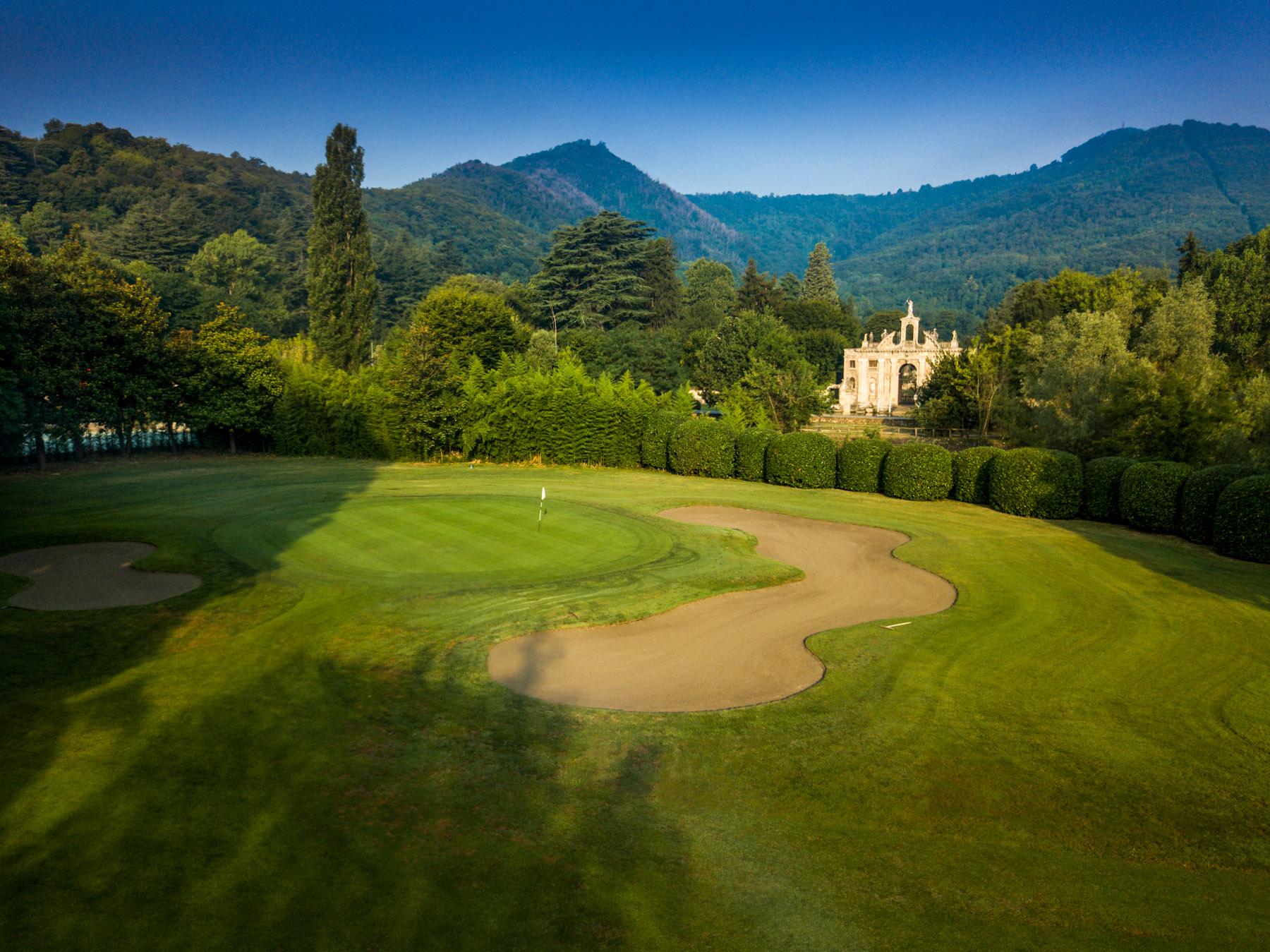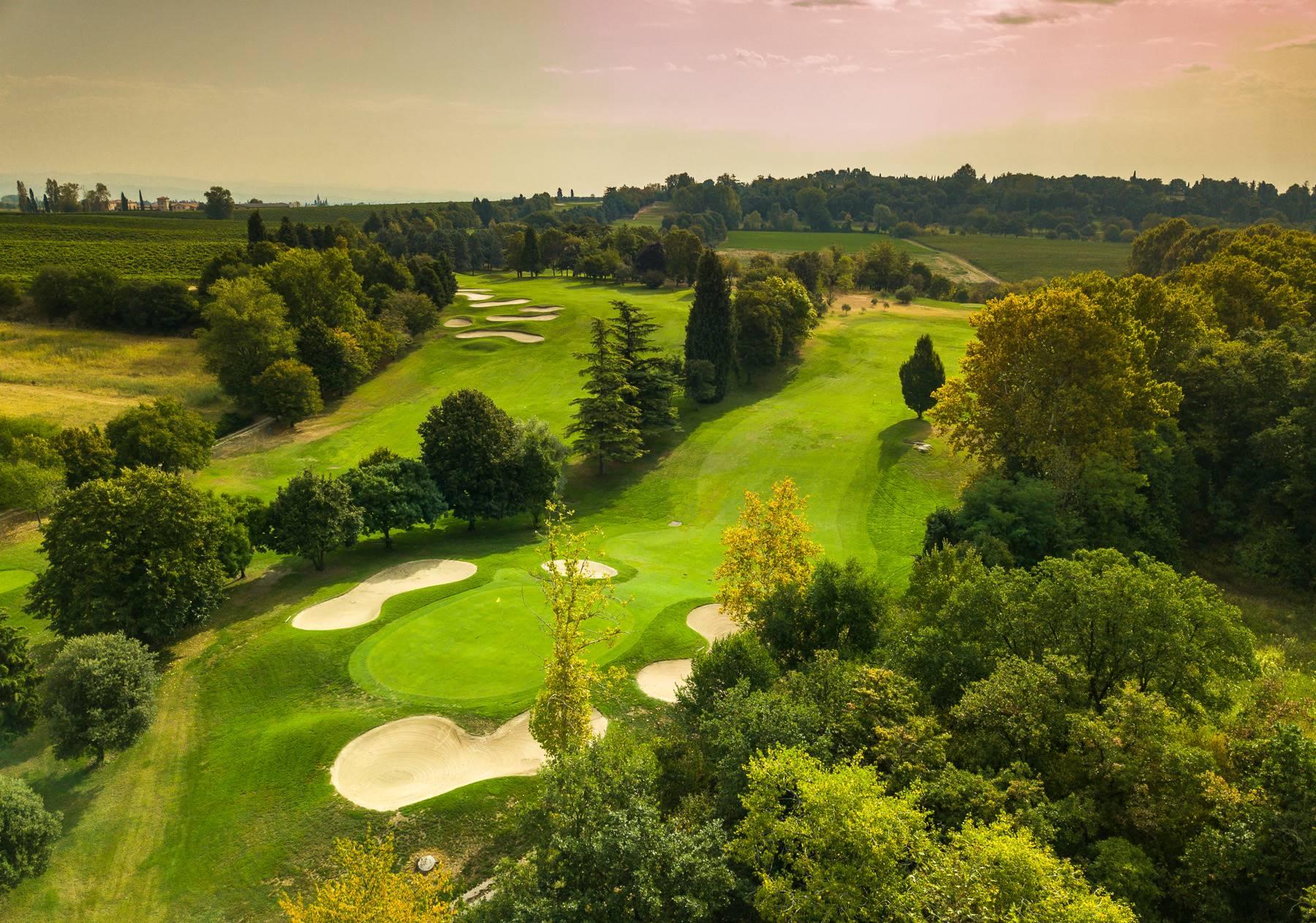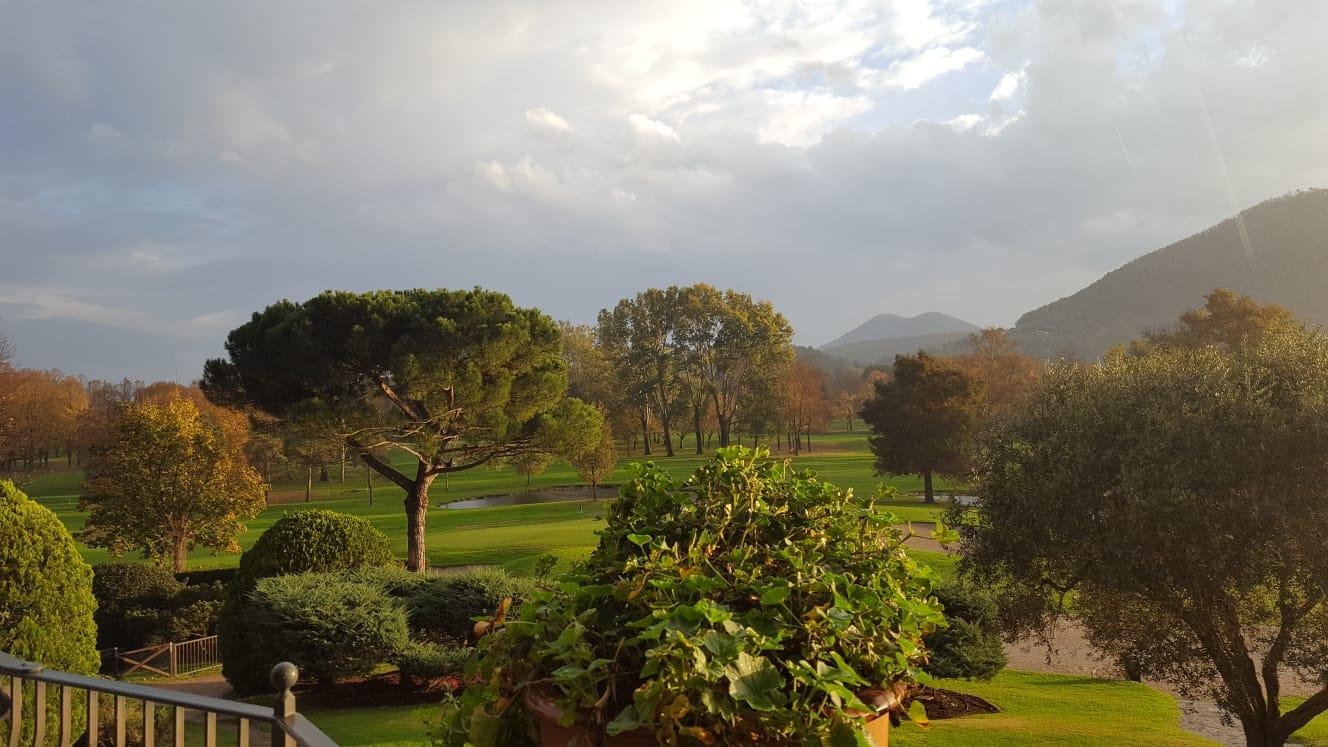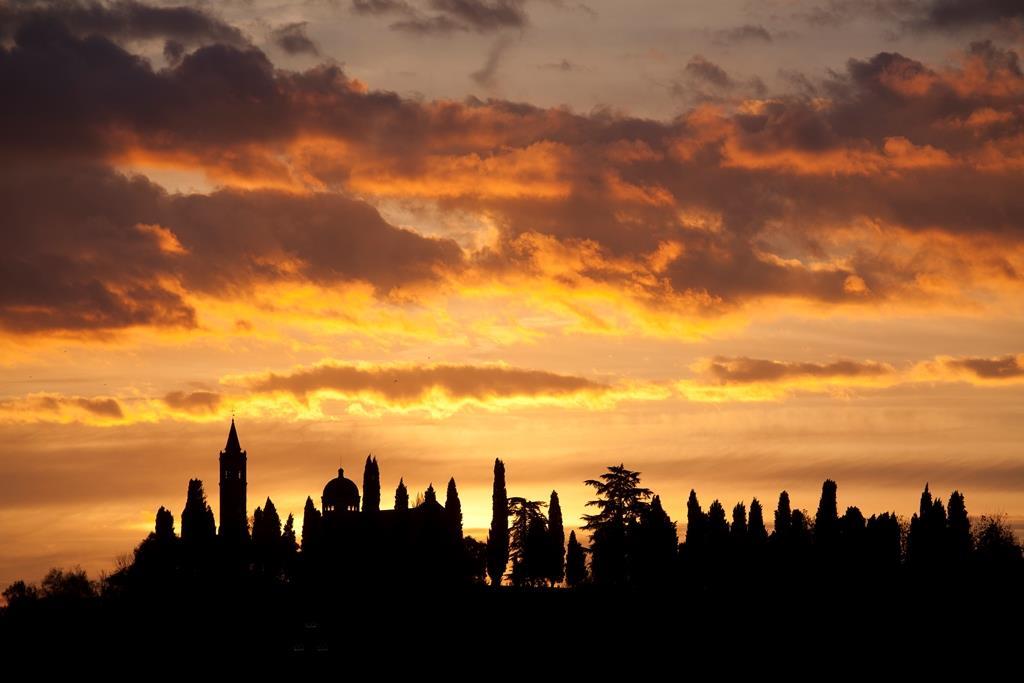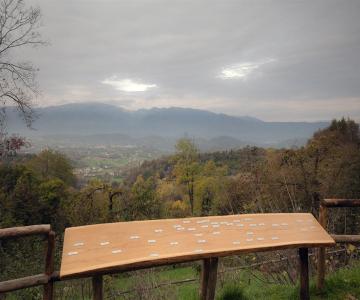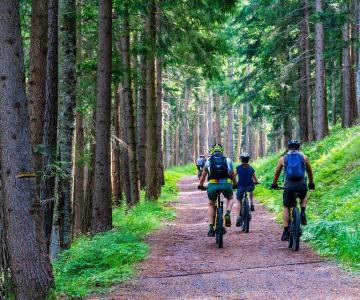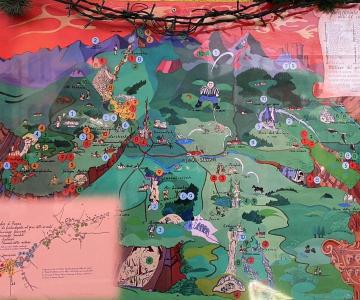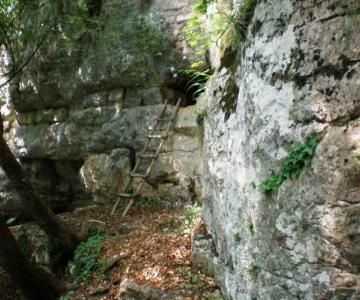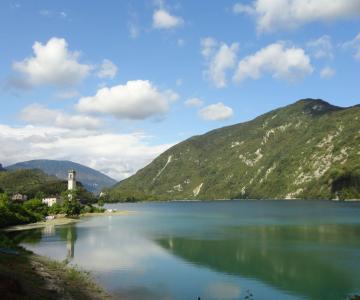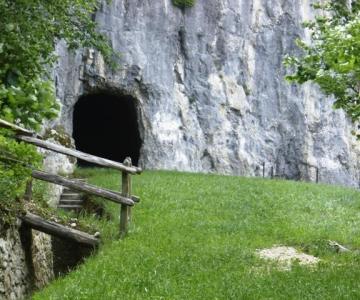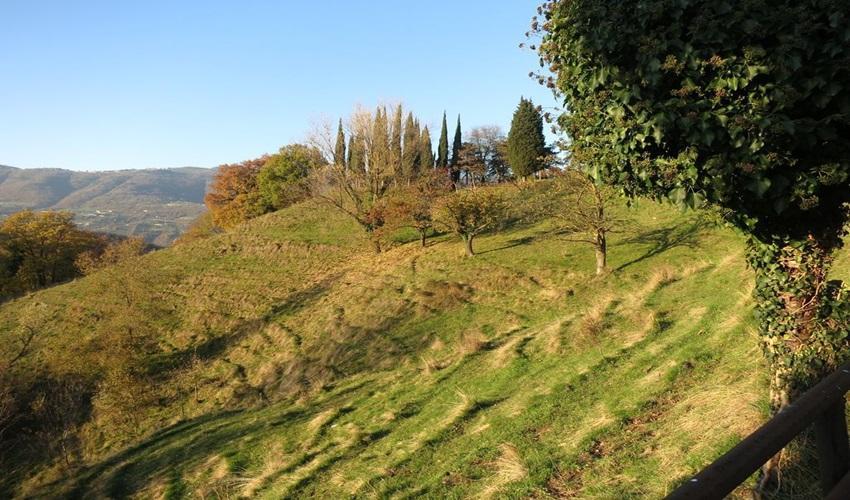

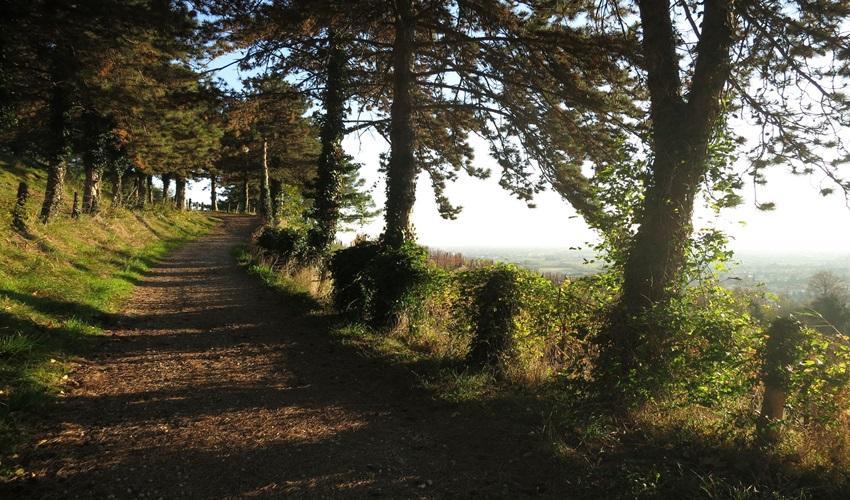
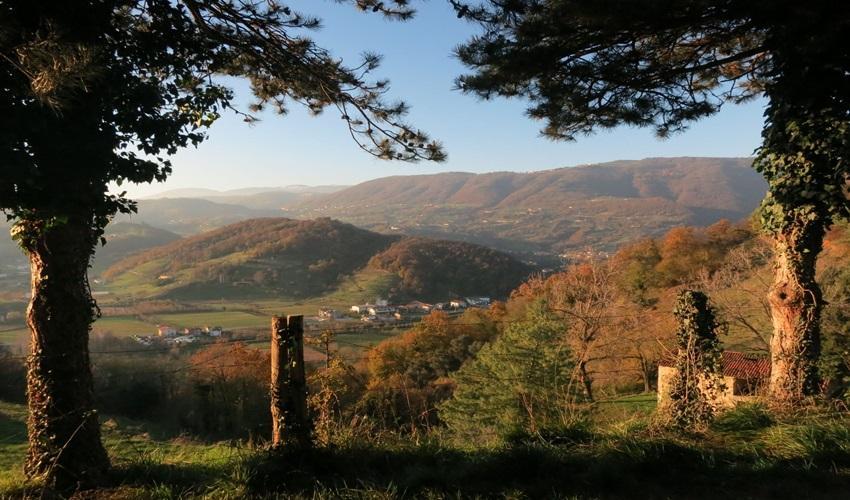

The Hills of San Benedetto are so called in memory of an ancient Benedictine convent, unfortunately no longer existing. They are located along the trekking path "From ancient convents to a jewel of nature: the Gorghi Scuri", among the most evocative places of our territory. During the walk people can immerse themselves in stretches of lush woods alternating with long rows of vines and olive trees planted on terraces that follow the sinuous lines of the hill.
MONASTERY AND CHURCH OF SAN BENEDETTO
Going up the slope of the hill of San Benedetto, on the plateau, you can see today only a few square stones gathered disorderly in a heap, the only vestige of the monastery and the church of San Benedetto. Memories of the buildings can be found in the will of a certain Zilio, who left some money in 1253. Since then, the life of the monastery and the name of its rectors are regularly documented on the occasion of the recurrent pastoral visits of the bishops of Padua (to whose dependencies lay the central site) which recorded the state of conservation and the economic situation. In 1488 Bishop Pietro Barozzi verified that no trace of the monastery remained and that the church was in serious decay.
In the second half of 1500 the Church ceased to belong to the Benedictines, passing under the patronage of the noble Bianchi family who rebuilt it. In 1571 the bishop of Padua Ormanetto, in his pastoral visit to the parish church of Santa Maria Assunta visited the Oratorío di San Benedetto, rebuilt by the Bianchi brothers who made it their family chapel.
Several rectors succeeded each other in the custody of the Church of San Benedetto from 1571 to 1776, the year that saw the appointment of the last rector, Giuseppe Bonomo. After his ministry, the slow decay of the Church began until in the second half of 1800 it was stripped of its assets and transformed into a dwelling.