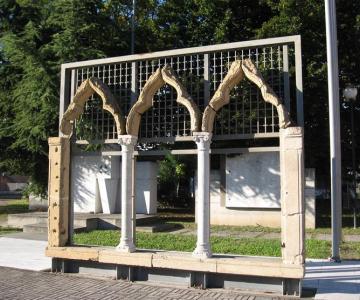
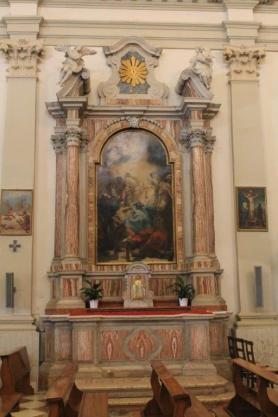
The first parish was built in the 8th century, but it was heavily modified in the 18th century, removing the colonnades that divided the three original naves and reversing its orientation.
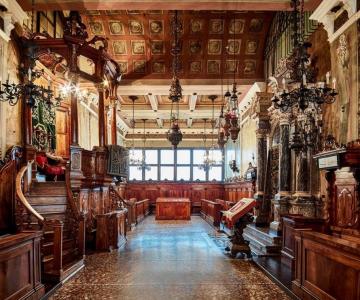
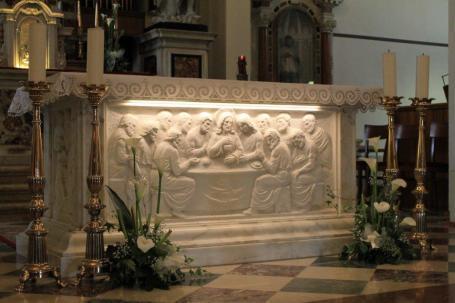
The church has a Latin cross structure, formed by a nave and a transept. The main nave is the oldest part of the building, enriched by 5 marble altars: the altar of Pentecost, the altar of Santa Maria Assunta, adorned with an 18th-century statue of the church's titular, the altar of the Parasceve, a modern work enriched by a statue of Christ in black marble from Belgium, the altar of St. Anthony, and finally the altar of Saint Joseph. Particularly rich is the main altar, an 18th-century work covered in polychrome marbles and embellished with angelic figures.
In the transept, to the right of the main altar, there is a small altar from the late 19th century dedicated to St. Luigi Gonzaga.
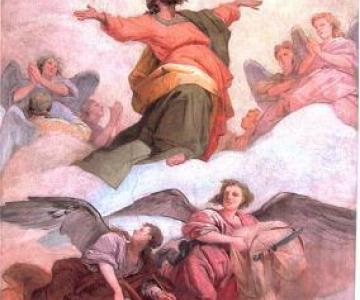
Among the most important artistic works preserved in the church are: the Altarpiece of Pentecost by Giandomenico Tiepolo, located at the dedicated altar, the cycle of four canvases by Pietro Damini depicting the Stories of Saint Francesca Romana, and the Madonna del Rosario by Pietro Liberi.