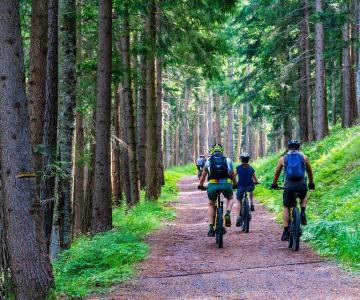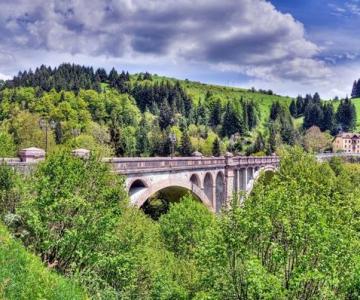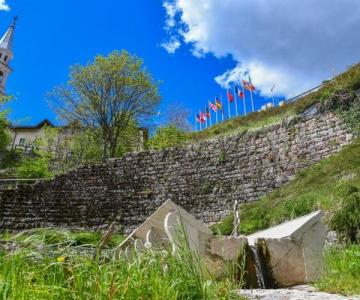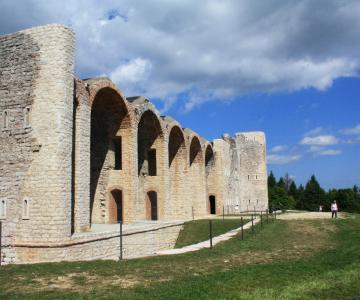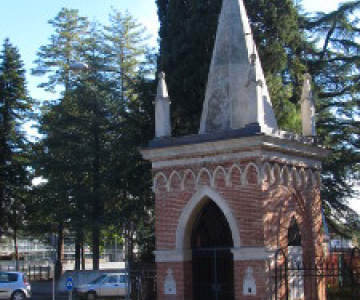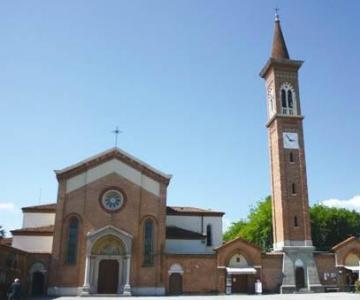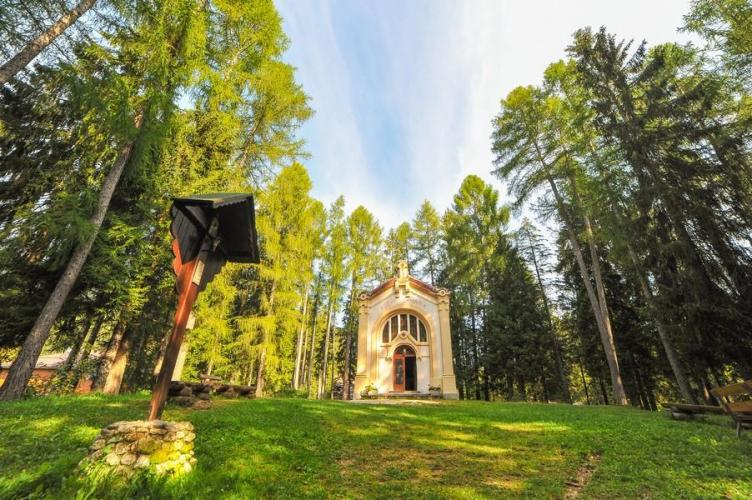
The small church is the ideal place for a short walk in the woods and to immerse oneself in nature and contemplation. Its history dates back to around the early 1900s, when ancient incomplete walls of a small chapel or a capital were discovered, from the place "Pilleche" capital.
Initially, an oratory was built in 1900 and completed in 1903 in the locality called Spilleke in honor of the Immaculate Madonna of Lourdes and Christ the Redeemer. The place "Spilleke," the height of play, is a deformation of Pilleche in reference to the mentioned capital, due to its position on a hill. The oratory was erected thanks to donations from the people of Roana and with the support of the parish priest D.G. Sartori, with the inauguration taking place on May 12, 1904. In 1905, the priest Don Severino Sartori, a missionary in China, donated the sacred image of Mary.
Subsequently, between 1910 and 1912, Don Giovanni Cavalli oversaw the expansion of the small chapel by adding a grotto inside modeled after that of Lourdes. The adorned oratory became the center of various visits from devotees from all over the region, even reaching Asiago. In the vestibule, according to the wishes of the priest D. Giuseppe Rebeschini, the words of Leo XIII were carved for the image of Mary: "Maria Virgo nive candidor, tuere Ausoniae fines" (O Virginal Mary, whiter than snow, protect the borders of Italy), the words proved to be prophetic as just a few years later, the advance of the Austrian troops threatening Italy was halted here. The oratory was then destroyed during the war.
At the end of the war, when the refugees returned, a hospice for the Capuchin Fathers was built on the site of the oratory, and a few meters further south, the current small church was constructed, in a more dominant position and surrounded by larches and firs, with a new image of Our Lady of Lourdes offered by Monsignor Evaristo Sartori, cousin of Don Severino Sartori.
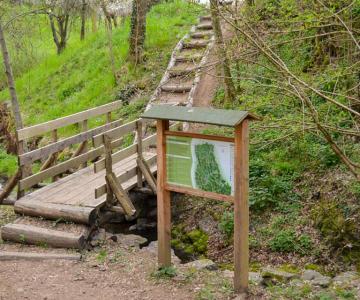
The small church was designed by Geom. Domenico Simeone Frigo and built by the Giovanni De Guio company on behalf of the municipality. The style is modern Romanesque, and the inauguration took place on November 21, 1931. Later, D. Cerato oversaw the decoration of the interiors with frescoes and ornaments, one of which was donated by Giovanni De Guio, the builder. Additionally, an easy and comfortable access path was created to reach it, beautifying the road with plants that would later form a lush forest of firs and evergreens, the oasis of Mary.
Along the avenue, there are also 14 wooden stations of the Stations of the Cross.
The small church also hosts weddings and the Holy Mass every Thursday morning during the months of July and August.